
By Gabriel Delgado
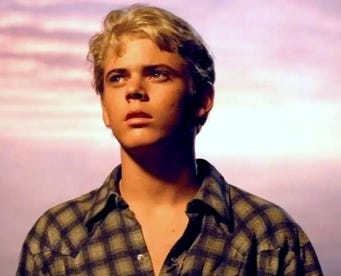
A line from a film could enter the vernacular. A lyric could become shorthand for an entire emotional experience. “Stay gold, Ponyboy.” “Show me the money.” A character, a scene, an album cover, a television commercial, even the particular cadence of a movie line could circulate through society for years. These fragments became cultural reference points because we encountered them repeatedly, talked about them, imitated them, argued about them and, perhaps most importantly, had enough time to remember them.
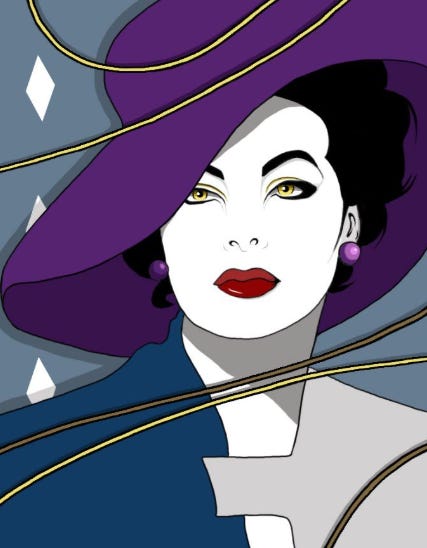
This is not nostalgia for the 1980s or 1990s. Nor is it an argument that popular culture was somehow more intelligent then.
It is an observation about time.
Culture once had more time to settle.
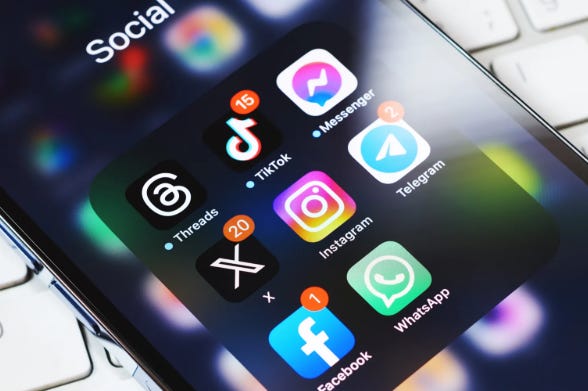
Today, we live within an extraordinary abundance of images. Instagram, TikTok, YouTube and an expanding constellation of digital platforms deliver photographs, videos, first-person narratives, political opinions, advertisements, criticism, entertainment and increasingly sophisticated artificially generated imagery into our field of vision almost continuously.
The problem is not that there is too much creativity.
The problem is that there may be too little space between encounters.
And contemporary art exists inside this same accelerated visual environment.
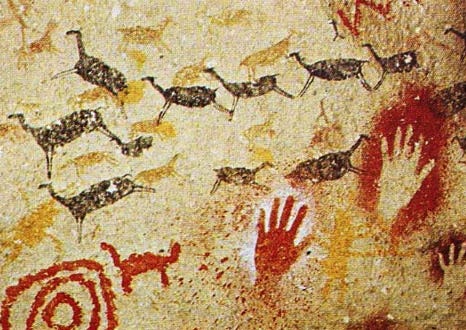
For most of human history, images were relatively scarce.
Consider what it meant to encounter an image in antiquity, in a medieval church, during the Renaissance or even in the nineteenth century. Images occupied physical locations. Seeing them required movement. A person traveled to a temple, church, palace, public square, museum or private collection.
The experience was spatial and temporal.
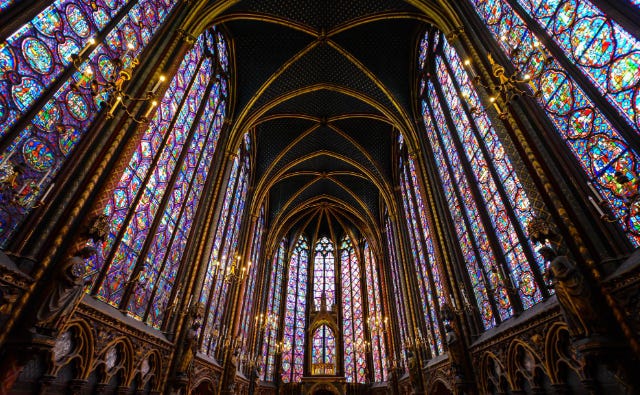
Even after mechanical reproduction dramatically expanded access to images, there remained limitations to their circulation. Books had pages. Magazines arrived periodically. Television had schedules. Movies had running times. Galleries had opening hours.
The internet dismantled much of that scarcity.
Social media accelerated the transformation further.
Now the image rarely waits for us.
The next image is already arriving.
That distinction matters.
We have become remarkably sophisticated consumers of visual information while simultaneously becoming conditioned to abandon one image for the next.
The contemporary artist therefore faces a strange historical contradiction: there have never been more opportunities for an artwork to be seen, and perhaps never more competition for the sustained attention necessary for an artwork to actually be looked at.
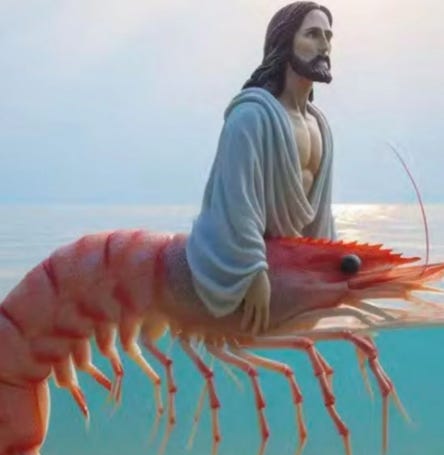
Artificial intelligence intensifies this condition because it radically lowers the amount of labor necessary to produce certain kinds of visual information.
An image that once required photography, illustration, staging, design or extensive digital manipulation can now sometimes be generated in seconds.
The resulting flood has produced an increasingly common phrase: AI slop.
The phrase is deliberately dismissive, but it points toward a legitimate cultural anxiety. When images can be generated endlessly, what happens to our relationship with images themselves?
Artists are already responding differently.
Some enthusiastically embrace artificial intelligence as another tool in a lineage that includes photography, video, Photoshop, digital fabrication and countless technologies that were initially treated with suspicion.
Others reject it, emphasizing materiality, craftsmanship, authorship and the physical evidence of the artist’s hand.
Still others occupy the territory between the two, allowing machine-generated imagery or computational processes to inform an idea while insisting upon physical transformation through painting, sculpture, drawing, installation or other forms of making.
I am less interested in declaring which position is correct than in observing what happens next.
Because history suggests that artists will do what artists have always done.
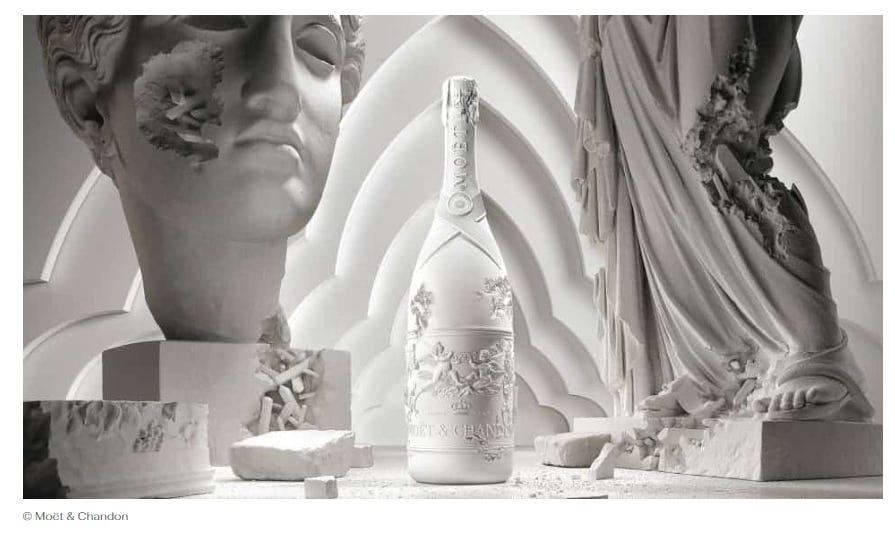
Good artists will continue making art. Bad artists will continue making art. Extraordinary artists will occasionally make bad art, and overlooked artists will occasionally make extraordinary art.
Technology does not eliminate that problem.
It simply gives us considerably more material through which to search.
I recently considered framing this problem differently:
The art world doesn’t need more content. It needs more judgment.
But the more I thought about that sentence, the less satisfied I became with the word judgment.
There is already plenty of judgment.
Social media practically industrialized it.
Like.
Dislike.
Follow.
Unfollow.
Share.
Ignore.
Buy.
Sell.
Hot.
Overrated.
Emerging.
Blue-chip.
Relevant.
Irrelevant.
We make hundreds of miniature judgments every day, often within seconds.
What I think we need instead is something slower.
Evaluation. Context. Discourse. Attention.
And perhaps most importantly:
BREATHING ROOM
We need enough distance between stimulus and response to allow an encounter to become an experience.
That is where the sophisticated eye begins.
The prescription is remarkably uncomplicated.
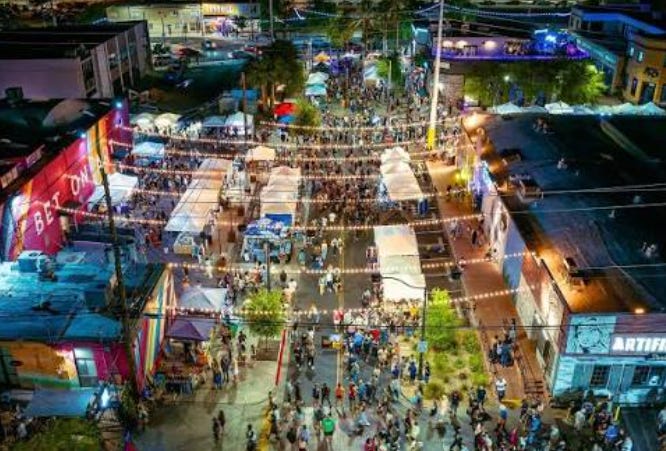
Go to your local First Friday.
Walk into the galleries.
Visit the museum you have driven past fifty times.
Spend an afternoon looking at antiquities. Then walk upstairs and look at Renaissance painting. Look at nineteenth-century academic painting. Modernism. Postwar abstraction. Pop. Minimalism. Conceptualism. Pictures Generation. Neo-Expressionism.
Look at what artists were doing in the 1980s.
Then the 1990s.
Then the 2000s.
Then walk into a contemporary gallery and look at what someone made this year.
Not on your phone.
Stand in front of it.
Move closer.
Move backward.
Look at the edges.
Look at the surface.
Ask yourself why the artist made certain decisions.
You do not have to like it.
That is another misconception social media has encouraged: that cultural experiences require immediate approval or rejection.
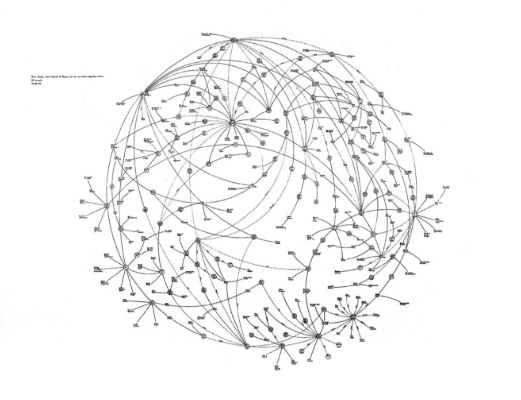
Sometimes the most valuable response to an artwork is simply:
I don’t understand this yet.
Stay another five minutes.
This becomes particularly important for collectors.
Don’t ignore trends. Understand them.
Know which artists are suddenly appearing everywhere. Know which galleries represent them. Know which museums are exhibiting them. Understand what the major dealers are pushing and why. Pay attention when a gallery expands into another city, hires an influential director or closes a location.
Study success.
Study failure.
Study longevity.
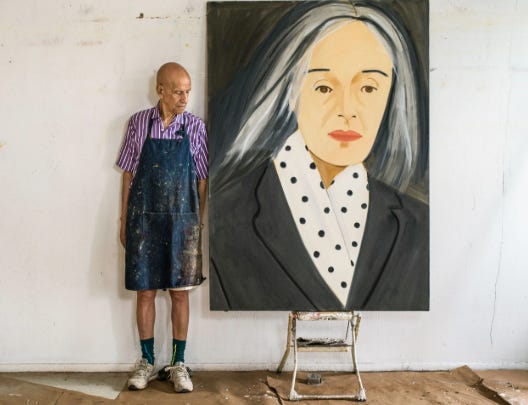
Look at an artist such as Alex Katz, whose career stretches across generations of changing critical fashions and market cycles.
Look at Hunt Slonem and the extraordinary persistence of a recognizable visual vocabulary maintained across decades.
Whether either artist corresponds to your particular taste is almost beside the point.
Ask the more interesting question:
What allows an artistic language to survive?
Then look in the opposite direction.
Visit the young gallery nobody has told you matters yet.
Walk through one of the multi-gallery buildings in New York, Los Angeles or San Francisco where numerous programs exist under a single roof. Spend three hours moving between them.
Look at fifty works.
Remember five.
Ask yourself why those five survived the other forty-five.
That exercise is worth more than scrolling through five hundred images.
People sometimes talk about having “a good eye” as though it were an innate gift.
I don’t believe it is that simple.
The eye can be trained.
A sophisticated curatorial eye develops through accumulated exposure coupled with historical context.
You see a painting today and something about it reminds you of another painting you encountered eight years ago. That painting reminds you of an exhibition. The exhibition recalls an artist. The artist connects to a movement. The movement connects to a historical moment. Suddenly you are no longer looking at an isolated object.
You are looking at a relationship.
That is visual literacy.
It cannot be acquired entirely through Instagram because scale matters. Material matters. Installation matters. Architecture matters. The physical relationship between your body and an object matters.
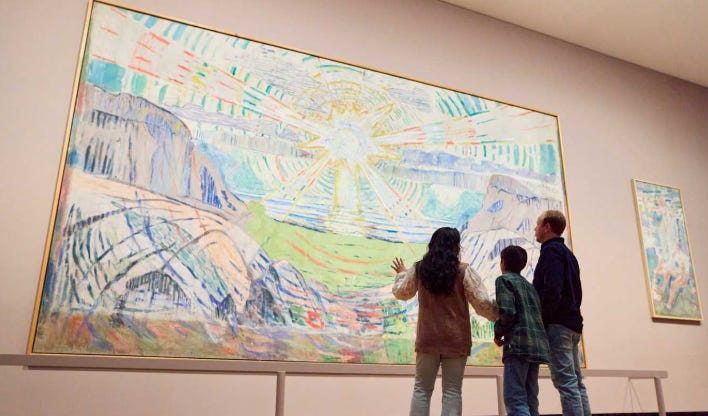
A six-inch painting and a sixteen-foot painting can occupy exactly the same dimensions on a phone screen.
In reality they are radically different propositions.
The more art you physically encounter, the larger your internal visual archive becomes.
And the larger that archive becomes, the harder it is for superficial novelty to masquerade as significance.
This is also why I resist the advice that artists and collectors should simply ignore trends.
Don’t ignore them.
Observe them without becoming obedient to them.
Know what the mega-galleries are exhibiting.
Know what the auction houses are selling.
Know what museums are acquiring.
Know which artists appear repeatedly at fairs.
Know which galleries are expanding.
Know which galleries are contracting.
Know what collectors are discussing.
Know what critics are questioning.
Know what algorithms are amplifying.
But none of these things individually determines quality.
They are information.
The sophisticated eye absorbs information without surrendering to it.
That distinction is increasingly important in a culture where popularity can be quantified instantly.
Ten million views demonstrate that something attracted ten million views.
They do not necessarily tell us whether it will matter ten years from now.
For artists, artificial intelligence raises another interesting question.
Perhaps the important divide will ultimately not be AI versus non-AI.
Perhaps it will be between artists who use technology to avoid thinking and artists who use technology to extend thinking.
Every generation of artists inherits new tools.
The tool itself rarely determines the significance of the work.
The artist does.
A brush does not guarantee a painting.
A camera does not guarantee a photograph.
A computer does not guarantee digital art.
And artificial intelligence does not guarantee imagination.
The critical question remains remarkably old-fashioned:
What did the artist have to say, and why did the artist need to make this object?
That question survives technological change.
Perhaps, then, one of the most radical cultural acts available to us today is also one of the simplest.
Look longer.
Not because the past was better.
Not because technology is inherently corrupting.
Not because contemporary culture has somehow lost its way.
Look longer because attention has become valuable.
When virtually everything around us is engineered to move us toward the next image, the next video, the next notification and the next opinion, choosing to remain with something becomes meaningful.
Spend twenty minutes with one painting.
Walk through a museum without photographing everything.
Visit a gallery without immediately searching the artist’s auction record.
Allow yourself to dislike something without dismissing it.
Allow yourself to admire something without needing someone else to validate the admiration.
Return to an artist five years later.
Change your mind.
That last one may be especially important.
A sophisticated eye is not an eye that is always correct.
It is an eye capable of revision.
We do not need fewer artists.
We do not need fewer images.
And I am not convinced we need more judgment.
We need better conditions for attention.
We need curiosity strong enough to compete with acceleration.
We need historical knowledge alongside contemporary awareness.
We need physical encounters with objects.
We need discourse that lasts longer than a comment thread.
And we need enough breathing room for culture to become memory.
So go see the exhibition.
Walk through the museum.
Visit the artist’s studio.
Take the elevator through twenty galleries in one building.
Look at what survived from 2,000 years ago and then look at what somebody finished yesterday.
Know the trends without becoming captive to them.
Know the market without mistaking price for importance.
Know technology without mistaking novelty for progress.
And keep looking.
Because in an age capable of producing an almost infinite number of images, the scarce resource may no longer be content at all.
No posts
Comments
Nothing yet. Say the first thing.
Sign in to join the conversation.