
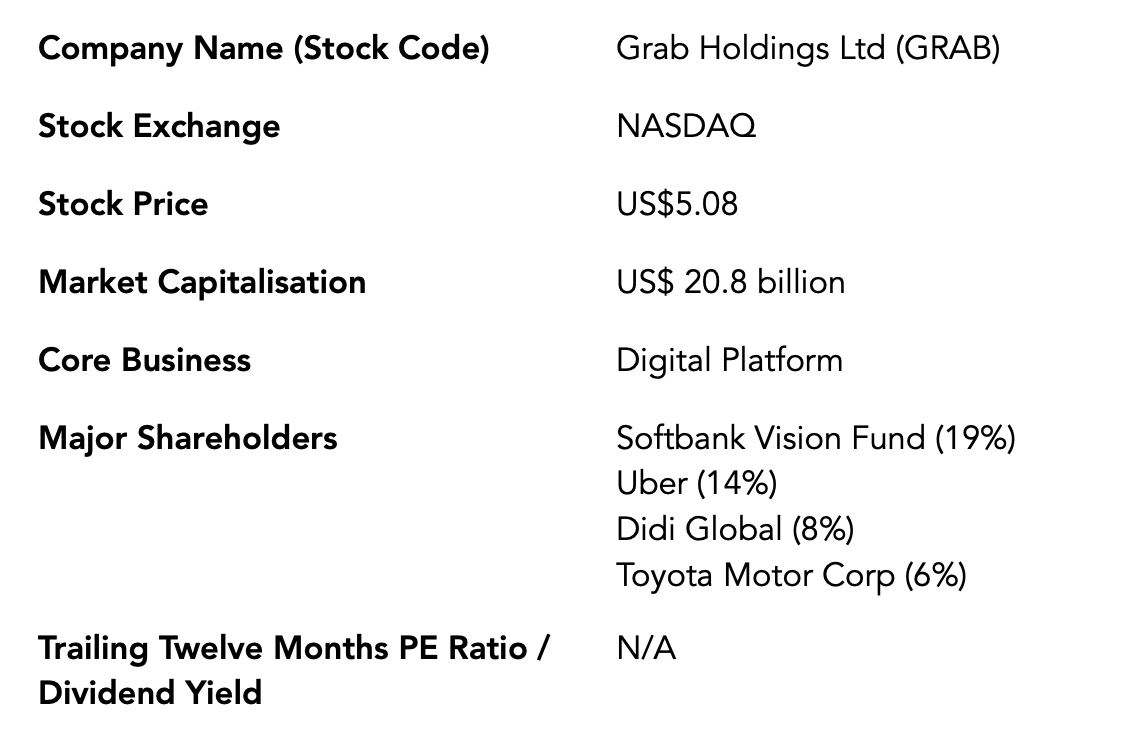
Founded by Anthony Tan and Hooi Ling Tan in June 2012 in Malaysia as MyTeksi. Rebranded in 2013 to GrabTaxi and expanded to Singapore, the Philippines and Thailand.
Launched GrabCar and GrabBike in 2015 to allow private vehicle owners to offer taxi services. In the following year dropped the “Taxi” to become “Grab” and also launched GrabPay to facilitate cashless payments.
In a 2018 regional consolidation, Grab took over Uber’s Southeast Asian business in a deal that granted Uber a 27.5% equity stake in the company. By 2019, Grab officially positioned itself as a “Superapp,” integrating ride-hailing, food delivery, and financial services into one interface. This positioned it well to ride the digitalisation tailwinds spurred by the Covid-19 pandemic.
In December 2021, Grab went public on the NASDAQ through a SPAC merger (Altimeter Growth Corp). It was the largest SPAC deal in history at the time, valuing the company at nearly US$40 billion.
Between 2022 and 2024, Grab secured digital bank licenses in Singapore (GXS Bank), Malaysia, and Indonesia, moving deeper into high-margin financial products like lending and insurance. Its treasure trove of transaction data from consumers and merchants provide abundant lending opportunities.
Grab is one of the very few Southeast Asian digital platforms that is prevalent across the region and is also dominant in most of them. A successful acquisition of rival GoTo in Indonesia would create an unassailable position in the world’s fourth largest market.
Grab is an asset-light market orchestrator that is able to handle surges in demand at low cost - something that potential autonomous vehicle platforms like Tesla will find difficult to match. Grab is also itself investing in AV companies
Its growth prospects are strong given its fundamentals and commanding market position.
Digital Taxi
Founded by Anthony Tan and Hooi Ling Tan in June 2012 in Malaysia as MyTeksi. Rebranded in 2013 to GrabTaxi and expanded to Singapore, the Philippines and Thailand. It launched GrabCar and GrabBike in 2015 to allow private vehicle owners to offer taxi services.
In the following year dropped the “Taxi” to become “Grab” and also launched GrabPay to facilitate cashless payments. In a 2018 regional consolidation, Grab took over Uber’s Southeast Asian business in a deal that granted Uber a 27.5% equity stake in the company. By 2019, Grab officially positioned itself as a “Superapp,” integrating ride-hailing, food delivery, and financial services into one interface.
This positioned it well to ride the digitalisation tailwinds spurred by the Covid-19 pandemic.
In December 2021, Grab went public on the NASDAQ through a SPAC merger (Altimeter Growth Corp). It was the largest SPAC deal in history at the time, valuing the company at nearly US$40 billion.
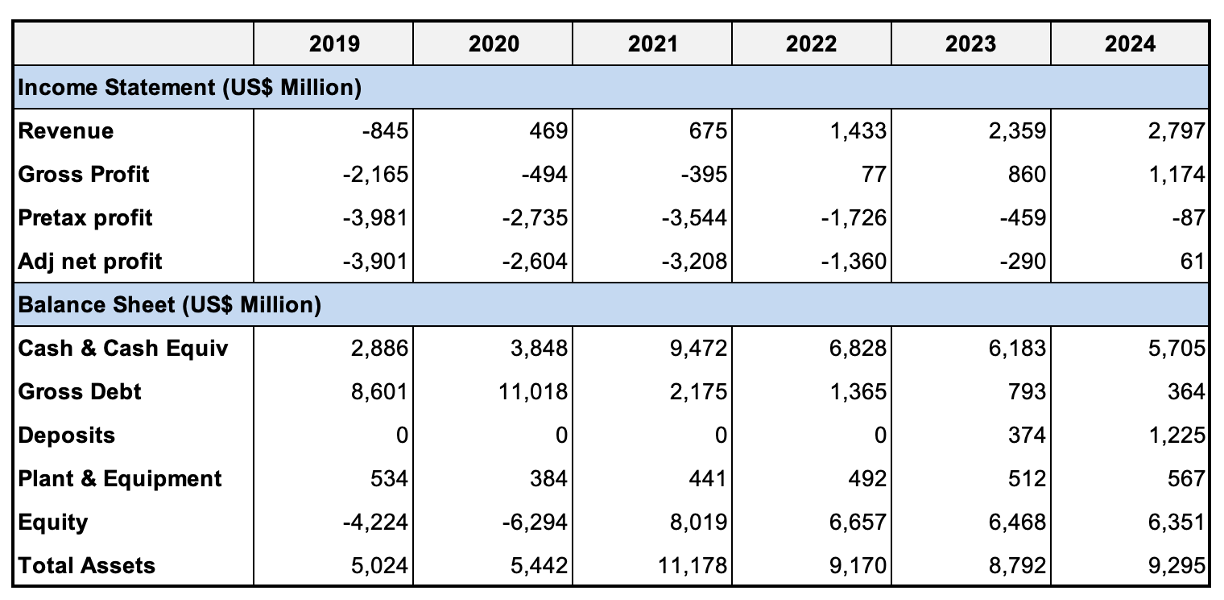
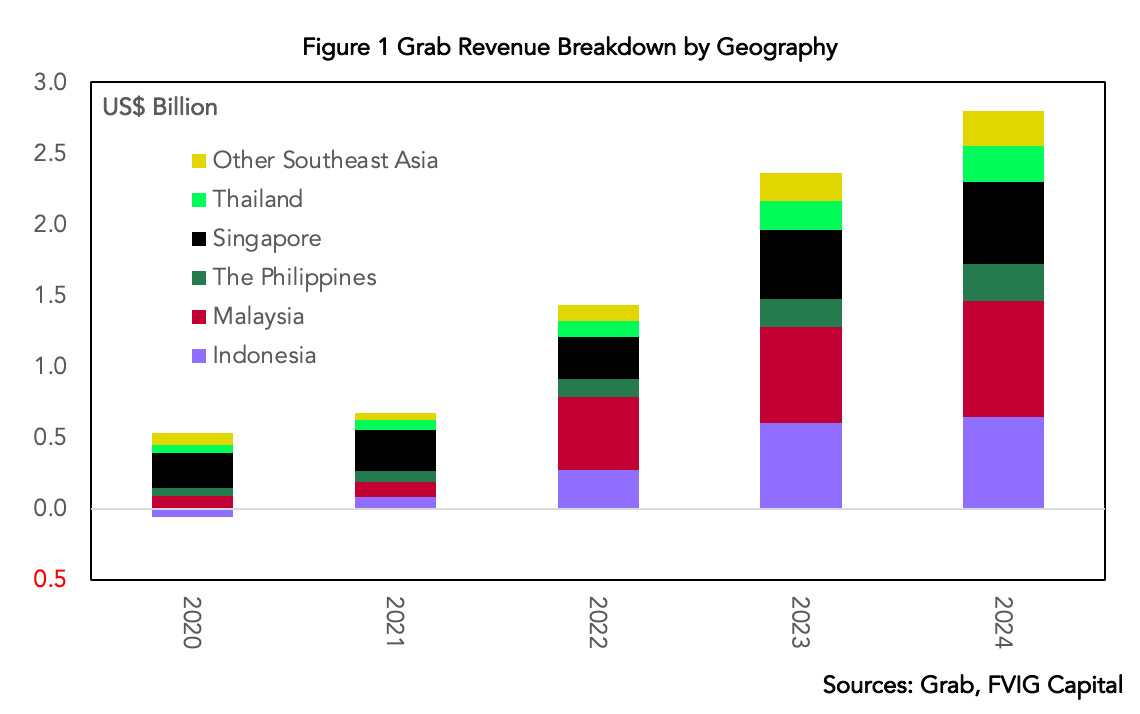
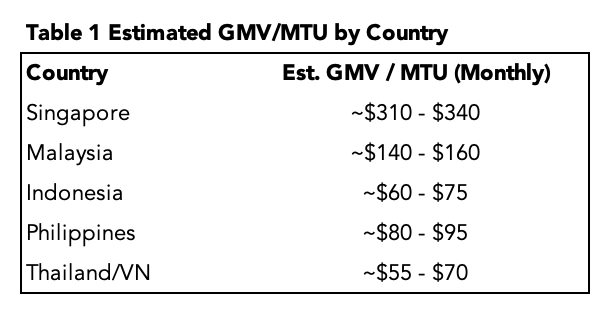
Grab is one of the very few Southeast Asian digital platforms that is prevalent across the region and is also dominant in most of them. A successful acquisition of rival GoTo in Indonesia would create an unassailable position in the world’s fourth largest market. Notwithstanding Indonesia’s sheer size, Malaysia is Grab’s largest market (boosted by contribution from Jaya Grocer, a grocer acquired in Jan 2022), followed by Singapore (high value per user) - see Figure 1 and Table 1
Reaching Scale
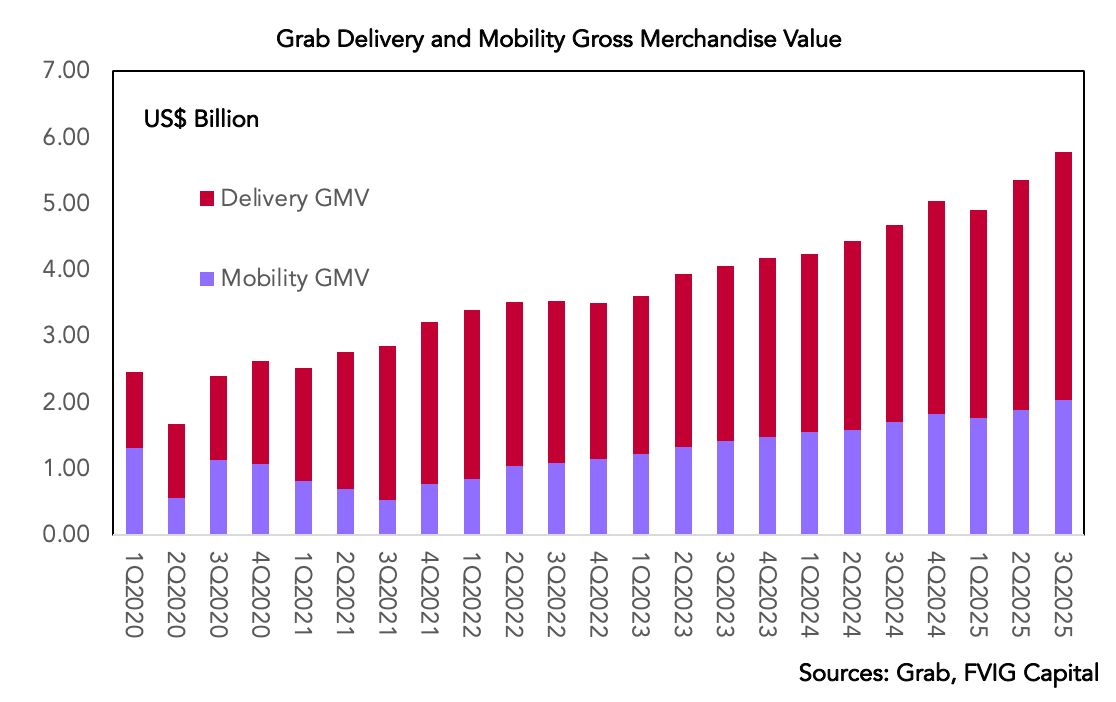
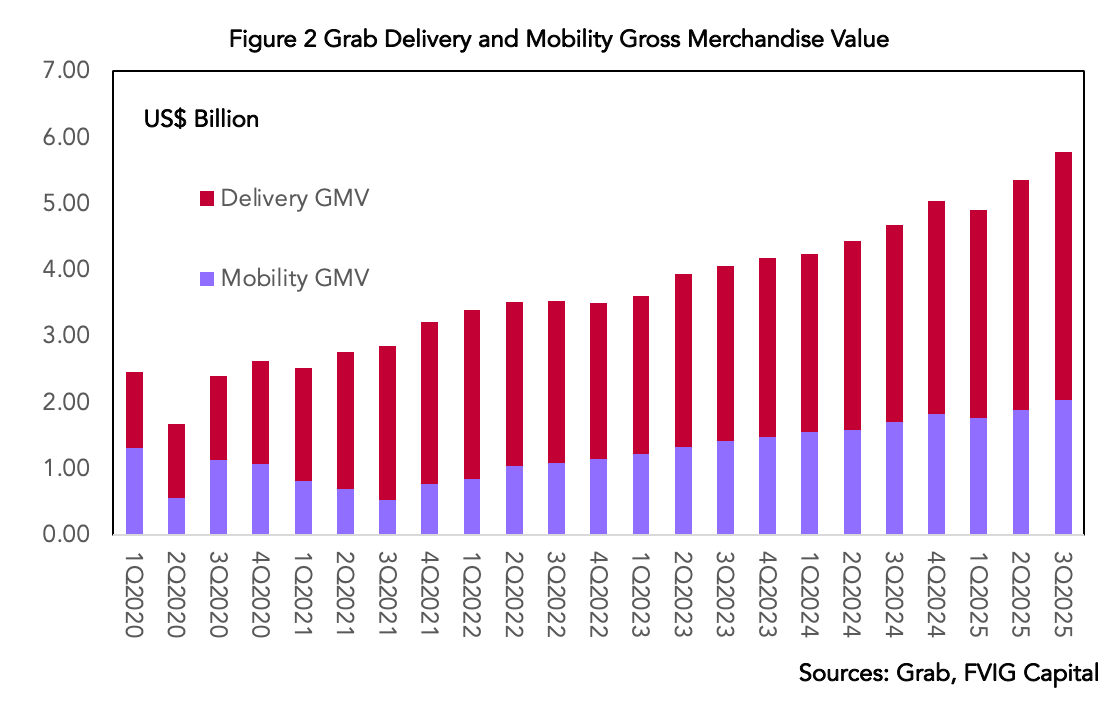
Even without GoTo, Grab has grown from strength to strength, with Delivery and Mobility Gross Merchandise Value (GMV) reaching a record high in 3Q2025 - see Figure 2
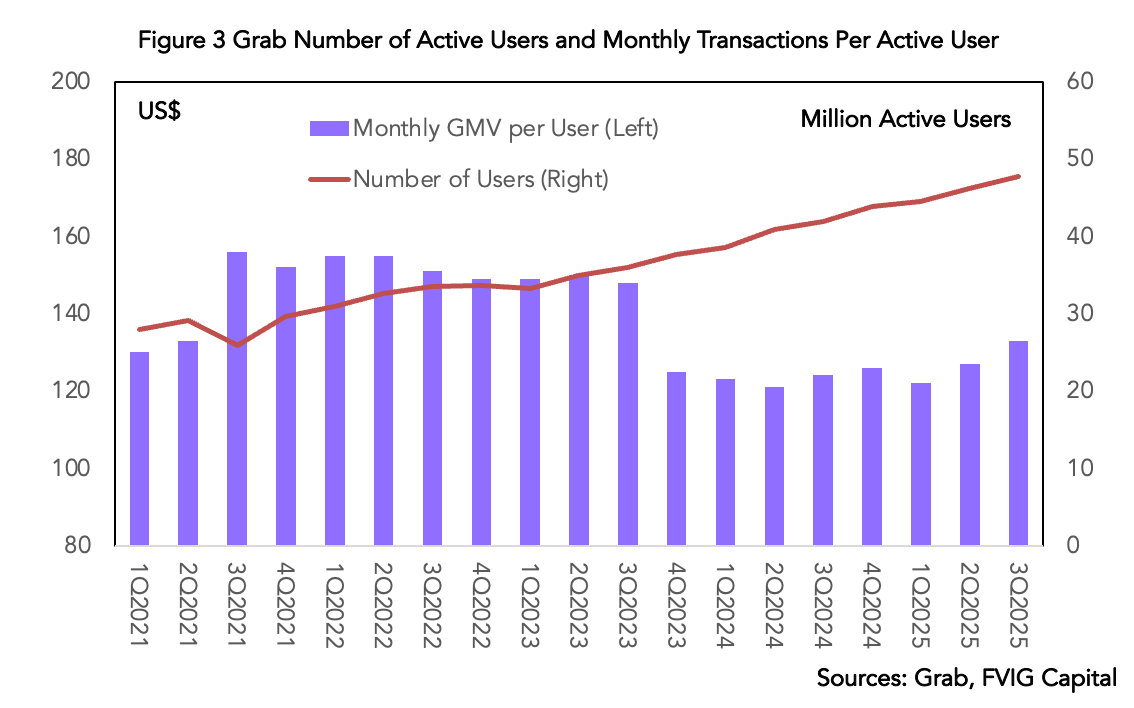
The key driver of this rise is increases in the number of users - see Figure 3
Grab has also reduced the incentives paid out to consumers and driver/delivery partners - see Figure 4
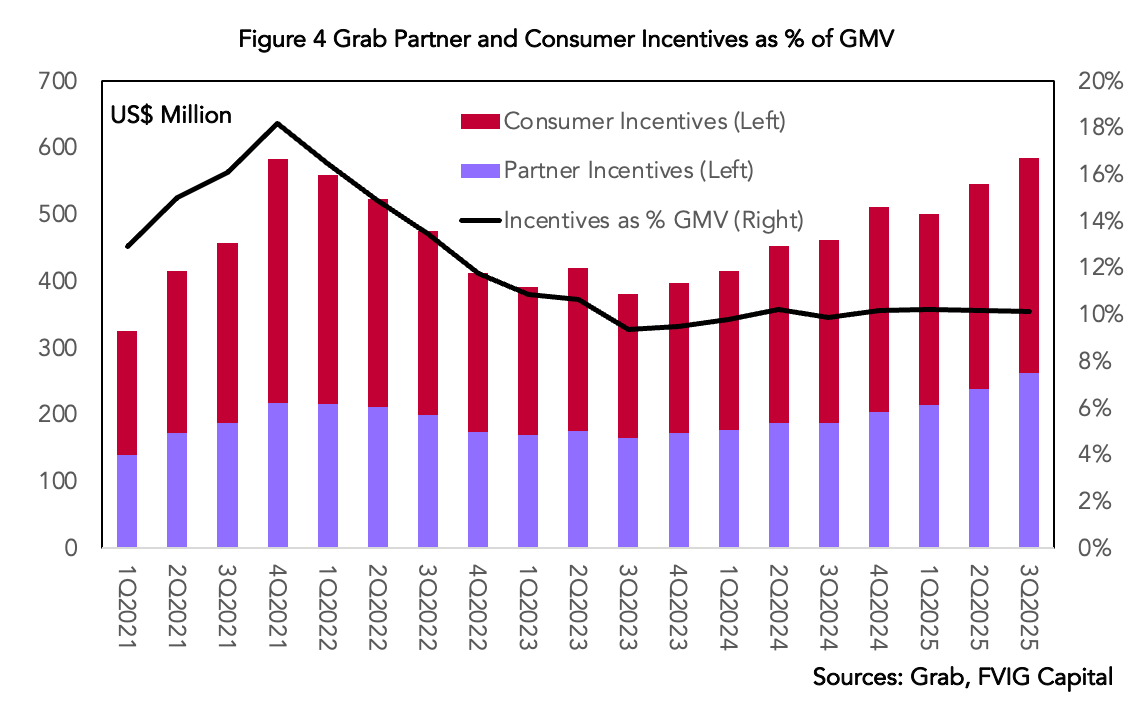
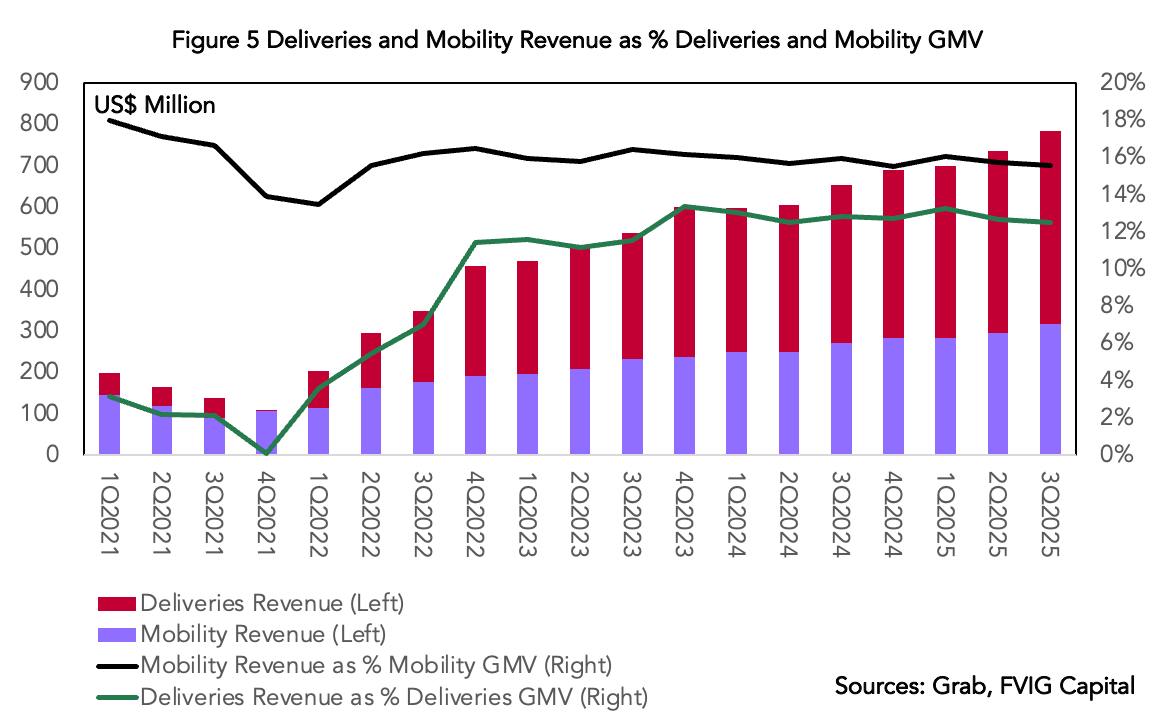
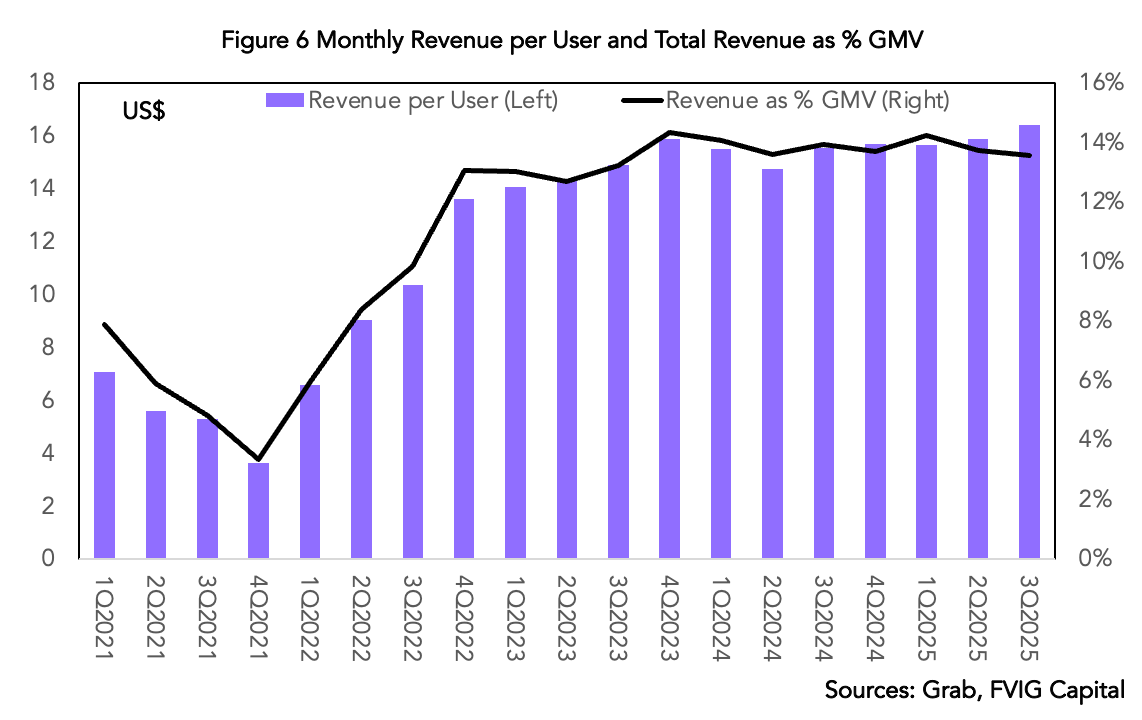
Most of these incentives are attributable to the food business. As a result, deliveries revenue as % of deliveries GMV and total revenue per user have been on a steady rise - see Figure 5 and Figure 6
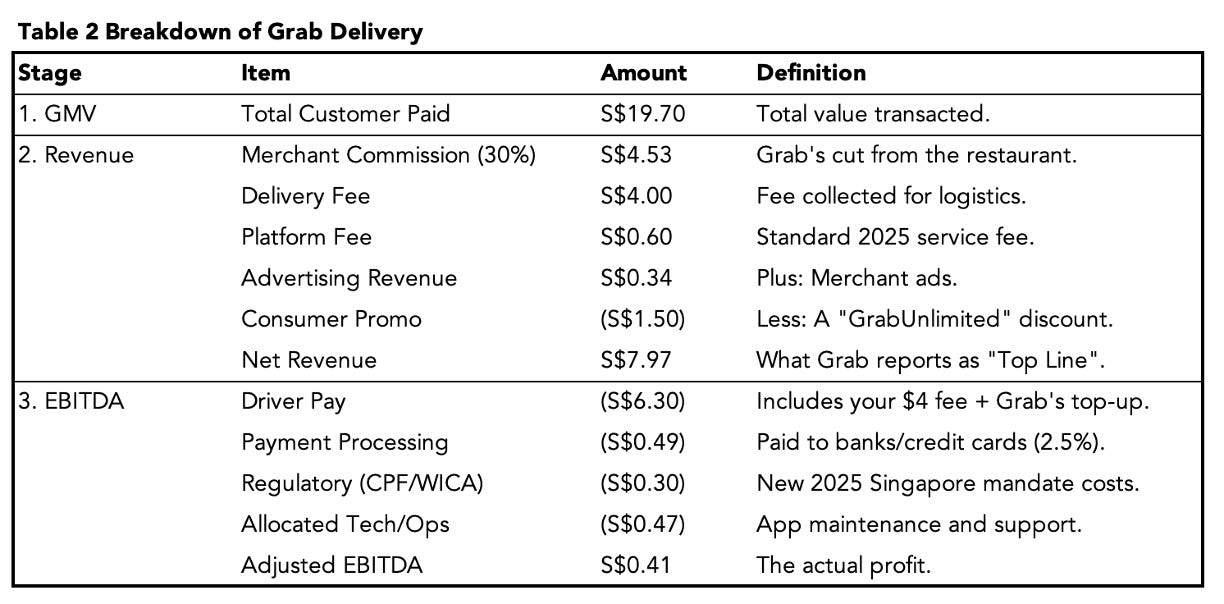
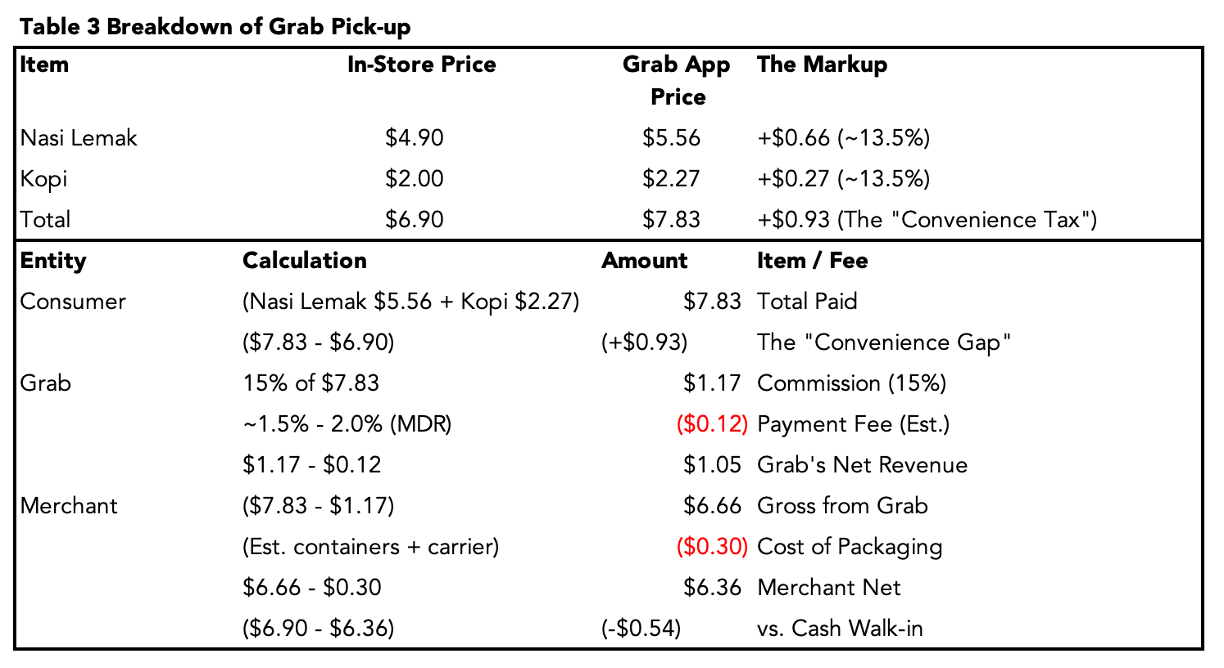
Aside from pick-up orders, Grab has to subsidise delivery partners out of food commissions, as delivery fees are often not enough of an incentive. This is different to mobility partners - see Table 2, Table 3 and Table 4
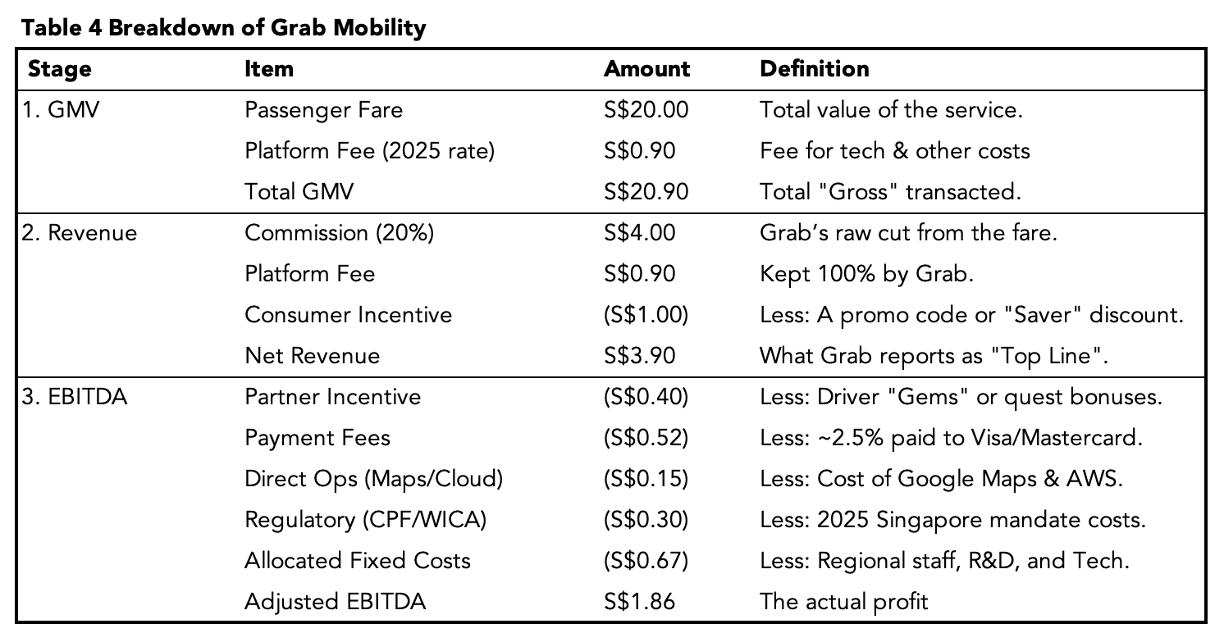
Consequently, mobility EBITDA is the major contributor towards Grab’s bottom line. Improvements in delivery EBITDA have been driven by high-margin advertising revenue - see Figure 7
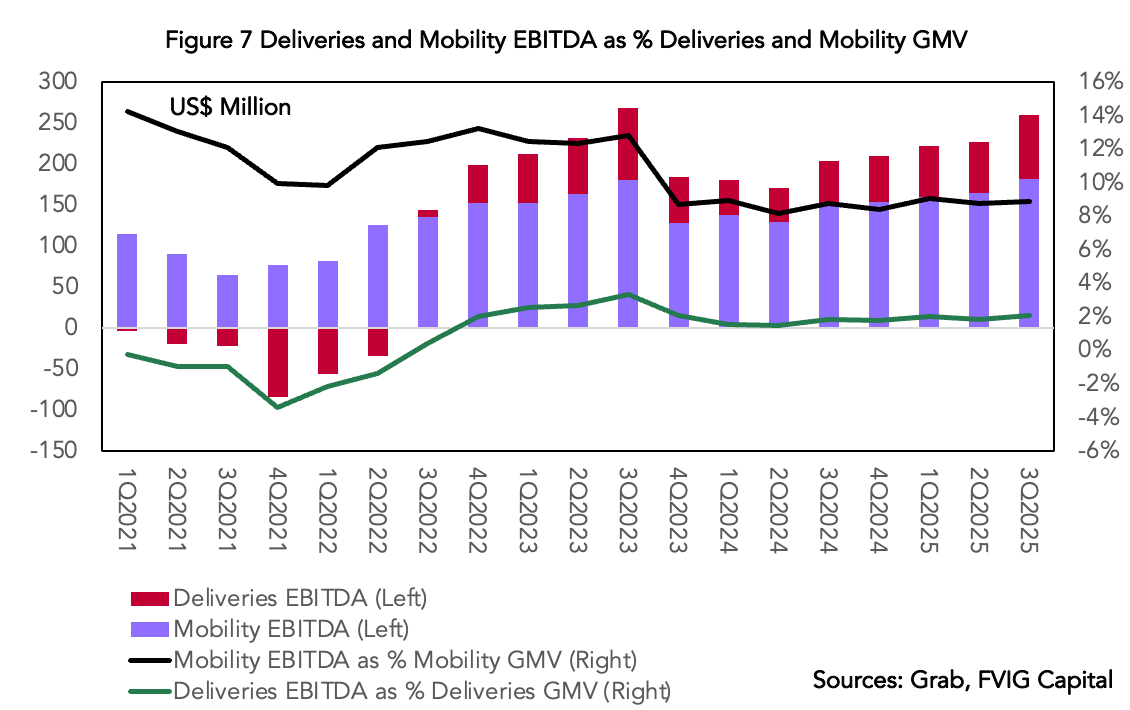
The delivery business is nonetheless highly strategic because its higher frequency, which attracts monthly subscribers that lock-in users into Grab’s ecosystem - so next time said user wants to use lower frequency ride-hailing, they will most likely use Grab to do so. In addition, the delivery business also opens the door to potential customers for its growing financial services arm.
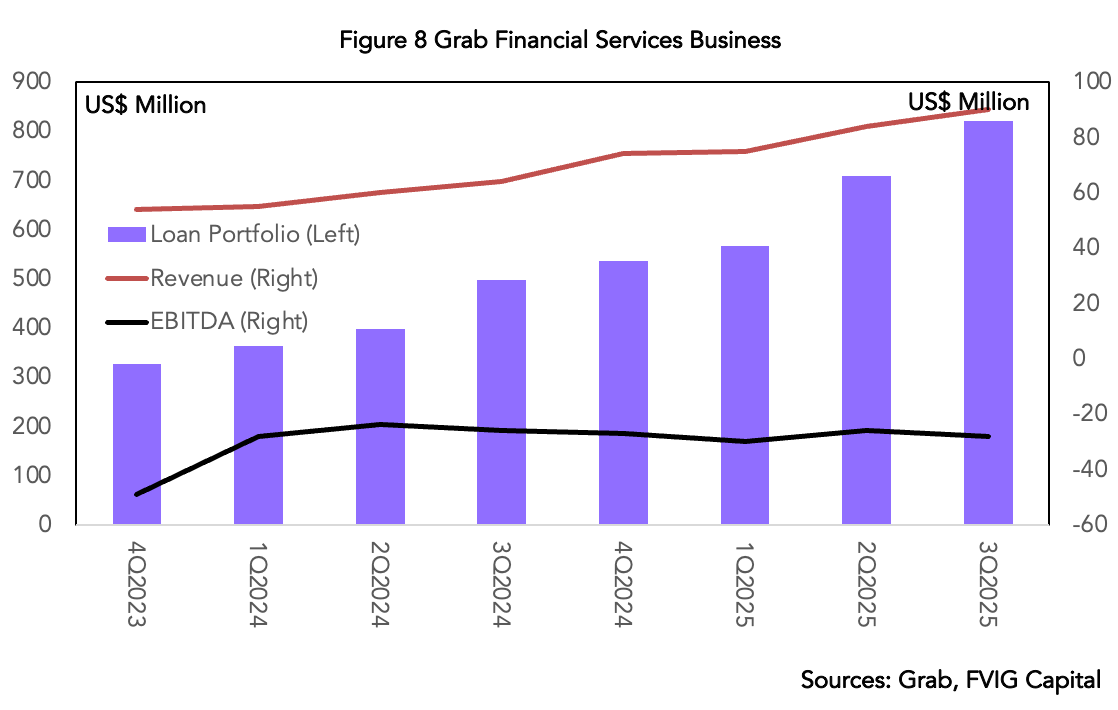
Between 2022 and 2024, Grab secured digital bank licenses in Singapore (GXS Bank), Malaysia, and Indonesia, moving deeper into high-margin financial products like lending and insurance. While its financial services arm is absorbing losses for now, Grab’s ecosystem treasure trove of transaction data from consumers and merchants provide abundant lending opportunities in the future. At scale, the financial services business can be highly profitable - see Figure 8
Dominant Orchestrator
Grab is already profitable on an adjusted basis, and has over US$5.2 billion in net cash as of September 2025. It is well positioned to continue growing a sticky customer base across ASEAN. Profits are poised to grow at a faster pace than revenue as it benefits from operating leverage.
Grab is an asset-light market orchestrator that is able to handle surges in demand at low cost - something that potential autonomous vehicle (AV) platforms like Tesla will find difficult to match. Grab is also itself investing in leading AV companies. Its growth prospects are strong given its fundamentals and commanding market position.
At FVIG Capital, we will continue to monitor developments closely and provide updates as Grab reaches its inflection point.
Disclaimer:
This report is published by FVIG Capital for informational and educational purposes only and does not constitute investment advice or a recommendation to buy or sell any security. The views expressed are those of the author(s) as of the date of publication and are subject to change without notice.
FVIG Capital, its affiliates, and/or their associates may hold positions in the securities discussed. While every effort has been made to ensure accuracy, no warranty is given as to the completeness or reliability of the information contained herein. Readers should conduct their own due diligence before making any investment decisions.
Comments
Nothing yet. Say the first thing.
Sign in to join the conversation.