
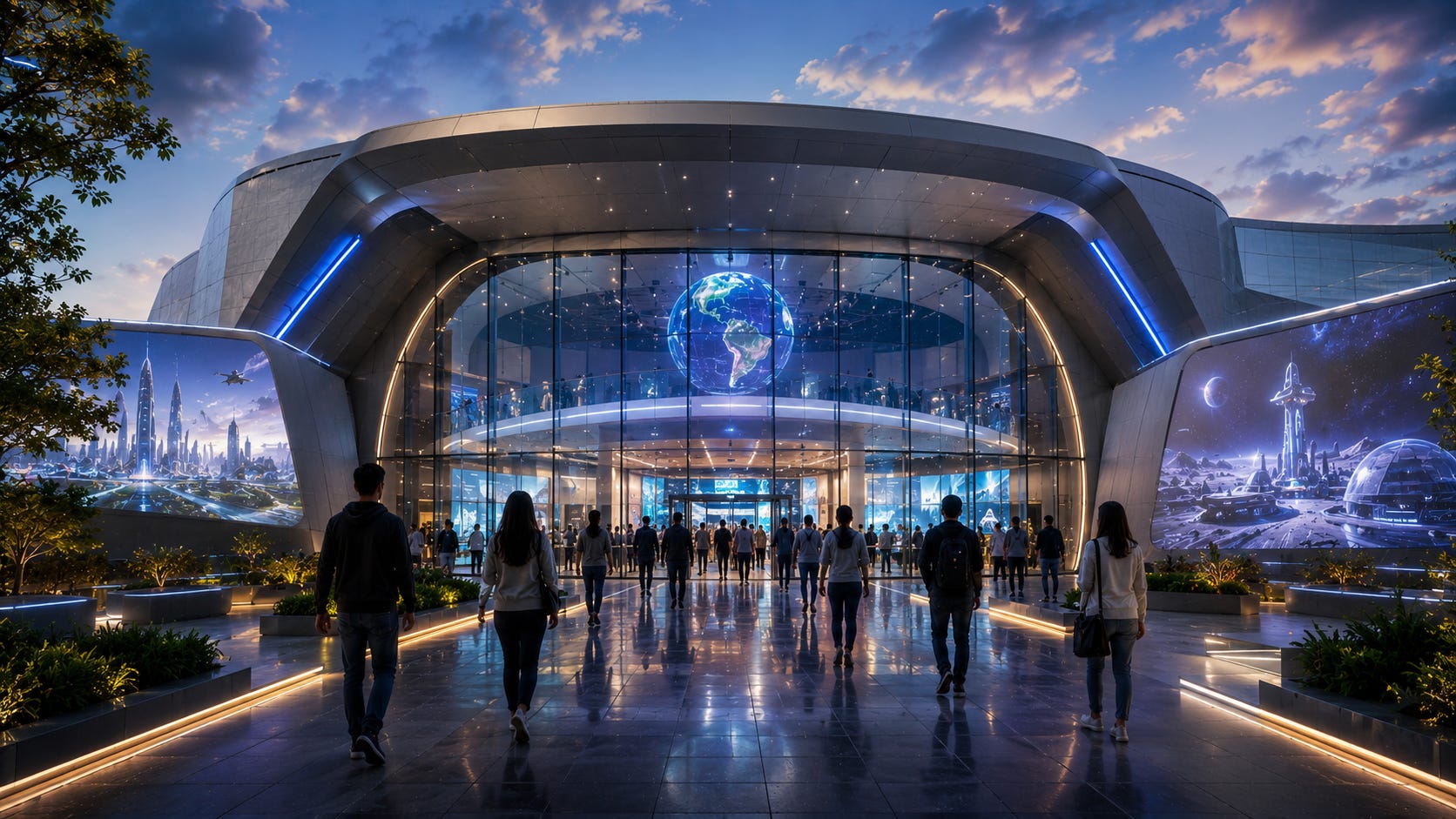
Walk into almost any traditional museum and you’ll notice the same quiet design assumption running through every hall: the story is already finished. The dinosaur is extinct. The painting is complete. The rocket already flew and already landed. Museums about the past are trophy cases, built to preserve an achievement at the exact moment it stopped changing. That’s a valuable function. It is not, however, the most valuable function a museum can serve. The museums worth building next aren’t the ones that freeze history in place. They’re the ones that put the unfinished future on display while there’s still time to shape it.
A museum about the past asks visitors to admire something that’s already settled. You walk past the exhibit, absorb the plaque, and leave with your understanding of the world essentially unchanged, because nothing about the exhibit requires anything further from you. The achievement happened without your input, and it will keep being true whether you engage with it or not.
That passivity is the trophy case’s core limitation. It’s an excellent way to honor what’s been accomplished. It’s a poor way to change what happens next, because it asks nothing of the visitor beyond appreciation. A museum organized around a resolved question, however impressive that resolution was, simply cannot generate the same forward motion as a museum organized around a question still being actively fought over.
Contrast that with a museum built around something still being figured out in real time. In an earlier piece on the Space Settlement Museum, I drew exactly this distinction, arguing that traditional space museums function as trophy cases, celebrating a feat already accomplished and safely finished, while permanent settlement beyond Earth remains an active test kitchen, full of unsolved engineering problems that ordinary people could genuinely help think through if they understood them better. That’s the whole difference in a single phrase: trophy case versus test kitchen. One asks you to admire. The other invites you to participate in something still being decided.
This matters enormously because the questions still being decided are precisely the ones where public understanding, public pressure, and public imagination can actually move the outcome. Nobody’s opinion is going to change whether the Wright brothers flew in 1903. Plenty of people’s opinions can still change how, and how quickly, and how equitably, humanity settles beyond Earth, or reorganizes its industries around AI, or redesigns its cities for a warming climate. A future-facing museum has leverage a past-facing museum simply cannot claim, because the exhibit is still being written, and the visitor is invited to hold the pen.
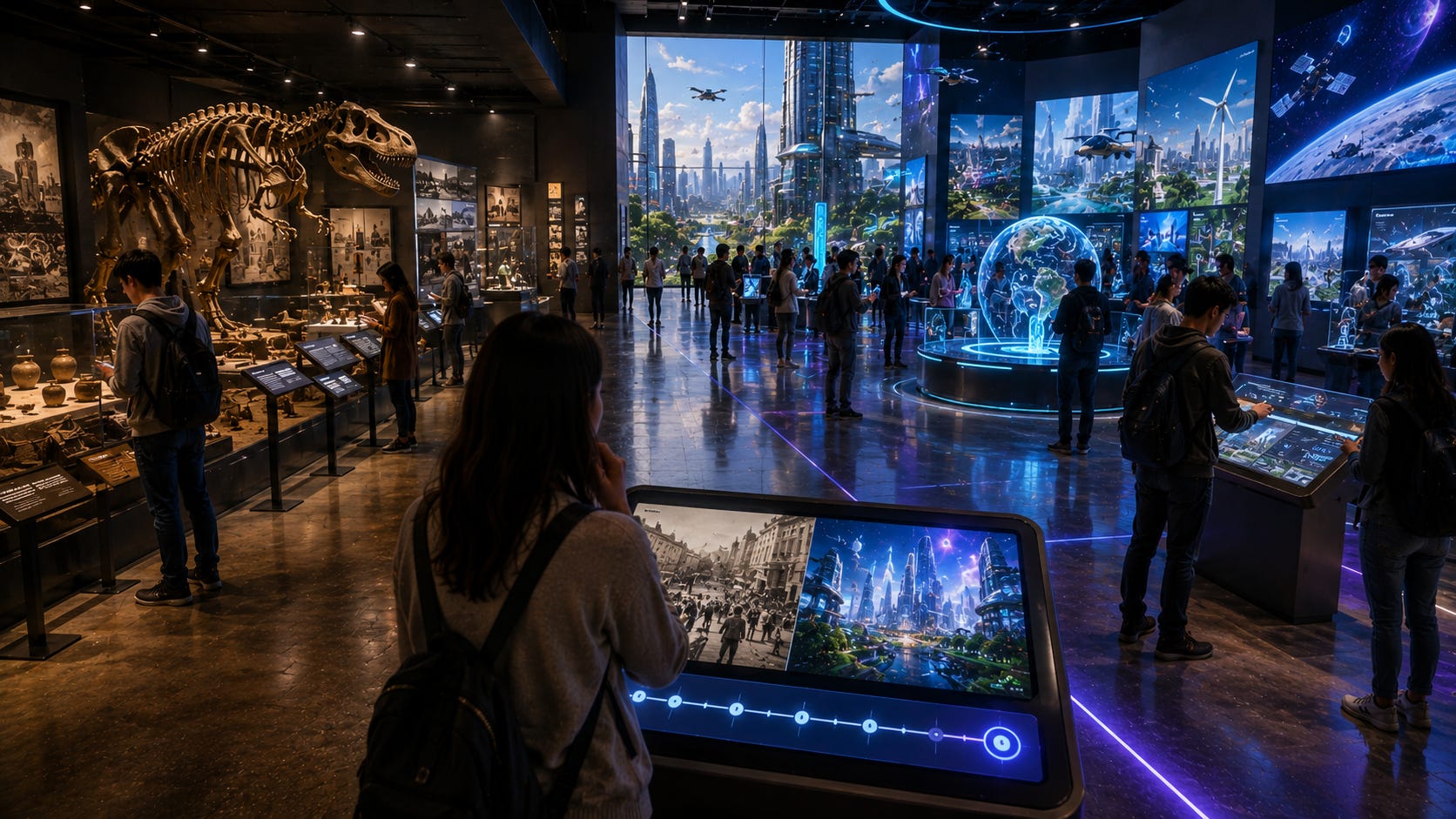
I made a related point in an earlier piece on the Museum of Future Inventions, describing a museum built not around static displays but around interactive halls where visitors don’t just observe emerging technologies but actively engage with them, because your vision of the future permeates virtually every decision you make in your life, and changing that vision changes the decisions that follow from it. That’s a strikingly different claim than anything a traditional museum can make. A history museum can inform you. A future museum can redirect you, because the moment you can vividly picture a possible tomorrow, you start making today’s decisions in service of reaching it, or in service of avoiding it.
This is the deeper argument for why future-facing museums carry more real-world value than past-facing ones. A past museum changes what you know. A future museum changes what you do next, because it gives you a felt, physical sense of a possibility you previously only encountered as an abstract headline.
This principle doesn’t only apply to physical technologies. In an earlier column of my own, I built out the Museum of Extinct Professions, walking through vanished jobs like switchboard operators and lamplighters, not primarily as nostalgia, but as a mirror for the reader’s own career, since walking past an extinct profession should make a modern worker ask which parts of their own job look like that headset. And in a follow-up piece, the Museum of Formerly Relevant Ideas took the same structure and pointed it at assumptions rather than jobs, arguing that the most useful exhibit in that museum is the one built from beliefs the visitor still personally holds, ideas that have already quietly expired but haven’t been taken down yet.
Notice the pattern across all four of these museums. Even when they’re framed around the past, like an extinct profession or a dead assumption, the actual value comes from turning the exhibit back toward the future: which of your current habits, beliefs, or job functions belongs on the next plaque? A museum about the past only earns its value when it’s secretly a museum about what’s coming for you next.
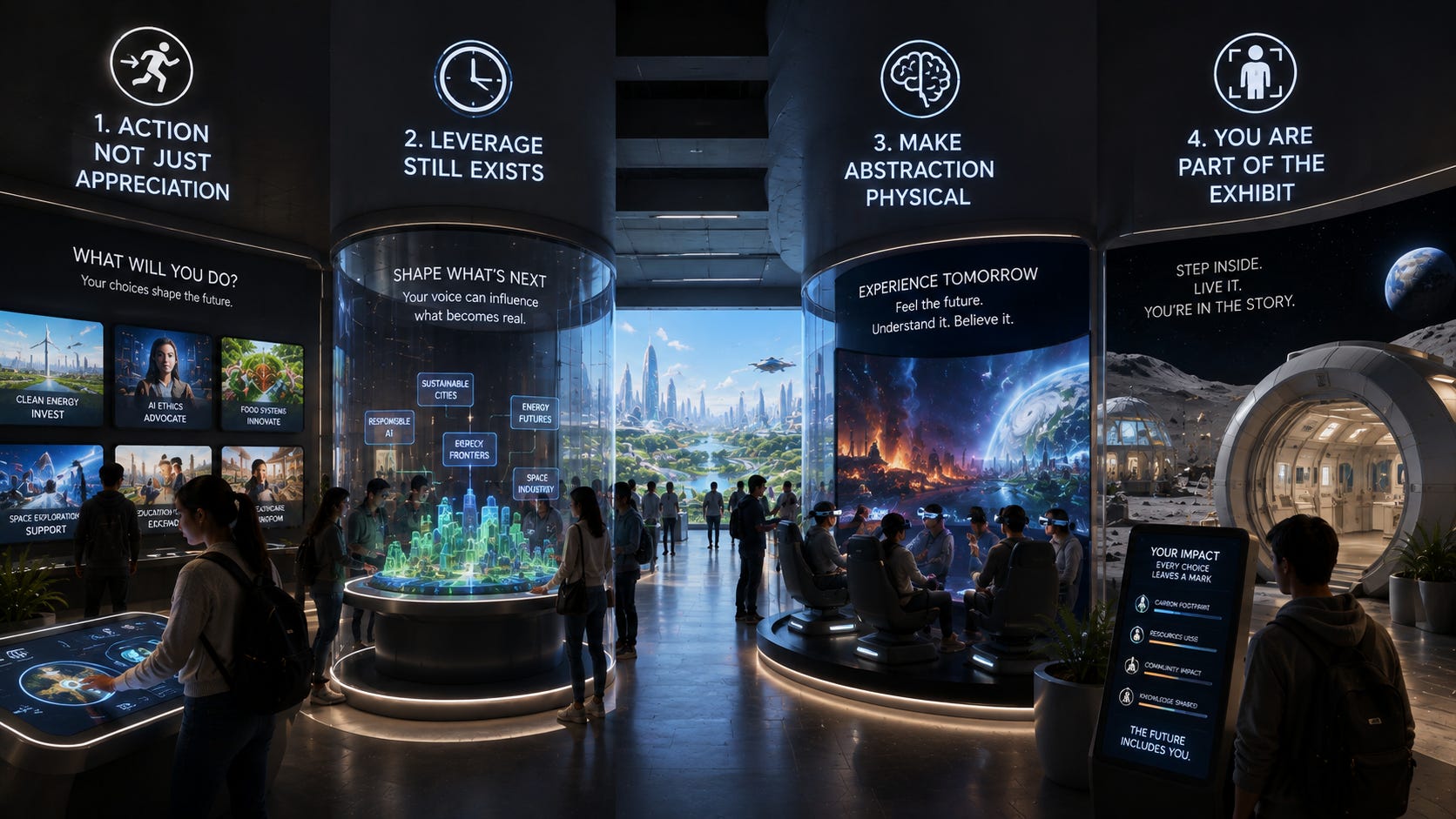
They generate action, not just appreciation. A visitor leaving a future-facing museum has a decision to make. A visitor leaving a past-facing museum has a fact to remember. Decisions compound into behavior change. Facts, on their own, usually don’t.
They arrive at the moment leverage still exists. Public understanding can still shape an unresolved technology, policy, or industry shift. It cannot retroactively shape something that already happened decades ago.
They make abstraction feel physical. The News-from-the-Future Theater concept, immersing visitors in vividly simulated future headlines, works precisely because abstract possibilities become emotionally real once they’re experienced rather than merely described.
They turn the visitor into part of the exhibit. A rocket behind glass excludes you by design. A full-scale lunar habitat you can walk through and sleep in, or an exhibit that quietly indicts your own outdated assumptions, implicates you, and implication is a far stronger motivator than admiration.
Here’s my prediction. As more institutions catch on to this distinction, the most influential museums of the next decade won’t be the ones with the most impressive artifacts from the past. They’ll be the ones brave enough to put an unfinished argument on display, the ones that hand visitors an active question instead of a settled answer, and trust them to walk out slightly changed by having wrestled with it.
A museum about the past can only ever tell you what already happened. A museum about the future can still change what happens next, and that, quietly, is the entire difference in value between the two. The trophy case preserves history. The test kitchen builds it, one visitor, one shifted assumption, one redirected decision at a time.
Futurist Speaker — The Museum of Future Inventions: A Journey Through the Technologies of Tomorrow
Futurist Speaker — The Space Settlement Museum
No posts
Comments
Nothing yet. Say the first thing.
Sign in to join the conversation.