
Just a reminder: I love it when people upgrade to a paid subscription. It makes me think very positively of them, and (briefly) myself.
As a rubric for understanding my upbringing, I can offer little better than the image of a 13-year-old version of me staying up late into the night, eating Parma ham sandwiches and binge-watching boxsets of the David Suchet Poirot series in the smaller of our two living rooms.
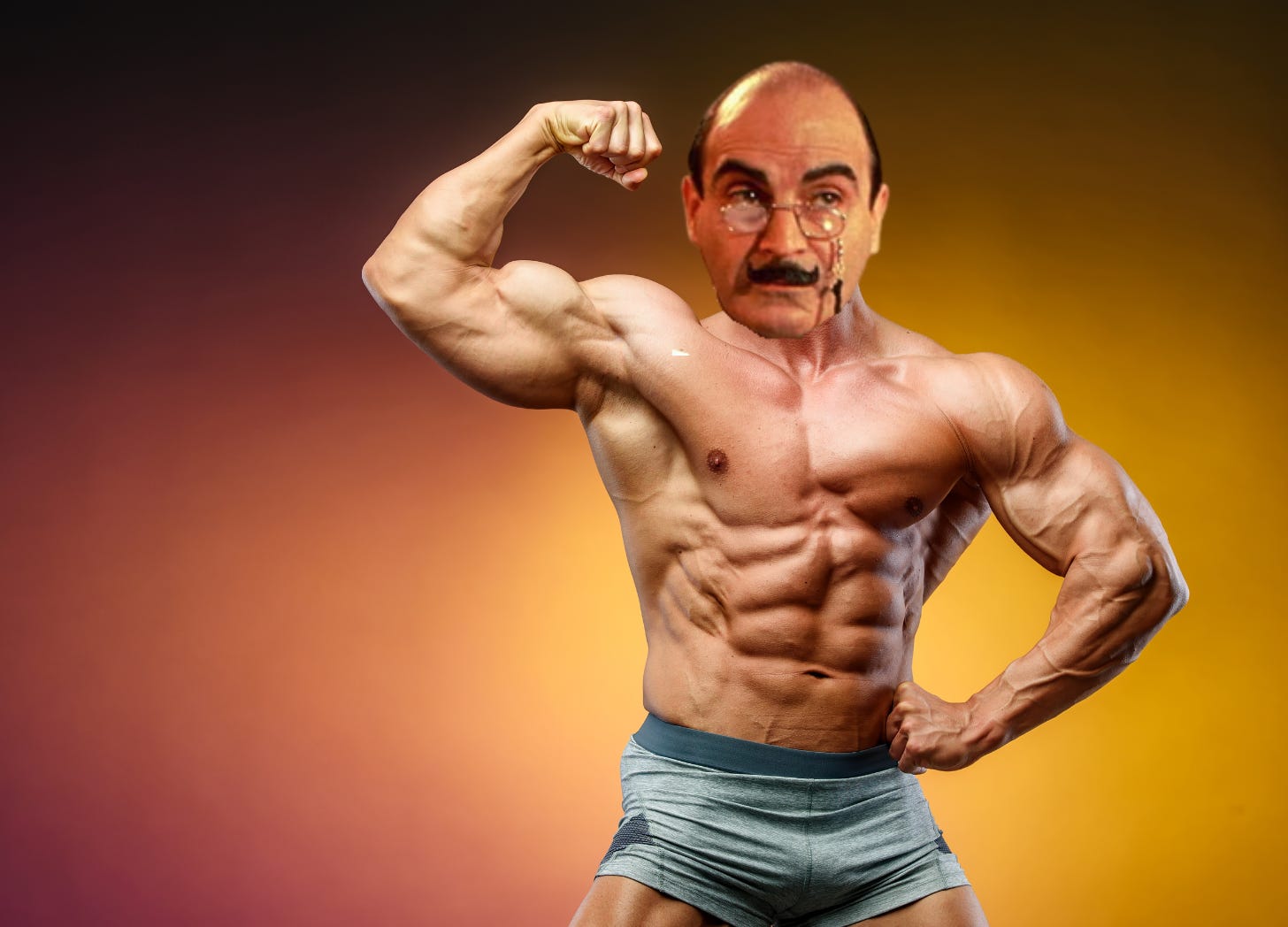
I adored that series. In part, because I was already a fan of the Poirot novels, which scratched an itch in my teenage brain (an itch that continues to be scratched: I am two thirds of the way through a systematic re-read of all those books). But also because it was so elegantly made, with attention paid to all the interwar details, and led by performances that showed a touching respect for the source material. It was (at its peak: it jumped the shark, rather, in its final few seasons) a self-deprecating, deeply reverential interpretation of Agatha Christie’s series. In David Suchet they had the perfect Poirot: he was small and round and cerebral and had wonderful, twinkling eyes.
This week the BBC announced that it would be commissioning a new TV show, Hercule, a look at the earlier years of the Belgian detective. “An intimate study of Hercule the man and an epic portrait of Britain between the wars,” according to the press release, the six-part series will star 33-year-old Edward Bluemel (who has made his reputation playing the “horny disaster” archetype in shows like My Lady Jane and We Might Regret This) as Poirot. It is hard to reconcile this actor with Christie’s own description of Poirot, from the first novel, The Mysterious Affair at Styles. “Poirot was an extraordinary looking man,” observes the book’s narrator, Captain Hastings. “He was hardly more than five feet four inches, but carried himself with great dignity. His head was exactly the shape of an egg, and he always perched it a little on one side. His moustache was very stiff and military.” These are not incidental details but the core of the character. Poirot is an outsider, a foreigner. He is famous within his world, vastly experienced, and never able to blend into the fabric of its universe. He is an unapologetically fastidious dandy, and that informs his sleuthing. He is not young, he is not sexy.
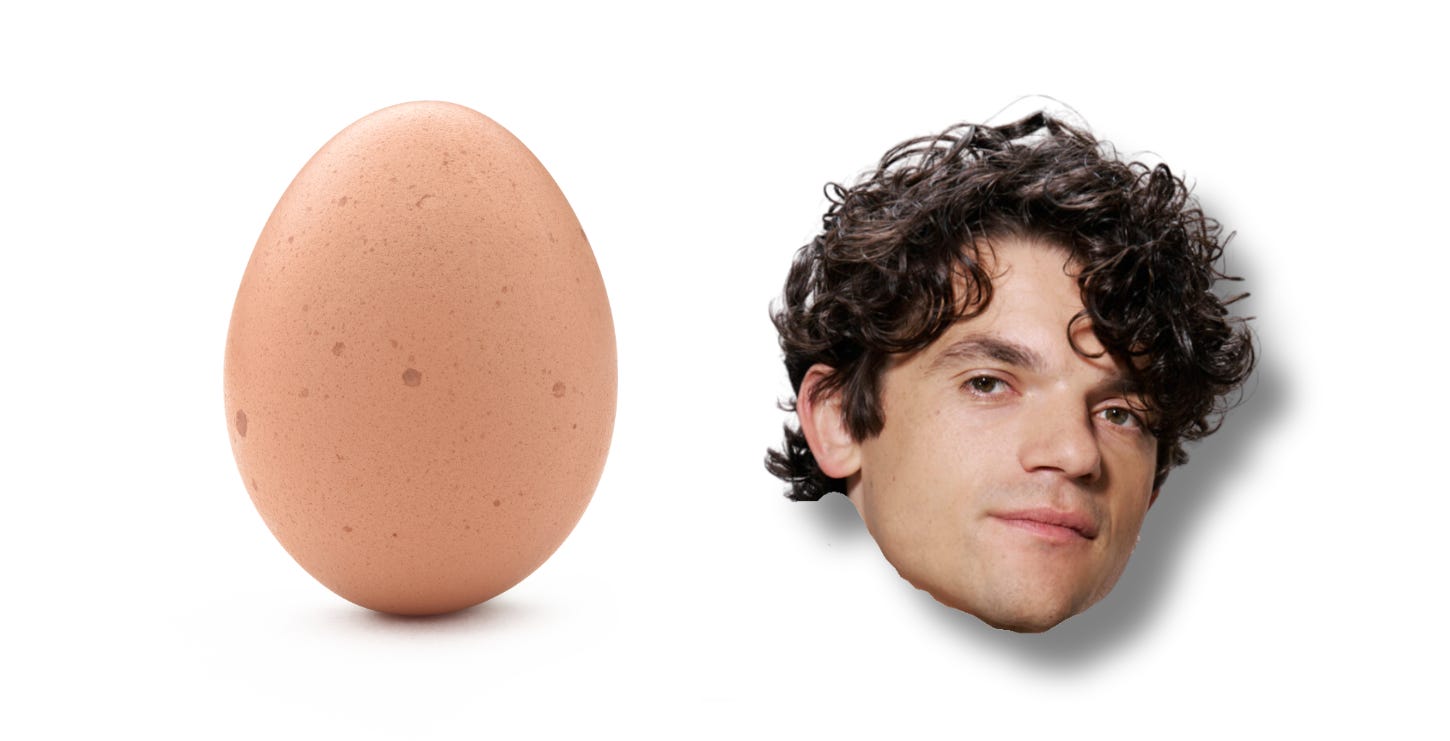
Now, I have nothing against Bluemel, who has been terrific in several shows I’ve enjoyed. But his casting raises a specific question: what’s the point? After all, the appeal of Poirot – to aficionados of detective fiction – is wrapped up in a characterisation that defies an easy origin story. The individual murder mysteries are a mixed bag (some are elegant, others are tortuous) but, as with any of the great detective series, they are unified by the protagonist. If you make Poirot young and sexy, you have denuded the character of its governing attributes. Why, then, would you not simply create a new detective, who could be young and sexy without carrying the baggage of misrepresenting a beloved character?
The answer, of course, is that we are living through the most regurgitative era in the history of art. At the American box office last year, 14 of the 15 highest grossing films were sequels or protractions of existing intellectual property (IP), from the video game Minecraft to comic books like Superman and Captain America. Many of the big new TV series this year have been derivative projects: The Testaments (Handmaid's Tale sequel), Detective Hole (reboot of Jo Nesbø’s series), Young Sherlock (rebook of Sherlock Holmes), Spider-Noir (comic book extension), A Knight of the Seven Kingdoms (Game of Thrones spin-off), etc. By far the most anticipated TV project this year is HBO’s hard reboot of the Harry Potter franchise, which is arriving around Christmas.
This is cultural stagnation, and it is caused by a number of industrial factors that make commissioners more risk averse. Declining cinema audiences led to a decline in the gross number of screens, which meant each screen had to make more money. The consequence? Cinemas programme the biggest, safest bets, squeezing smaller movies and meaning that studios don’t want to greenlight projects they feel won’t be able to compete for the limited multiplex space. Increasing competition from streamers – some of whom overspent for a decade and are now in belt tightening mode – means they want to attract audiences with familiar IP. The consequence? A bunfight for superhero projects or book adaptations or big archive properties. It creates a culture that demurs from experimentation, which looks the same year-on-year. And with the financial outlook in Hollywood, the British film and TV industry, and, dare I say it?, the rest of the entire world, looking a bit bleak, we can expect fewer creative risks to be taken in the coming months and years.
That’s cultural stagnation, and it’s been a trend for much of the 21st century. But the Hercule project represents, to me, a form of cultural decay. The reasoning behind the project is quite simple: people love Hercule Poirot, they know who he is, and therefore there’s an in-built audience for the show. Undoubtedly there are bods at New Broadcasting House who also hope that a younger, fresher take (why do people always use the word “fresh” to describe things aimed at Gen Z, as though anyone over the age of 40 is a rotting corpse) will appeal to new audiences. But what actually happens is that it leans on the reputation and prestige of the original Christie series, and then strips away the things that make Poirot distinctive. A 30-year-old, lean, athletic Poirot (undoubtedly the moustache will be retained, because moustaches are very “in” right now) is indistinguishable from the character whose fanbase is being gouged. Why call him Poirot at all? Why not introduce a fun new 1920s detective rather than bastardise an existing commodity? The answer, of course, is laziness and fear – the two adjectives that are destroying our art.
Comments
Nothing yet. Say the first thing.
Sign in to join the conversation.