
Priya had not planned to quit her job.
She had planned to finish the build, show it to a few people, maybe charge something small, and see what happened.
What happened was faster than she expected.
She was a senior engineer at a logistics company in London, five years in, good at the work, and pretty disconnected from what it actually produced. Most of her days went into maintaining systems that moved data between other systems that moved data. Nobody outside the company knew what she built, and nobody inside seemed to think about it much either.
She had started the AI project six months earlier: a pipeline that pulled weekly ad performance data from Google and Meta, ran it through an analysis layer, and emailed a plain-English summary to whoever connected their account.
Not a dashboard, and not another interface to log into and interpret. Just an email, every Monday morning, that told you what happened last week, what to watch, and what to do differently.
She had built it for herself. She ran two small affiliate sites and spent more time reading ad reports than acting on them. She wanted the insights without the reading.
By the time she had it working locally it was doing exactly what she wanted.
She deployed it on a Thursday evening.

(How it feels writing this fictional crap at 12:37 AM on a part-time job that pays in "experience.")
She had been avoiding it for two months.
In her head it was a project. Configure infrastructure. Manage servers. Handle scaling. Write deployment pipelines.
In reality it was a render.yaml, a GitHub push, and forty minutes of watching Render provision everything she needed.
Web service. Worker service. Cron job. Postgres database.
She set the cron to run every Monday at 7am. Render would wake the scheduler, fetch all connected accounts, queue a report job for each one, fire the worker, generate the analysis, send the email.
She pushed at 9:47pm.
By 10:30pm the pipeline was live.
She added her own Google Ads account as a test client, set the email to herself, and went to bed.
(Deadpool prediction: Nothing good has ever started with "Monday morning." Except this.)
She woke up to an email in her inbox. Not from a person. From her own system.
Subject: Weekly AI Report: Priya’s Test Account (week ending 27 July)
She opened it on her phone before getting out of bed.
Summary. Key trends. Three anomalies flagged. Four recommended actions ranked by expected impact.
It was good. Not “good for an automated report.” Just good, the kind of analysis she would have spent forty minutes producing manually and still felt uncertain about.
She read it twice.
Then she texted her friend Demi, who ran a small e-commerce brand and spent every Sunday manually reviewing her Meta ad performance.
“Can I show you something?”
They met for lunch that day.
Priya showed Demi the email on her phone.
Demi read it. Read it again. Asked if it was real.
Priya said yes. Showed her the system. Showed her the Monday send. Showed her that it had already run once, automatically, without Priya doing anything.
Demi said: “How much?”
Priya had not thought about pricing. She said £200 a month.
Demi said: “For this? That’s nothing. Set me up today.”
Priya connected Demi’s Meta account that afternoon. Added her to the clients table. Set the recipient email. That was the entire onboarding.
She skipped the signup flow and the payment page, and just invoiced Demi manually through Stripe, then set up a recurring payment.
£200 a month. First payment processed that evening.
She stared at the Stripe notification for a long time.
The money was not the thing that hit her.
The thing that hit her was that she had not done anything to earn it.
She had built the system, deployed it, gone to bed, and woken up to find the system had done its job. Now someone was paying her for that job, on a recurring basis.
She had not logged in, checked on it, or been anywhere near it when it ran.
The system had just worked.
She had spent five years at the logistics company building systems that worked. The difference was that those systems made money for someone else. This one made money for her while she was asleep.
She knew, sitting there looking at the Stripe notification, that something had changed permanently.
She didn’t announce the product, post about it on LinkedIn, or write a launch post of any kind.
She showed it to people she already knew who had the problem.
A friend who ran a small Google Ads consultancy. A former colleague who had just started an e-commerce side business. A cousin who managed paid social for a restaurant group.
Every conversation went the same way. She showed them the email. They asked how much. She said £200 a month. They said yes.
She onboarded each one the same way. Add to the clients table. Connect their ad account. Set the recipient email.
Ten minutes per client.
Six weeks after deploying, she had seven paying clients.
£1,400 a month, recurring and automatic.
The pipeline ran every Monday at 7am. Seven emails went out. Seven clients received analysis they would otherwise have spent hours producing.
Priya did not touch the system.
Seven clients was not life-changing money.
But it was enough to see the trajectory clearly.
She had seven clients after six weeks of telling nobody. She had spent nothing on marketing. And she had no churn, because the product delivered value without asking anyone to change their behaviour: the email just arrived every Monday and did its job.
She did the maths on a Tuesday afternoon in a meeting she was not paying attention to.
At ten clients she would cover her rent. At fifteen she would match her take-home salary. At twenty she would exceed it, with a system that required maybe two hours of maintenance a week.
She was at seven after six weeks of barely trying.
She handed in her notice the following morning.
Not because the numbers guaranteed it would work, but because she understood, clearly and for the first time, what she had actually built.
Not a side project or a tool, but a business that ran on its own infrastructure, delivered value automatically, and grew without her having to be present for every step.
Priya was not exceptional.
She was a senior engineer who understood async architecture. She knew how to structure a pipeline. She had built backend systems before.
What she had not done before was deploy something that belonged to her: something where the upside went directly to her, not to a company she worked for.
The technical gap was smaller than she had imagined. The infrastructure gap was even smaller once she stopped treating deployment as a future problem.
The stack that ran her business:
A Render web service that handled account connections and API calls.
A Render worker that executed report generation without blocking on HTTP.
A Render cron job that fired every Monday at 7am and queued a job for every active client.
A Render Postgres database that stored clients, reports, and job logs.
Groq and LLaMA 3.3 70B for the AI analysis, on the free tier, fast enough for production.
Resend for email delivery, on the free tier, which covered her first thirty clients.
Total infrastructure cost at seven clients: effectively zero. Render’s free tier handled the load. She upgraded Postgres to the paid tier at £15 a month when she hit ten clients.
Her only real cost was the time she spent building it, mostly evenings over three weeks, plus the forty minutes it took to deploy on a Thursday night.

( Daddy Deadpool Guidance for you all )
You can follow every step in this series and build the exact same stack Priya built.
The code works. The architecture is sound. Render handles the infrastructure. The AI analysis is genuinely useful.
What a tutorial cannot give you is the moment you look at your Stripe account on a Monday morning and see a payment that arrived while you were asleep.
The infrastructure exists, the tools are free, and the AI layer is accessible to anyone who can write a fetch call.
The only question is whether you build the thing.
CLAIM YOUR FREE $25 IN RENDER CREDITS
The entire stack Priya built runs on Render. Web service, worker, cron job, Postgres. Everything.
Sign up for Render using the link below.
Go to your Render Dashboard and log in with your email.
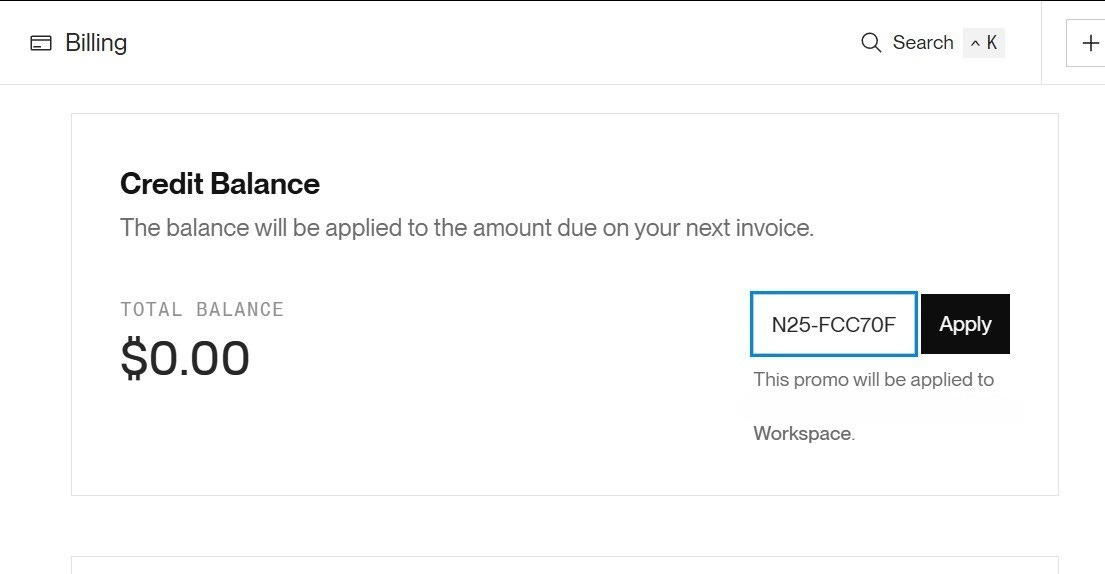
Open a new tab and claim your code here: 👉 CODE LINK
Back inside Render go to: Billing → Add Credits → Redeem Code
Paste your code. Credits appear automatically.
Takes two minutes. Valid until 2027.
Four issues. One complete arc.
July: Build and deploy an async AI agent. Background workers, job queues, no more HTTP timeouts.
July: See what a deployed product does that a localhost demo never can. A real URL closes clients that a Figma mockup never will.
August: Automate the entire pipeline. Cron jobs, scheduled delivery, a system that runs every week without human input.
August: What happens when all of it is running and someone pays you for it while you are asleep.
The technical foundation is complete.
The rest is execution.
ONE THING DADDY DEADPOOL WANTS FROM YOU

I do not sell courses. I never have.
What I want is for every engineer reading this to have built something that generates income without requiring them to be present.
You have the stack. You have the architecture. You have seen what it looks like when it works.
Maximum effort. Minimum babysitting.
The next step is yours.
👉 Claim your $25 and build the thing
FINAL NOTE
This issue is sponsored by Render.
I only work with tools I actually use and would recommend to the 188,000 engineers reading this.
📩 If this landed in Promotions, drag it to Primary.
No posts
Comments
Nothing yet. Say the first thing.
Sign in to join the conversation.