
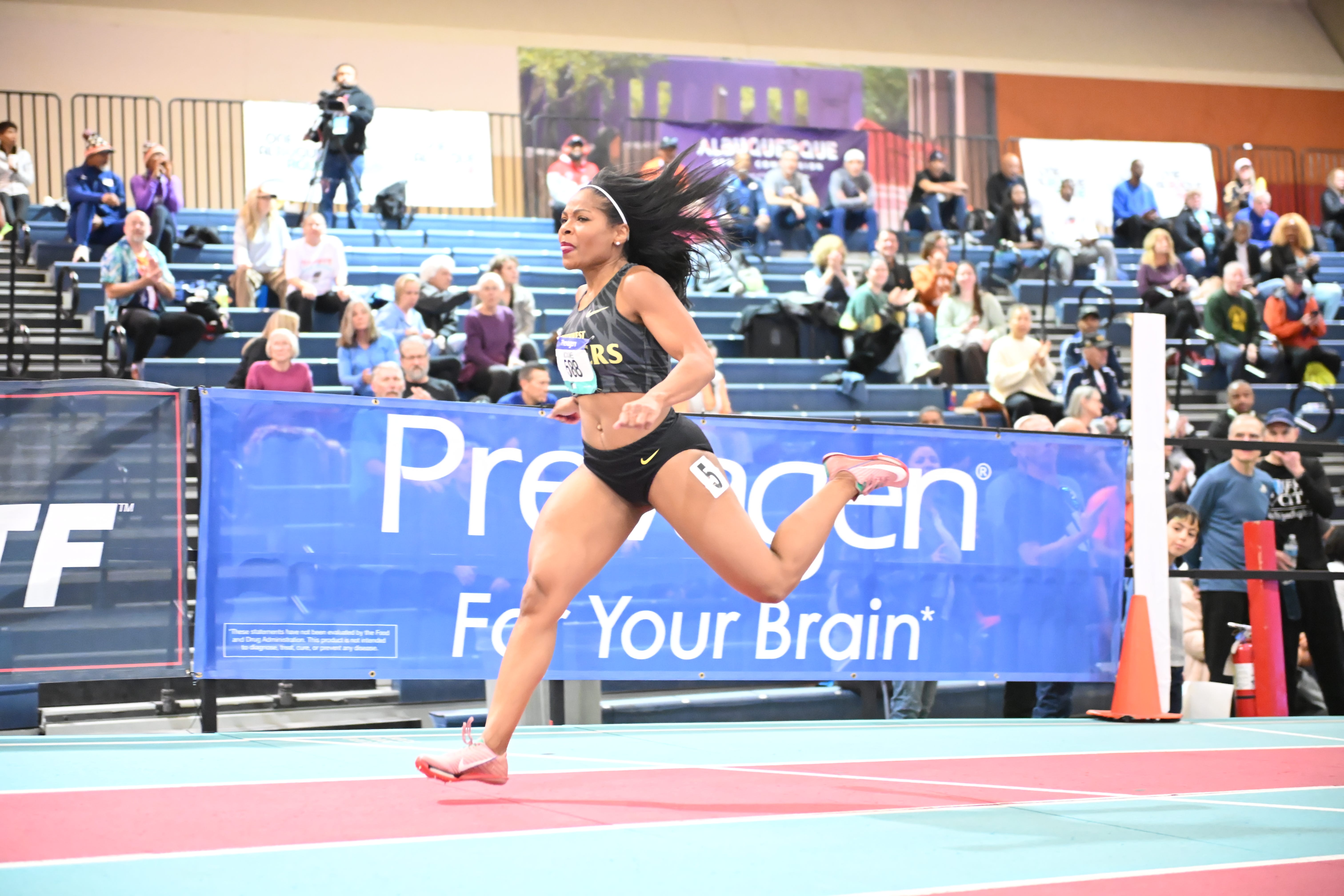
Cynthia McNamee isn’t your typical superager. She’s missing the crown of silver hair. Fewer wrinkles, too. Her muscles bulge. She looks and moves like someone in her prime.
McNamee is just 50.
Research and news on superagers reveal people in their 80s, 90s and 100s enjoying unusual health. I’ve written these stories, admiring how thriving seniors counter assumptions about inevitable atrophy and slippage due to aging. With slower declines, they stay healthier longer, saving themselves, their families and society the hardship and healthcare costs of drawn-out illness.
But this same misunderstanding—that we’re all destined for constant deterioration—is even more misplaced for middle-aged people. While many in their 40s and 50s do experience a steady dip, it’s not dictated by biology. With favorable conditions and evidence-based behaviors, midlifers can do more than slow decline. They can make sizable improvements in health and performance. Such trajectories point to a different definition for superaging.
What “masters” athletic events show us
In masters competitions for people ages 25 to over 100, records have been falling in recent years, and older age groups are seeing larger improvements than younger ones. Better performance is enabled by evidence-based training, alongside growing participation and a deeper pool of competitors compared to previous decades. Science may be raising the ceiling on what’s possible.
As a middle-aged sprinter, McNamee set the indoor U.S. record for her age group in the 200 meters at 26.10 seconds and the world record for 60 meters at 7.93 seconds. These times could win high school varsity heats and flirt with collegiate qualifying standards. McNamee’s peak speed is 20 mph, meaning each foot touches the ground as briefly as a camera flash while propelling her 7 feet forward.
So … not bad for 50. Or, really, for someone being chased by a bear.
Her strategy for snatching masters records? “I’ve been getting faster as I get older,” she told me. Sounds simple enough, but the following nuances have been key to McNamee’s midlife improvement.
Specialize later
I’ve interviewed dozens of people still thriving in old age. Almost all stayed physically active throughout life, which helps explain their longevity. Typically they focused on a sport that made exercise fun.
What’s more interesting? Many didn’t play their chosen game in young adulthood. They were active in other ways in their 20s and 30s, until they discovered their passion around midlife—often right before a significant aging milestone.
McNamee dabbled in track and field in high school and junior college. But as a young adult, she was a self-described gym rat focused on lifting. Right before her 40th birthday, at 39, she grew bored of that routine. “My motivation was decreasing,” she says. “I asked myself, when was the time I felt best in my body?”
She reached out to her old track coach, who introduced her to competitions open to middle-agers. That led to her participation in masters events run by USA Track & Field. “From there, I got the bug,” she says.
Middle-age specialization may be more beneficial than pursuing the same activity when younger, since people are less likely to burn out psychologically. You also spare your joints and tendons from the same repetitive impacts over many decades. McNamee has stayed mostly injury-free, and she wonders if the wear-and-tear she avoided in her 20s and 30s has helped.
Cultivate community and get competitive
Aside from group classes, McNamee was somewhat solitary at the gym, whereas at masters events, “I met so many lovely people,” she says. “I was thrilled to find a different community of upper-aged people who were like-minded and into this level of fitness.”
They also fire her up. “The folks in the community keep me coming back to the events, but I’m also competitive by nature.” That’s especially true when competing with younger runners. Outside the masters events, in local competition, she can go against people in their 20s. “I’m still winning heats against college kids.”
They’ve started calling her Benjamin Button. (Brad Pitt’s version did not, to my knowledge, run 60 meters in 7.93 seconds.) “It’s happening the opposite way,” she says. “I’m getting faster the older I get.”
Cross-train and periodize
McNamee has improved her times over the past decade by training more strategically. That means adding other workouts besides running, while keeping her overall training volume the same.
She recently integrated cycle classes to maintain cardio and endurance without overdoing it on the track. In the winter period away from the track, she focuses on the cycle classes four days per week. This high-intensity interval training pays off when she resumes track workouts. “I’m amazed what kind of shape I’m still in,” with less muscle burn, she says.
An important part of mixing things up is strength training—not just traditional weightlifting but functional moves like sled pulls, VertiMax, cleans, and hang cleans. The added strength supports her on-track explosiveness. It also compensates for the decline in musculature that otherwise begins in middle-age. (If you haven’t strength-trained for years like McNamee, start slow before trying intense full-body moves.)
Use evidence-based supplements
McNamee is open to a few supplements backed by research (not the ones backed by shirtless men yelling at you on Instagram). They include creatine, which she takes before strength training.
Collagen is a supplement she added to her regimen four years ago. Compared to creatine, there’s less evidence supporting collagen, but a recent review spanning nearly 8,000 patients found “clinically meaningful” benefits for bone and muscle health. Previously, researchers reported less joint pain.
McNamee also takes an omega-3 supplement. As with collagen, evidence for here is mixed, but some research suggests omega-3s support aspects of healthy aging, recovery and muscle function.
Recover
McNamee relies on optimal sleep—a pillar of recovery after tough workouts.
She also engages in regular ice baths, massages and stretch therapy, which may further assist recovery and injury prevention.
Organize for success
It’s challenging to figure out what works on the individual level. So McNamee keeps a thorough diary of her training and competition results. “I can see my times actually getting faster, particularly in the 100 and 200 meters,” she says.
She’s used this same approach to assess other aspects of health—for instance, tracking sleep for months to find her optimal number of hours per night.
Streamline health
If you reinforce your interest in health with other areas of life, it may be easier to fully engage in a healthy lifestyle.
McNamee has aligned her health interests with her career working as a paralegal in medical malpractice defense. The role allows insight into factors affecting health outcomes—including long-term neglect of physical health.
McNamee likes how the job dovetails with her activities outside work, rather than stovepiping them. “A lot of people get stuck focusing on their careers and put health on the back burner,” she says, “but declining health might prevent them from enjoying the fruits of their labor.”
With family, too, McNamee has found efficiency. She nurtured her kids to be active, leading to their participation on school track teams. As young adults, they follow mom’s competitions and have their own healthy lifestyles. “I’ve tried to be a great example to them,” she says.
Be proactive—and creative
McNamee thinks the main ingredient to becoming faster as a master—and healthier—is being proactive. “I’ve tried to get ahead of issues before having them,” she says. “I want to see what this body can do now and at any age.”
Part of being proactive is preventive screening. Her healthy lifestyle is inspired by her mother passing away from ovarian cancer when McNamee was 18. “It was the most devastating experience in my whole life,” she says. “So I really advocate not just fitness but keeping up with your annual visits, mammograms, colonoscopies and other screenings.”
Another way to be proactive is “going against the grain and trying new things,” she adds. “Don’t go overboard, but see how far you can challenge yourself. Track is my creative way to stay fit. I plan to do it as long as God allows.”
No posts
Comments
Nothing yet. Say the first thing.
Sign in to join the conversation.