
The two types of law are criminal and civil. You probably already know this, but we’re starting here because there’s still a bit of confusion around. Here’s an example from last week.
Anthropic has accused Chinese ecommerce giant Alibaba of obtaining illicit access to Claude by creating fake accounts designed to access the AI model which the American company does not offer to Chinese groups.
In a letter to Congress, Anthropic said Alibaba had conducted the “largest campaign to illicitly extract Claude’s capabilities”. It said the Chinese company used 25,000 fraudulent accounts to generate more than 28.8mn exchanges with Claude, which it said was a violation of its terms of service.
In the US, fraud can be a criminal charge. There are mail fraud, wire fraud, securities fraud, that kind of thing. There’s no violation-of-a-terms-of-service fraud, though even here the boundaries can blur between what’s civil and criminal. The Feds can be called to investigate allegations of false representation for financial gain, abuse of position, etc.
Is that what might be happening here?
“Alibaba’s campaign targeted some of Claude’s most valuable capabilities, such as agentic reasoning, software engineering, and long-horizon tasks,” Anthropic wrote in a June 10 letter to the Senate Banking Committee.
…. Also known as the Senate Committee on Banking, Housing and Urban Affairs. There’s not much in the letter about banking or housing, so presumably it’s addressed to the Committee’s urban affairs function: economic stability, national security, all that jazz. What exactly does it say?
Anthropic urged Congress to “close loopholes allowing PRC [People’s Republic of China] AI labs to access advanced US chips, and penalise PRC labs responsible for distillation attacks”, according to the letter, which was obtained by the FT.
Chip exports? Bit of a tangent, but fine. Everyone’s jittery about chips, particularly members of national security committees. But “penalise PRC labs responsible for distillation attacks”? For which crime?
In 2014, when TGI Fridays faced a distillation attack on its offer of unlimited mozzarella sticks, no one called on Congress to penalise Gawker. That’d be daft. Unlimited mozzarella sticks were legally obtained, having been offered in a private contract between parties on defined and de facto terms of service. And, even if we assume chatbots are of greater importance to US national security than full-service casual dining franchises (a debatable point), it’s still a leap to argue that eating all you can eat at an all-you-can-eat buffet qualifies as criminally fraudulent misrepresentation. Should it matter that the buffet does data not shrimp? Either way, it’s a terms-and-conditions thing, right? People can’t be arrested for tokenmaxxing. Not yet.
In related news:
Spotify has removed more than half a million streams of a song that shot to number one in its US chart after discovering that the surge in streaming coincided with a jump in suspicious wagers on prediction market Kalshi.
US streams of “Earrings”, an indie-pop track by singer-songwriter Malcolm Todd, rose almost 70 per cent between Sunday and Monday on Spotify. That propelled the song, first released in 2024, to number one on the platform’s daily US chart.
In the preceding week, traders on Kalshi had been pricing only around a 2.5 per cent probability that Todd would have a number-one song on Spotify USA before the end of June.
This one invites bigger questions than “who is Malcolm Todd?” For one: why would anyone bet on Spotify weekly streaming charts?
Probably, the punter believes they have an informational edge. Their edge might be an awareness of the very long history of spoofing music charts; or it might be because they have a bot farm that does Spotify spoofing.
The obvious follow-up question — why would anyone take the other side of such a bet? — has a few possible answers. Maybe they’re stupid? Or maybe they’re actually a liquidity algorithm that’s programmed to play percentages on any real-money retail wager across any market, even the silly ones? Or, maybe, the counterparty anticipated an intervention by Kalshi, or Spotify, or possibly even a regulatory authority? The ways they could’ve anticipated this are numerous and represent another sort of informational edge.
Is anything going on here potentially criminal? Certainly not at a top level, let’s be clear. Kalshi is a US bookmaker for commodity futures, not gambling. What it does is legal, apparently, even though what its customers do is very obviously gambling.
Insider trading? Ehhhhhh, complicated. The Commodities and Futures Trading Commission can’t by itself bring criminal charges and, lately, any powers it has to bring civil actions have been considered ceremonial.
That leaves payola. Seriously, there’s precedent. In March, a North Carolina man pleaded guilty to conspiracy to commit wire fraud after using bots to stream his AI-generated songs. His scheme was more straightforward — extract royalty payments from the streaming services — but, if it can be proved that bots were playing Malcolm Todd’s indie-pop track “Earrings” to win a bet, the same principle should apply.
Wire fraud is the power pill of American law. So long as a financial scheme moved forward with the assistance of communications by a wire, it can be a crime. Wire fraud can legitimately describe playing Spotify streams under false pretences for profit.
Maybe it can also describe running Claude prompts for profit?
Playing lots of songs without listening to them can lead a person to the perp walk. Maybe the same can be true of trying to get too much information from a large language model? Or for the wrong types of information? Or for seeking to use that information for that wrong type of gain? Or something? Wanting a criminal ring-fence around any potential productivity benefit AI might offer feels weird as a principle, but case law often does, so maybe we can’t blame Anthropic for trying.
○ A look at the lessons that prediction markets might take from what horse racing has and hasn’t done about insider betting.
○ The quants have been creaking again.
○ What the collapse of software-as-a-service company Medallia reveals about the private credit industry.
○ How the ‘oil price’ isn’t always the oil price.
○ Monitoring the tone and delivery of execs on earnings calls for profit.
○ What Maslow’s hierarchy of needs can sort-of tell us about European stocks.
○ Just two universities dominate the British spinout ecosystem; you can probably guess which.
○ Strategy has a new bitcoin treasury strategy: Instead of holding, it’s selling.
○ Short-term repo financing for equity positions has climbed sharply.
○ Will AI’s rollout echo the industrial revolution, meaning productivity per worker improves while living conditions stagnates?
○ The SpaceX bond sale didn’t go too well.
○ A World Cup prediction scorecard update.
○ Asterisk magazine looks at the failings of randomised controlled trials.
○ The fragility of semi-liquid private credit funds is a paper on SSRN.
○ Matt Stoller’s BIG does egg Libor.
○ The Value of Nothing gets to the nub of Great Britain’s ‘picky bits’ problem.
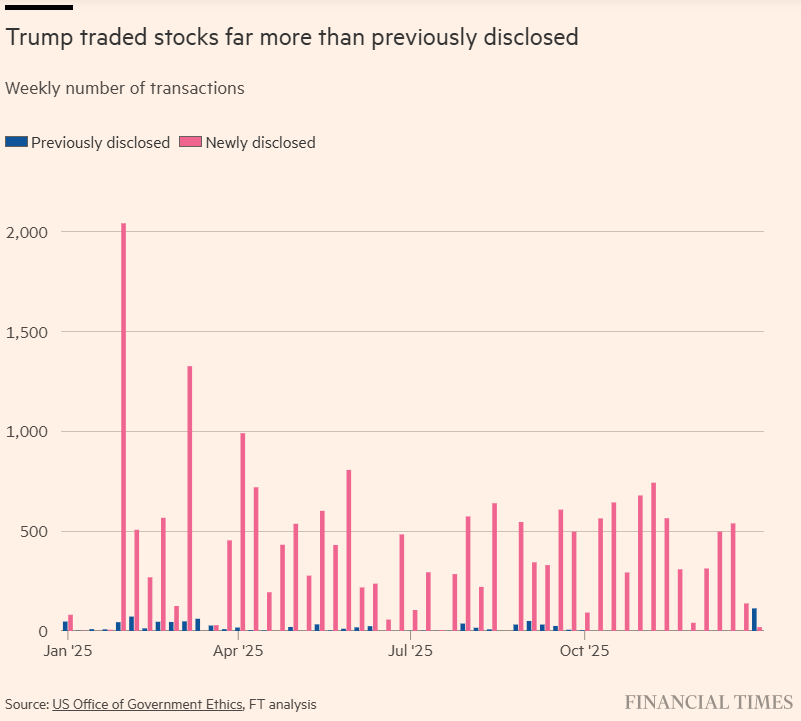
○ That Donald Trump really compulsively trades stocks is one of the five things we learnt from his latest financial disclosure.
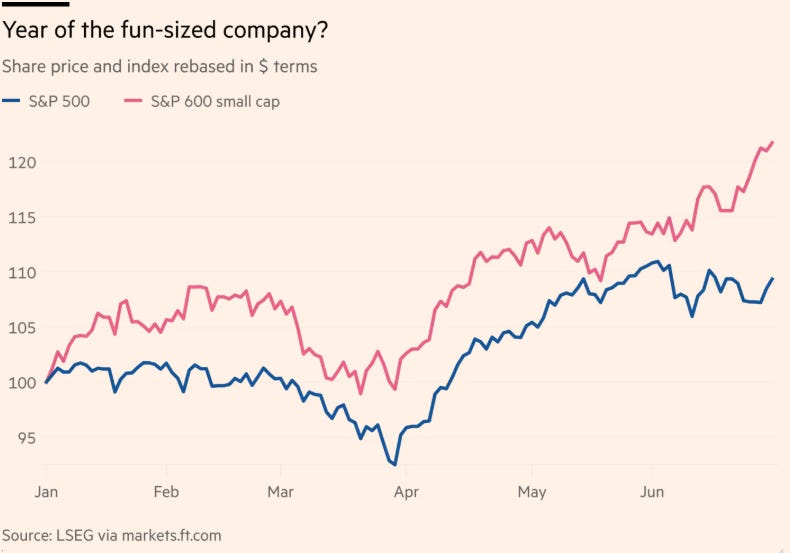
○ Unhedged’s half-time review highlights that it’s been easier for small caps to become large caps.
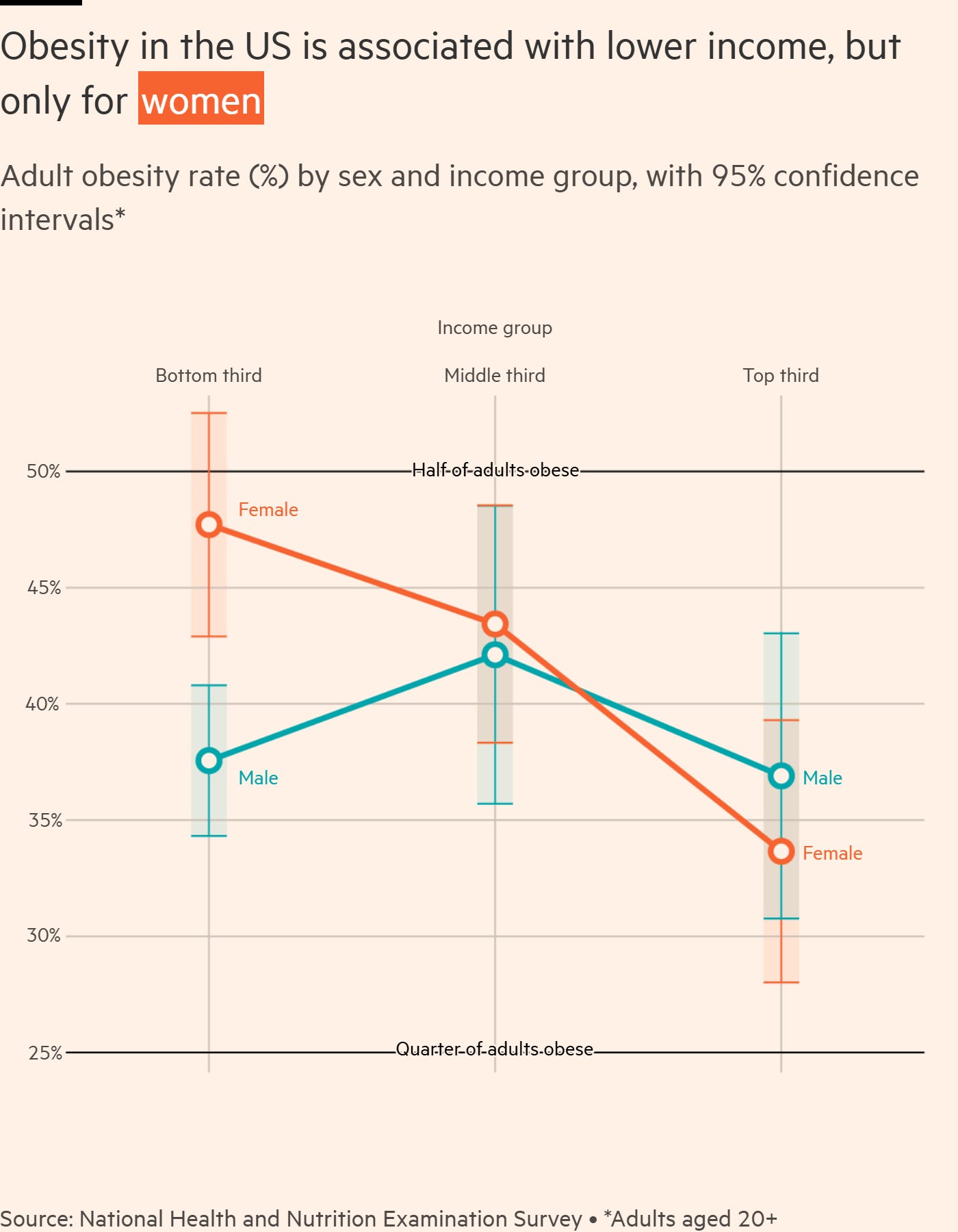
○ Soumaya Keynes is essential reading on the economics of women’s weight.
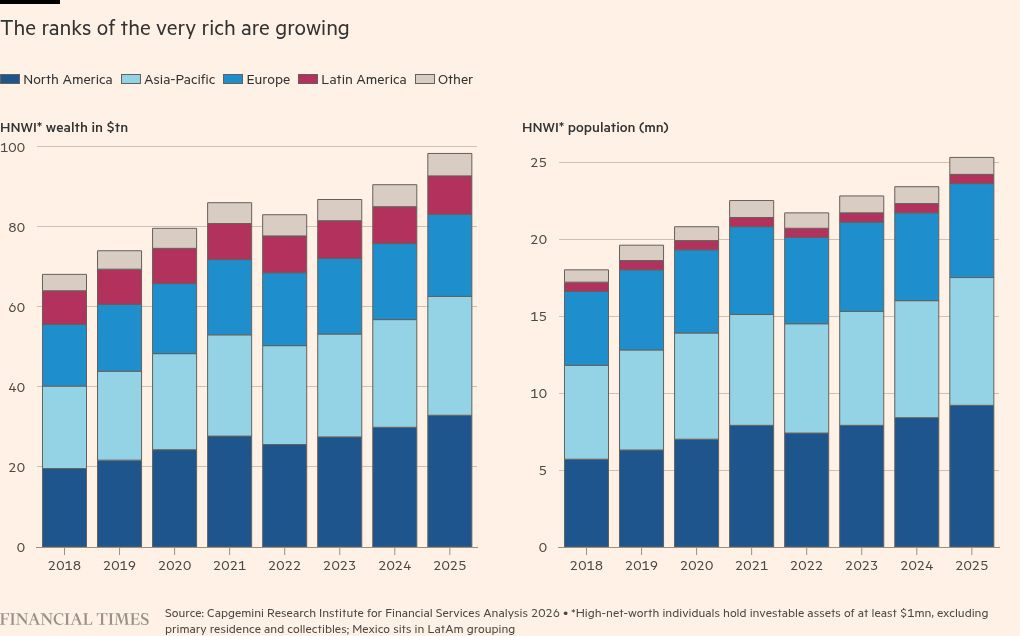
○ Rich kids are inheriting their rich parents’ wealth. And, worryingly for wealth advisers, the kids don’t seem that enthusiastic about the latest developments in offshore multi-family offices and tax-avoidance vehicles.
No posts
Comments
Nothing yet. Say the first thing.
Sign in to join the conversation.