
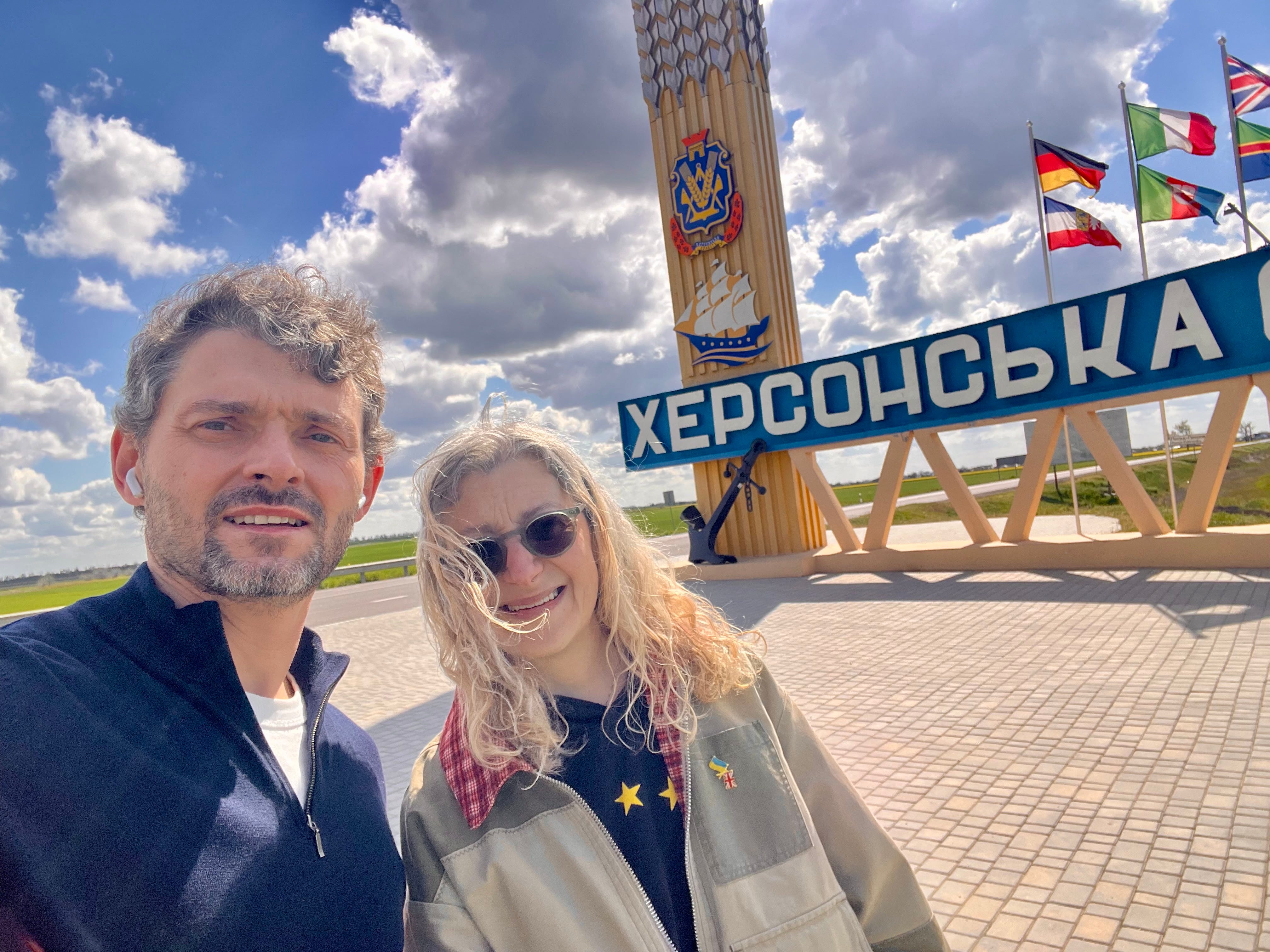
Now if you set out to drive five hundred miles across Ukraine, accompaying a lorry carrying life-saving equipment, you can guarantee that it won't all go according to plan. Although you can guarantee that Ukrainians will find a way to make it succeed, regardless.
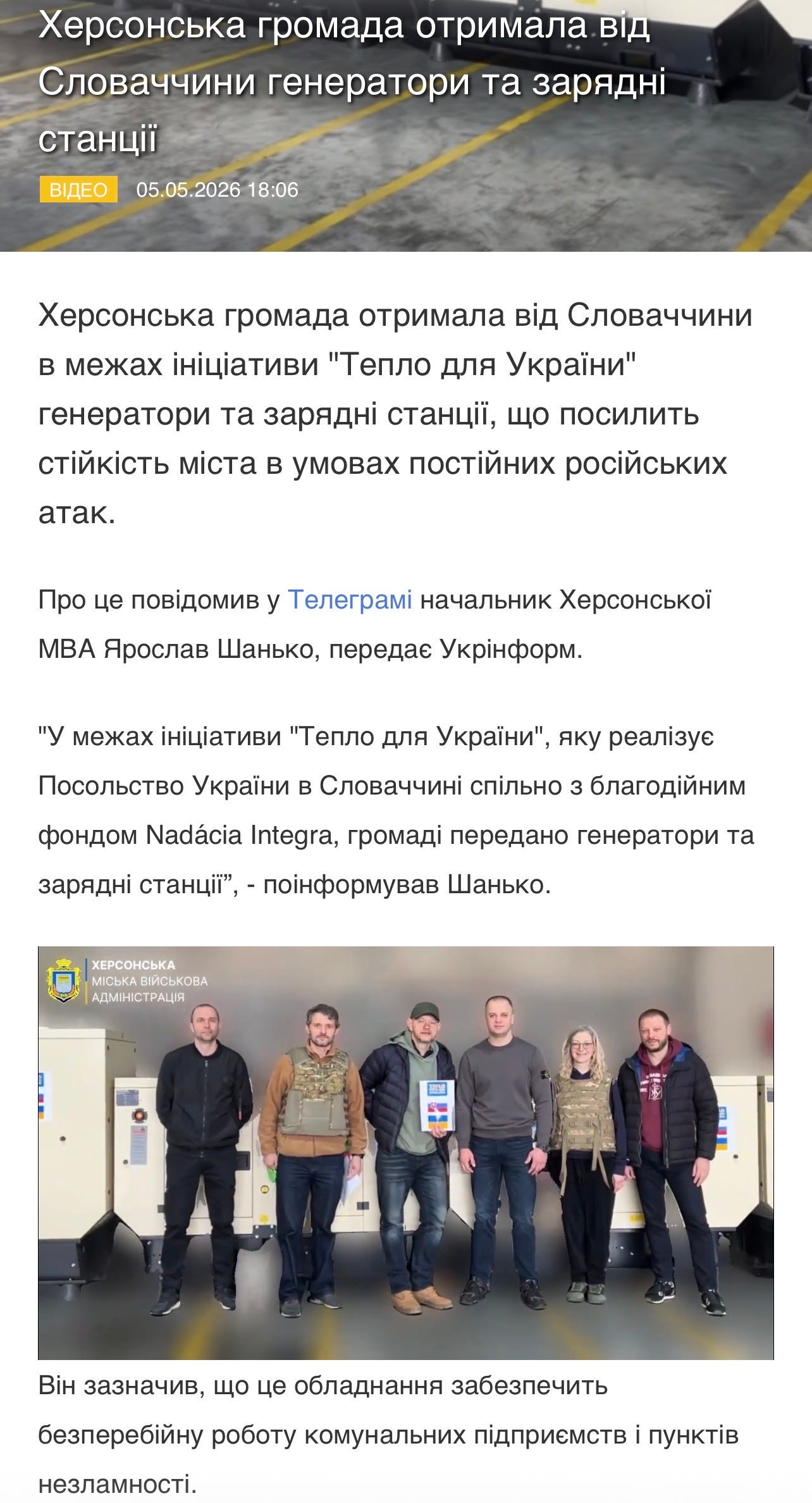
I joined Andriy Yukymenko, a journalist turned pastor, along with his brother and our friend Oleksii Kolchanov on a delivery of high capacity generators, power inverters and battery units to the authorities in Kherson, organised by the Integra Foundation.
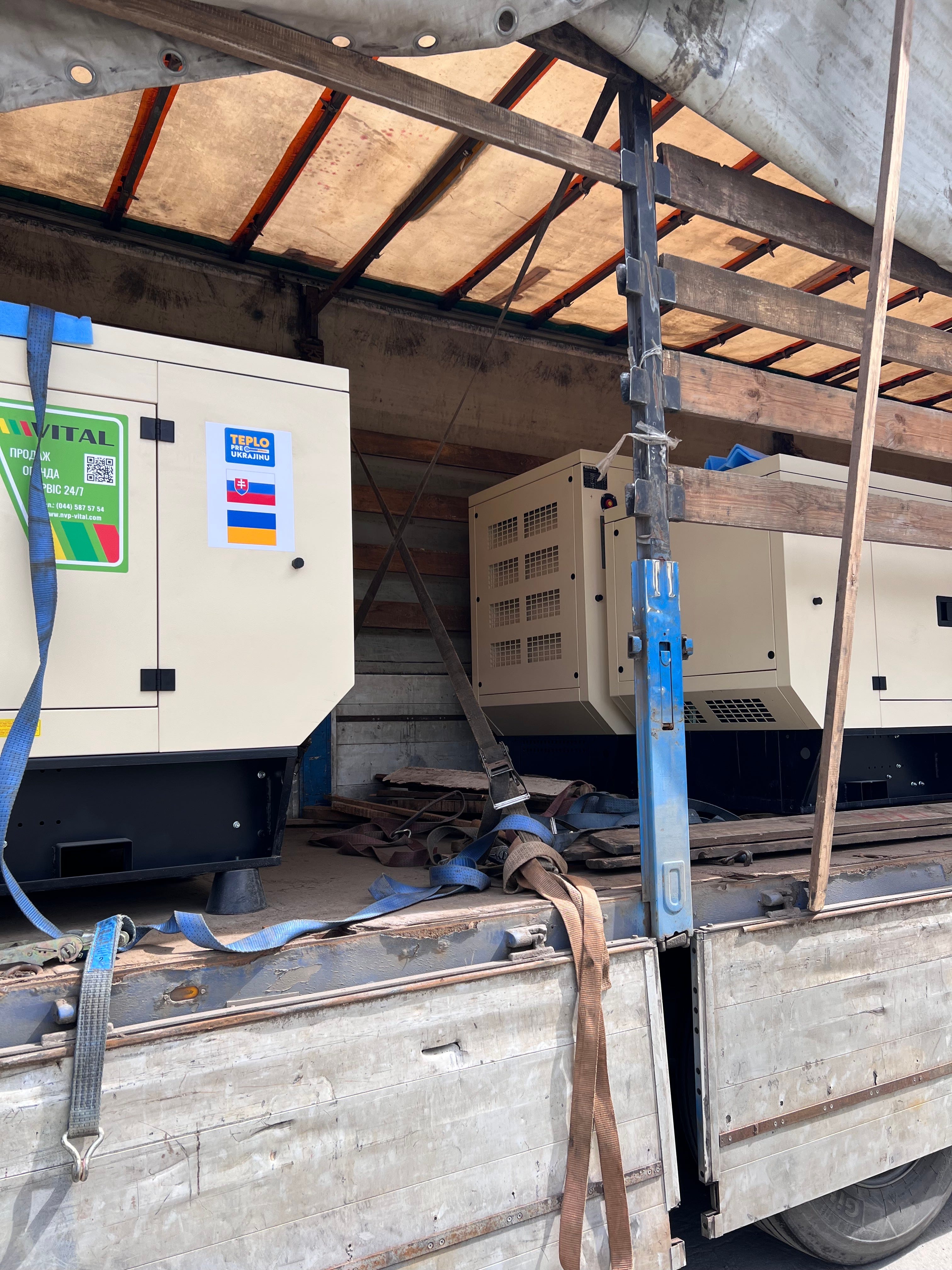
The generators had been donated by Slovakia, with a huge amount of logistics involved - and the first challenge was completing all the customs paperwork for permission to begin their onward journey from Kyiv. On the morning of our planned departure, there were a few hours of nervous waiting around before Oleksii finally got the all clear. We drove across Kyiv to a large site where the generators were loaded onto an articulated lorry by a very efficient forklift truck driver, followed by boxes of the other equipment, all strapped into place and locked off securely before the long journey ahead.
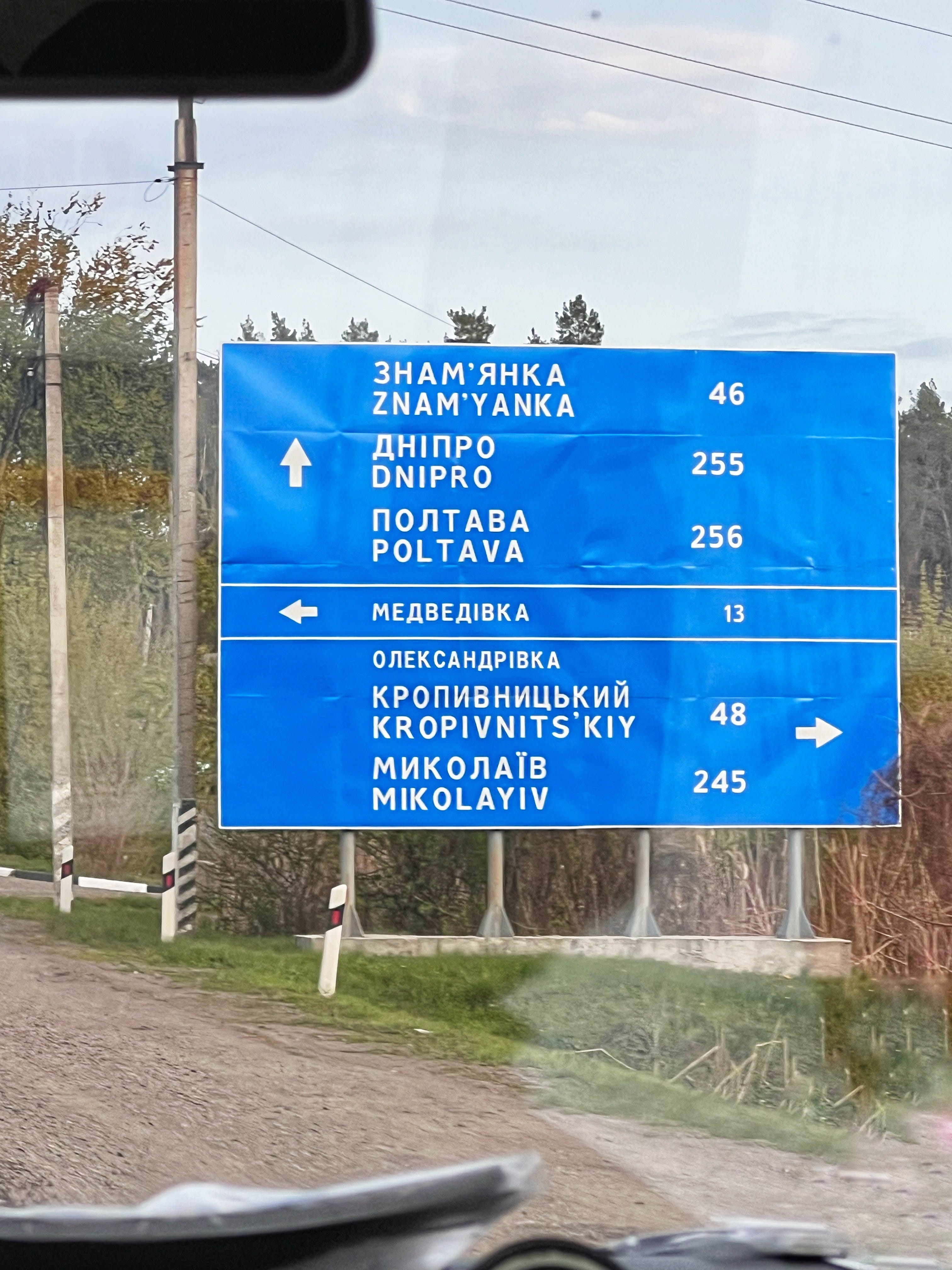
We followed by car for the first leg of the trip to Mykolaiv - accompanied by Oleksii's dog Yasmin, who had the enviable ability to fall asleep almost immediately. All was going well until the early evening when one of the car wheels suddenly burst on a particularly jagged stretch of road. Andriy and his brother deftly changed the tyre but insisted on getting the wheel repaired before we tried driving into Kherson: no one wants to break down somewhere like that without a complete set of spares. By this time it was around 8.30 at night and we seemed to be in the middle of nowhere: in fact, we had just literally driven past a large road sign pointing to about 6 different cities on all sides of Ukraine.
Thanks to some frantic googling, the guys located a tyre repair shop in Kropyvnytski which was open until 9, and we drove rather rapidly to get there before it closed. The wheel, which had looked pretty mangled to me, was in fact repairable, and we managed to get back on the road to Mykolaiv, arriving at the hotel just before the midnight curfew.
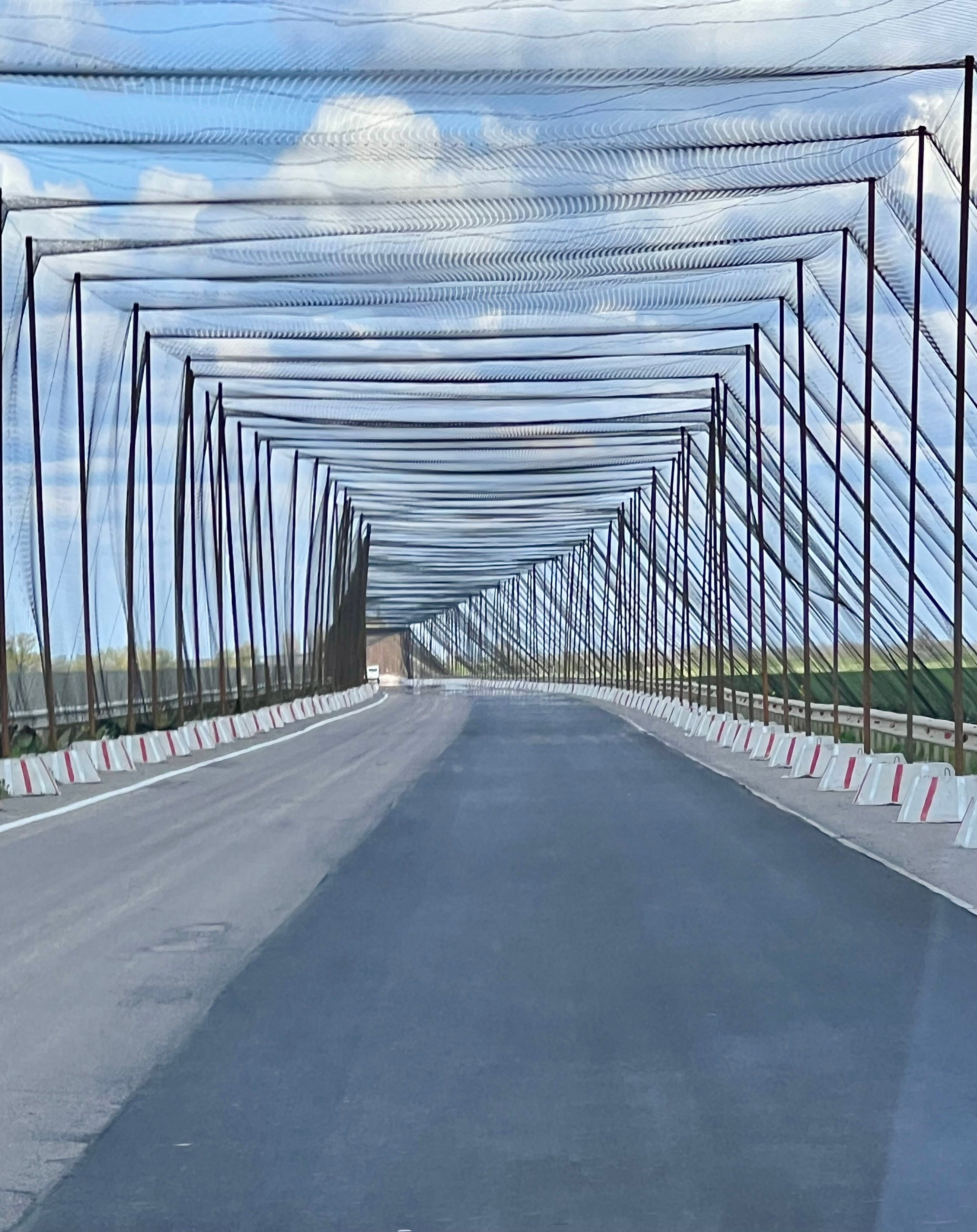
The next morning was, by necessity, an early start: only Yasmin the terrier looked at all happy about the 5.30am wake up call. The highway from Mykolaiv to Kherson is not one to linger on: covered by newly reinforced netting to guard against the threat of Russian FPV drones. On this road, it is always better to travel as early as possible: there will be hardly any other traffic, although you must negotiate two blockposts on the way into town. Luckily Oleksii's sheaf of documents were all in order, including the correct permission for me to enter Kherson with my foreign passport.
We sped past the stele marking the entrance to Kherson city and pulled up at a warehouse where the generators would be handed over. The place had clearly seen troubled times: there was a pile of rubble stacked up outside one of the buildings and the staff carried drone detectors around with them. The lorry full of generators swung into the car park and another highly skilled forklift driver began ferrying everything inside the warehouse with remarkable dexterity and speed.
The head of Kherson's regional administration, Yaroslav Shanko, arrived to shake hands and give a speech of thanks. The generators and batteries had been donated to keep water pumping stations and key municipal services going during power blackouts - part of the 'Warmth for Ukraine' initiative launched in Slovakia to help the country cope with the consequences of Russia's attack on civilian infrastructure.
There was no chance to drive further into Kherson, as the city officials warned that Russian drones were particularly active in the area: we could hear several explosions going off as we stood outside the depot, a depressingly regular soundtrack to life just a handful of miles from Russian positions across the river Dnipro. Instead we swung around and drove back along the thankfully uneventful highway towards Mykolaiv and Odesa, until the net tunnels gave way to the bright blue skies of a spring day. A journey which cost a huge amount in time, resources and the courage of the driver who carried that precious load into a dangerous frontline city, where it was so desperately needed. It was a privilege to be on that journey with them.
No posts
Comments
Nothing yet. Say the first thing.
Sign in to join the conversation.