
The most direct way to reach Kramatorsk is by road from Kharkiv, but the route has got so risky it has become known as the Road of Death. The reason: small Russian FPV drones, armed with explosives which they can drop onto cars or buses below. As soon as you pass the outskirts of Kharkiv, the road is covered by a tunnel made of fishing nets: an all too common sight in frontline areas around Ukraine. The netting offers some protection against the drones, but the burnt out skeletons of destroyed cars hastily pushed to the side of the road are evidence that it doesn't always work.
In the city of Sloviansk, some 10 miles from the frontline, the bus slows to turn a corner: there is a sharp popping sound outside. Glancing out of the window, you can see a soldier shooting his rifle towards the sky, at an FPV drone. The bus picks up speed and travels onwards to Kramatorsk, the other so-called fortress city holding out against a Russian advance. On the right of the bus station is a small grocery shop which has been bombed into a heap of mangled metal: it is not the most reassuring sight. I am with the US volunteer Ben Kochenberger, who has been away for a few weeks and is shocked by how far things have deteriorated. We decide not to get lunch at the bus station, and call a taxi into town.
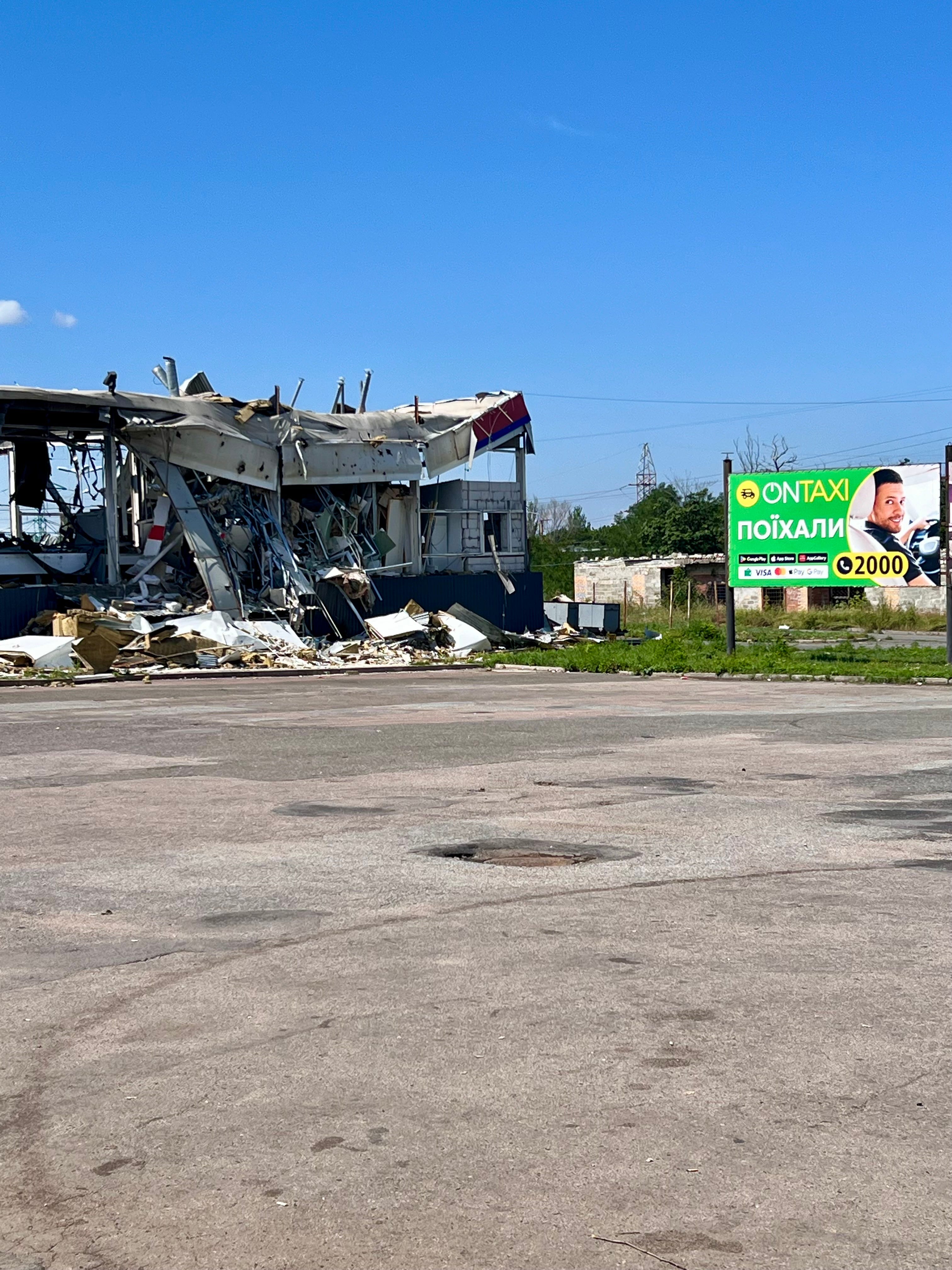
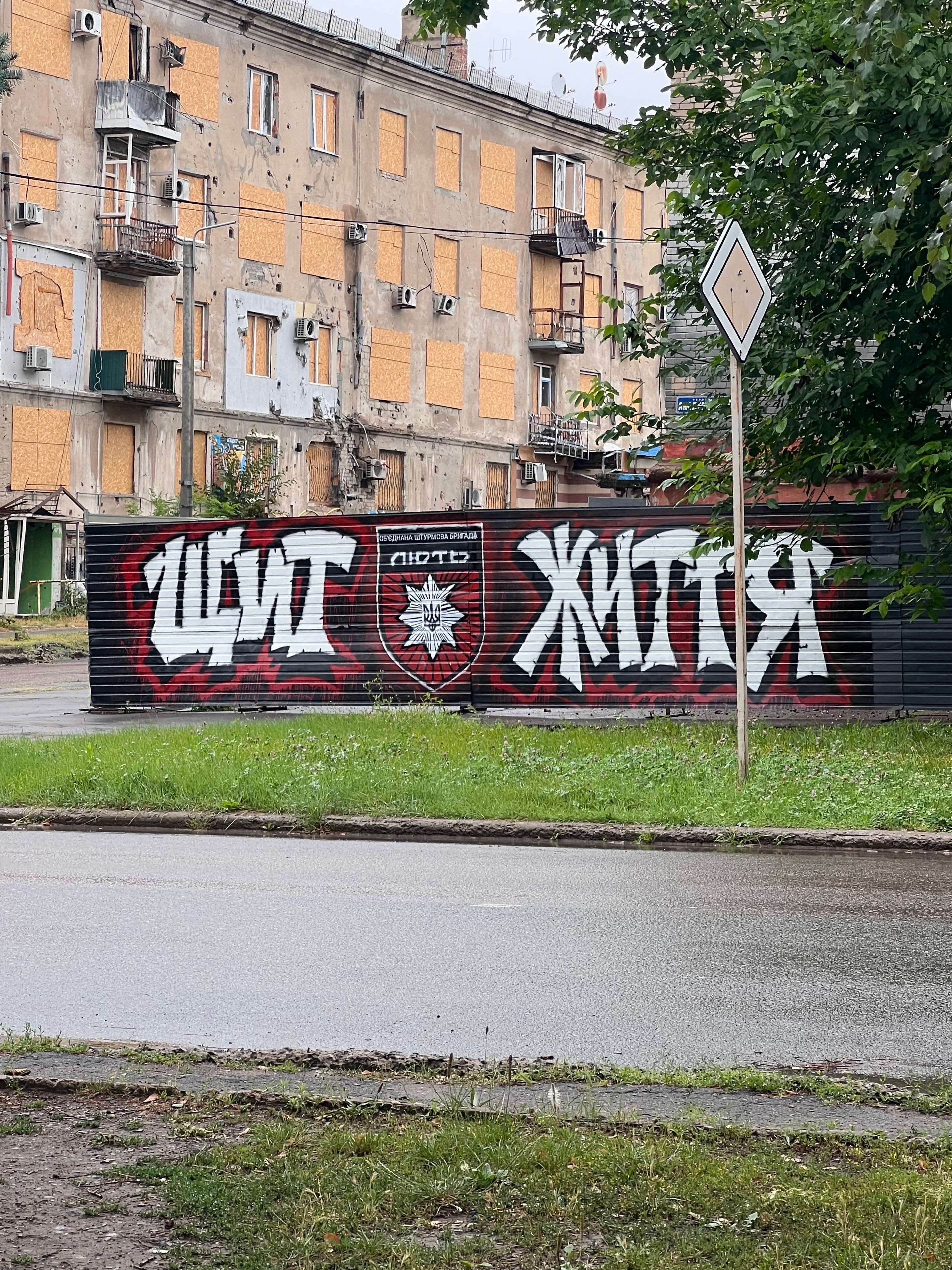
The paradox of these front line cities is that, for now at least, many services are continuing to work. The trains stopped calling here in November last year, but there are still buses: the post office will deliver, supermarkets and some cafes are open, while municipal workers sweep the streets and cut the grass in the city's many parks. But it is all desperately precarious. Every day more and more small businesses announce they are closing their doors, casualties of a lack of customers and escalating safety concerns.
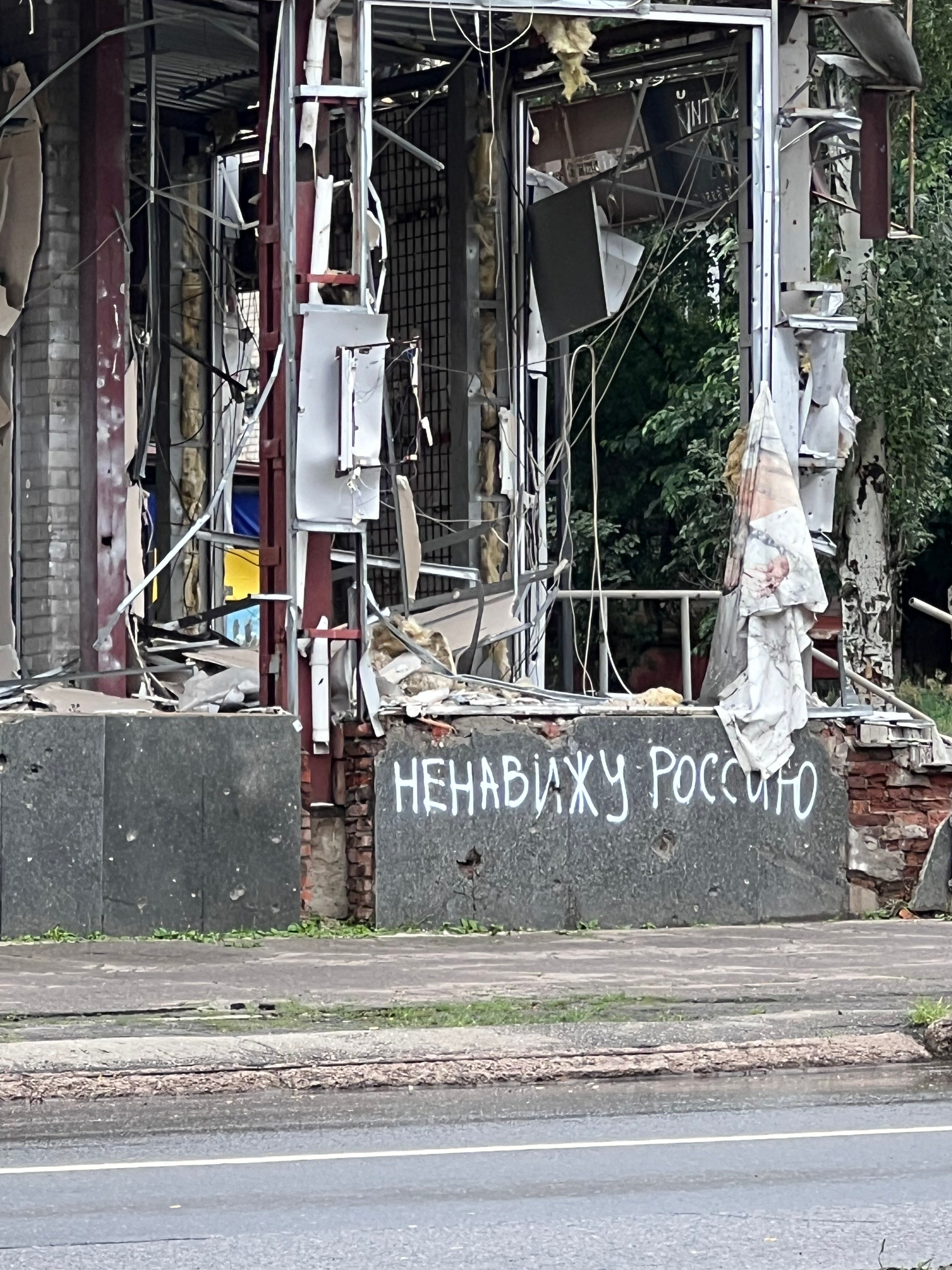
The hibiscus and roses are blooming in the city's parks, but they too are all but deserted - few people want to take the risk of walking around outdoors, where there is little cover from drones. An entire road is lined with the wreckage of stores, offices and homes: destroyed by a huge guided air bomb which fell in the middle of the street back in May. Broken glass crunches underfoot: there are splintered pieces of lettering which once spelled out the name of a shop. On one fragment of wall, someone has written, neatly, 'I hate Russia'. Just around the corner, miraculously protected from the blast, a memorial remains to the 13 people who were killed when the Ria Pizzeria was blown up in a direct missile strike, back in 2023. Their photographs stare out over the debris of the most recent attacks: witnesses, still.
Just up the road, a lady called Anya is trimming a huge bunch of red roses in the flower kiosk she's been running for just two months. She says business has recently got much harder, with few customers venturing into this risky part of town. "It's important to have something beautiful", she says, but adds that while there are still young men who come in to buy a bouquet for their wives or girlfriends, people are also buying flowers for funerals, nowadays.
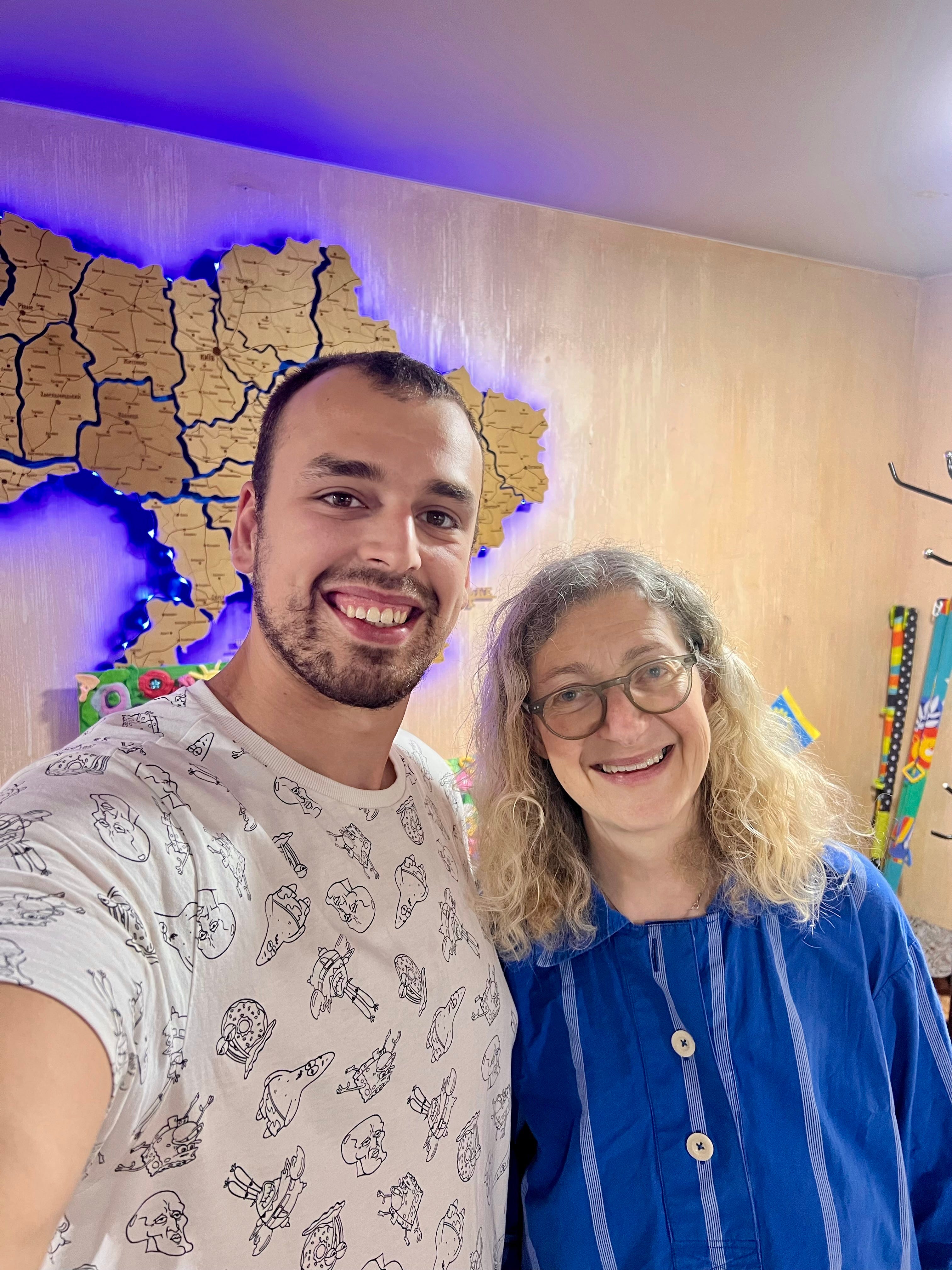
A short distance away, we call into a volunteer hub for a cup of tea. One wall is decorated with a large wooden map of Ukraine, and some toy houses which are neat and pretty with their thatched roofs, and nothing at all like the battered, shell-marked blocks of flats which line the streets outside. There are some childrens' toys scattered around, although it is not safe enough for children to play here any more. But next door, music is playing: a young couple are taking a ballroom dancing lesson, twirling and sashaying in time to the music while their teacher videos their moves on her mobile phone. "This is our anti-stress!", they say, and pirouette away.
I was there to meet Bogdan Zuyakov, a 26 year old former arm wrestling champion, who runs one of the city's main volunteer evacuation groups. Every morning he gets up just after dawn, puts on full body armour, and drives into towns like Druzhkivka and Sviatohirsk, to evacuate people from the heart of the "kill zone". Every week they get hundreds of such requests, he says: "and every day, I am more and more tired". It is hardly surprising. Zuyakov also works a full time job, repairs windows and roofs broken by explosions, and organises what he calls a "social taxi service", transporting elderly people and those with low mobility around town.“My day begins around 6am, when we go to our first evacuation. Then my official work starts at 9am. Often I’m involved with unloading and distributing humanitarian aid. At 4pm I could go home but usually there is another evacuation.” At night, he often rushes to the scene of bomb attacks to help rescue people, and treat the injured. Keeping his vehicles on the road is another huge challenge: sometimes they are repaired, only to be damaged again by a drone strike. No wonder Zuyakov is tired.
But that doesn’t stop him from working around the clock to help the people of Kramatorsk and the nearby towns and villages which have fallen into the Russian kill zone. It is unbelievably risky work: in December last year, Zuyakov was injured and another rescue volunteer was killed as they were trying to evacuate people from Kostyantynivka. Their vehicle came under a direct hit from a Russian FPV drone - it was the last time he would try to get into Kostyantynivka, and the town is now fully contested.
Most days currently begin with the hectic drive to Druzhkivka, which lies between Kramatorsk and Kostyantynivka, down a road littered with burned out vehicles, and the debris of drones and explosives. It seems impossible that anyone could still be living there, but a few hundred residents have stubbornly hung on. Most of the people they bring out are elderly or have limited mobility: some insist on bringing pets or other animals which they don’t want to leave behind. FPV drones circle constantly above them, and they frequently need to hide under the cover of trees. “I never ask people why they stay in such places”, he says. “I never judge.” Each day, the situation there gets worse, and they wonder if each trip to Druzhkivka might be the last.
Each morning, they transport the evacuees to a hub in the city where they can be processed - from there they will be taken by bus to the transit centre in Lozova, in Kharkiv region, which handles up to 300 people a day. So many people, all their world reduced to whatever they could cram into a suitcase and a couple of carrier bags.
Zuyakov admits that finding volunteers is a problem because many of them are now serving in the army. Ben Kochenberger, a lawyer from the United States, has been volunteering with him for the last year, traveling on evacuations and supplying much needed funds for their work. Since April, they’ve been joined on their missions by the writer Victoria Belim, who has managed to raise an astonishing 25,000 euros to keep the evacuations going. Zuyakov says social media has become an important way of raising awareness, and funds. “Making videos is just a small part of my job. But there is nothing wrong with producing content - without an audience, we couldn’t do anything”, he says. “People share our content, and it is seen abroad, so people can really understand what is happening here in eastern Ukraine.”
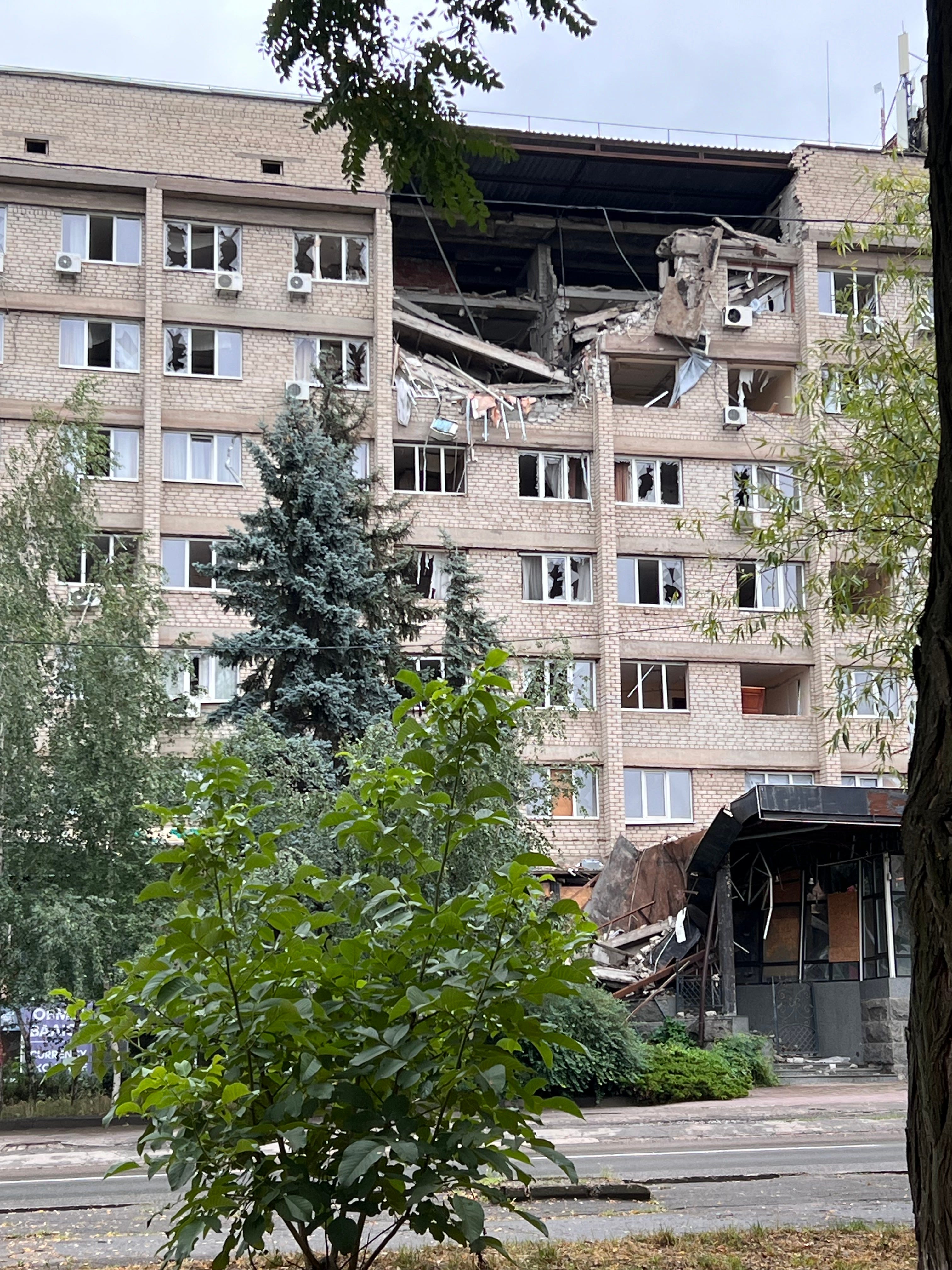
The Russian attacks on Kramatorsk are relentless and highly destructive: especially the huge guided air bombs known as KABs which can flatten an entire block - you can see buildings across the city boarded up, hollowed out, reduced to ruins. “The outskirts of the city, places like Bilenke village are now under fire from MLRS (artillery)”, Zuyakov says. “I worry that Kramatorsk will be completely destroyed in one year, even in half a year.” It is a major city, with more than 40,000 residents - and several areas are already under compulsory evacuation orders for families with children. Zuyakov has already been taking people out of the city itself, but he knows from personal experience that it isn’t at all straightforward to move. He and his wife want to relocate to Lozova - but it’s now crowded with many thousands of displaced people, and so far they have been unable to find anywhere suitable which they can afford.
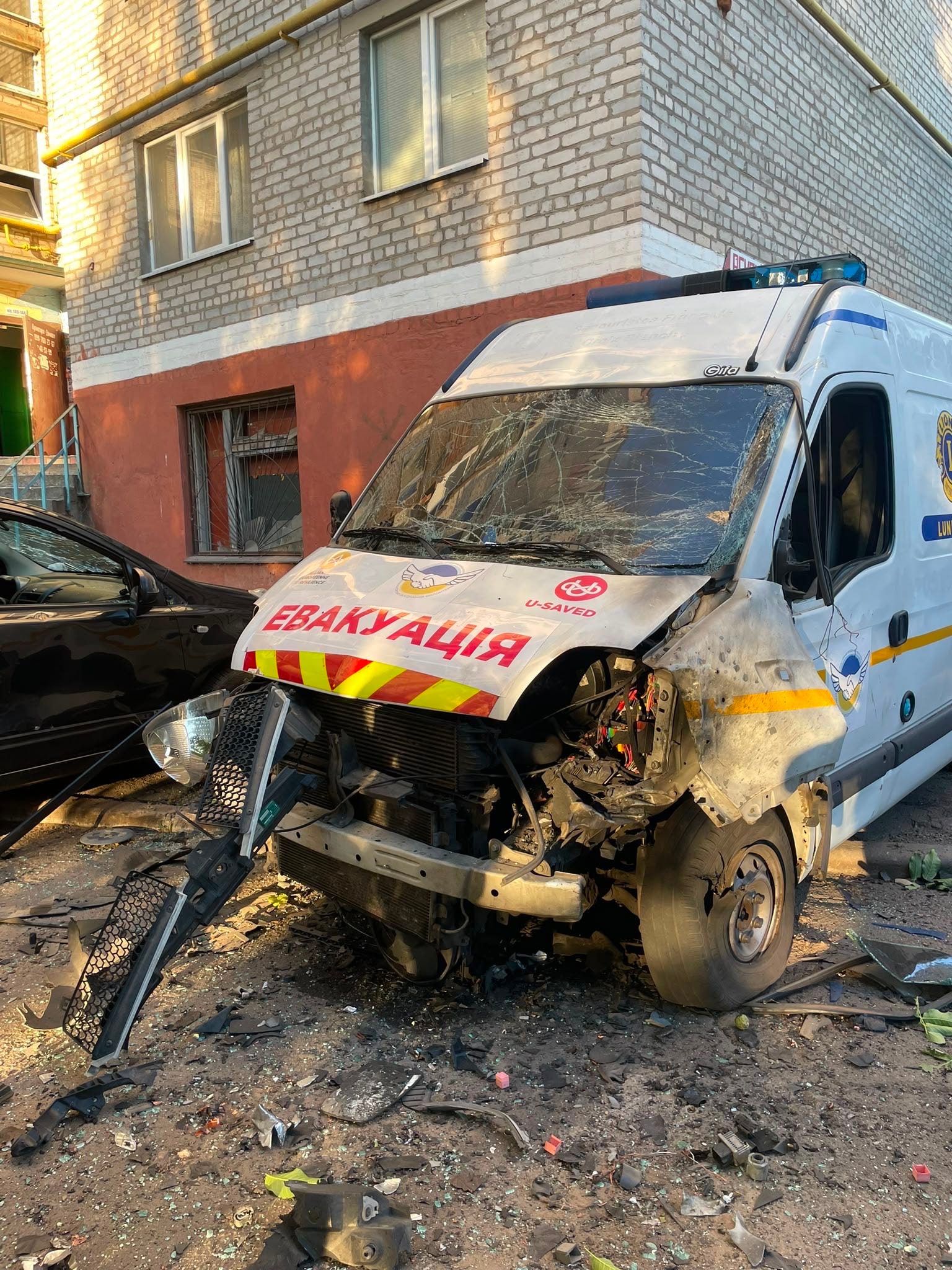
On the morning I wrote this piece - Bogdan’s team had yet another setback: their ambulance, nicknamed ‘Paracetamol’, which they had used to evacuate more than a thousand people, was hit by an FPV drone. Fortunately no-one was hurt but they had only just paid for it to be repaired and are urgently seeking a replacement. As Ben said to me, driving through a spectacular Donetsk region sunset, “it is not often you meet a real hero, someone who has personally saved many hundreds of lives”. Bogdan Zuyakov is a hero, as are all of his team. The link to their fundraiser to repair their ambulance and keep their incredible work going is here. https://tinyurl.com/bxvx8bmn
No posts
Comments
Nothing yet. Say the first thing.
Sign in to join the conversation.