
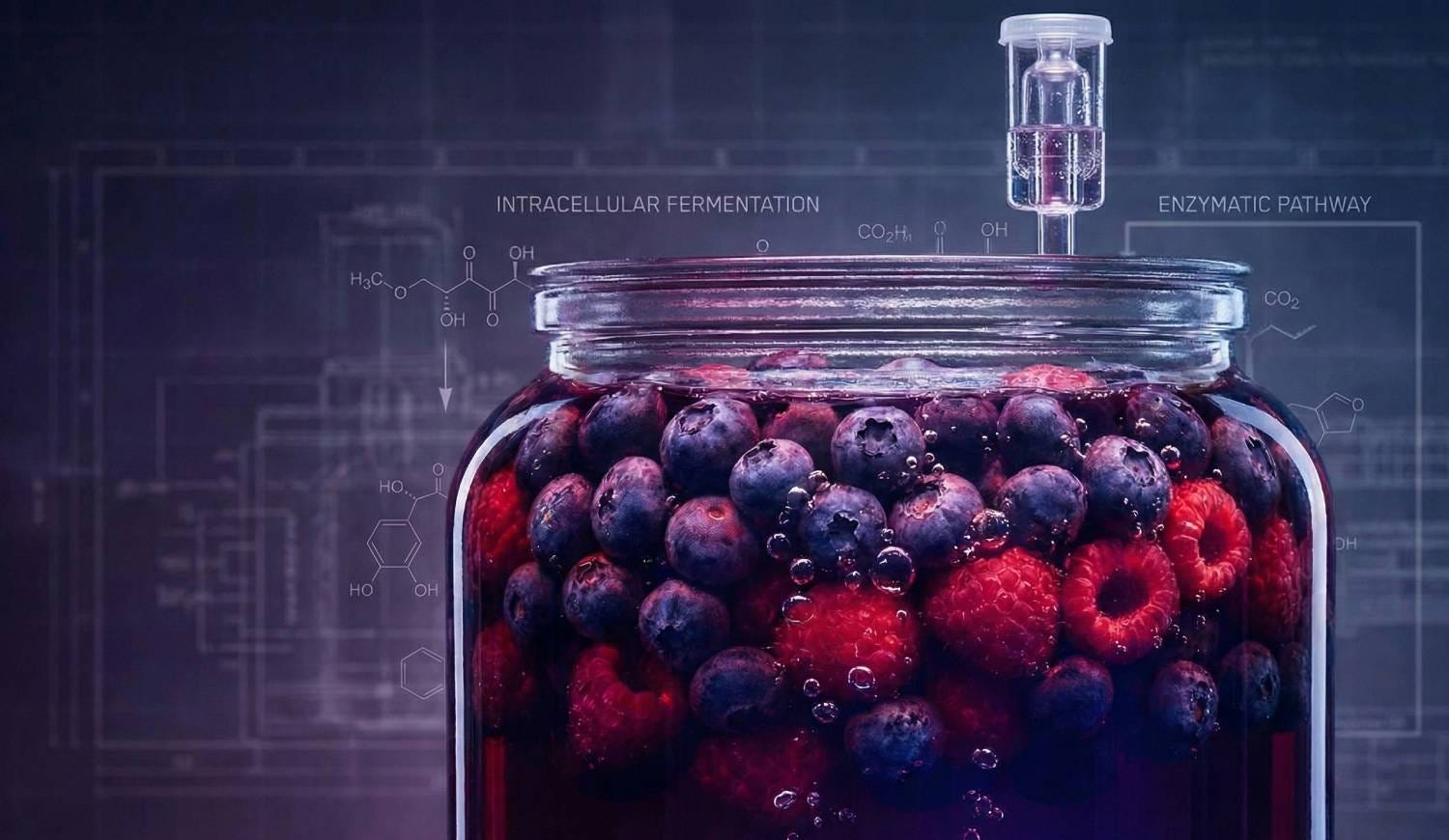
The standard approach to making strawberry, raspberry, blackberry, or blueberry wine involves crushing the fruit, adding pectic enzyme, and letting yeast have at the resulting slurry. The moment you crush a raspberry, you rupture thousands of cell walls simultaneously. The juice mingles with the seeds, which release their payload of bitter tannins into the must. Oxygen floods in. Polyphenol oxidase gets to work, turning your brilliant red must brown. The fresh-picked aroma compounds, many of them highly volatile esters, begin evaporating almost immediately.
We accept these trade-offs as inevitable. They’re not.
Every November, wine shops worldwide fill with bottles of Beaujolais Nouveau, that famously gluggable, banana-scented red that arrives just weeks after harvest. The wine divides opinion; some dismiss it as a marketing gimmick, others celebrate its exuberant fruitiness, but the technique behind it deserves serious attention from anyone making wine from soft fruits. Carbonic maceration, the process that gives Beaujolais its distinctive character, might be the most underutilized tool in the fruit winemaker’s arsenal.
Before the theory, let me tell you what happened when I tried this technique with blueberries.
I was skeptical at first. Blueberries’ thicker skins and firmer flesh suggested they might resist intracellular fermentation, requiring extended carbonic phases that could introduce off-flavours. The process took longer than with softer berries, closer to ten days, rather than five or six for raspberries, but the blueberries eventually softened from within. The skins lost their waxy resilience and became almost gelatinous. When I finally pressed the fruit, the juice ran clear and deeply purple, with virtually none of the cloudy particulate matter that characterizes conventionally crushed blueberry must.
I served the finished wine blind to several experienced tasters, including two sommeliers and a fellow winemaker. Every single one identified it as a Gamay-based wine. Most guessed Beaujolais Nouveau specifically. The banana and bubble gum notes were there, the soft tannins, the fresh acidity. Only when I revealed the actual fruit did the blueberry character become obvious in retrospect: that distinctive dusty, almost wild berry note that had been lurking beneath the carbonic signature all along.
That blind tasting convinced me this technique deserves far more attention. But to use it well, you need to understand what’s actually happening inside the berry.
Comments
Nothing yet. Say the first thing.
Sign in to join the conversation.