
Text within this block will maintain its original spacing when published
“There is a garden in every childhood, an enchanted place where colors are brighter, the air softer, and the morning more fragrant than ever again.”
― Elizabeth Lawrence
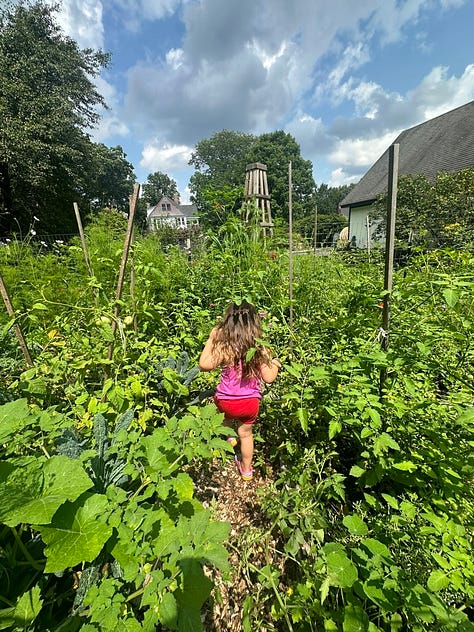
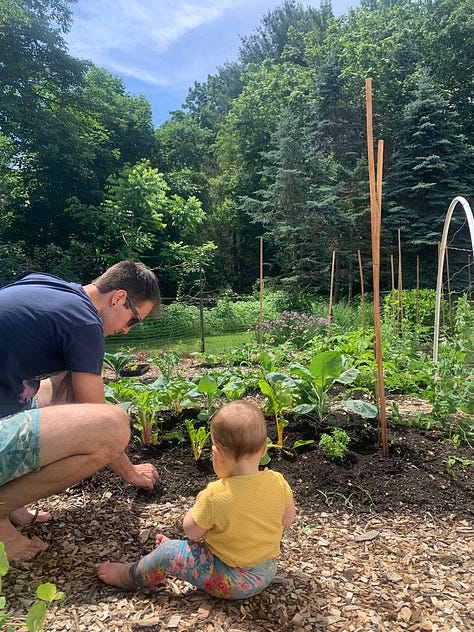
Despite what the tradwives of social media might lead you to believe, gardening with kids isn’t all sunshine and rainbows and childhood magic. I mean, it definitely can be —I have so many photos on my phone of our kids at various ages and stages enjoying the garden and they make my heart want to burst whenever I look at them. Now, depending on what age kids you have, they can range anywhere from incredible helpful to downright destructive-yet-adorable. But gardening with kids can be done, and you can actually have fun doing it! I promise.
More on the nitty gritty specifics on how I prioritize garden tasks, because today will be all about the actual how the heck I actually garden with kids:
Now, on to kids. Those adorable loin gremlins whom we adore oh-so-much but who have an uncanny ability to siphon your time, energy, and on some days, your will to live!
You might not be as productive as you would be without them — for instance, I yearn for the days of being able to knock out a garden project in 8+ hours working with my husband. And since our kids are at the age where no one naps anymore but they’ll occasionally play nicely together in another part of the yard, we can get some bigger projects done. But it’s a rarity.
I know some people who have let their gardens fall by the wayside due to lack of time from sports and traveling and general parental stressors, but I firmly believe that you can garden in a way that is additive to your family’s life, not merely something else that’s on your plate that you have to deal with. That begins with acceptance: your garden will likely not ever look like the fancy gardens you see on social media. And that’s ok! My own garden is usually riddled with weeds come August, but also we harvest hundreds of pounds of food from it all season long, and derive endless enjoyment from being in there as a family.
So while I can appreciate a perfectly tended, weeded, lush garden, I also wouldn’t trade these chaotic years for the world. Because if I do my job right, I know that I’m instilling in our kids a deep love of nature, the importance of a healthy ecosystem where birds and bugs alike flit about the garden, an appreciation of where their food comes from, and the value of hard work.
Not to get too hippy dippy here, but some of my fondest memories growing up are of hours spent gardening with my parents, visiting our local nursery, climbing trees, picking berries and vegetables, and traipsing around our property looking for bugs and flowers and garter snakes.
In fact, I have one distinct memory of setting up my own little oasis underneath an old forsythia bush and befriending a mole that I found. This also might be a good time to mention that I was an only child!
If you had a flourishing, impeccable garden before kids and think it’ll be a return to business as usual, then think again. Unless you have lots of help in the form of grandparents, babysitters, nannies, and the like, then you just won’t have as many hours to devote to the garden when they’re young without neglecting other areas of your life. Could I spend more time in the garden? When ours were really young, we would get a couple naps each weekend and I tried to take advantage of them during the height of garden season, but sometimes you’re just exhausted and need to rot on the couch! And that’s ok! There’s a reason why most of the folks in my Master Gardener program are older folks, and it’s because they are mostly retired with lots of time on their hands to enjoy the hobby of gardening. I don’t mean that in a negative way, but I’m a realist.
I’ve tried very hard to shift my mentality from executing on grandiose projects to just…being outside together. And kicking some cans down the road for when we have more time. Though I know when I do have more free time, I’ll deeply long for these hectic days.
And if you have big plans of gardening alongside your little cherubs and teaching them to commune with nature and tend the earth, realize that some days it very well may play out exactly like that. But other times, they may trample on your freshly broadforked beds with the soil fluffed just so, while you grimace and beg them to, fortheloveofallthingsholy, please stay on the pathways!
One thing that has been transformational to my gardening life with kids: a mud kitchen. My husband built this in 2023 when our kids were almost-1 and almost-3, and it has gotten so much use from kids of all ages — all the way up to twelve. It’s also a great year-round outdoor toy. Snow pies, anyone?
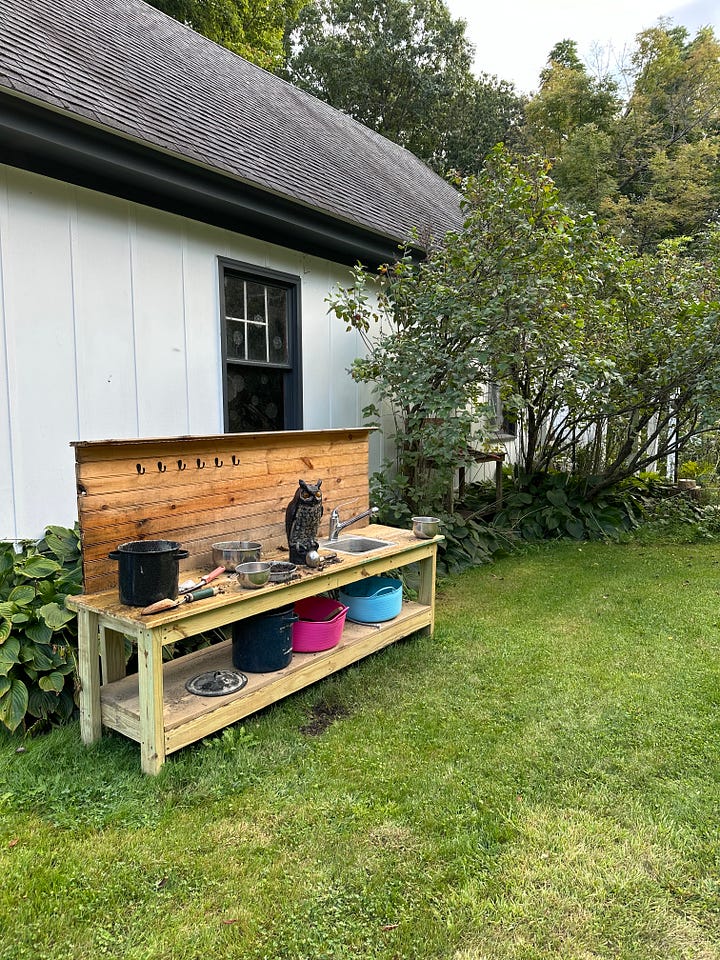
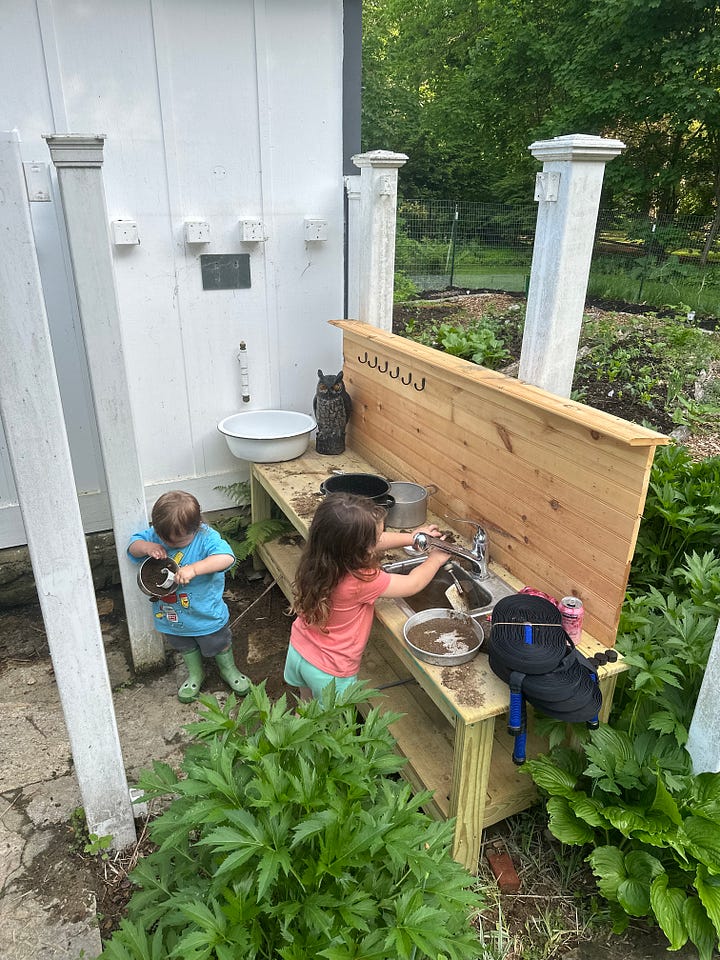
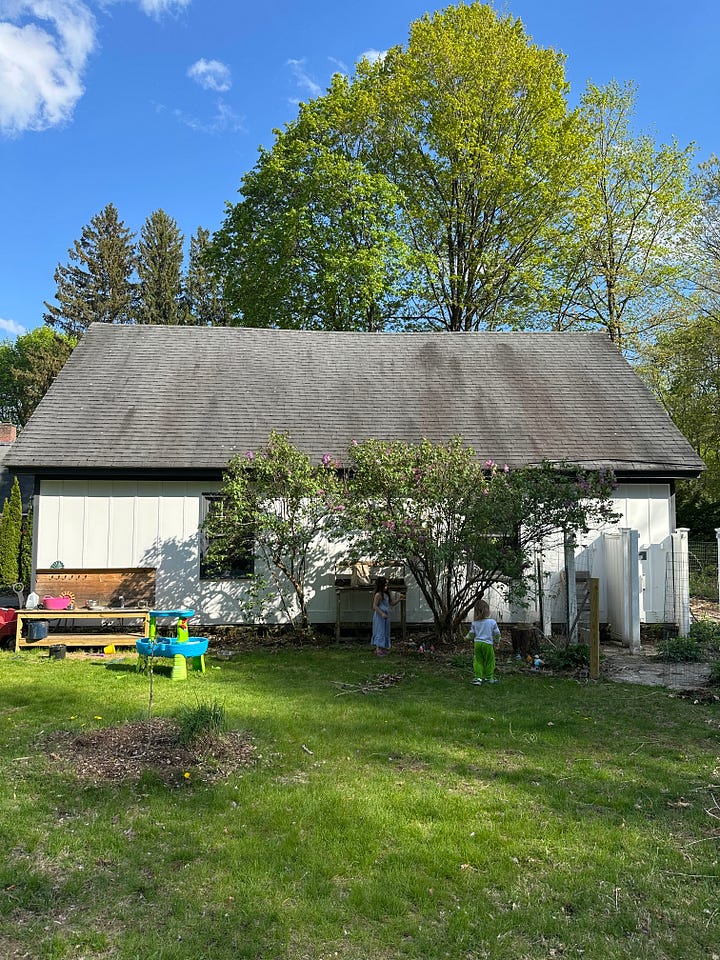
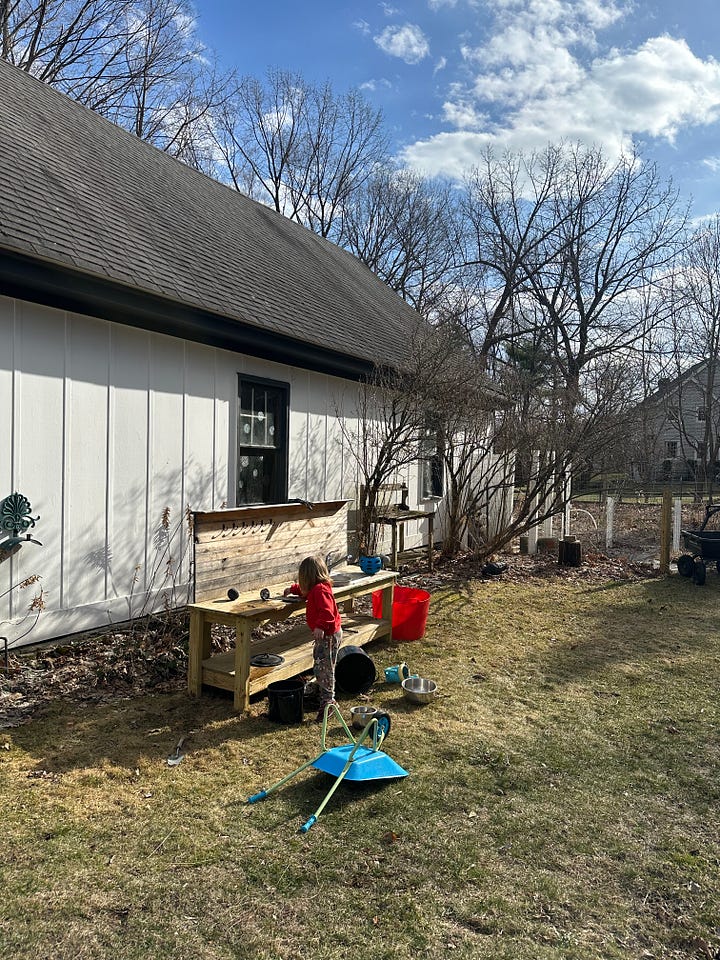
It’s moved around to different areas —when they were much younger, it was inside the garden fence so I could watch them much more closely, but now it’s just outside. They know the plants they’re allowed to pick to “make soup” with, and it’s a fun way for them to learn the names of various plants. I can just hear my son’s sweet little voice asking if I want some “vio-wet and yah-ro soup” aka violet and yarrow soup. My heart!
I’ve gotten all of the various items either for free from our local recycling center, or dirt cheap from the Goodwill Bins. We have a hose that connects to make the faucet fully functional, but I’ve seen clever tricks where people use old detergent dispensers as a way to let the kids play with water.
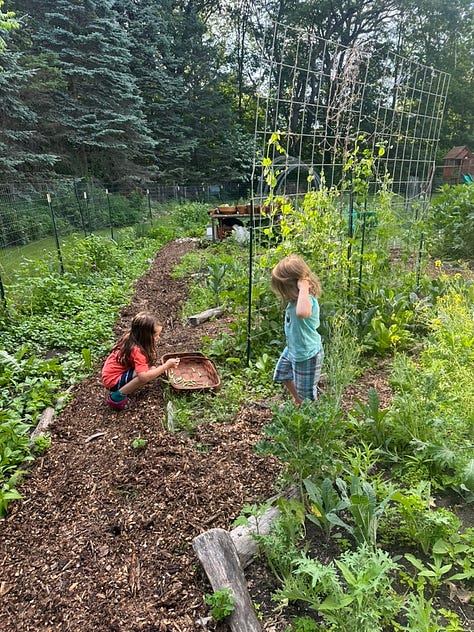
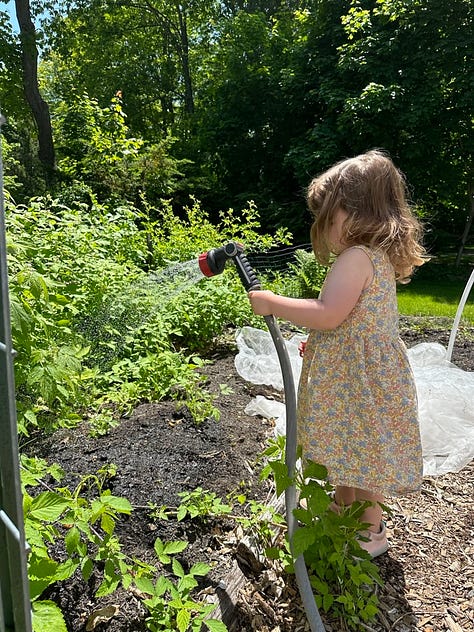
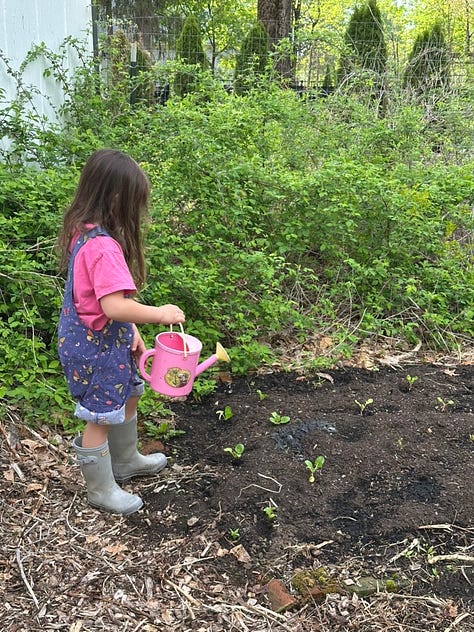
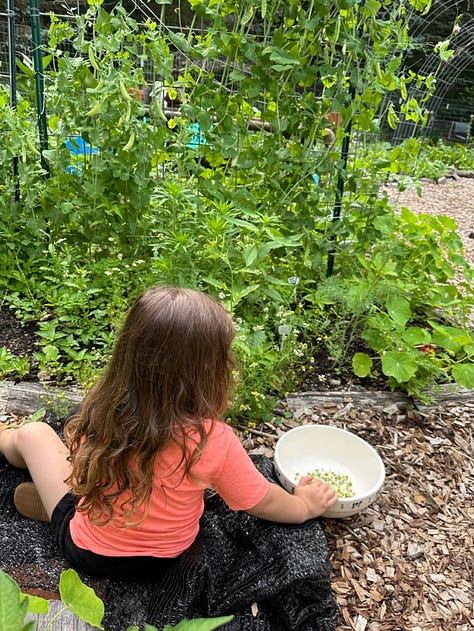
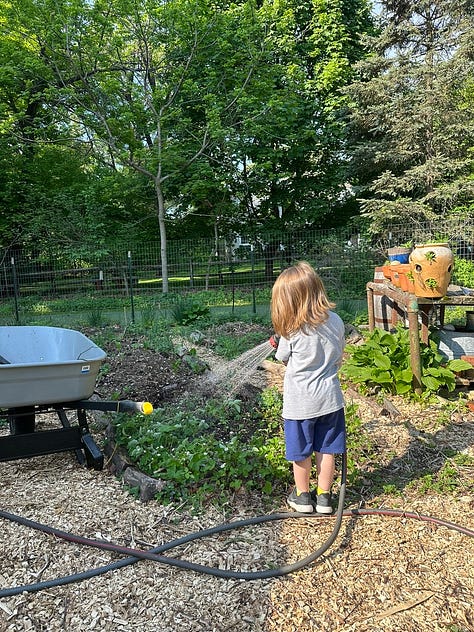
Along with the mud kitchen, I’ve let them have a dedicated digging patch —their very own corner where they can dig to their heart’s content without mom freaking out. Good for getting mud for said mud kitchen, but also for “planting stuff” like leaves, seeds, sticks, etc. They also have their own area in the garden itself where they actually direct sow whatever seeds I give them, and take great joy in having a job to do in their part of the garden. They take turns (kind of) watering, checking on the plants, harvesting, and mulching.
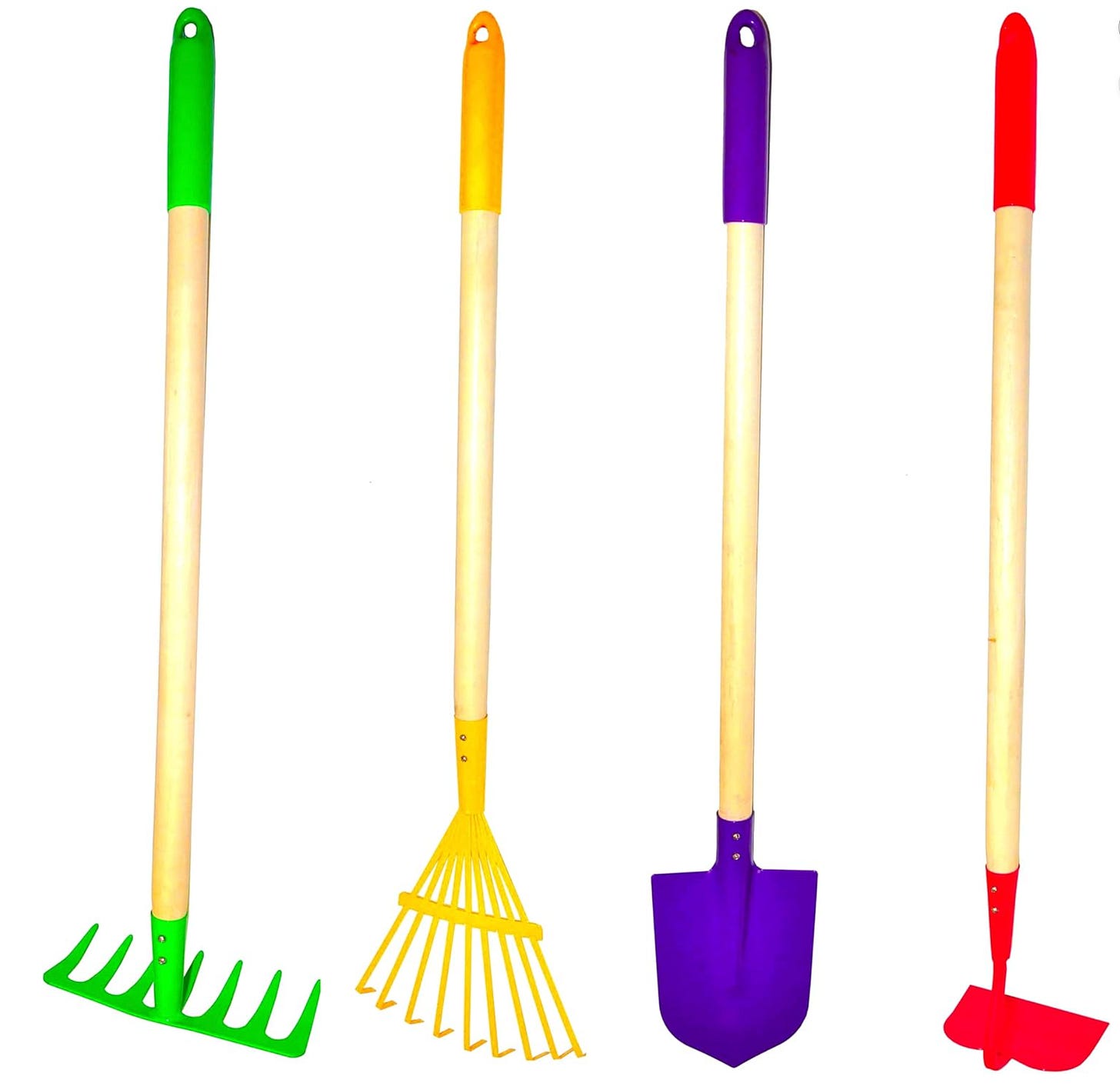
Because it’s bad enough that I get distracted and leave all of my garden tools lying around the yard (sorry, Kristian!). I certainly don’t need two small humans following suit. And no, I don’t mean those junky plastic tools that will break immediately — actual sturdy tools that they can use. We’ve had this set for 3 years and they’ve stood the test of time with our two mini gardeners:
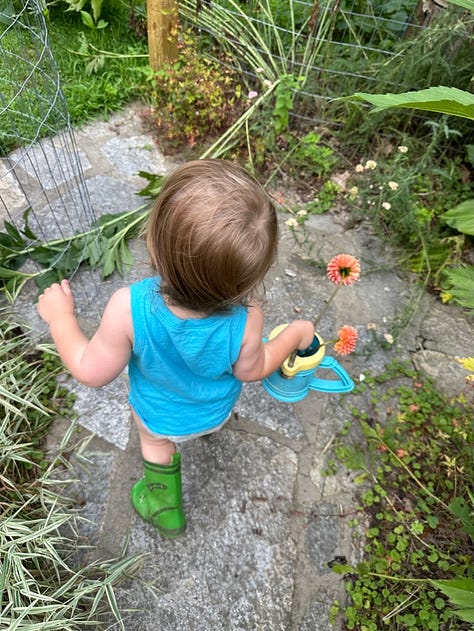
Additionally, they each have their own pair of kid-sized garden gloves, and their own small watering cans. A watering can is your secret weapon! If you’re trying to do something and they’re getting frustrated because they want to help, but they’re at the age where their help might be exactly helpful, then fill up a watering can and set them to watering something that is hardy. Maybe not freshly planted seeds or new transplants, but an established shrub? Some weeds? They’ll feel helpful and you can have a couple minutes to finish the task at hand.
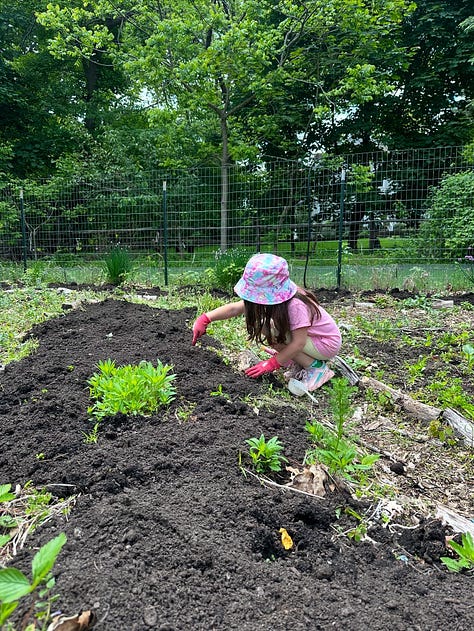
You’ll also want to have them in good mucking around clothes and/or shoes. One thing you’ve got to be completely comfortable with is that they will get downright filthy. But that’s the point, and what makes being outside so much fun as a kid! And according to Happiest Baby:
Outdoor muddy play provides sensory-rich experiences that encourage curiosity, creativity, and joy—qualities shown to buffer stress and support resilience. And group play in natural spaces—like puddle jumping or building mud pies—encourages cooperation, empathy, and problem-solving skills.
Plus, the little boost you get from dirt play may be supported on a microscopic level too. Soil contains Mycobacterium vaccae, a naturally occurring bacteria shown to have antidepressant-like effects, boosting serotonin and reducing anxiety in mice models. Though human studies haven’t yet been published, researchers believe exposure to these mood-boosting microbes during childhood may support better mental health.
Comments
Nothing yet. Say the first thing.
Sign in to join the conversation.