

As Ukraine has intensified its strikes on Russian infrastructure, including the Russian retail giant Wildberries in July, debate over the effectiveness of the campaign has spread across both social and traditional media, often with nearly as much frequency as the strikes themselves. Commentators have offered differing assessments of their significance, some even arguing that it’s simply performative.
Much of the public discussion has focused on the immediate retail consequences, including the loss of warehouse capacity, destroyed goods, and the financial damage suffered by Wildberries itself. The broader consequences, however, have received far less attention.
To examine this wider picture, we invited Vladimir Milov, a Russian economist, former Deputy Minister of Energy of Russia, and Vice President of the Free Russia Foundation in Washington, D.C.
We discussed what Wildberries actually is, how it is integrated into the Russian economy, what its main vulnerabilities are, and why its problems matter beyond the loss of warehouses and goods. We also looked at how the situation could affect Russia’s wider financial system, and why Wildberries’ connection to VTB, one of Russia’s largest and most Kremlin-linked banks, is especially important.
Vladimir argues that the impact extends well beyond warehouse losses or disruptions to military logistics, reaching into Russia’s wider financial system, which has become closely connected to Wildberries and is now directly exposed to the company’s growing difficulties.
Below is the transcript of our interview.
Frontelligence Insight (further: FI):
Vladimir Milov: First, I understand that all these comparisons with Amazon make for a flashy headline, but this is where the similarities end. Amazon operates in the United States, which is the world’s largest economy and market. Amazon is also a US company that is not under sanctions and has the best access to financial and capital markets. Wildberries is an online retailer operating in a relatively small economy that is under great pressure from sanctions and international isolation, with serious constraints on access to capital. It is the equivalent of Amazon, but on a much smaller, dwarf-planet scale. I think these comparisons miss the mark.
Importantly, if you recall Amazon’s history, it is an interesting comparison because that history is often discussed today in connection with the AI boom. Amazon did not make a significant profit despite being a major online retailer. It did not generate meaningful profits for about 15 years, and it only began to do so after becoming a major technology, services, and financial conglomerate.
Here is where the main issue with Wildberries lies, if you look at what the Russian media has been writing about it over the years. One major problem that plagued Wildberries was that it could not find a way to become profitable. It was not profitable. Only recently, in 2024 and 2025, did it begin to show some profit.
It also does not disclose its full financial results, which is very telling, although it does disclose enough information to show that its reach in online retail sales is enormous. But it still cannot turn that reach into a highly profitable business. The first meaningful profits came in 2024 and 2025, in the range of 100 to 200 billion rubles. The best result was in 2025, at 175 billion rubles, which represents a net profit margin of around two or three percent, given retail turnover of 6 trillion rubles. This is not a highly profitable business. Wildberries was only able to produce these relatively modest profits over the past couple of years because of its integration with the advertising company Russ Outdoor. They created some sort of synergy.
This is why there is so much attention around the company: it has built an enormous reach. It became the retailer next door. That is its key advantage.
Before I left Russia, I lived in a residential area in Moscow, and nobody had that level of penetration when Wildberries began to expand. That expansion happened largely with VTB’s money (VTB, “Foreign Trade Bank,” one of Russia’s largest banks), which is why VTB later came back and said, “Listen, now we want you, after we helped you expand.”
A few years ago, we saw this network of retail pickup points developing rapidly. In almost every residential building, or at least in the next building, you could find a Wildberries location. You could order anything online and walk for barely a minute to collect it. That was convenient, and the company’s reach expanded rapidly. So did its turnover.
In 2025, Wildberries reported turnover of more than 6 trillion rubles. But it shows much less in its accounts - this is accounting trickery. If you count it that way, it would place Wildberries among Russia’s five largest businesses.
The company has built this enormous reach. There is also a large cash turnover, which makes it a very interesting business for the FSB, because it is very interested in areas where a lot of cash moves around. Cash enables it to finance shady, illicit activities, and the parallel governmental and business system that effectively runs the country depends heavily on cash.
Wildberries was also thinking about its future business model because its existing model was not generating large profits.
This is also where the vulnerability comes from. Unlike other online retailers, including Ozon, Wildberries was betting on the development of major logistics hubs: huge warehouses that it would invest in, build, own, and operate. These facilities became distribution centers and formed a major part of its business model, solidifying its dominant position in retail sales.
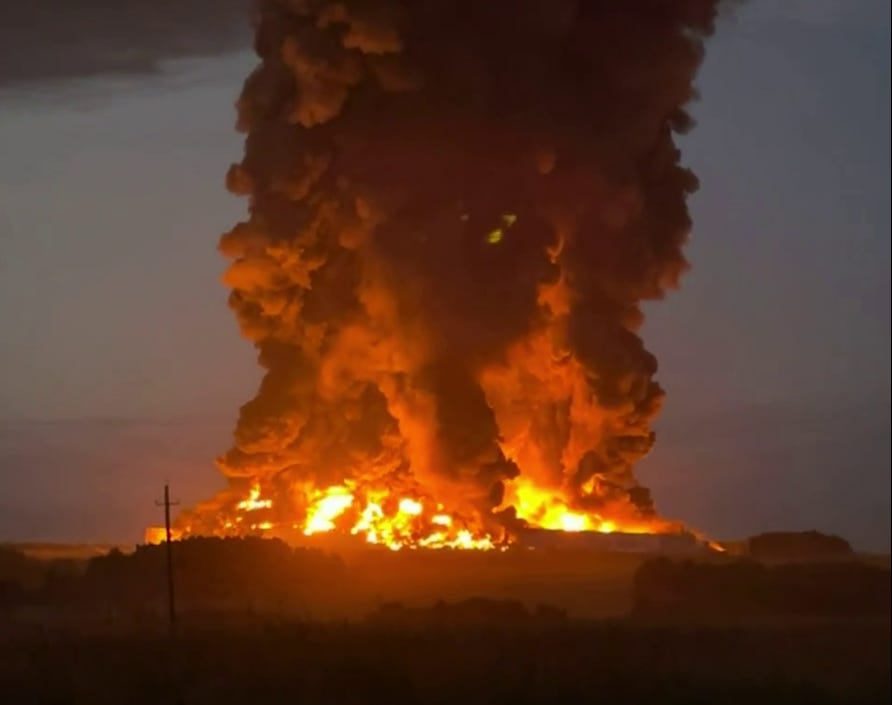
That made them a vulnerable target for Ukrainian strikes because previously Russian warehouse capacity was significantly more dispersed, so you could not inflict a lot of damage on the economy by attacking some standalone warehouses. When Wildberries made this multibillion-dollar bet on building a narrow series of big logistical centers, that decision was made before the invasion of Ukraine. But ultimately, against the background of war, that made them targets and very vulnerable to these attacks.
I see a great deal of speculation in the Ukrainian, international, and Russian media about Wildberries’ importance to the Russian economy. Because Wildberries is still a relatively recent business phenomenon, it is also replaceable. I think the factor that makes it dominant and such a leading retailer is largely its brand.
Throughout my life, over all these decades since the Soviet era, I have seen many kaleidoscopic changes in the way the Russian retail sector operates. I would not describe any retailer as such a fundamental pillar of the Russian economy that the economy would collapse if that retailer disappeared. Retail is an extremely fluid and flexible sector. Whenever one model collapses, it is immediately replaced by another. Retail commerce would continue uninterrupted even after a nuclear war.
If you recall the mayhem and destruction following the collapse of the Soviet Union, there was essentially no normal system of trade. Yet one emerged very quickly, almost overnight. That is one example showing that destroying a retailer does not, by itself, create a major impediment to the wider economy.
Retail is one of the fastest-recovering, most flexible, and most fluid industries. It does not depend on one particular structure, and it will try to adapt to Ukrainian strikes. What I mean is that all this talk suggesting that Russia cannot live without Wildberries because it is so large is wrong. Yes, Russia can live without it. It did so only a few years ago.
Vladimir: The right direction to look is this partnership with VTB. VTB is one of the biggest Russian players. Also in terms of profits, according to the RBK 500 ranking of the biggest Russian businesses, it is in the top five. It is the second-biggest bank after Sberbank.
The partnership with Wildberries had been rumored for some time, and VTB has not hidden what it wants from the company. It does not need the retail business itself. It does not consider that business particularly lucrative, profitable, or worthwhile. What it wants is to use Wildberries as a way of reaching its 80 million retail clients.
Over the past year or so, there has been a major conflict in Russia between traditional banks, including Sber, VTB, and others, and marketplaces such as Wildberries and Ozon. These marketplaces suddenly gained new market power through their reach among millions of Russians who had become accustomed to dealing with online retailers. They began offering discounts and favorable conditions for their own financial and banking products, particularly through Wildberries Bank, while offering discriminatory conditions to everyone else.
This was not adequately covered by existing financial-services and Central Bank regulations. It largely slipped beneath the radar. I think VTB recognized the opportunity and thought: why do we not jump in, become leaders of this process, and outplay all the other banks? Some banks, such as Sber, had been calling for heavy regulation of the marketplaces. VTB instead chose to enter the market and use the market power of an online retailer to become a champion of discriminatory practices in financial services. That is what it wanted to do.
When everybody is accustomed to using Wildberries, and when there is a pickup point next door in regions across the country, that network can be used to VTB’s advantage. The model makes sense, except for one thing: VTB committed itself by signing this partnership with Wildberries in June. It committed itself to working with Wildberries and taking responsibility for what happened, while remaining very far from reaping the benefits because the partnership was still in its earliest stages.
For this model to materialize, for VTB to derive profits from access to Wildberries’ 80 million retail clients, that will take time, and the synergy will take time to materialize. But the commitment to Wildberries is already here. It was solidified by their partnership signed in June, and then came the strikes.
What we’re seeing right now is that the market sees VTB as a body responsible for taking Wildberries out of that pit. The damage will also affect it, and the damage is substantial, I think. Today, Forbes Russia published an estimate that it is in the range of 250 billion rubles, which is probably an underestimate. But that is a significant number, a quarter of a trillion, and like four or five billion dollars. That’s a lot of money, a lot of damage for VTB.
It was a much less conservative and much more aggressive bank in terms of credit expansion than Sber in the previous years. They provided credit to a lot of ventures in the past few years, a lot of risky, corrupt projects which are toxic.
One of the most important things going on in the Russian financial market right now is this bickering between VTB and the Central Bank regarding Basel requirements, because the Central Bank strongly wants to avoid a full, head-on banking crisis, which is looming and which we will see very soon in Russia. It wants to avoid it through a steady tightening of requirements and a build-up of reserves. The Central Bank demands that the banks beef up financial reserves as a buffer to protect them against bad loans, which are mounting because of the deteriorating Russian economy.
But while Sber was relatively prudent and cautious in its policy and did not lend that aggressively, as VTB did, Sber has a relatively good position vis-a-vis reserves. VTB now has an estimated hole in its capital. It is probably much bigger, but a couple of months ago it was rumored to be 700 billion rubles, which VTB’s top management themselves officially mentioned as a shortfall in meeting Central Bank requirements for reserve build-up.
What does it mean? It means that this is the amount of bad loans they have for which, under Central Bank criteria, they should be building a buffer of reserves. But they can’t because they don’t have enough capital. The shortfall in VTB’s capital relative to Central Bank requirements for bad, toxic loans was 700 billion rubles.
That was only a couple of months ago. I think the figure is probably larger now, and the market was troubled by it. There were many negative headlines. The Wildberries crisis has therefore caught VTB at probably the worst possible moment.
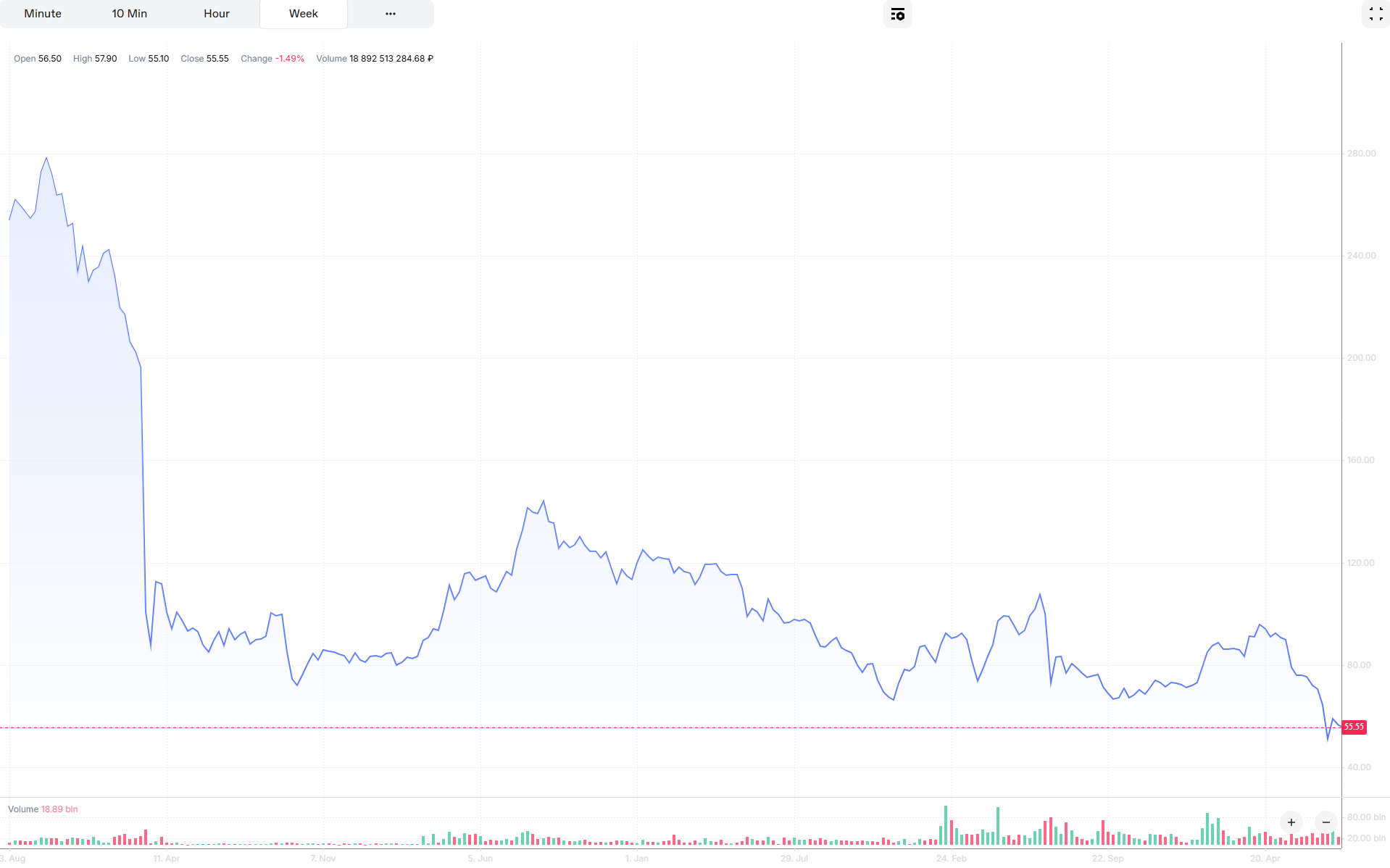
VTB was already in trouble and engaged in a serious standoff with the Central Bank. It did not have enough capital to cover all the toxic loans it had issued, while the Central Bank was insisting on a buildup of reserves. VTB did not have the money. That was the central issue.
Then comes Wildberries. VTB does not have a formal obligation to compensate Wildberries for all the damage. But there are several important considerations. There are not many other potential sources of money, and the government itself does not have the money.
If we created a line of people, businesses, military manufacturers, and others waiting to receive more government subsidies because they cannot continue operating without injections of financial aid, it would be an enormous line stretching across the Atlantic from Paris to New York. Wildberries would be at the back of that line. Many others are already waiting: aviation, agriculture, the coal industry, steelmakers, and more. It is a very long line.
If Wildberries arrives with a request saying, “Please give us 200 or 300 billion rubles to compensate for the damage,” it will be met with a hard look and the question: “Where were you last month? We already have all these other people waiting.” The government does not have the money. Nobody else wants to take responsibility because everybody sees this as VTB’s problem now. VTB took responsibility for Wildberries. It is theirs. Let VTB save it.
VTB had recently been promoting the following story: there is a silver lining and a way out of all our mounting troubles. We now have Wildberries in our pocket. We are going to reach its 80 million clients, create a great deal of synergy, make a lot of profit, and get out of the woods. That was the story VTB was selling. It is largely over now.
It is also very clear that Wildberries does not generate sufficient profit. Its total profit for last year, 175 billion rubles, is nowhere near enough to compensate for the direct physical damage to its warehouses and logistics infrastructure. I am not talking about the sellers. Let us leave them aside and focus on the direct material damage to Wildberries itself. The company does not have enough profit to cover that damage, so all eyes are now on VTB.
Only a month ago, VTB was boasting that it could significantly improve its financial position through the synergy created by reaching Wildberries’ 80 million clients. Wildberries has now suddenly turned from a major asset into a major problem. There is no obvious way out because the vulnerability remains. The strikes can continue, and there is little the company can do.
I think the most important thing is not that all Russians are trading through Wildberries. Russians will shift to something else. It’s not a big deal. Our retail commerce is very flexible.
What is important is that Wildberries is taking down one of the biggest players in the Russian economy with it, VTB. VTB finances a lot of riskier, more adventuristic government-sponsored import-substitution projects with questionable economic viability. Sber stayed out of many of them because of its prudent, cautious, conservative policy. VTB was willing to more aggressively take on all these industrial, import-substitution and infrastructure projects that Putin was promoting. These projects generated questionable returns, which is why Sber always decided to stay out, but VTB jumped in because its policy was more aggressive.
This is why they have this big hole in their balance sheet. I think it’s worth saying that VTB is not just one of the biggest players in the Russian economy, but it is arguably the biggest creditor of a lot of fringe, marginal, adventuristic projects associated with developing Putin’s economic infrastructure and industrial import substitution, as well as some of the military industries.
They can switch tomorrow to something else. Wildberries is a big retailer, but that is not as important as the damage done to VTB’s business, from which VTB has hardly any way out.
Amid all this mounting trouble, the Wildberries story was a lifeline for VTB. They advertised that we’re gonna save ourselves by expanding our market share through synergy with Wildberries and reaching out to their 80 million retail clients.
Vladimir: No. According to today’s Forbes article, the material damage is significant. It’s measured in the hundreds of billions of rubles.
The more important story than even the direct material damage is the way the damage is dragging down VTB’s business, which is the real big beast. VTB is a big, important creditor and player. Nobody else compares to VTB in terms of aggressively financing a lot of adventuristic industrial and infrastructure projects in Putin’s new wartime economy.
It’s not just that it is a big bank, second only to Sber. It’s not just that it is one of the big Russian businesses overall. It’s that Wildberries was the best hope to revive VTB, which was the major aggressive creditor of a lot of fringe projects in this new Putin wartime economy. Now all things have reversed. Instead of the best hope, Wildberries has turned out to be a major liability.
I think the claim that the strikes on Wildberries make no difference is wishful thinking. That’s not connected to reality.
Vladimir: A lot of focus is on the damage to sellers and customers. I think most of that will be written off. I think there are two direct sources of damage for Wildberries.
First is the material damage to their infrastructure, which would cost hundreds of billions. Take a look back at how much money Wildberries spent on all these logistical centers.
They were boasting, “We invest this hundred billion rubles there, a hundred billion rubles there.” You can easily track this and see how much these logistical centers cost to build. What we’re talking about is a full recovery value.
Forget about the sellers. What will happen to the sellers is that their stuff will be written off and forgotten. There is no question about it. Yes, that’s damage as well, but Wildberries did invest a lot in building all that stuff, and it needs to be nearly fully rebuilt now. We’re talking about a full recovery value. That’s point number one.
Point number two: their business model is being ruined because they advertised this as their major competitive advantage: unlike the traditional dispersed warehouse infrastructure, with a lot of transactional and logistical costs involved, they built a compact, concentrated infrastructure of their own and might now take advantage of scale. This is gone. Their main competitive advantage is gone.
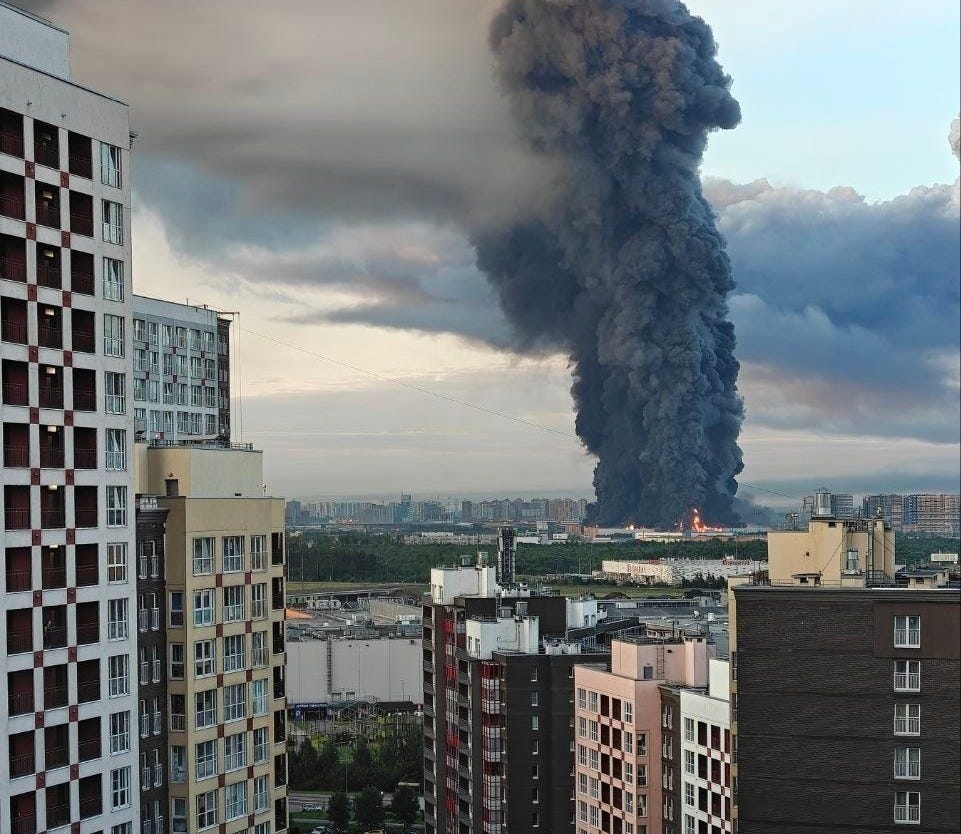
Now they can continue by simply leasing warehouse space from others, which is available. In Russia, it is an illusion that strikes can lead to a shortage of warehouse capacity. Russia has a significant excess of warehouse capacity. You can look across the Russian business media. There is no question about that. They have a lot of warehouse stock which is not in use.
Also, different investors across the board have been heavily building a lot of warehouses because people literally believed in Putin’s promises that we were gonna have a thriving domestic economy decoupled from the West. A lot of people recently have been building a lot of retail warehouse space, counting on that growth.
This is not materializing, which is why not only do warehouses stay empty, but the situation has been worsening over the past year. More and more new warehouse space was introduced, while economic activity was shrinking. The excess of warehouse capacity was increasing.
That is why Wildberries can, in principle, lease this space from private warehouse owners. There are two problems here. First, I see that many of them are trying to refrain from working with Wildberries because they’re afraid that they might become targets in the next strikes. I’ve heard these reports, but they need to be verified.
The second thing is that this opens the way for Wildberries to survive as a business, but it significantly diminishes the advantages of scale and concentration of logistics and warehouse capacity. They become just another retailer using private warehouses, which everybody else can do. Their main competitive advantage turns out to be gone. That’s the key problem.
The impact on vendors and consumers, that’s a secondary issue. Wildberries can continue its operations. There is warehouse space to lease. But can they now build a different business model based on leasing private warehouses instead of building their own concentrated centers? I don’t know. That’s a big question.
In terms of Ukrainian strikes, the drones themselves, the strikes, are cheap. Any strike that destroys something of greater value than the drone itself and the cost of launching it makes sense. Technically speaking, it’s as simple as that. It is very cheap to strike worthwhile infrastructure.
Vladimir: Ozon shares were falling sharply last week when rumors circulated that they might be one of the next targets. Ozon is in a slightly better position because they have much more dispersed warehouse capacity, not as concentrated. It is going to be a bit more difficult to inflict damage on Ozon than on Wildberries. But striking it is also worthwhile because there is some degree of concentration, and everybody else is looking at Ozon now as a potential second target after Wildberries.
If Ozon is targeted, that will completely destroy the hope that Russia can build a modern retail logistics business founded on concentrated warehouse capacity. Russia would have to go dispersed, like mini-refineries, mini-power stations. That is possible in response to strikes on big, concentrated infrastructure, but it is also less economically efficient and more costly.
That means that if Russia moves in that direction, it will increase costs in the economy, complicate logistics and shrink profits further. Shrinking profits is arguably the number one problem in the Russian economy because they deprive businesses of resources for development and investment.
Further strikes against both Wildberries and Ozon will eventually lead to a further decline in the profits of Russian business overall, which means less space for investment and less hope for economic recovery. The market is panicking because Ozon is a big corporate player. It’s a logical next target, so everybody is freaking out even more.
Think about the systemic effect of Ukraine going after big businesses one by one, not just picking one and stopping there. The big question is, who’s going to be next? After Ozon, it could be anything: export terminals, manufacturers of critical machinery, machine-building plants. There are plenty of these bottlenecks in the Russian economy where, when you strike, you might inflict a lot of indirect damage on others.
The big issue with Ozon is that everybody is looking at who is going to be next. Strikes on Ozon may also create this effect, apart from increasing costs, complicating logistics and shrinking profits. They also prove that Ukraine is always looking for the next target, and you might be next.
That will also significantly diminish business confidence and economic activity, which means shrinking investment. Economic activity is currently the major number one problem.
Vladimir: We have to keep all eyes focused on the September-October discussion of next year’s federal budget for 2027. It is already impossible to see how the government makes ends meet.
Now, going back to this discussion of the previous years, about when the money for Putin’s war machine would run out, it has already run out. But he was only able to continue the war for two more years by significantly raising taxes on the Russian economy: the corporate profit tax from 20 to 25 percent two years ago, and VAT last year. The damage inflicted on the Russian economy through these tax increases is huge.
The costs are rising. Everybody is talking about mobilization. Mobilization will not be cost-free. It’s an extremely costly exercise for the economy. Plus, Chemezov, the CEO of Rostec, met with Prime Minister Mishustin in mid-July. That meeting is available on YouTube, and he was saying, “We’re out of money. We don’t have money for new investment projects, so please help us with subsidies.”
There are many other examples: the big hole of at least 700 billion rubles in VTB, and so on and so forth. The continuation of the war requires a significant increase in spending. By all criteria, the current level of military and military-industry spending is not enough. The budget just doesn’t seem to be working.
The finance minister already said that the budget for next year is going to be extremely difficult. I believe that they will have to debate, as one of the scenarios for next year and beyond, the option of a ceasefire along the current lines, without preconditions, without demanding that Ukraine leave Donbas. This will be just one of the scenarios.
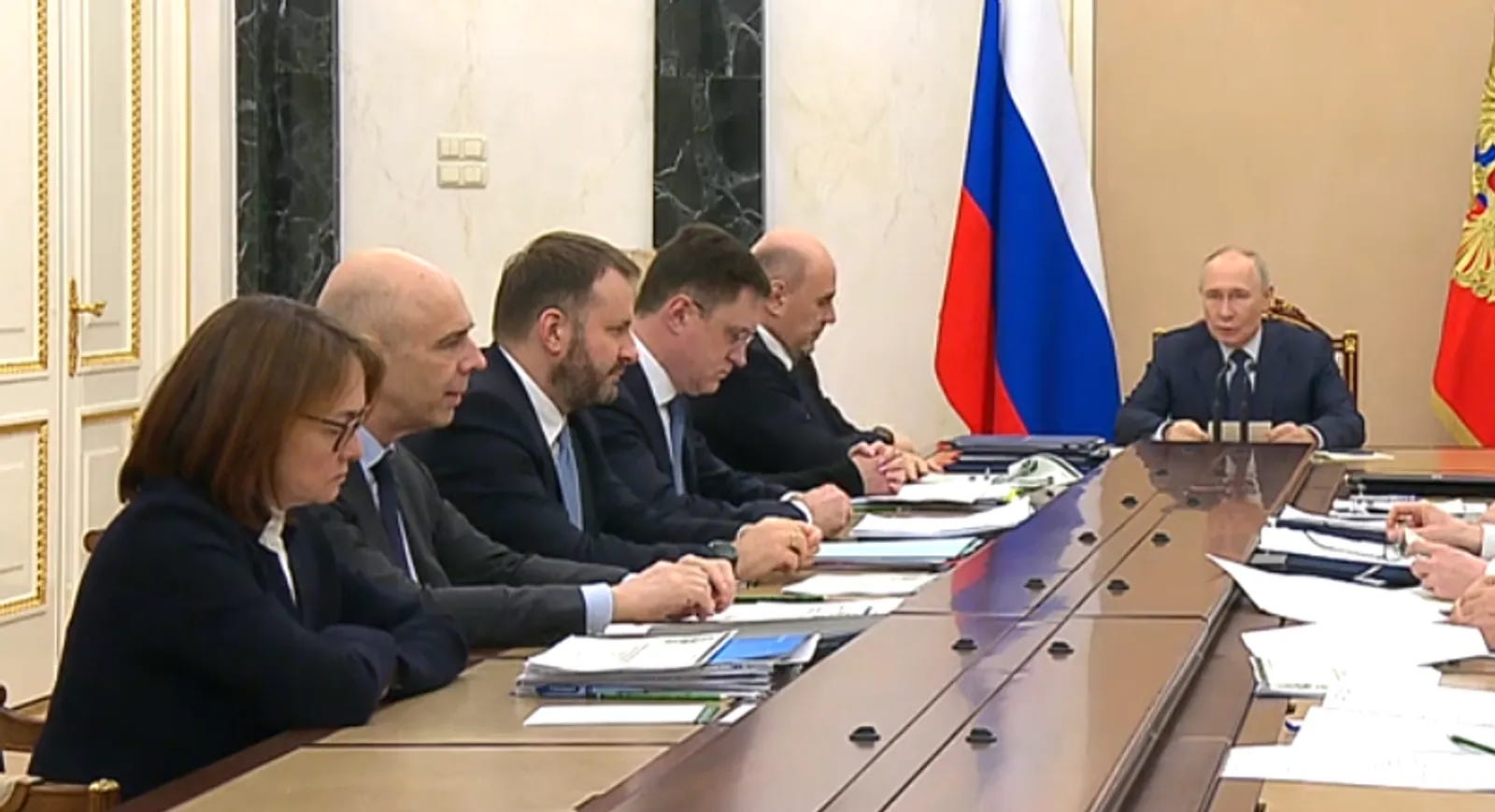
Putin is a stubborn guy. I’m not sure he will yield to these demands. When you see these mounting troubles, you don’t see a good way out because, apart from increasing taxes, they were getting by with increased domestic borrowing through OFZ. But it is getting more and more difficult.
The Ministry of Finance has now suspended the auctions because yields have been rising, and that increases budget spending on servicing the debt. How to finance all these mounting demands for spending is not clear, and the economy is tanking.
The windfall from the Middle Eastern war, the extra revenue, is largely over. We have some outbursts here and there, but we can clearly see that it is not preventing either a record budget deficit or GDP decline.
There will be a very difficult discussion on the budget this September-October. And on the other side of the table, you see this option where, for everybody, life becomes so much easier with just one click of a finger, by stopping the hostilities along the current lines.
That will be a test moment for Putin: he can face mounting trouble and increasing pressure, which is growing by the day economically and will be so much worse by September, or he can jump out of it. Let’s see what Putin decides.
But I think the main conclusion from Ukrainian strikes and sanctions and all these enormous sources of pressure is that the pressure is working. The cracks are there. We can see them. What Ukrainian strikes are doing is adding fuel to the fire, significantly and visibly exacerbating the Russian crisis.
It comes to some sort of inflection point. Let’s look at September-October, and hopefully we will finally see Putin changing his mind. If not, let’s increase the pressure. That’s the point.
No posts
Comments
Nothing yet. Say the first thing.
Sign in to join the conversation.