
This is The Great Books Project in Anthropology. I am on a quest to rediscover the classics and their insights into the human condition as a salve to the contemporary technological, social, and political threats to our humanity. Lest we forget.
Email me your recommendations: frontalobe.substack@gmail.com
Phantom Africa by Michel Leiris
Leiris, Michel. 1968. L’Afrique fantôme. Paris: Gallimard
Leiris, Michel. 2017. Phantom Africa (trans. Brent Hayes Edwards). India: Seagull Books
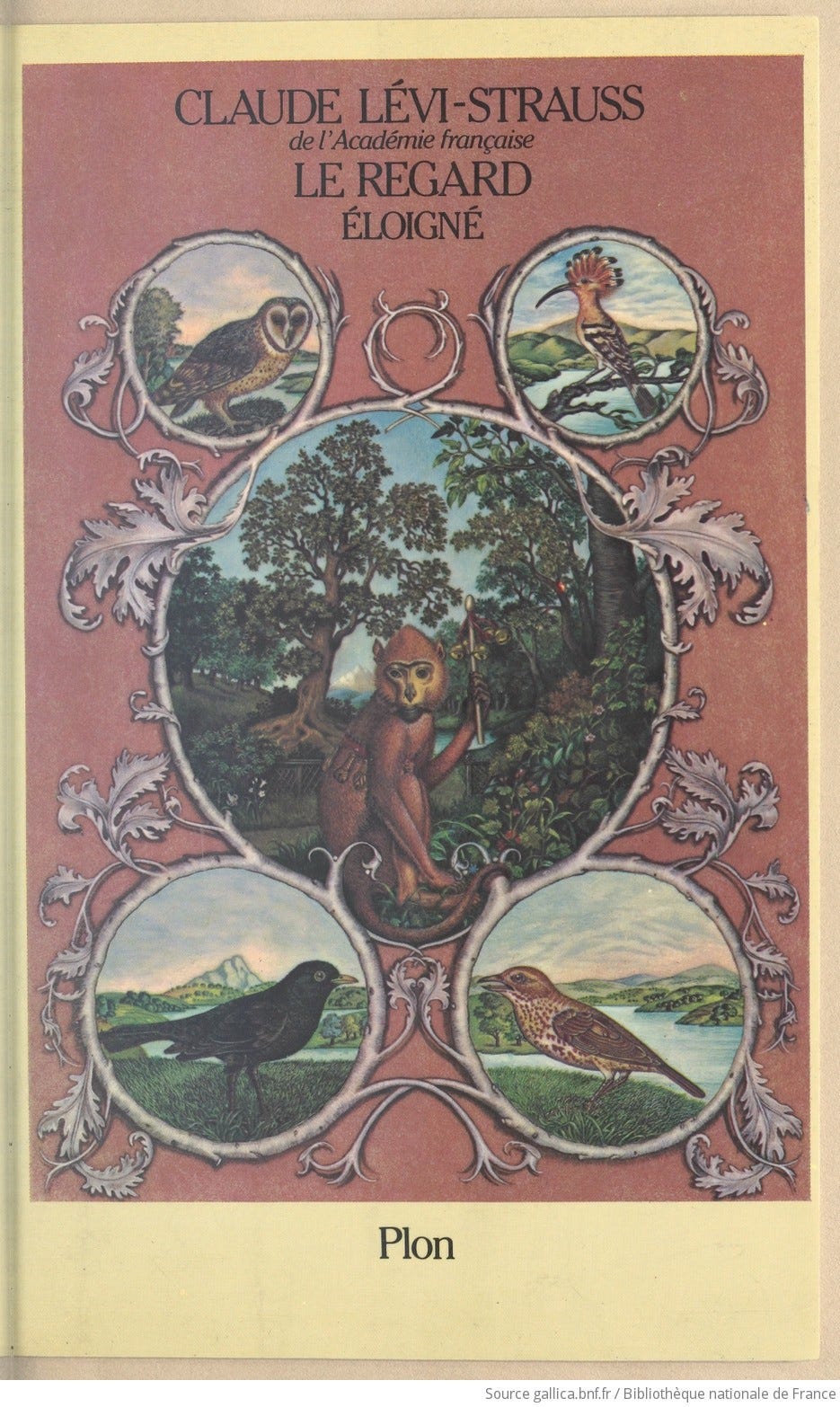
Tristes Tropiques by Claude Lévi-Strauss
Lévi-Strauss, Claude. (1949) 1993. Tristes Tropiques Paris: Plon
Lévi-Strauss, Claude. (1949) 1969. World on a Wane (Tristes Tropiques) (Trans. J. Russell). Boston: Beacon Press
================
The Book Review Guideposts: The Rhetorical Sandwich
While reading early modern ethnographies or monographs, I shall use these tropes to evaluate and appreciate the literary and scientific work of the forefathers of anthropology.
The Opening Trope
Writing using referentiality (realist) or evocative (literary)
The chapters are written as parts of the whole (holism)
The Closing Trope
There are different ways to start your ethnography: the literary and realist styles, and we get to read two different ones in this instance. The differences primarily rest on how close our ethnographers—Michel Leiris (1901-1990) and Claude Lévi-Strauss (1908-2009)—are to their present time on paper. This is tricky because I am referring here to the ethnographic time or the recorded present of the author when the book was written. This freezing of time, the eternal written present, is one such critique against ethnographic writing. The ethnographic present may be interpreted as cultures continuing to exist as they are, just like in the monograph. It is as if we are reading a photograph—forever sealed and sheltered in a bubble of eternal time. Thus, these recorded impressions perpetuate one aspect or interpretation of a culture for the foreseeable future. I read it as an important record and document of that history. As such, the past that is the ethnographic present is always tinged with nostalgia—one that cements ethnographic authority.
In the first place there existed beyond the rational a category at once more important and more valid: that of the meaningful. The meaningful is the highest form of the rational…
Lévi-Strauss, p. 59
Chapter 6 How I became an Anthropologist | Chapter 7 Sunsets
Lévi-Strauss is in no hurry to land in reality. He spent the first five chapters establishing context. We get a sense of time past and time present colliding—even I got confused about his memories of his early travels to the New World as his first fieldwork. At this point, we understand that Lévi-Strauss is using his past to provide a more holistic picture of what happened to him in Brazil.
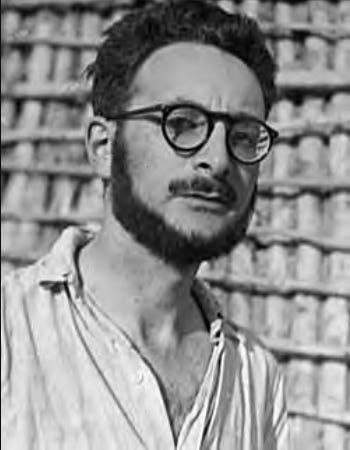
Lévi-Strauss is a much vilified figure among post-modernists who saw his structuralist framework as rigid in its conception. This makes this chapter particularly significant. We meet someone who did not set out to be rigid or impersonal but his approach to ethnology (the comparison of cultures) for me. He recounts why anthropology as a discipline suited him.
Today I sometimes wonder if I was not attracted to anthropology, however unwittingly, by a structural affinity between the civilizations which are its subject and my own thought-processes.
Lévi-Strauss, p. 56
In his struggle for meaning, Lévi-Strauss found a discipline that included his own self in the process. This was contrary to how people understood his academic work—like in all social sciences, of creating abstractions and models of society—as highly impersonal. He sees it as a joint enterprise and a starting point to even conceive of writing about another culture.
…we have a profession on the one hand, and on the other an ambiguous enterprise, oscillating between a mission and a refuge, bearing within itself elements of both and yet always recognizably one rather than the other…
…The ethnographer, while in no wise abdicating his own humanity, strives to know and estimate his fellow-men from a lofty and distant point of vantage: only thus can he abstract them from the contingencies particular to this or that civilization.
Lévi-Strauss, p. 58
Abstraction cannot exist without having to undergo a form of sacrifice, what he calls abdicating one’s humanity.1 Indeed, the expectation is that you voluntarily surrender who you are to become who you will be at the moment of the ethnographic present.
The conditions of his life and work cut him off from his own group for long periods together; and he himself acquires a kind of chronic up rootedness from the sheer brutality of the environmental changes to which he is exposed. Never can he feel himself ‘at home’ anywhere: he will always be, psychologically speaking, an amputated man.
Lévi-Strauss, p. 58
Thus, he looks back and writes in the ethnographic present how he came to being at the point of the pen. I appreciate that he was highly self-aware, recognising that as a teacher he could never repeat lessons over and over again in his syllabus.
…my mind has the particularity—and it may well be an infirmity—that I find it difficult to concentrate twice on the same subject… it proved physically impossible for me to address my students if I were not delivering an entirely new series of lectures.
Lévi-Strauss, p. 56
Anthropology and/or ethnographic fieldwork forces one to confront the person at his most vulnerable and in the middle of the void. No one tells you this, but the result of that painful growth is the insightful analysis that is the monograph.
Anthropology affords me an intellectual satisfaction: it rejoins at one extreme the history of the world, and at the other the history of myself, and it unveils the shared motivation of one and the other at the same moment. In suggesting Man as the object of my studies, anthropology dispelled all my doubts: for the differences and changes which we ethnographers deal in are those which matter to all mankind, as opposed to those which are exclusive to one particular civilization and would not exist if we chose to live outside it.
Lévi-Strauss, p. 56
Given that he is on that transformative journey, it is unsurprising that he writes a chapter, an ode really, to light, to the sun and sunsets, and forever inscribes the moment in the ethnographic present.
This is one of the great examples of a literary style that fuses what he sees in the journey that no one noticed. The ship ever so slightly veers off course—with no one noticing it, except him. He is, at once, secretly savouring the experience alone and yet in communion with nature and the vast sameness of the ocean. Hence, that slight angle that rendered the direction of the ship in error, simultaneously gave him the ache of inspiration to describe light. He is only present with the sunset.
Many years have passed, and I don’t know if I could recapture that early state of grace. Could I re-live those moments of fever when, notebook in hand, I would jot down, second by second, phrases evocative of the evanescent and constantly renewed forms before me? It’s a gamble that still fascinates, and I’m often tempted to begin it all over again.
Lévi-Strauss, p. 66
And yet he does; its importance is highlighted as a distinct chapter in the monograph, to describe what time feels like and how it looks in different spectrums of colour.
Daybreak is a prelude, and nightfall an overture—but an overture which comes at the end, and not, as in most operas, at the beginning. The look of the sun foretells what the next hours will bring; dark and livid, that’s to say, if we are in for a wet morning, and pink, frothy, and insubstantial if the weather is to be fine. But as to the rest of the day, the dawn makes no promises.
Lévi-Strauss, p. 66
Lévi-Strauss stretches out from the recesses of his mind to recall the promise and also the foreboding approach of sunset on the horizon.
Time impacts the way an ethnography is written. Unlike the daily travel log of Leiris, Lévi-Strauss has the privilege of distance from when he first conducted his Brazil fieldwork. The difference between the two is palpable as we shall see. Today, we see how Lévi-Strauss reconstructs his memories, his old self, and in the process revisits his old data and notebooks to tell the Amazonian Indian stories. For now, this distance in both temporal time and place is a specific methodology that he says is essential to the comparative project.
Anthropology is unique as a discipline because it explicitly includes the ethnographer in its analysis. The comparison is not possible until the ethnographer is “amputated” from his context. What results is a double (or even triple or quadruple) level of distancing as ethnographers piece together fragments of their old self, notes, data, and observations. This abstraction, commonly derided as impersonal, is actually the key to analysis. But in that state of liminality, the literary writing style can harness ethnographic authority.
Further Reading:
Lévi-Strauss, Claude. 1985. The View from Afar. [trans. Joachim Neugroschel and Phoebe Hoss] Oxford: Basil Blackwell
Lévi-Strauss, Claude. 1983. Structural Anthropology (vol. 2). [trans. Monica Layton] Chicago: University of Chicago Press
Lévi-Strauss, Claude. 1963. Structural Anthropology (vol. 1). [trans. Claire Jacobson and Grundfest Schoepf] New York: Basic Books
The ongoing draft and outline of our project are available on our main page.
If you got this far, I appreciate it! If you find reading this worthwhile, it greatly helps my cause if you can share. My tip jar is open, but this newsletter will always remain free.
Contribute to my library access!
If you are new here, we have just concluded reading David Graeber’s Debt: The First 5,000 Years. My first slow read here on Substack in 2023 was David Graeber’s The Dawn of Humanity. Unique among his peers, Graeber asked the big questions in anthropology—how did people organise themselves and what were the values and choices they made. Sadly, except for a few scholars, we have stopped boldly asking who we are, why we are different, and where we are headed. We are changing this now.
Re-read the previous post:
The method of distancing is both a thinking and analytical process made explicit. I think it is a worthwhile meandering to find out more about this in the next few posts.
Comments
Nothing yet. Say the first thing.
Sign in to join the conversation.