
I received two instructions:
Rest
Don’t do anything that causes pain
I ignored both of them, wildly.
I’d torn both my calf muscles in an awkward manoeuvre on a French ski slope - the right calf worse than the left (the muscle went ‘ping’), but the left was injured too.
This was devastating for an active person on Day Two of an eye-wateringly expensive, week-long holiday, even more devastating because I was loving my skiing just before I fell, whizzing down the slopes at top speed, waving my poles in the air in a near euphoric state.
I get like that.
I’m a person of extremes. I rise high and I sink low.
The low came later as I lay on my bed with my leg on an ice pack, sobbing, ranting and railing against this cruel twist of fate.
When my tears had dried enough to see my phone screen, I got busy, studying for a PhD in calf tear rehab via YouTube.
The following day, I saw a doctor and a physio and received the simple instructions outlined above: Rest. Avoid Pain.
They went in one ear and out the other.
Two days after my accident, on my husband’s 60th birthday, I got a bus to a bar and danced to a live band, swinging my upper body without moving my legs (the music too good to resist).
The following day, on my 55th birthday, we took a sleigh ride through a snowy forest. Now, that was an inspired choice, a gentle, pain-free celebration, but then I pushed on and did too much, as I’ve always done.
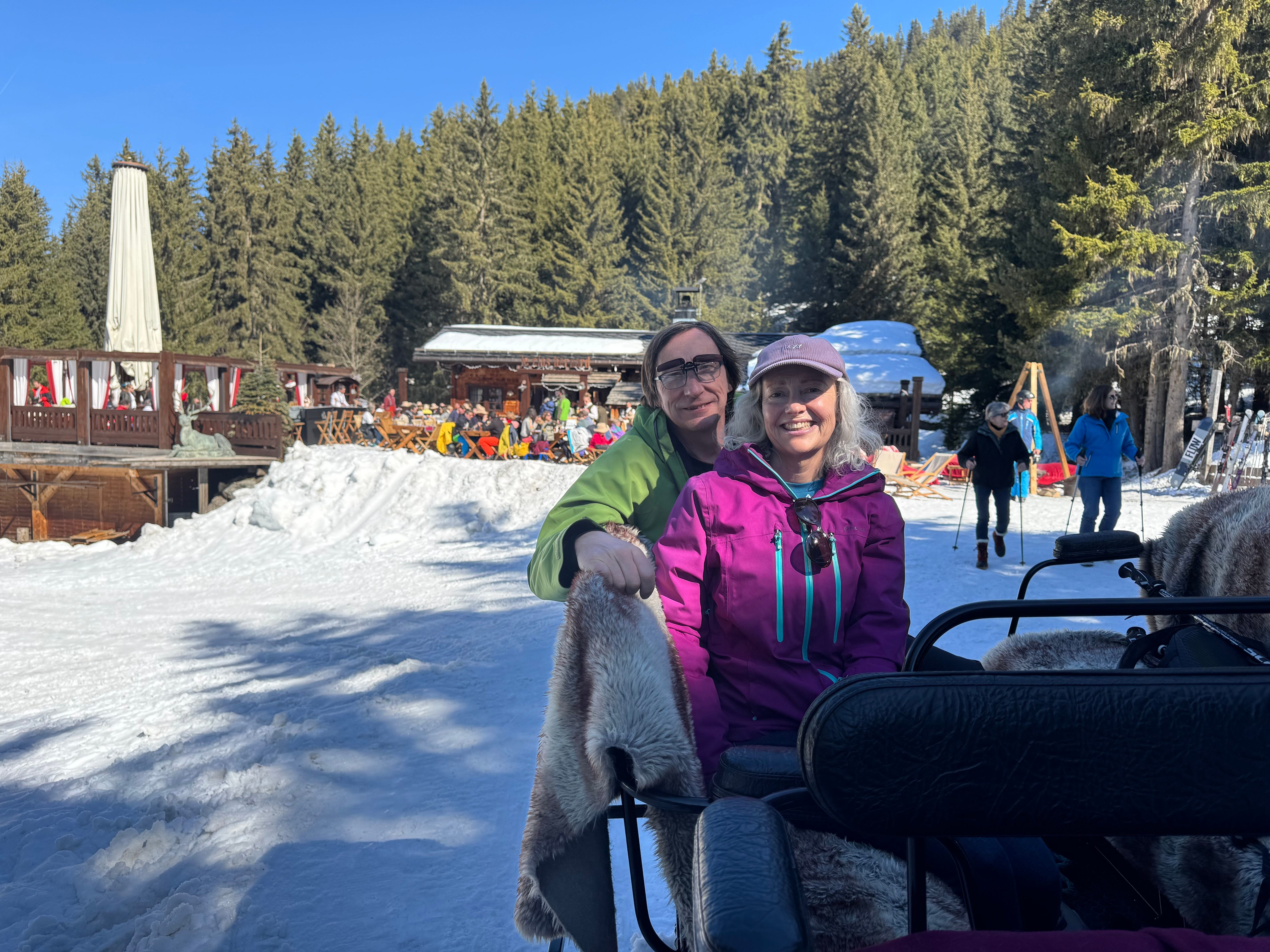
I hobbled and slid across slushy snow to a gondola, travelled up the mountain and had lunch with my friends, before doing the same journey back again, numb with cold.
That particular choice was not inspired. Rather, it was driven by stubbornness, a fear of missing out, an outright refusal to accept my condition and an intolerance of my vulnerability.
Looking back, I wonder if when the physio told me that calf tears could take six weeks or more to heal, I heard two days.
Still, I got myself back to the UK, went for more physio and began my exercises in the hope of defying all prognoses and engineering the swiftest of recoveries.
That didn’t happen either.
Instead, I set myself back, over and over again, as my codependency, addiction to busyness, hunger for belonging, FOMO and fear of vulnerability conspired to ruin my rehab.
I failed to cancel numerous things that I would have been wise to cancel; I walked too fast trying to keep up with someone, ashamed to state my needs; I cleaned the house for four hours in preparation for a party, high on adrenaline that numbed the worst of the pain; and I briefly wore boots with a heel because I was feeling plump after a week of no exercise and 3-course meals in our ski chalet (I’m 23 years into my healing journey from an eating disorder and body dysmorphia but these old ways of thinking are deeply ingrained).
As a result of this kaleidoscope of my addictions and dysfunctional behaviours, my left calf tear got worse, my right leg swelled up and both my Achilles tendons reacted.
I guess that was the only way my legs could get my attention and force me to stop and put my feet up.
If you’re a woman (or man or person) who does too much, maybe you can relate to this?
I’m now nine weeks on from the initial injury and seven weeks on from the re-injury and I’m still healing, getting a bit better, doing a bit too much, having a setback, improving a little bit more, hurting another part of my body through over-compensating or pushing through and being forced to slow down, over and over and over again, because in this area of my life, I learn at snail’s pace.
This enforced period of rest and relative inactivity has brought me to my knees, physically, mentally and emotionally.
My coping mechanisms of overdoing it, staying busy, rushing, running and always being on the move have been taken away from me, bringing me face-to-face with the darkness and despair I’ve been avoiding since I was a kid.
You see, I learned, as a little girl, to do rather than be.
Simply being felt frightening because I would have to be with my feelings and they were too painful for a small child to feel.
Being also meant I would have to face up to reality - to the fact that my parents were struggling to take care of me so my very survival might be at risk, a possibility too frightening for my under-developed self to absorb.
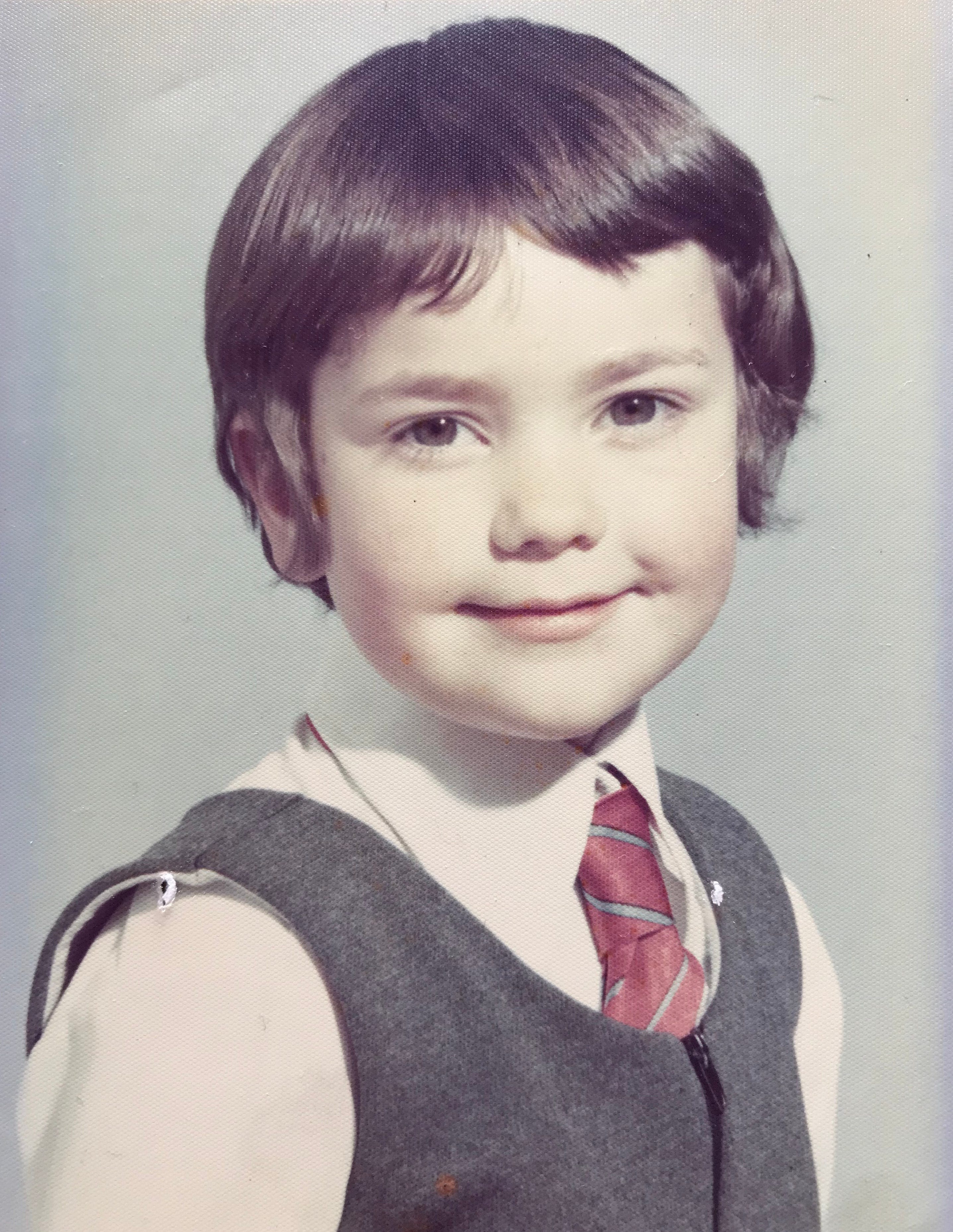
But that same under-developed self was wired for survival so she quickly resorted to coping mechanisms or trauma responses to block the feelings and escape reality: fight, flight, freeze and fawn, with my primary response being flight.
I ran, exercised, played sport, performed, studied, achieved, won, rushed and stayed strong, believing that being powerful, fast and capable were the only ways to survive.
No wonder, then, that my current period of enforced immobility, drastically reduced capacity and extreme vulnerability has taken me to a dark place.
For the past two months, I haven’t been able to run or rush. I’ve barely been able to walk and when I’ve done too much, pushed my body too far, my legs have screamed at me - physical reminders of the consequences of self-abandonment.
It’s hard for me to explain how challenging this time has been, how bleak I’ve felt. Tears spring to my eyes as I write these words. But I will do my best because there is huge growth on offer here, for me and for anyone who can relate.
There’s a saying that’s served me well over the course of my 23-year healing journey and that’s hugely helpful right now:
When it’s hysterical, it’s historical.
Setting aside any negative connotations of hysterical and how that word has been used to label women in the past, this catchy saying reminds me that if my reaction to a person or situation is disproportionate, off the scale, then that person or situation is triggering an emotional flashback to my past.
So, when I spiral down to the depths of despair when my leg swells up after doing too much, which is an act of self-abandonment, that’s because my emotional brain (amygdala) has hijacked my rational brain (prefrontal cortex), transporting me back to a moment of abandonment in my early life.
My rational brain knows the swollen leg is a setback and I’ll get better eventually.
My emotional brain thinks all is lost.
The all is lost feeling is an echo of my very first abandonment wound, connecting me to what psychotherapist and author Pete Walker calls the abandonment depression, which encompasses feelings of hopelessness, helplessness and overwhelm.
Hopeless, helpless and overwhelmed.
These are the feelings I get in touch with when I don’t have access to my usual coping mechanisms, when I’m stripped of my capacity and capability, my strength and my speed.
I feel like giving up, just as I felt like giving up as a child.
If it’s this hard, what’s the point? If it’s this hard, I don’t want to be here.
These are frightening feelings and I’ve scared myself over the past few weeks but I’ve also found incredible healing that I wouldn’t have found if I hadn’t gone to this dark place.
I have thawed layers of frozen feelings that I hadn’t been able to reach, despite decades of addiction recovery and therapy.
I have cried tears that have been stuck inside, meaning I can process trapped pain.
I have dared to be vulnerable with people I trust, on a deeper level than ever before, to tell the truth about the darkness and despair.
I have touched the emptiness that I’ve been running from, dwelled in it for a time, and come out the other side, a transformative experience that reduces my fear of going there again, or of feeling other painful emotions, or of facing other things that terrify me.
I have always known that we have to face our deepest fears in order to heal and transform and I have shared this truth with my readers and coaching clients.
Whether we’re trying to form an intimate romantic relationship or endeavouring to complete a creative project and put it out into the world, we have to go there.
We have to feel and face our fear of rejection or abandonment, our fear of criticism or attack, or whatever other fear is etched into our psyche as a result of painful life experiences.
We have to go to the dark depths to discover what lies beneath these fears, which for those of us with complex trauma, will be a fear of annihilation, a fear that we’re not going to survive this.
I wish we didn’t have to feel despair, hopelessness, helplessness and overwhelm. Honestly, I do. I wish there was another way, but as I wrote in a recent note, the only way out is through.
The important thing to remember if you do go to that place of despair is that you are in an emotional flashback, triggered back to your childhood, back to a time when you were helpless and the situation was overwhelming.
Back then, we didn’t have the resources, the developed brains, the emotional intelligence or the support to process what was going on.
But we do today.
Even with my injuries, I know I am capable and resourceful and resilient and determined and I will get through this because I always have.
I also have an array of grounding techniques and emotional regulation tools as well as a wide support network of people who get me and get what I’m going through.
We don’t have to do it alone. We can reach out for support, remembering that vulnerability is strength.
This will be hard, especially if isolation and self-sufficiency were hallmarks of our childhoods. We’ll be tempted to repeat these patterns, to go it alone, to stay silent about our pain.
But we recover by breaking free of old behaviours and by risking doing something new.
We heal by telling the truth and asking for help.
I will end this article here because I’ve been resisting finishing it for weeks now, accepting that I’ll never be able to convey exactly what’s in my head, that perfection doesn’t exist and that procrastination is a fear-based coping mechanism I deserve to overcome.
I’ll be back soon with further thoughts on despair, as well as some more upbeat topics!
I hope you stay tuned.
And if I can support you in any way, please reach out.
From midlife with love,
Katherine x
If you enjoy my writing, please consider becoming a paid subscriber to receive subscriber-only articles and extra love 🩷. Alternatively, you can buy me a coffee here. To explore my coaching, speaking and writing, click here: https://www.katherinebaldwin.com/
Comments
Nothing yet. Say the first thing.
Sign in to join the conversation.