
Where I live, spring has announced its presence only to those who stop to notice. The trees are still naked, baby leaves almost bursting from their buds, ready to drink in the sunshine.
Stereotypical spring is usually full blossoms and baby lambs, a picture-perfect moment where you can say, “Okay, today is officially spring”. But seasons, like any process that supports life, are more complicated.
Seasons are always unfolding in an interconnected cycle. The start of spring is faintly perfumed with the odor of winter death. The autumn leaves decompose with the orange vibrance of summer.
This intertwining of growth and death constitutes life on Earth. The same way the expansion and contraction of our hearts animate our bodies with life. The mistake our culture makes is thinking that life and death are opposites. Without death, there would be no life.
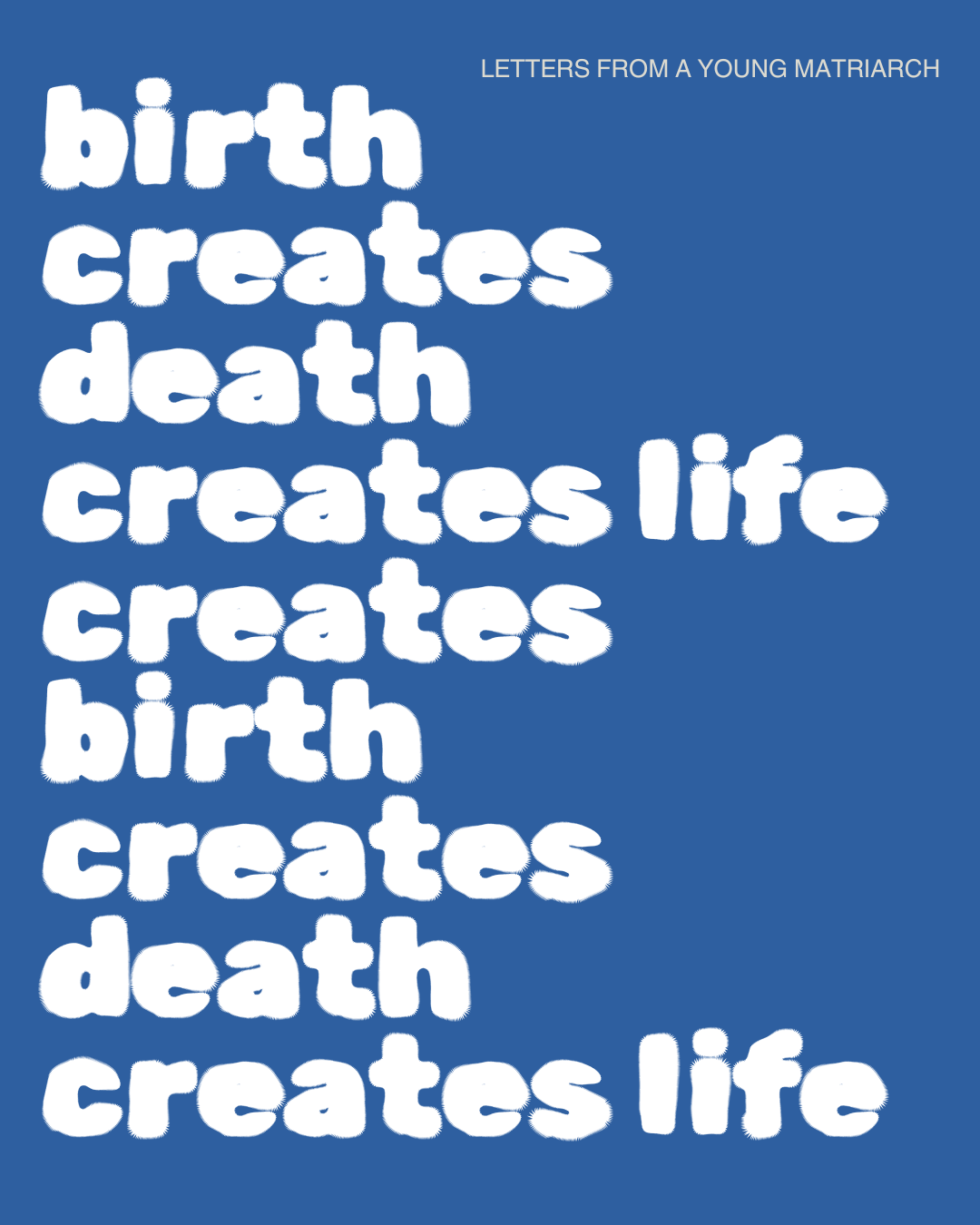
This is knowledge that only comes when you take the time to sit with life quietly and listen deeply. Not just human life. All life.
The insight that follows is that death, decay, and endings are not to be feared or avoided. When treated with respect, when honored, death serves and sustains life.
When death is denied, feared, and suppressed, it can paradoxically become rampant. That’s the system we live in. Patriarchal economic systems are killing our life-giving planet. Patriarchal governments blow up children and call it politics.
When there is no acknowledgement of death, it becomes pathological. There cannot be life without death. If we seek to create that, there will be death without end. What we fear the most becomes reality.
It’s no surprise that the people who have gained the most from this system are funnelling billions into “longevity investments”. The fear of death is what drives them, so they try to control everything, including their own mortality.
In an interview in 2012, Peter Thiel said, “There are all these people who say that death is natural, it's just part of life, and I think that nothing can be further from the truth”.
I know death anxiety when I see it.
In my early 20s, the mere mention of death would send me into a panic. A news headline about someone dying young would ruin an entire afternoon. I felt alone in my fear, not because everyone around me had any more insight into death than I did, but because they had numbed themselves to it.
I have always felt close to the Earth and understood that she moves in sacred cycles. But it was matriarchal philosophy that gave me a framework to apply these learnings to my life and human society.
It has helped me see the loss and darkness we all experience not as something to fight against, but as fertile ground for transformation.
That does not mean we blindly accept death and destruction. In nature, death serves the balance of life. One animal dies to nourish another. Dead plant matter becomes compost that nourishes the soil.
The death and destruction we see in our society right now are a result of imbalance and disconnection with life. It is profane death, which is degrading the very fabric of life itself. When we are familiar with sacred death, profane death feels like swallowing a thorny tennis ball.
The only solution to the mounting crises we are experiencing is to simply stop. Shut the factories down, close the shops, shutter the government offices, at least for a little while, until we can regroup and rebalance. The fact that this is unthinkable shows just how distorted our society is. What kind of stability is there in a society that must keep going at all costs, that is willing to go as far as sacrificing the planet that sustains us?

The people who “lead” patriarchal societies have succeeded because of their proficiency at numbing themselves from life, death, and birth. The people who have the most intimate knowledge of these processes (mothers, caregivers, land stewards, etc.) have no power in our society. Matriarchy would change that.
Like many mothers, I experienced a complete identity death when my daughter was born. My personal relationships transformed beyond recognition; most of these connections have since died. I left my tech job behind and embraced writing full-time. My ecofeminist studies led me to matriarchy, which gave me a completely different blueprint for power and motherhood.
The more I learned about matriarchy, the more it felt like Mother Nature herself was drawing me a map through hostile and painful terrain. It was as if she were whispering to me:
“We didn’t always live this way,”
“Fathers are not the center of the family,”
and
“You are powerful in a way this culture cannot recognize.”
While the people around me said very blatantly:
“This is just how the world is and always will be,”
“Girls without fathers are dangerous,”
and
“You can only derive power from institutions and a man by your side.”
Matriarchal frameworks give us completely different (and more logical) possibilities for living than the rigid absolutes dictated by patriarchal norms.
Last month, I visited Malta, a small Mediterranean island with significant remnants of ancient matriarchal cultures that once thrived there. There are numerous temples still intact, some over 5,000 years old.
The imagery on these temples denotes a deep connection to the cycles of life. These ancient peoples inscribed interconnected spirals on the walls, and their most sacred places were underground temples where loved ones were laid to rest, and new babies were born.
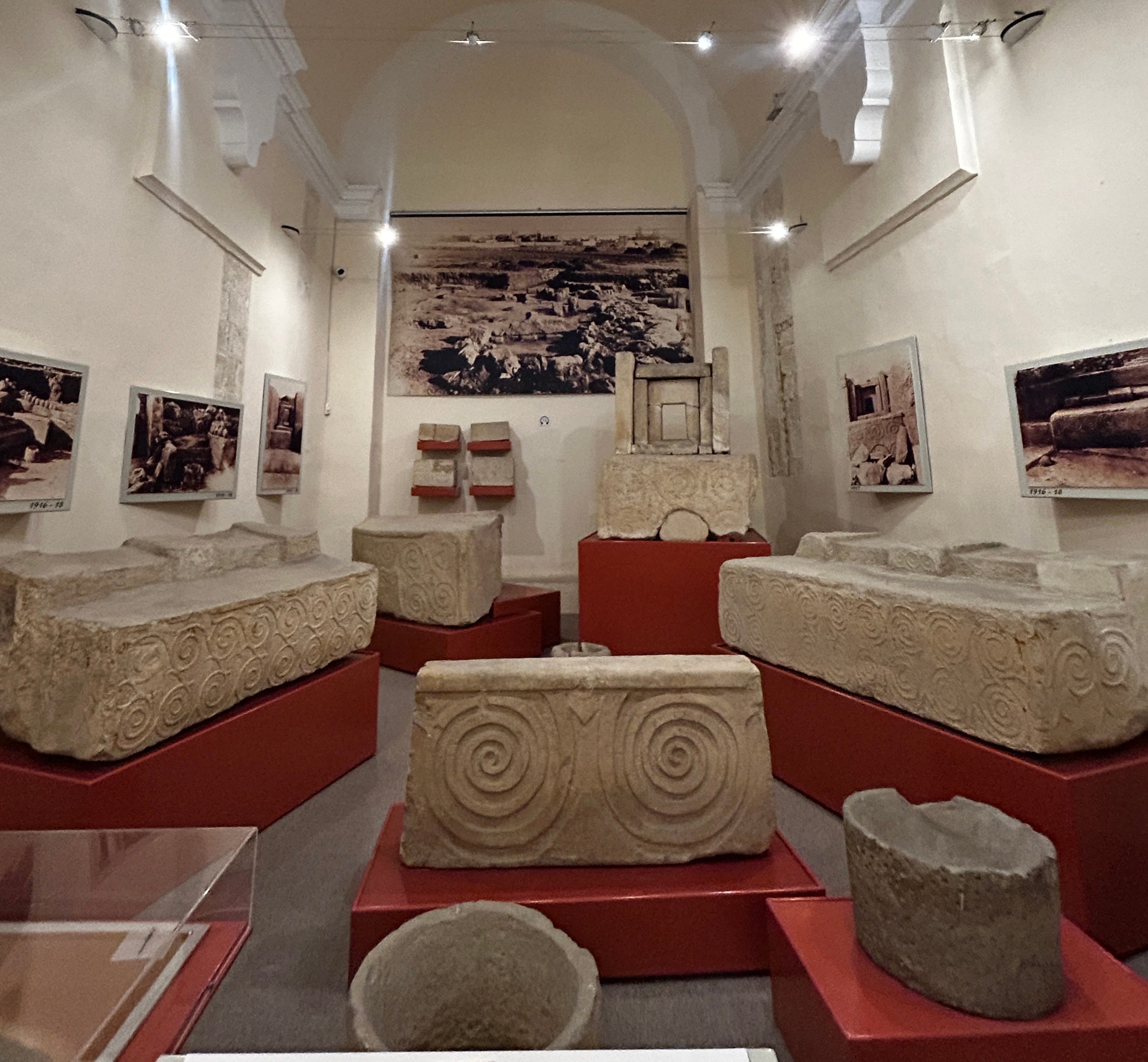
Many ancient and present-day matriarchal societies believe in rebirth, seeing birth and death as intertwined processes of life. In death, someone becomes an ancestor. At birth, an ancestor is reborn.
Unlike our society, which hides and medicalizes the domains of birth and death, these processes were collectively honored and treated with the reverence they deserve. It is almost impossible for a mind shaped by patriarchy to visualize the depth to which people birthing, grieving, and dying were taken care of.
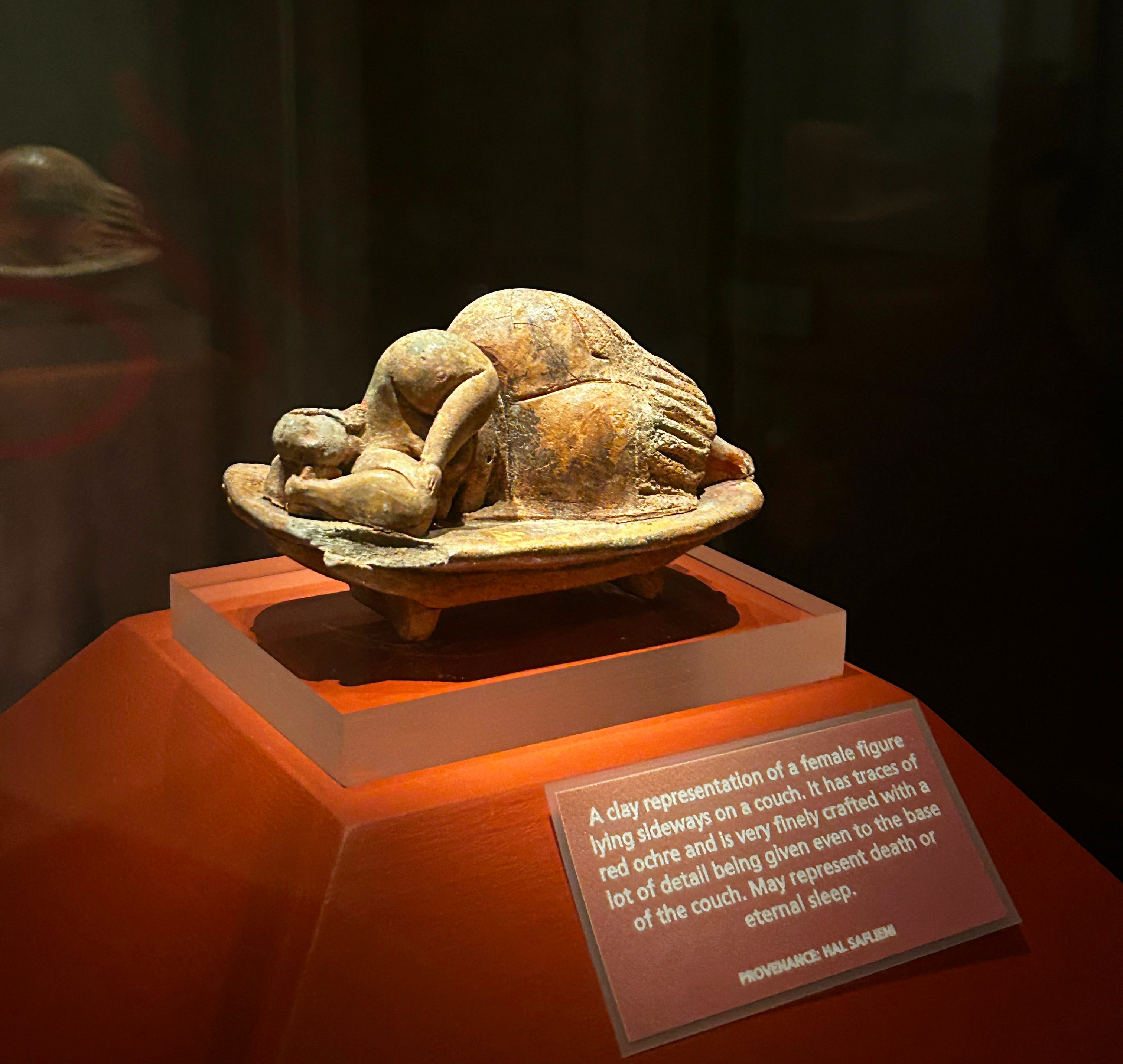
I took home a copy of the “Sleeping Lady”, an iconic 5,000-year-old goddess figurine. Her likeness gives us insight into how matriarchal people might have honored rest and death-like states.
She lies next to my laptop as I write these words. With her by my side, I receive permission at any moment to close my eyes, lie down, and fully nourish myself, regardless of the never-ending responsibilities of single motherhood.
By focusing only on growth and suppressing death, patriarchy is destroying life itself. The collapse is already happening. Earth’s ecosystems are being pushed far beyond her limits. The majority of patriarchal governments are not equipped to deal with what is coming.
My experience being displaced by the wildfires that ravaged Los Angeles early last year gave me firsthand proof of how deep in denial our culture is about the scale of this problem, and how unprepared we are for what is to come.
Saying this out loud sometimes makes me feel like a doomsdayer, and I’ve already been called as such. But what’s crazier to me is a society that doubles down on normalcy when the imbalance is screaming at us.
A matriarchal society is not a utopia that pretends only nice things exist. It’s a society that can only emerge from human beings who have integrated death. Those who have truly internalized that death exists, is unavoidable, is inevitable. There is nothing to fear in this, because what follows necessarily is that life exists, is unavoidable, is inevitable.
It’s about yielding to this flow, this pendulum swing that we are subject to as the result of being alive. We’re surrounded by evidence of the intertwining of birth and death. There is nothing but that. These cycles govern our moon, our soils, our wombs. When birth and death are in harmony, life’s melody is sweet and moving.
The system tells us the answer is to consume more, perform more, don’t age, don’t fail, don’t stop. To integrate death is to slip free of that leash. People who are not terrified of endings cannot be controlled.
The majority of us are dependent on economic and political structures that present themselves as permanent. When those systems inevitably buckle under the weight of what they have refused to integrate, it will devastate those of us who rely on them. When collapse comes, the people most prepared will be those who have already been building something truer and more balanced than what this society can offer.
Matriarchy is not a far-off possibility. It is a system of survival we can begin right now, with the Earth as our partner. Those who understand her cycles, who know how to move with contraction as fluently as expansion, with death as readily as growth, will be the ones who know how to adapt, to feed people, to hold life together when the old certainties have dissolved.
What that looks like will be different everywhere. Every matriarchal society that emerges will develop its own rituals, customs, and languages for honoring death and rebirth. That is not mine to prescribe. What is mine to say is that there is another way. There are real systems of governance, economics, and culture that can be reborn through us.
We cannot save or preserve patriarchy. It is collapsing. The most matriarchal act we can do now is to take the darkness and create a fertile foundation for the future.
No posts
Comments
Nothing yet. Say the first thing.
Sign in to join the conversation.