
When you’ve been raised in the system of capitalism, it can seem impossible or unrealistic to imagine an economy where people gift each other things freely.
The gift economy is not supposed to replace the capitalist system. It’s not like grocery stores would suddenly give everything for free, and money would cease to exist. Living under a full gift economy would require a complete reorganization of society.
We would not have giant conglomerate-owned supermarkets. Instead, we would get our food from local farms and gardens. We would not have private property and mortgages. Instead, we would treat land as something to steward and be in relationship with. We would not spend the majority of our waking hours enriching shareholders. Instead, we would share the responsibility of meeting needs among many, and have much more time for rest and leisure.
We cannot get there immediately. But we can start laying the foundations. Practicing the gift economy is both a vehicle to escape the confines of the capitalist system and a way to build a world outside of it permanently.
I have a university degree in Economics. Though I could understand the logic of my studies, I never resonated with the core assumptions from which the logic flowed, chief among them the base assumption of scarcity.
When I look at the world, I don’t see scarcity. I see a planet teeming with an unimaginable variation and volume of life. I see a biosphere designed specifically to protect our skin and nourish our lungs. I see 6 billion people who have all been mothered into adulthood, and 2 billion children who are being mothered as we speak.
What the system of patriarchy does is convince us that only structures approved and used by (rich, white) men are legitimate. This applies to everything, including the very definitions of these structures.
Investopedia defines economics as the study of “how societies manage scarce resources to produce, distribute, and consume goods and services.” This is an ideological definition of economics rooted in a patriarchal worldview.

Etymologically, economics (“oikos” meaning household and “nemein” meaning distribution) is nothing more than the study of how resources are allocated to meet household needs.
The Investopedia definition describes a very specific type of economics: capitalist exchange. It’s all about what gets produced and what gets consumed.
When we take the etymological definition of economics at face value, and we observe how resources are allocated inside households, the resulting behaviour is much more in line with the gift economy. As children, we receive freely what we need to grow. The stronger social ties are, the more likely we are to receive what we need without having to immediately pay for it.
To take the implementation of the gift economy seriously is to position the constant gifting done in intimate relationships, chiefly mothers and children, as a legitimate economic discipline that can be studied, emulated, and applied to society.
The gift economy, simply put, is the distribution of resources according to need. Goods and services are constantly flowing from those who have more to those who have less, in an infinite circle. Whatever there is in abundance, from money to time to love to skills, is constantly flowing from you to someone else, and from others to you.
The indicator of value in a gift economy is not the goods and services themselves, but the strength of the relationship that happens as a result of the gifting.
In the gift economy, the world is assumed to be abundant, and the continuous sharing and gifting of resources creates more abundance. This is how matriarchal societies not only work but also how they are created. Because when we can meet our needs outside of the patriarchal economic system, we weaken those power structures while legitimizing life-centered and relational systems.
We cannot shift to a gift economy overnight. But we can begin to start unravelling the iron grip of capitalism by changing how we move through the world and shifting the small choices we make every day. This list is drawn from my own practice. Some of it I'm already living, some of it I'm still working toward. I hope you find it useful, and I’d love to hear any ideas it sparks in you.
My daughter is almost 3 years old, and I have never paid anyone to look after her (outside of institutional daycare). When I moved to Norway as a single mother a year ago, I befriended a young woman who voluntarily spends time with my daughter every weekend or so while I write. Another young girl in our neighborhood plays with her for a couple of hours, so I can cook. Money has never been discussed or asked for because everyone in this exchange receives something valuable to them. I receive space, my daughter receives social development, and they receive joyous time spent with a young child.
When we see value beyond money, we are participating in the logic of a gift economy.
In our current economic system, where strangers are constantly interacting, money is a useful tool of exchange.
But the capitalist system has become so entrenched that money has become the primary indicator of value. The system continues by making money scarce, which increases its value. Those who already have money have an easier time making more, which increases the value of money even further. It’s a downward spiral from there, and we are currently living it.
In a gift economy, money can still be used. But the primary currency is not money. It’s trust.
The trust and feelings of warmth and gratitude that have been built between me and the women who care for my daughter are clearly of higher value to all of us than money. That’s why we participate in it.
The free exchange of giving and receiving increases trust between people. It doesn’t matter what you give or receive (money, time, skills, emotional labor, energy), as long as the exchange meets needs.
When we feel there is never enough, we keep consuming and competing, which holds the logic of scarcity in place both externally and internally.
The majority of people on Earth do not have enough money. That is materially true, and it’s also the foundation of the capitalist system.
But when we expand our definition of value beyond money, we also give ourselves the opportunity to see more abundance. If we look carefully, there is something all of us have in surplus: a skill, knowledge, joy, space, time, emotional capacity, clean air, health, confidence, a stocked pantry, the list goes on.
Taking an honest inventory of the wealth we already have can shift us out of the constant urgency to acquire more.
That urgency is what keeps us locked into systems that depend on scarcity. When it softens, even slightly, we gain the capacity to relate differently to the world.
Under patriarchal capitalism, we’re trained to feel ashamed for needing help. But need is part of the cycle of gifting. When you’re in a hard season, ask for help, and let others show up for you.
Allow yourself to receive without immediately converting it into a transaction. Need is an entry point into relationship, not a burden. In a gift economy, you don’t necessarily repay the exact person who gave you what you needed. You participate in continuous circulation by giving what you have in abundance.
This is probably the most difficult shift for those raised in individualist societies. Asking for help can feel like weakness or creating debt. But an economic system that meets needs cannot function if those needs are not apparent.
The gift economy works when we give from what we have in surplus. Identifying what we have in surplus is a skill that must be honed by being both honest and discerning. Those of us socialized as women under patriarchy have been conditioned to over-give even when we don’t have abundance. We cannot sacrifice ourselves in the course of giving.
The easiest way for me to notice where I need boundaries in giving is to ask myself: Will I still be nourished after giving this? Or, when I give to this person, does the resulting strengthening of the relationship even out any loss I might feel from the “loss” of what I gave?
Knowing your limits is what makes the gift economy sustainable and nourishing for everyone involved.
The gift economy predates capitalism and will outlast it. It’s how children are raised. Calling it an economic system moves the conversation from personal to structural, which is how societal change happens.
When you name these acts as part of an economic model and not just “being nice”, you help others change how they perceive value. The gift economy continues to stay invisible partly because we’ve been treating it as private and sentimental rather than an economic structure.
When we say “this is the gift economy in action”, we begin to return value to everything patriarchal capitalism has deemed worthless.
Take care work, for example. The vast majority of this work is done by women globally, and it is unpaid or underpaid. This is certainly a huge problem, because it keeps people doing care work in a state of constant scarcity.
But this framing also centers money as the primary source of exchange, and capitalism as the only legitimate economic system.
In reality, care work already performs the core functions of an economy: it allocates time, energy, and resources according to need. In many ways, it is more valuable than the market economy because it directly sustains life.
The task, then, becomes less about fitting care work into the existing market and more about extending its logic beyond the private sphere.
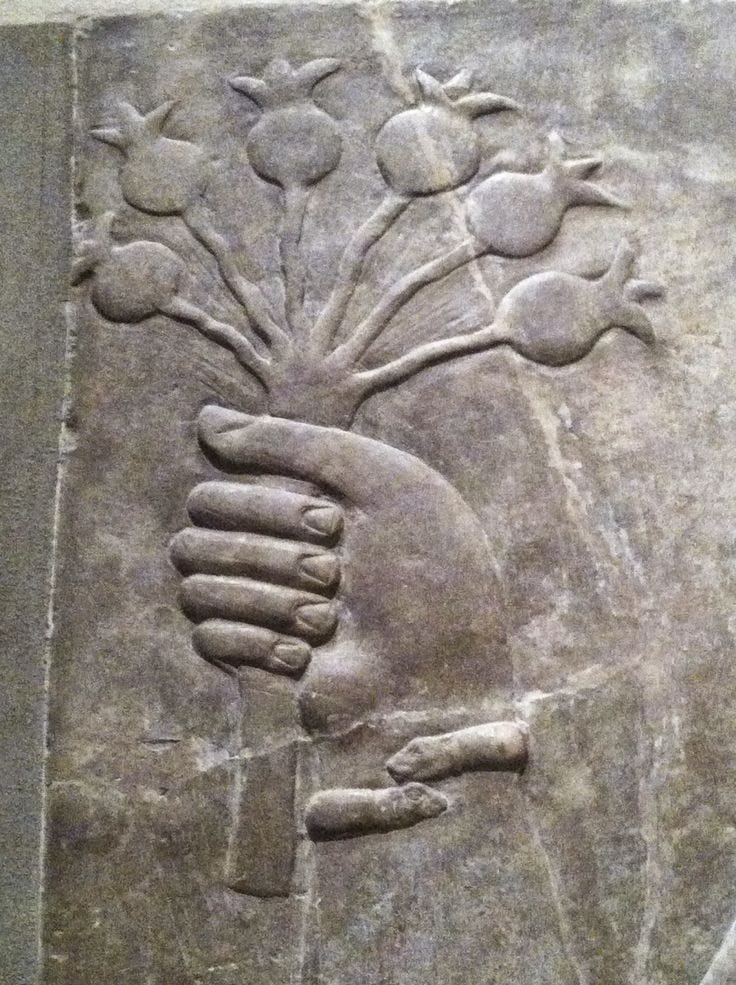
These actions may appear small, but they are the foundation of a new economic structure that requires the nurturing of three conditions:
Trust
Visibility of needs
Circulation of surplus
The gift economy begins when value is no longer calculated through money alone, when needs can be expressed without shame, and when giving and receiving are no longer purely transactional.
If we continue operating under the assumption that everything has a price, we will behave that way, which only shunts us into that world even further. But if we operate under the assumption that people want to be connected first and foremost, then we prioritize the exchange that increases the connection itself, rather than the value of what is being exchanged.
These ideas are not always easy to communicate, but I consider them the basis of an economic theory that underpins matriarchal social structures. The more we share these ideas, write them down, and create clean logic from which actions can flow, the more likely we are to create the matriarchal world we always deserved.
We don’t need to build a new system from scratch. We simply need to behave as if a different one already exists. It does, and it grows every time we participate in it.
No posts
Comments
Nothing yet. Say the first thing.
Sign in to join the conversation.