
Something is happening in the garden next to our building.
Three weeks ago it was bare. Imagine cracked soil, a few stalks from last season still standing, brown and unconvincing. We walked past it without much notice or a second glance, like anyone else does. And then, without any particular announcement, things started coming up. Slowly, at the edges. Small shoots pushing through in the spots we weren’t watching.
That’s how spring actually arrives. Not the way it usually gets photographed with big blooms, bright and sudden and saturated golden light but tentatively, at the margins, before it has your full attention.
So, we’ve been thinking about how that relates to creativity…
We’ve been thinking about that lately in relation to creative work.
Earlier this year, we wrote about snowflakes. As in, how nature, which we tend to think of as spontaneous, is actually deeply structured. And the part that kept staying with us: difference doesn’t come from chaos. It emerges when consistent systems meet changing environments.
Spring is a version of the same idea. Stick with us here.
The ground doesn’t transform overnight because the temperature ticked up. It transforms because something was quietly working through the winter like with the roots extending and dormant seeds absorbing slow moisture.
Ideas work this way, too. The ones that feel like they appeared suddenly usually didn’t. They were doing something underground for a while — such as processing, connecting, or waiting for conditions that would let them come through. Just like a garden.
This isn’t just a silly comparison. Neuroscience calls it the default mode network, in which the brain activity that increases when we’re not actively focused on a task. It’s the system responsible for making unexpected connections, generating novel ideas, and processing experiences into insight. And it’s most active when we step back, not when we push forward. Research from the University of California found that people who took breaks and allowed their minds to wander performed significantly better on creative problem-solving tasks than those who kept working straight through.
The fallow period, in other words, it’s infrastructure.
The instinct to force it
There’s a version of creative productivity that treats quiet as a problem. If you’re not outputting, you’re falling behind. If the idea isn’t formed yet, you need to push harder until it is.
We’ve felt this pressure. Most creative people have. And it almost never produces the work you were actually hoping for. It produces the work you could access from the surface like the obvious takes or the predictable executions. And don’t get us started on the ideas that technically fill the brief but don’t have anything alive in them.
The thing you were actually trying to make was still underground and you totally interrupted it before it was ready.
The business case for this is clearer than it might feel at the moment. Research by the Harvard Business Review found that creative teams that built deliberate recovery time into their process produced measurably stronger outputs and reported higher confidence in the quality of their ideas. The teams that pushed through reported higher output volume. But volume and quality moved in opposite directions. Interesting, right?
What brands actually need from their creative partners isn’t more, it’s better. And better tends to come from people who know how to protect the conditions that make good work possible. This includes the ones that don’t look productive from the outside.
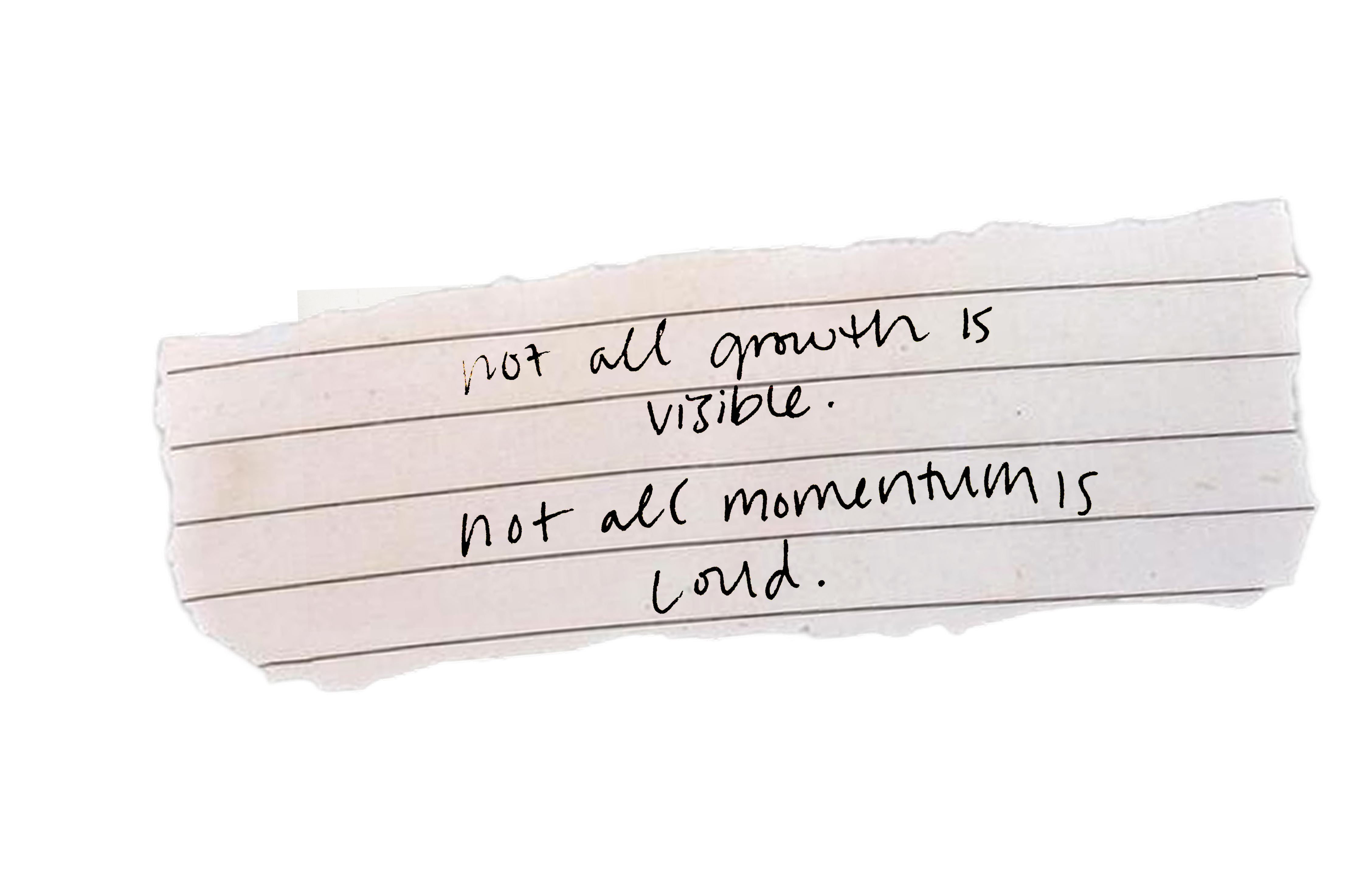
Not all progress is visible nor does all momentum look or feel loud. Sometimes the most productive thing a creative season can do is let you rest, recalibrate, and receive without knowing exactly what you’re taking in. The fallow period isn’t the enemy of growth, because that’s where creativity germinates and eventually, blooms. For a lot of ideas, it’s the prerequisite.
An invitation
The most valuable creative work rarely announces itself early. It shows up when the conditions have been right for long enough.
Spring is a good time to notice what’s beginning, rather than what’s finished. It’s a time to pay attention to the edges where things are coming up whether that’s in your work, in your thinking, or in how you’re spending your time.
We’re curious: What’s beginning to grow for you right now? Share it with us.
No posts
Comments
Nothing yet. Say the first thing.
Sign in to join the conversation.