
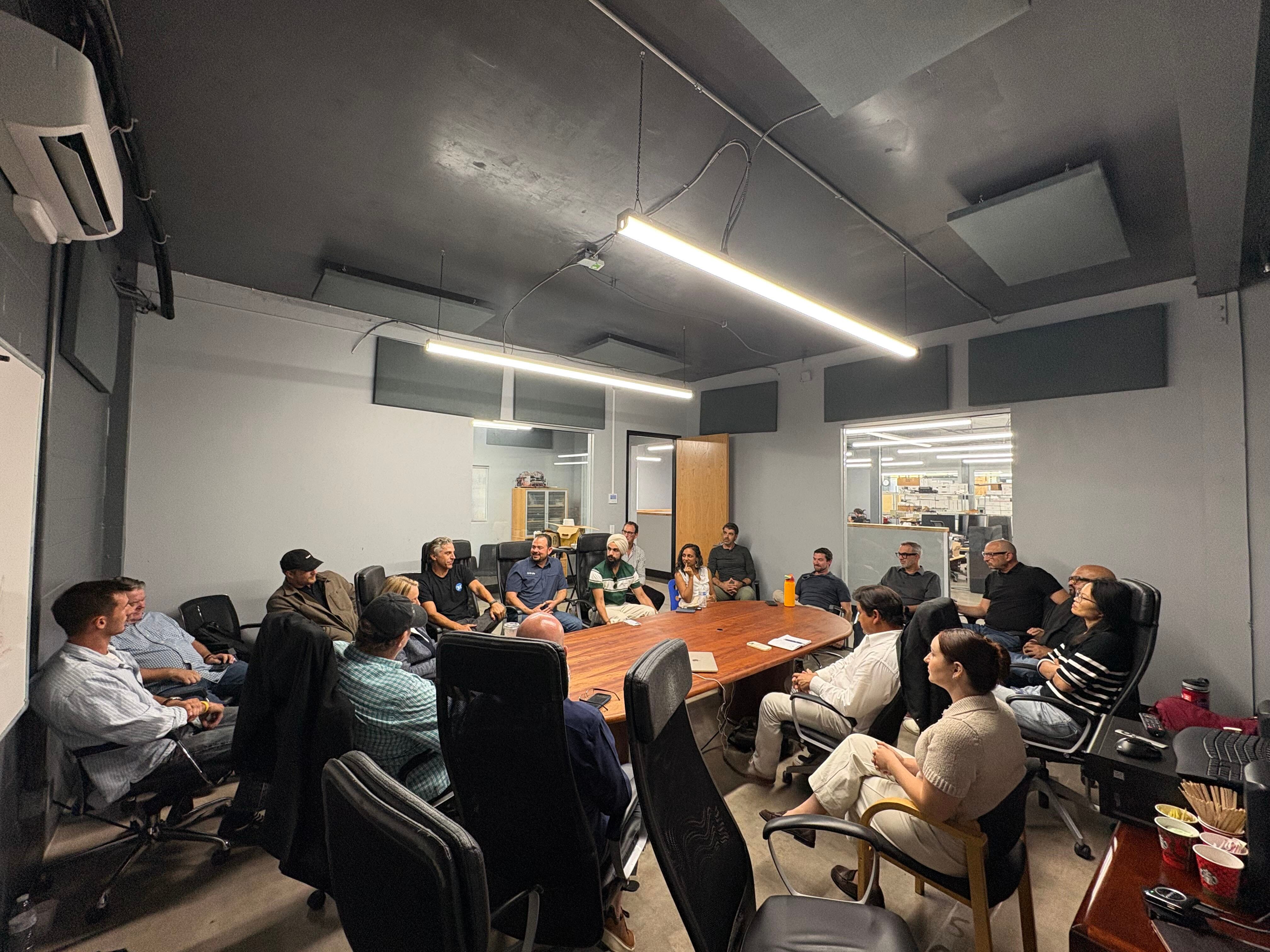
Our RTP office sits in Sorrento Valley.
Within a few minutes of us is Google, where Fitbit now lives. Across the street is Dexcom. Oura opened an engineering office nearby. Qualcomm - the company that helped make mobile computing possible - is right down the road.
Then layer in UC San Diego, decades of medical device talent, wireless engineers, biosensor companies, and one of the deepest diabetes ecosystems anywhere.
There’s something happening here.
So we decided to put some of those people in a room.
We invited a small group of wearable founders, engineers, operators and investors to our office for our first San Diego Wearables Roundtable.
No pitches. No panels.
Just one question to start:
What has changed in the last five years that makes wearables more interesting now?
The conversation quickly went somewhere much bigger than wearables.
COVID accelerated healthcare into the home.
Consumers became increasingly comfortable collecting their own health information.
People now pay out of pocket for Oura, WHOOP, continuous glucose monitors, advanced blood testing and full-body scans from companies like Prenuvo.
GLP-1s have taken this even further. Millions of people are actively intervening in their own biology, watching what happens, and adjusting.
We are moving from a world where:
A doctor measures you occasionally.
To one where:
You continuously measure yourself.
But measurement may be the least interesting part.
One of the most interesting debates around the table was about AI.
Software is becoming dramatically easier to build.
Analysis is becoming cheaper.
Models are getting better incredibly quickly.
But an AI model can’t analyze a physiological signal that nobody is collecting.
It can’t know your glucose without glucose data.
It can’t know your hydration without measuring hydration.
It can’t understand how an infant is feeding without sensing what is happening between mother and baby.
It can’t understand exactly how an athlete is recovering without information from the physical world.
That makes me increasingly interested in a simple idea:
As intelligence becomes commoditized, proprietary access to the physical world may become more valuable.
Wearables can become that bridge.
Sensor → data → intelligence.
And eventually:
Sensor → intelligence → intervention.
One founder at the table, Debbie Chen of Hydrostasis, made a point I keep thinking about.
If I wake up exhausted, telling me I slept badly isn’t particularly useful.
I already know.
Her company measures hydration. Their newest device can process the signal on the edge and simply tell someone when they need to drink.
No dashboard required.
That distinction came up repeatedly.
The first generation of wearables measured us.
The next generation helped interpret those measurements.
The really interesting products may do something about them.
A strength-training device can recognize that an athlete hasn’t recovered and modify today’s workout.
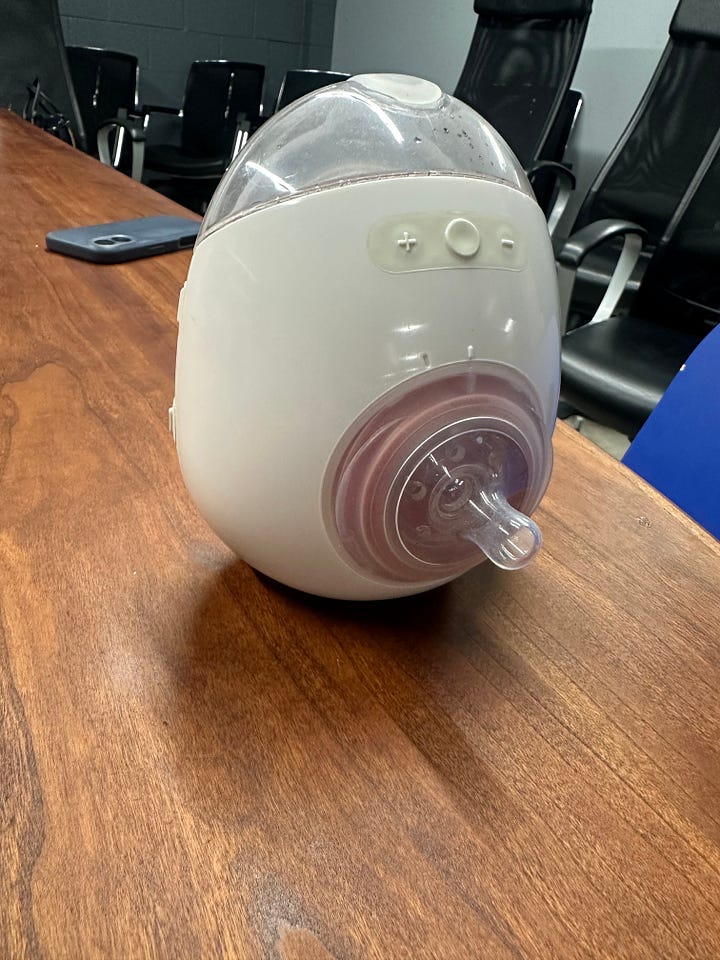
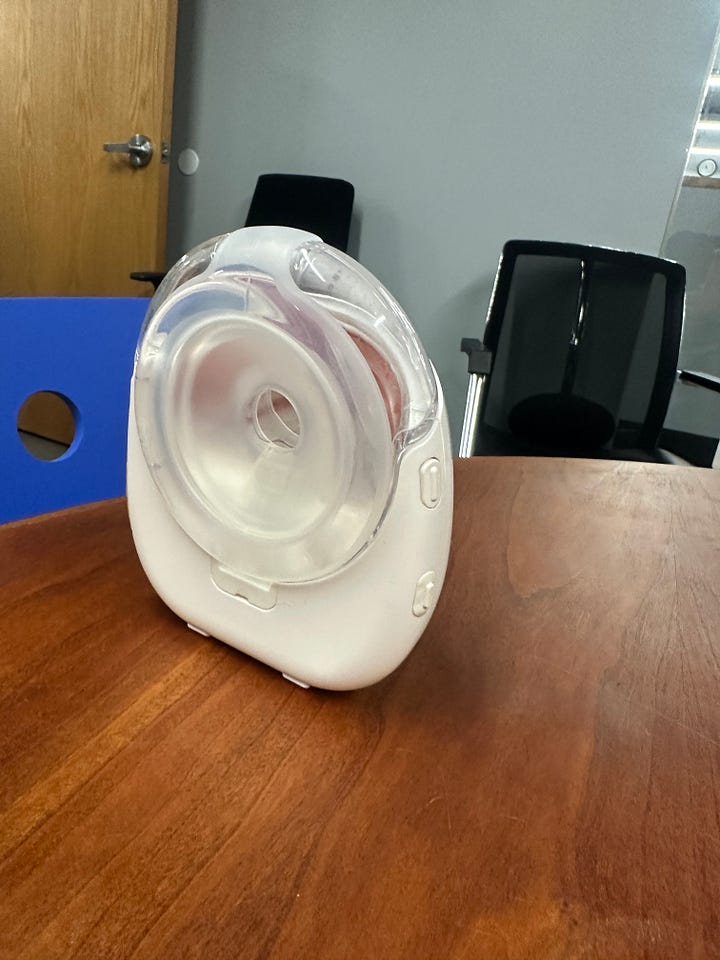
A breastfeeding device can understand how an infant is feeding and respond in real time.
An automated insulin-delivery system can measure glucose and adjust insulin.
The loop becomes:
Sense → understand → intervene → measure → adapt.
That’s a much more powerful product than another dashboard.
We had people around the table who had worked on everything from regulated medical devices to Fitbit and the Pixel Watch.
That produced another interesting distinction.
For a medical device making a clinical decision, accuracy can be everything.
But a consumer might not actually need clinical-grade accuracy.
If my wearable consistently measures me the same way, I can still understand whether I’m recovering better, sleeping worse or becoming more active.
One former Fitbit/Google leader described something their team had observed: sometimes the value of a wearable wasn’t even changing behavior. It was the gratification and reassurance of seeing what you’d already accomplished.
The data itself becomes feedback.
And sometimes identity.
One investor put the consumer version even more simply:
Does wearing it make me feel cool?
Engineers can spend years making a sensor incrementally more accurate while consumers choose the product they actually want on their body.
Both matter.
But they are very different businesses.
This became one of the biggest debates of the morning.
One path is traditional:
Build a medical device → FDA → reimbursement → healthcare system.
Another increasingly possible path is:
Build something consumers want → let them pay → learn → improve → pursue clinical applications where they make sense.
Someone pushed back that we live in a San Diego bubble. Most Americans aren’t spending thousands of dollars every year optimizing their health.
That’s true.
Insurance, Medicare and Medicaid remain enormously powerful distribution mechanisms.
But I’m increasingly convinced this isn’t necessarily an either/or decision.
For some companies, consumer may be the beachhead and medical the scale.
For others, FDA clearance creates the trust and defensibility that eventually enables a consumer product.
Figuring out the correct sequence may be one of the most important strategic decisions a wearable founder makes.
There was also a useful counterpoint to the entire conversation.
People are getting tired of being measured.
Sleep scores can create anxiety.
Notifications compete for attention.
Dashboards fill with information nobody acts on.
And eventually some users understand themselves well enough that they wonder why they’re still paying a subscription to be told what they already know.
So perhaps the future isn’t wearing ten devices producing thousands of data points.
Maybe it’s the opposite.
Better sensors.
Better intelligence.
Less interaction.
And intervention only when it matters.
The best wearable may eventually be the one you almost forget you’re wearing.
Toward the end I brought the conversation back to where we started.
Is there actually something special happening in San Diego?
The room seemed to think so.
San Diego has spent decades accumulating many of the ingredients required to build this category:
Wireless.
Semiconductors.
Medical devices.
Diabetes.
Biotech.
Sensors.
FDA and regulatory expertise.
Consumer health.
And increasingly, AI.
Qualcomm created generations of wireless engineers.
Dexcom built one of the world’s most successful wearable medical-device companies here.
Fitbit talent now sits inside Google’s San Diego operation.
Oura came here because the talent was already here.
UC San Diego continues producing new sensing and medical technologies.
And experienced engineers from these companies eventually leave and start the next ones.
That last part is where things get interesting.
Ecosystems compound.
After about an hour, we officially ended the roundtable.
Nobody left.
Devices came out.
People started comparing sensors.
A founder working on hydration got ideas for healthcare distribution.
Another founder found someone who might help with a consumer partnership.
People working a few blocks from each other discovered they should have known one another years ago.
Introductions started happening in real time.
That’s ultimately why we’re doing these.
I’ve been thinking about our new RTP office as an experiment:
Can we manufacture serendipity?
Obviously, serendipity by definition can’t really be manufactured.
But its probability can be increased.
Put the right 15 people around a table.
Give them a sufficiently specific reason to be there.
Get past the introductions and into the actual problems they’re trying to solve.
Then get out of the way.
San Diego already has the talent.
Maybe what it needs is more opportunities for that talent to collide.
Our first wearables roundtable was a pretty good data point.
No posts
Comments
Nothing yet. Say the first thing.
Sign in to join the conversation.