
“-Monsieur Hamil, est-ce qu’on peut vivre sans amour ?”
There are novels built around great events, mysteries, wars, or adventures, and there are novels built around a single question. La Vie devant soi is one of them. I first read this novel years ago, but some scenes never left me, because they feel true in a way that is difficult to explain. A child asking a question. An old man hesitating before answering. A woman carrying loneliness, memories, and too many stairs. A handful of people living at the margins of society and trying, despite everything, to take care of one another.
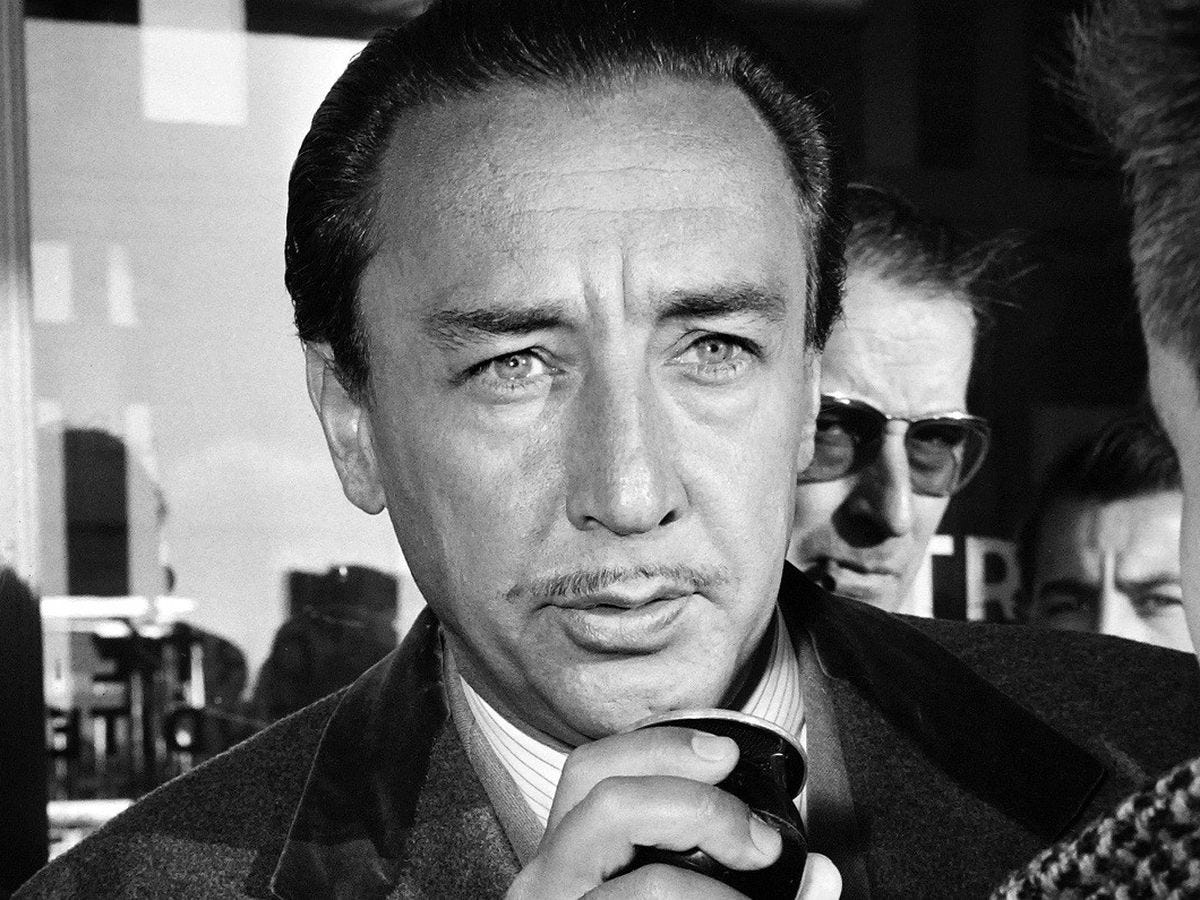
Published in 1975 under the pseudonym Émile Ajar, La Vie devant soi tells the story of Mohammed, Momo, a young boy growing up in Belleville, raised by Madame Rosa, an aging Jewish survivor of Auschwitz who cares for the children of sex workers.
On paper the subject sounds bleak but the novel is anything but. It’s funny, tender, irreverent, heartbreaking, and deeply human. Through Momo’s voice, Romain Gary manages something extraordinary: he allows a child to speak with innocence while seeing truths that many adults spend their lives avoiding.
The opening pages already contain everything that will follow: poverty, abandonment, friendship, memory, old age, identity, and above all the need to be loved. What makes this novel so powerful is that it never becomes sentimental. Gary writes about suffering with humour, about loneliness with tenderness, and about death with a surprising amount of life.
• discover the unforgettable opening of one of the most beloved novels in modern French literature
• meet Momo, Madame Rosa, and Monsieur Hamil
• explore one of the novel’s central questions: can we live without love?
• learn more about the extraordinary life of Romain Gary, the only writer ever to win the Prix Goncourt twice
• discover the fascinating story behind the Émile Ajar literary mystery
• learn all about the word ‘même’ with French en Douceur
• and perhaps reflect on the people who have shaped your own life, whether they were family or not
The French of La Vie devant soi is deceptively simple. Momo speaks like a child, often bending grammar, misunderstanding expressions, and inventing his own logic. For learners, this makes the novel both charming and occasionally surprising. Don’t worry if certain turns of phrase feel unusual, that is part of Gary’s genius. We are hearing the world through Momo’s eyes.
So let’s climb the six flights of stairs to Madame Rosa’s apartment in Belleville and meet some of the most unforgettable characters in French literature.
For the monthly price of a ☕, support this project and go further into your French journey: paid subscribers receive full access to the archives, the full poem of the week, literary bites, writing workshop, art, music and more… Upgrade and enrich your learning!
Bonus: when you upgrade, receive for free the French en Musique Workbook, a 50-page workbook to guide you through 10 stunning French songs, step by step(value 10$).
& your exclusive summer gift: La Petite Anthologie Poétique de l’Été.
La première chose que je peux vous dire c’est qu’on habitait au sixième à pied et que pour Madame Rosa, avec tous ces kilos qu’elle portait sur elle et seulement deux jambes, c’était une vraie source de vie quotidienne, avec tous les soucis et les peines. Elle nous le rappelait chaque fois qu’elle ne se plaignait pas d’autre part, car elle était également juive. Sa santé n’était pas bonne non plus et je peux vous dire aussi dès le début que c’était une femme qui aurait mérité un ascenseur.
Je devais avoir trois ans quand j’ai vu Madame Rosa pour la première fois. Avant, on n’a pas de mémoire et on vit dans l’ignorance. J’ai cessé d’ignorer à l’âge de trois ou quatre ans et parfois ça me manque.
Il y avait beaucoup d’autres Juifs, Arabes et Noirs à Belleville, mais Madame Rosa était obligée de grimper les six étages seule. Elle disait qu’un jour elle allait mourir dans l’escalier, et tous les mômes se mettaient à pleurer parce que c’est ce qu’on fait toujours quand quelqu’un meurt. On était tantôt six ou sept tantôt même plus là-dedans.
Au début, je ne savais pas que Madame Rosa s’occupait de moi seulement pour toucher un mandat à la fin du mois. Quand je l’ai appris, j’avais déjà six ou sept ans et ça m’a fait un coup de savoir que j’étais payé. Je croyais que Madame Rosa m’aimait pour rien et qu’on était quelqu’un l’un pour l’autre. J’en ai pleuré toute une nuit et c’était mon premier grand chagrin.
Madame Rosa a bien vu que j’étais triste et elle m’a expliqué que la famille ça ne veut rien dire et qu’il y en a même qui partent en vacances en abandonnant leurs chiens attachés à des arbres et que chaque année il y a trois mille chiens qui meurent ainsi privés de l’affection des siens. Elle m’a pris sur ses genoux et elle m’a juré que j’étais ce qu’elle avait de plus cher au monde mais j’ai tout de suite pensé au mandat et je suis parti en pleurant.
Je suis descendu au café de Monsieur Driss en bas et je m’assis en face de Monsieur Hamil qui était marchand de tapis ambulant en France et qui a tout vu. Monsieur Hamil a de beaux yeux qui font du bien autour de lui. Il était déjà très vieux quand je l’ai connu et depuis il n’a fait que vieillir.
- Monsieur Hamil, pourquoi vous avez toujours le sourire ? Je m’appelle Mohammed mais tout le monde m’appelle Momo pour faire plus petit.
- Il y a soixante ans, quand j’étais jeune, j’ai rencontré une jeune femme qui m’a aimé et que j’ai aimée aussi. Ça a duré huit mois, après, elle a changé de maison, et je m’en souviens encore, soixante ans après. Je lui disais je ne t’oublierai pas. Les années passaient, je ne l’oubliais pas. J’avais parfois peur car j’avais encore beaucoup de vie devant moi et quelle parole pouvais-je donner à moi-même, moi, pauvre homme, alors que c’est Dieu qui tient la gomme à effacer ? Mais maintenant, je suis tranquille. Je ne vais pas oublier Djamila. Il me reste très peu de temps, je vais mourir avant.
J’ai pensé à Madame Rosa, j’ai hésité un peu et puis j’ai demandé.
- Monsieur Hamil, est-ce qu’on peut vivre sans amour ?
Il n’a pas répondu. Il but un peu de thé de menthe qui est bon pour la santé. Monsieur Hamil portait toujours une jellaba grise, depuis quelque temps, pour ne pas être surpris en veston s’il était appelé. Il m’a regardé et a observé le silence. Il devait penser que j’étais encore interdit aux mineurs et qu’il y avait des choses que je ne devais pas savoir. En ce moment je devais avoir sept ans ou peut-être huit, je ne peux pas vous dire juste parce que je n’ai pas été daté, comme vous allez voir quand on se connaîtra mieux, si vous trouvez que ça vaut la peine.
- Monsieur Hamil, pourquoi ne répondez-vous pas ?
- Tu es bien jeune et quand on est très jeune, il y a des choses qu’il ne vaut mieux pas savoir.
- Monsieur Hamil, est-ce qu’on peut vivre sans amour ?
- Oui, dit-il, et il baissa la tête comme s’il avait honte.
Je me suis mis à pleurer.

The first thing I can tell you is that we lived on the sixth floor with no elevator, and for Madame Rosa, with all those kilos she carried on herself and only two legs, it was a real source of daily life, with all its worries and sorrows. She reminded us of it every time she wasn’t complaining about something else, because she was also Jewish. Her health wasn’t good either, and I can also tell you right from the beginning that she was a woman who deserved an elevator.
I must have been three years old when I saw Madame Rosa for the first time. Before that, you have no memory and you live in ignorance. I stopped being ignorant at the age of three or four, and sometimes I miss it.
There were many other Jews, Arabs, and Black people in Belleville, but Madame Rosa had to climb the six flights of stairs all by herself. She used to say that one day she was going to die on the staircase, and all the kids would start crying because that’s what you always do when somebody dies. Sometimes there were six or seven of us there, sometimes even more.
At first, I didn’t know that Madame Rosa was looking after me only to receive a money order at the end of the month. When I found out, I was already six or seven years old, and it hit me hard to learn that I was being paid for. I thought Madame Rosa loved me for nothing and that we were somebody to each other. I cried about it for a whole night, and it was my first great sorrow.
Madame Rosa saw clearly that I was sad, and she explained to me that family doesn’t mean anything and that there are even people who go on holiday leaving their dogs tied to trees, and that every year three thousand dogs die that way, deprived of the affection of their own. She took me onto her knees and swore to me that I was what she held most dear in the world, but I immediately thought about the money order and went away crying.
I went down to Monsieur Driss’s café downstairs and sat opposite Monsieur Hamil, who was a travelling carpet merchant in France and who had seen everything. Monsieur Hamil has beautiful eyes that do good around him. He was already very old when I first knew him, and since then he has done nothing but grow older.
- Monsieur Hamil, why do you always smile? My name is Mohammed, but everybody calls me Momo to make it smaller.
- Sixty years ago, when I was young, I met a young woman who loved me and whom I loved too. It lasted eight months; afterward, she moved away, and I still remember her, sixty years later. I used to tell her, I will not forget you. The years went by, and I did not forget her. Sometimes I was afraid because I still had a lot of life ahead of me, and what promise could I give to myself, I, a poor man, when it is God who holds the eraser? But now I am at peace. I am not going to forget Djamila. I have very little time left; I will die first.
I thought about Madame Rosa, hesitated a little, and then I asked.
- Monsieur Hamil, can one live without love?
He did not answer. He drank a little mint tea, which is good for your health. Monsieur Hamil always wore a grey djellaba, for some time now, so as not to be caught wearing a suit jacket if he was called. He looked at me and observed silence. He must have thought that I was still forbidden to minors and that there were things I was not supposed to know. At that time I must have been seven, or perhaps eight; I cannot tell you exactly because I was not dated, as you will see when we get to know each other better, if you think it is worth the trouble.
- Monsieur Hamil, why don’t you answer?
- You are very young, and when one is very young, there are things it is better not to know.
- Monsieur Hamil, can one live without love?
- Yes, he said, and he lowered his head as though he were ashamed.
I began to cry.
In today’s extract, Momo uses même several times:
Elle nous le rappelait chaque fois qu’elle ne se plaignait pas d’autre part, car elle était également juive.
On était tantôt six ou sept tantôt même plus là-dedans.
Il y a des choses qu’il ne vaut mieux pas savoir.
And elsewhere in French, you’ll hear:
Moi-même, je ne sais pas.
Même Anna n’a pas répondu.
C’est la même chose.
So what exactly does même mean?
Used to emphasize something surprising or unexpected.
Même Anna n’a pas répondu.
Even Anna didn’t answer.Même les adultes pleuraient.
Even the adults were crying.
This is probably the most common use learners encounter.
In today’s passage:
On était tantôt six ou sept tantôt même plus là-dedans.
Literally:
Sometimes there were six or seven of us, sometimes even more.
Here, même reinforces the idea of quantity.
Nous avions le même professeur.
We had the same teacher.C’est la même histoire.
It’s the same story.
Moi-même, je ne savais pas quoi répondre.
I myself didn’t know what to answer.Elle l’a fait elle-même.
She did it herself.
One of the most useful French expressions.
Il avait peur, mais il est venu quand même.
He was afraid, but he came anyway.C’est difficile, quand même.
It’s difficult, still.
What does même mean in these sentences?
Même Momo était surpris.
C’est le même café que d’habitude.
Elle l’a écrit elle-même.
Il pleuvait, mais nous sommes sortis quand même.
Answers:
Even
The same
Herself
Anyway / nevertheless
One little word. Four very different meanings. That’s French.
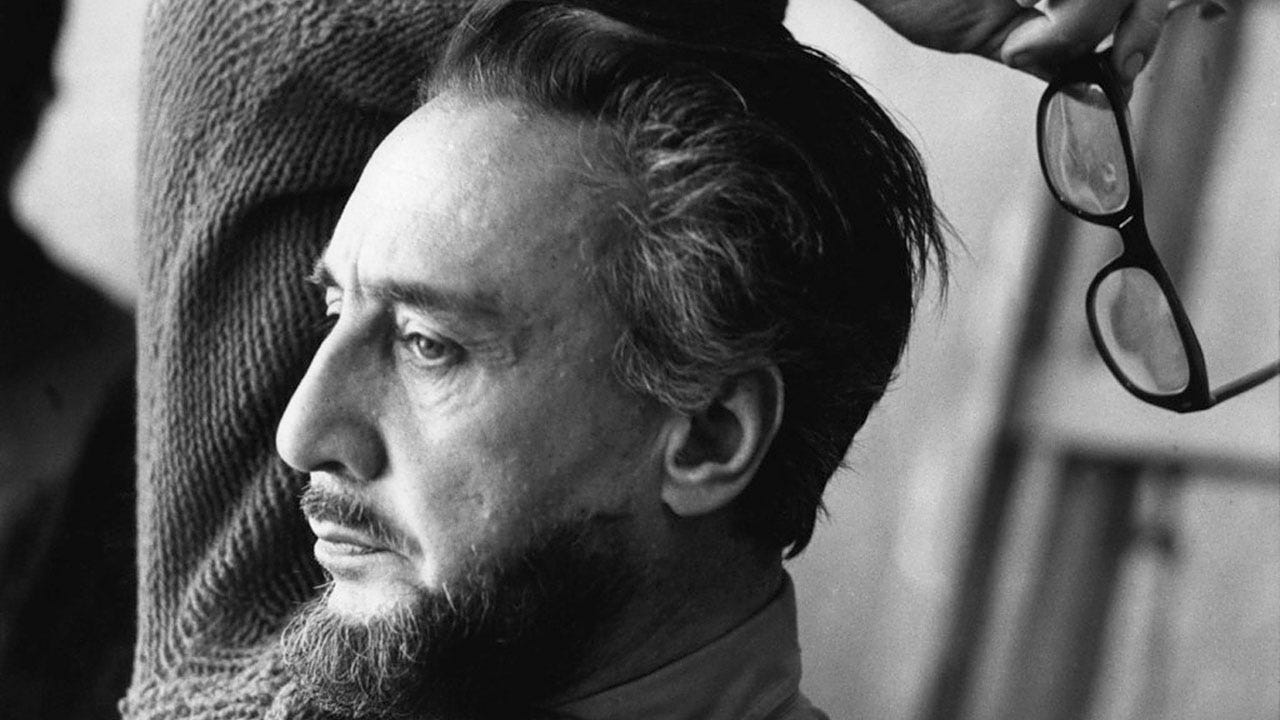
Romain Gary is one of those writers whose life feels almost as improbable as his fiction. Born Roman Kacew in 1914 in Vilnius (then part of the Russian Empire), he would go on to reinvent himself again and again, language, identity, nationality, even authorship itself becoming materials he constantly reshaped. Before he was Romain Gary, he was already someone in motion: a child marked by displacement, by migration, and by the absolute centrality of his mother, a figure who would later become the emotional core of his literary universe.
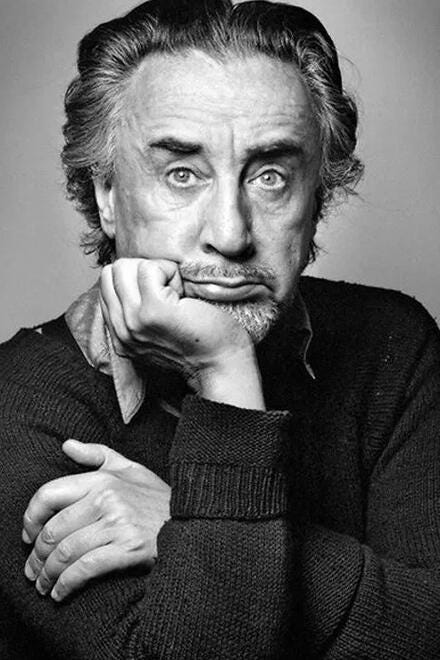
He arrived in France as a teenager, learned French as a second language, and eventually made it his first literary home. That detail matters: Gary never inherited French as a given. He chose it, mastered it, and pushed it to carry voices, accents, and emotional registers that feel slightly off-centre, deeply human, and often unsettlingly direct.

During the Second World War, Gary joined the Free French Forces under General de Gaulle and became a military aviator. He fought in Africa and Europe, earned decorations, and served in diplomatic roles after the war. That dual identity, writer and soldier, dreamer and strategist, runs through his entire work. In Gary, there is always a tension between imagination and reality, tenderness and brutality, irony and sincerity.
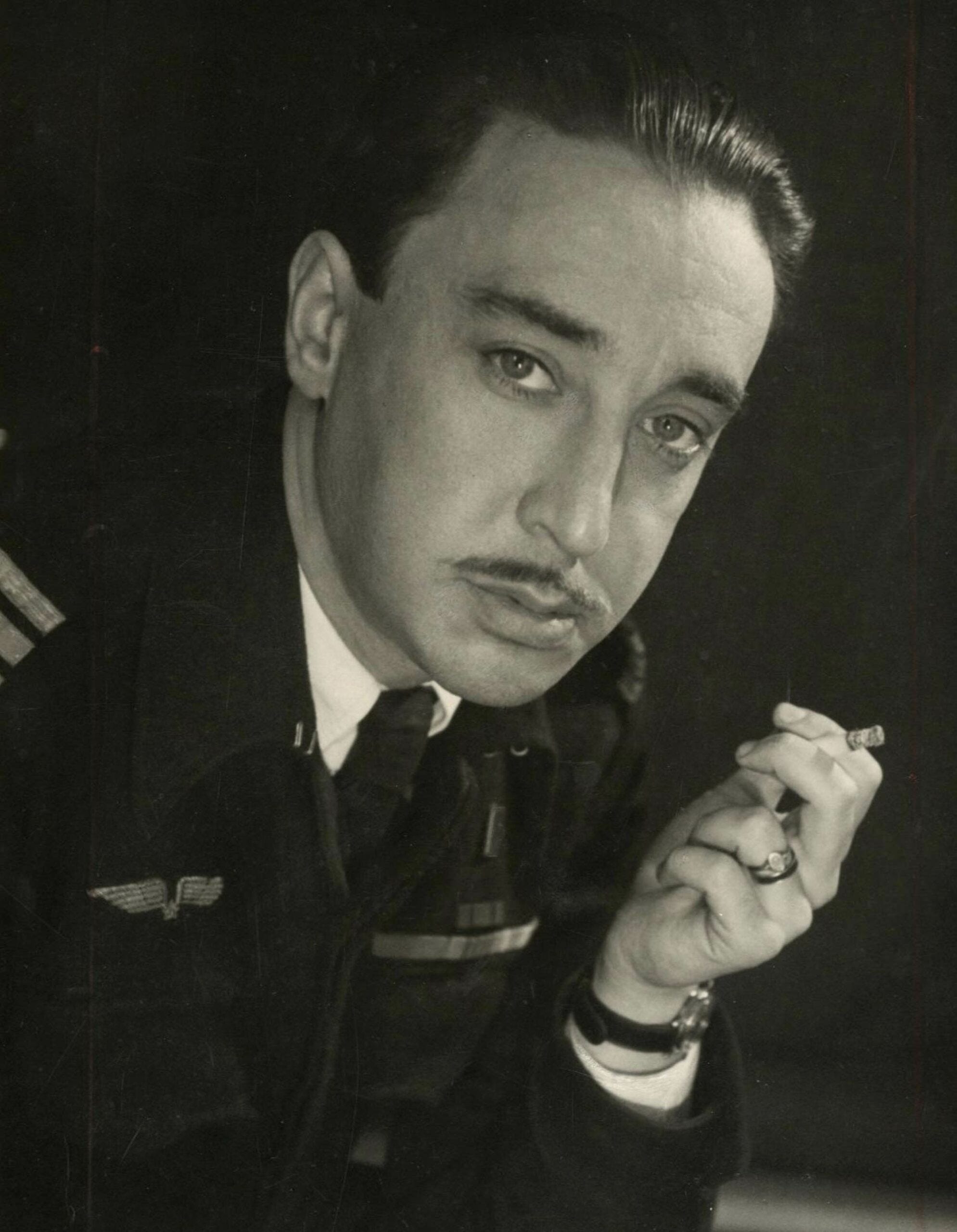
His literary career is marked by a rare achievement: he won the Prix Goncourt in 1956 for Les Racines du ciel. But what makes this story unique is that he would win it a second time in 1975 under a completely different name: Émile Ajar, for La Vie devant soi. The French literary world believed it was awarding a new author. It was, in fact, Gary himself, writing under disguise. He remains the only writer in history to have received the Goncourt twice, once officially, once anonymously.
This act of reinvention was not a trick for Gary; it was a philosophical gesture. He distrusted literary reputation, labels, and fixed identities. Writing, for him, was not self-expression but self-transformation. He once suggested that a writer should never be reduced to a single voice, a single style, or a single “truth.”
What makes Gary’s writing so distinctive is this balance: humour and tragedy constantly touching each other without cancelling each other out. A sentence can be funny and devastating at the same time. A childhood voice can carry philosophical weight without ever becoming abstract.
There is also, throughout his work, a recurring obsession with moral responsibility. Gary refuses cynicism. Even when his narrators are naïve or broken, they still ask essential questions: What does it mean to love someone? What do we owe to others? How do we survive without being erased by indifference?
And underneath it all is a deep, almost painful compassion. Gary writes as if every human being, no matter how marginal, how absurd, how lost, deserves to be seen fully for a moment before disappearing.
He died in 1980, leaving behind not only novels, essays, and memoirs, but also a carefully constructed mystery: a writer who had proven that identity in literature is never fixed, and that sometimes the most honest way to tell the truth is to invent a different name to say it under. Romain Gary is not just a novelist of the twentieth century. He is one of its most radical questions: who is speaking when we read?
When a novel becomes as loved and widely read as La Vie devant soi, it inevitably escapes the page. Romain Gary’s story, told through the voice of Momo, has been adapted for cinema in ways that try, each in their own manner, to preserve what is most difficult to translate: that fragile, childlike voice that says everything without ever fully explaining anything.
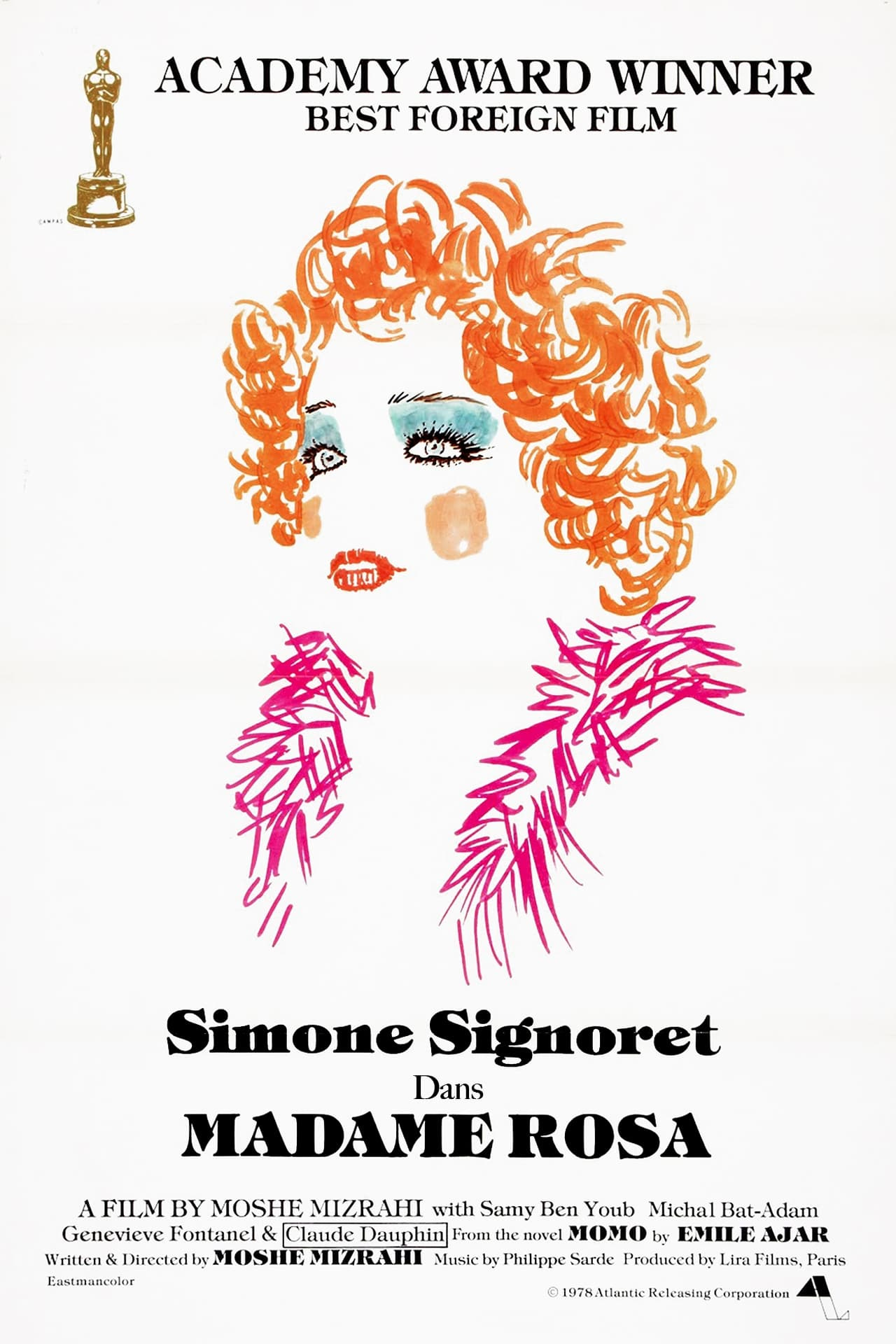
The most well-known adaptation is Moshé Mizrahi’s 1977 film La Vie devant soi, released internationally as Madame Rosa. The film stars Simone Signoret as Madame Rosa, in a performance that became iconic. Signoret embodies the worn tenderness of a woman who has survived too much history, too many bodies, too many children entrusted to her care. Her portrayal earned her the Academy Award for Best Foreign Language Film (1978), as well as wide critical acclaim for the emotional depth she brought to the character.
The film shifts slightly away from Momo’s internal voice and leans more heavily on the relationship between Madame Rosa and the surrounding world of Belleville. Cinema, by its nature, struggles to preserve the raw immediacy of Gary’s narration, the constant presence of Momo’s thoughts, his misunderstandings, his way of naming emotions without fully mastering them. What the film gains in visual reality, it partially loses in linguistic intimacy.

Later adaptations and television versions have revisited the story, but the 1977 film remains the central reference. More recently, the novel was adapted again in 2020 as The Life Ahead, directed by Edoardo Ponti and starring Sophia Loren as Madame Rosa. This version relocates the story from Paris to southern Italy and reimagines its setting, but keeps its emotional core: the fragile bond between two damaged lives learning to coexist.
What is most striking when comparing page and screen is how much of Gary’s work resists adaptation. The novel is not only a story; it is a voice. Momo’s language, broken, circular, sincere, creates a rhythm that cinema can suggest but never fully reproduce. The humour, too, is linguistic: it lives in misused words, in innocence that borders on philosophy, in sentences that say more than they understand. Every adaptation of La Vie devant soi becomes less a reproduction and more a translation attempt, an effort to move a voice from language into image, knowing that something essential will always remain just out of reach.
Perhaps the greatest achievement of La Vie devant soi is that it reminds us that family is not always a matter of blood. Sometimes it is the person who stays. The person who listens, who worries about us, protects us, or simply shares a cup of tea and a conversation when we need it most.
Momo’s question echoes throughout the novel: “Est-ce qu’on peut vivre sans amour ?” Monsieur Hamil answers yes. The novel itself seems less certain.
And you? Have you read La Vie devant soi? Were you familiar with Romain Gary and the Émile Ajar story?
And how would you answer Momo’s question?
I’d love to read your thoughts in the comments. If you enjoyed this Literary Bite, feel free to share it with another lover of French literature.
No posts
Comments
Nothing yet. Say the first thing.
Sign in to join the conversation.