
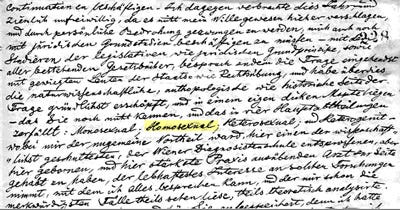
The idea of sexual orientation as an identity appeared in the 19th century where the term hetero/homosexual was first used (“invented”). Never before would men and women put themselves in these categories as they didn’t exist. This brought a big change in the self-understanding particularly of men and the relationship amongst each other! To my feeling the term “heterosexual” had the biggest impact, which consequently was adopted as a self-identification by the majority of men. It ruled out the existence of any kind of intimacy between men which was now was the thing of “the others” (homosexuals) with whom there was usually rather distance or they felt suspicious, at least no close contact.
At that time, men didn’t probably get aware so much of the change, that adopting the word “heterosexual” on the majority of men brought with it, because it was a time of history (rising industrial age) where anyway mutual alienation of men had become common and where in the relationship of men competition and exploitation had replaced healthy community and brotherhood, mutual responsibility and support. Before that, in all cultures in one way or the other (in varying degrees, openness, visibility depending on the rootedness in religious restrictions and fears) intimacy of all different kinds of forms was an important part of male-male interaction and this again was a solid fundament for the societies in their entirety.

In the Western civilization coming from a past, where throughout centuries religious viewpoints condemned any form of sex that had no procreative intention, society had overtaken these norms and even shaped their legal systems accordingly, which made sex between men a criminal act. For those who could not live with these norms due to their more prevalent sexual or romantic feelings for the same sex, the fact of declaring “We are born like this” (i.e. with this ‘identity’) created a strong argument for their demand and claim to drop those laws and to give them back an integrated place in society - and with it in the community of men. So the terms “homosexual” (and in reference to it the antonym “heterosexual”), coined by Karl Maria Kertbeny in 1868 were really born out of a defense and the newly rising scientific discipline of Psychology was thinking in these new categories of “homosexuals” and “heterosexuals”. It took till 1977 when Michel Foucault in his book “La volonté de savoir” (in English “The History of Sexuality”) showed that “heterosexuality” and “homosexuality” in reality is only a construct which with its rigidity does not at all reflect the richness of sexual interaction between humans in the history and applies only to the Western practices since the Industrial Revolution.

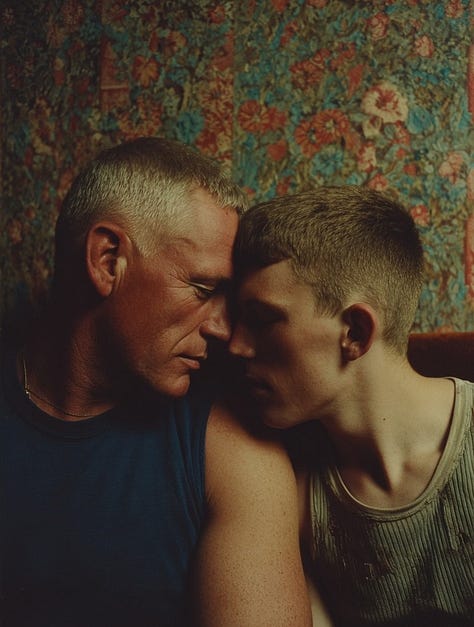

In all the millennia before and other cultures around the world, the sexual activity with either men or women was not seen as the result of an identity. In simple terms: Everybody could have sexual contact with both sexes. Few of those contacts were seen problematic in some way, many acceptable.
For women sexual interaction with both sexes was in many societies largely seen as acceptable because two women being intimate with one another didn’t threat the governing patriarchal system and the image of a man (who obviously needs to be the penetrator = governer).
Men who penetrated, no matter if they penetrated women or men, were in many societies fully acceptable such as amongst the ancient Greeks and Romans. Men, however, who were penetrated would often be seen as unworthy and needed to hide their activity.
In some contexts sexual interactions between men belonged to honorable standards, such as in Greek Gymnasiums where men didn’t only workout together naked, in many rites of passages of tribes and other communal gatherings of men, even in practices to mutually forge masculinity - as we know of Roman soldiers who would suck each others penises in order to boost their masculinity before war. The interaction was by no means seen as something feminine, very much the opposite was the case.
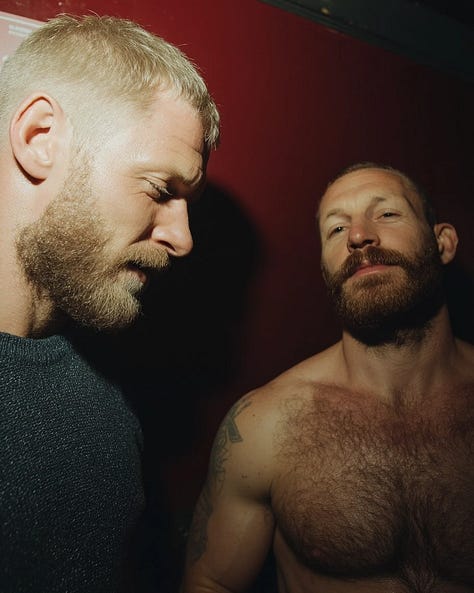
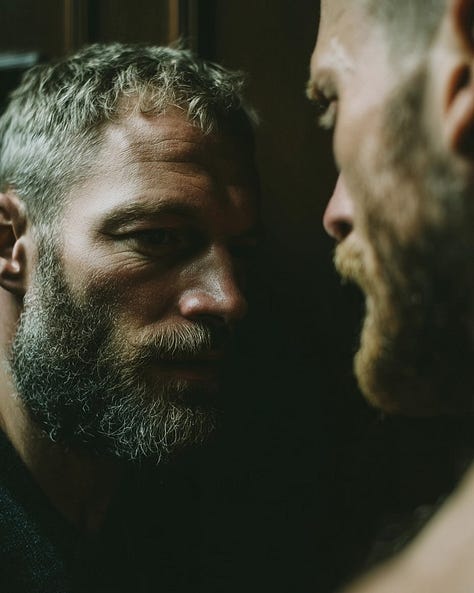
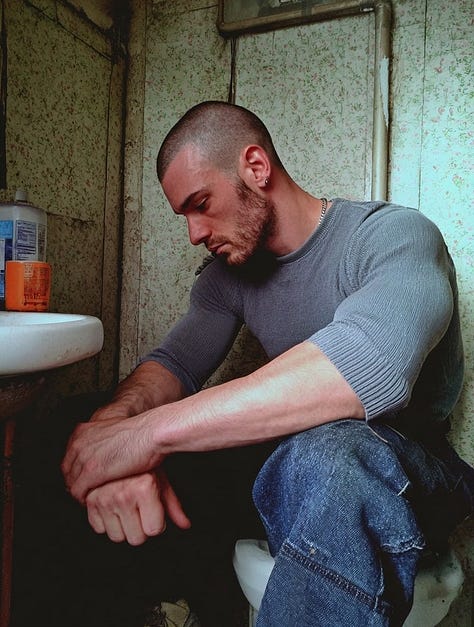
But as today, this construct of sexual identity is deeply woven into our communal psyche and mind, we have learned from early days on to refer to them, to experience every sexual or intimate activity or what could be interpreted this way with reference to those categories. This means to categorize feelings, phantasies, behaviors, and as we look for identity (see part 2, published next week) we have learned to filter everything that seems to question the identity we have found for ourselves and believe in. If a man, for example, identifies as heterosexual, every intimate activity with men must not exist, otherwise “gay-panic” sets in. So through these invented concepts of sexual identity we started to live with filters. Interaction between men are automatically and often unconsciously interpreted as effeminate and as this would be dishonorable for a man, they must by no means exist. After all “we” don’t want to be identified with this weird group of pink-clad sexually overt gays on CSD floats… However, this creates a whole lot of dishonesty between men (because there are things we have to hide form one another) and even shame (no longer is my brother me pushing forward, but I have to hide from him, especially hide as a sexual being). The result is aloneness and a big lot of weakening through it.

Comments
Nothing yet. Say the first thing.
Sign in to join the conversation.