
As we draw to the close of our Place Issue, we were excited to speak with James Rojas — city planner, artist, and community activist from Los Angeles who is responsible for developing the concept of Latino urbanism. We speak about the legacy of the British, the result AI jobs have had on city planning, his work with PlaceIt! and about planning from a feeling in your body instead of your brain.
This interview was conducted by Noelle Forougi for franknews, and condensed for clarity. Help keep frank free and for the public by subscribing below or donating here.
Can you introduce yourself and your work?
I’m James Rojas, a city planner, artist, and community activist born and raised in East Los Angeles. While studying at Massachusetts Institute of Technology, I examined my community and how Latinos use and transform public and private spaces in creative, sustainable, and community-centered ways. From that research, I developed the concept of Latino urbanism – a framework for understanding how informal social practices, cultural traditions, and everyday adaptations contribute to more human-centered cities.
As planners, we use maps, numbers, and words that people don’t understand, but people have connections to places that are better expressed through their feelings, emotions, and objects. My work now is dealing with community engagement all over the country, getting people to understand the feeling of place and express it. As planners, we often get the design right but the feeling wrong. Like, in LA, we design spaces for cars, but they don’t feel good for humans…
Basically you are saying there’s a disconnect between the planning process and an individual’s personal, emotional relationship with space?
Yes, basically, colonialism set the tone for planning throughout the Americas. The U.S. was founded by the British, and it was founded to make money. The British colonial model was primarily economic and technical. There were thirteen colonies, thirteen ports, all trading to make money for the British Empire.
The British generally didn’t care how a city was built. Cities often evolved through market forces and social hierarchy: the large house here, worker housing there, slave quarters somewhere else. Urban space reflected economic relationships and class divisions more than collective public life.
On the flip side, the Spanish colonized the New World with a different approach. They had a book called the Law of the Indies that specified how to develop settlements and how the colonies should work with a more top-down approach. And they, for example, specified that every settlement had to have a plaza in the middle of it. They were drawing on the Italian, Greek, Mediterranean model of city building.
Right.
While colonialism itself was deeply violent, the physical design was built on spatial relationships. The British didn’t care about that. In the British colonies it was economics, not relationships, not actual spaces. So the US became transactional. It’s always about highest and best use.
That’s a really succinct way to describe what’s going on in America, at a broad level and at a physical level.
Yeah, so, for example, there might be a vacant lot in a neighborhood that residents have used informally for recreation, gathering, celebrations, or everyday life for 50 years. But from the city or developer’s perspective, the “highest and best use” is to build a skyscraper that generates more revenue. Social and emotional relationships are not considered.
And that has such an impact culturally. This is actually something we have been talking about at frank recently – so much of what’s missing in American politics and culture is something to have pride in that is shared and communal. It’s not food, it’s not places, we barely even care that much about sports besides football. The common factor is just trying to make as much money as possible with the least amount of stuff by yourself behind a screen.
Yeah, you’re right. For many generations in the US, it was all about work. People were making cars in Detroit, working in coal mines in Pittsburgh, logging in Minnesota. Work made the American ethic. Detroit was a really nice city when it had all those high-paying manufacturing jobs. That work ethic drove America for a generation.
But now that it’s gone, Technology and AI has reduced work to almost nothing, a few people own everything, and people are kind of aimless. Someone tweets that it’s cool to move to Austin, and people just move to Austin, necessarily because of an industrial base or long-standing civic culture. And then that rapid movement creates all these housing pressures and infrastructure problems that are created artificially because they are disconnected from the actual physical realities of a place – it’s not like they’re shoveling coal in Austin. It’s all branding.
To your point about the structure of the American city being organized by commerce — how do you see Latino Urbanism basically working in contrast to that planning?
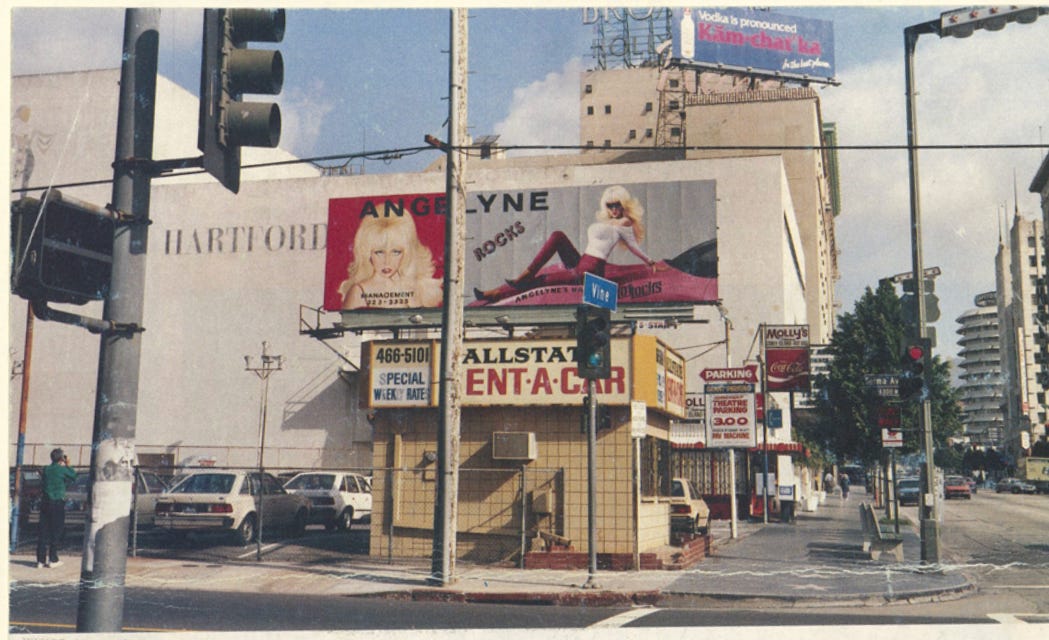
For me, it goes back to growing up in East LA. At MIT, my professors would talk about “good cities” and “bad cities,” and I thought, where does East LA fit? Back in the 80s it was probably considered a bad place — the gangs, the economic problems. But I still loved it. I wanted to be able to say there’s something redeeming here that does not fit into traditional planning language.
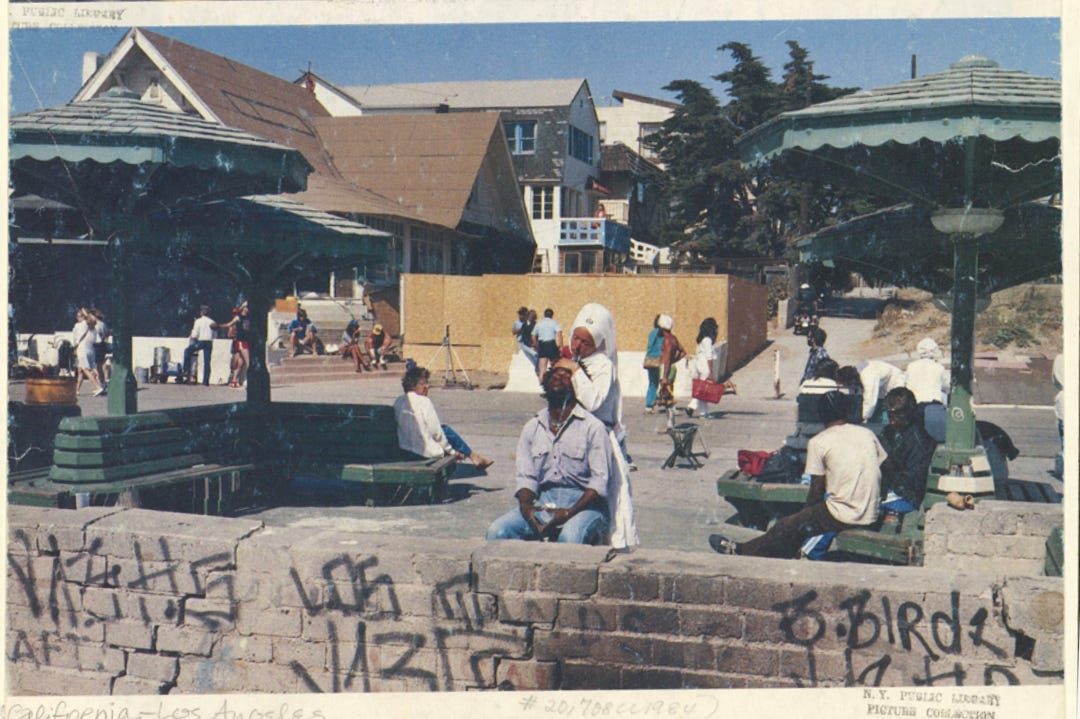
So that’s what I investigated in my research: how Latinos appropriate spaces, make them their own, and build community in a very different way. It’s built more on relationships than transactions. You have street vendors on corners selling to people waiting for the bus. People talk over fences. Families who buy houses in East LA miss the plazas of Latin America, so they turn their front yards into plazas. You’ll see fountains, benches, shrines, plants, and seating areas in front yards that function almost like miniature plazas.
What’s interesting is that Los Angeles has almost no formal zoning category for a true public plaza in the Latin American sense. There are transit-oriented spaces like Mariachi Plaza, but very few civic gathering spaces designed primarily for social interaction and collective life. So people improvise and create those environments themselves.
I’m also thinking about the new home kitchen permit in LA and that feels like the city looking at what’s already happening naturally, especially in Latino neighborhoods, and trying to build around it. Have you seen other examples of the city following what’s already going on?
Yeah, these are practices that are common in Latin America. In a small village, maybe one woman makes all the tortillas at her house and everyone buys from her. It’s a common, working-class practice to use your space productively. It’s not just a garden — it’s cultural production. It’s a place where you sell from your front yard, or you make tamales in your kitchen because you need to survive. Middle-class America says that doesn’t belong there, it belongs somewhere else. And these communities are challenging the norms we’ve developed about how and where you produce culture.
I would argue that Latino communities have done more to humanize and pedestrianize Los Angeles than many formal planning efforts because they put actual people into public space. Street vendors, outdoor gatherings, front-yard socializing, sidewalk commerce — all of these activities create life on the street. A city only works when people physically occupy and activate space. Without people, even the best-designed environment can feel empty and disconnected.
I feel like everyone I talk to wants the same thing in theory: to be able to sit outside, walk to the store, know their neighbors. Nobody is yearning for suburbia anymore, but our cities don’t respond to that…
I actually gave a TED Talk about this idea. With Place It! we do workshops — an hour and a half — where people build their ideal city with their hands, with these objects, instead of just talking about it.
Everyone who comes to a planning meeting is angry or ready to argue. If you start with that emotional state – you get a more fearful city: more parking, more surveillance, more separation.
So the first thing we do is shift the emotional framework. We ask participants to build their favorite childhood memory in five minutes using small objects and materials. The memories are almost always the same, because the experiences you remember ar the ones that are multi-sensory. People never remember watching TV or being on a screen, but they remember climbing a tree, being at a birthday party, learning to ride a bike.
So now people are in the right state of mind to plan — they have empathy for each other, they’re listening, they have shared values. Then we put them in groups and say: build your ideal community in 10 minutes. I’ve heard probably 2,000 of these visions, and they’re always the same — walkable, mixed-use, multi-sensory. Community gardens, plazas, public transportation, art, nature, parks, trees, physical activity. Nobody ever builds office parks, Walmarts, suburban houses with a commute, jails, or gated communities. Because they’re planning from joy, not from survival mode.
Fascinating.
That’s why I do this work, everybody wants the same thing. Planners just don’t have the right approach, and honestly, they don’t really care, because planning is so transactional. They just want to get the plan done, check the community engagement box, and move on.
It’s so frustrating and I think there is, in response, a sort of desire to have a heavy top-down mandate where we can make some of these changes in a big, sweeping way, instead of piecemeal. I’ve heard frustrations especially in LA with the result of the very horizontal structure of governance.
For me, it’s about giving everybody the right to reshape their community. Give people that right, and they’ll collectively come up with the right decision.
I did a workshop in Phoenix a couple of years ago. The city had built a recreation center for people with disabilities, but the nearest rail stations were a mile away. So we did a workshop and told people with disabilities: build your ideal station based on your disability. They made station models, and were so excited when they saw it as a reality that for five years they lobbied the city, the mayor, the council member to build a closer station. It was them collectively pushing it forward, with a shared value and a shared cause.
When people build what they want, they can see it and feel it. That park becomes real to them. They can feel what it should look like. And once it’s a feeling in your body, it becomes something you truly need and work for.
Is there anything in the space you’re tracking right now that’s especially exciting?
Cities need to build things. I was just in Seattle — they took down their waterfront highway and now it’s beautiful. New York has the High Line. Cities just need to build things to give people a sense of pride.
LA is stuck in problem-solving mode right now. How do we solve the housing crisis? That takes all the energy away from anything creative. What if the city said: we’re going to turn Broadway into a giant park from First Street to Olympic, take the cars off, make it green, put in fountains? That’s something people can go see and feel good about. Gloria Molina built Grand Park, and that’s a place people want to go. We have to be in production mode, not just problem-solving mode. Problems are always going to exist, the question is how much of your energy goes toward solving problems versus generating ideas.
And that comes back to your whole point about operating from joy instead of fear.
Yeah, LA becomes a very fearful place. Yes, there are awful things here. But people wake up every day with a positive attitude by and large. You cook, you go to school, you go to work out of hope, not out of anger. So we have to change that mindset. I think that's part of what Latinos bring — a different kind of approach. They're happy to be in LA, even with all its problems.
And sometimes you need a little of that to carry you through…
No posts
Comments
Nothing yet. Say the first thing.
Sign in to join the conversation.