
Last month we hosted co-hosted live event at frank with Alissa Walker and a group of experts to talk about “investments and policy decisions that LA is making in preparation for its megaevent-hosting era.” We liked what Chris Torres had to say about his work with Festival Trail — an organization basically trying to use the energy of the Olympics to spur investment in creating more public spaces in LA, modeling what the future of the city could look like. He said: “I think the best bet we have right now is to create incredible moments that are really kind of test cases, prototypes – not only of the physical place we want to be, but the community we want to be together. And show that to the world, show that to ourselves, and then demand that change.” We had a follow up conversation with him to break down in more detail what is going on with the Olympics, his take on the LA mayoral election, and how to build identity with space.
This interview was conducted by Noelle Forougi for franknews, and condensed for clarity. Help keep frank free and for the public by subscribing below or donating here.
Do you mind starting by introducing yourself and your work?
My name is Chris Torres. I run a design firm called Agency Artifact in Los Angeles. We’re urban designers, landscape architects, and strategists. I’m also co-founder of the Festival Trail Project, which is an initiative to spur public space improvements across the city and region in advance of the megaevents coming here.
What do you see the opportunity as in this forthcoming megaeevent era?
So the opportunity ahead of the games is really to think about what we’d call the next LA that we all want to see and live in. It’s about planting seeds for those projects to emerge. When you look at the previous Summer Games in Paris and London, the planning work started a decade before the actual events, and unfortunately we only have a few short years and months to get something done.
What we see the opportunity as is yes, visioning and executing projects, but more importantly planting seeds and setting up a structure that allows the mega projects we all know we need across the region to emerge.
Looking at previous games in LA, what can we understand from what we’re living with now that came out of those?
There are some big legacies from the ‘84 games, and from the games in the ‘30s as well. From ‘84 we have the LA84 Foundation, which has been really foundational in providing access to sports for youth across all of Southern California. The Metro also truly came to be and coalesced during the games, bringing together multiple transit agencies.
The legacy I don’t love from ‘84 is that we used it as an opportunity to import culture from around the world. It wasn’t really putting LA on the stage. It was trying to elevate LA as this pan-American global city. The opportunity now is different. We don’t need to bring in art and culture from around the world to seem sophisticated. We have an incredible culture here, and those are the stories that should be told.
On a very basic level, how does the planning work? There’s LA28, there’s the city…I just don’t really understand how it fits together.
So there are a few entities. There’s the IOC, the International Olympic Committee, which oversees the games. Cities bid to host. And, when they’re awarded a bid, a local organization spins up to execute the games — that’s LA28. Then there’s an agreement between the IOC, LA28, and the host city covering who pays for what and who does what.
We accepted a really unfavorable deal where the main focus LA28 needs to execute on is putting on the actual event — the sporting venues, infrastructure, security, marketing, transportation for athletes, media, and VIPs. Everything else — transportation for spectators, public safety, arts, culture, urban planning — the city of LA said, we’ve got it, we’ll handle it, and you don’t have to pay for it. Typically there’s equal financial and organizational participation between the two. They’re each throwing in dollars.
Why did we do that?
We really wanted the games. It was part of Garcetti’s legacy.
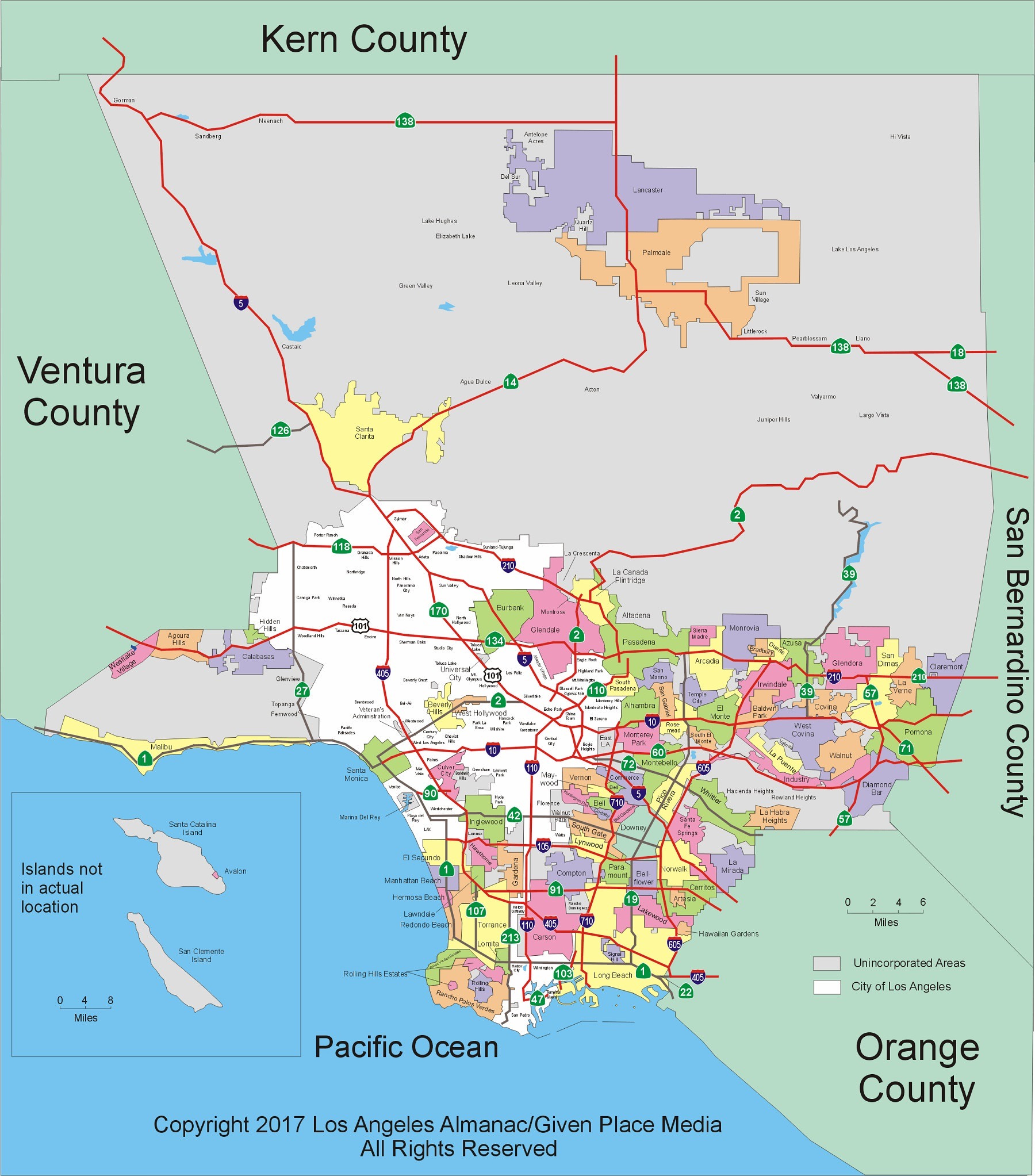
So it’s all on the city. And to be clear: that is the city of Los Angeles specifically. Not the county. Not Inglewood, even though there are events there. Not West Hollywood or Pasadena.
There is precedent for the Olympics essentially bankrupting cities. Montreal went into receivership and had to sell off land to get out of debt. It helped trigger the Greek financial crisis. It’s really wild that we accepted this, and I think more and more Angelenos are going to wake up to why did we do this, and what do we actually get out of it? If we’re going to do this, do something that will substantially change our quality of life, not just stick us with a bill.
Do we know where LA28 is on fundraising?
I don’t know exactly. LA28 is famously opaque with information. They’ll be very bullish and say they’ve got it, they’re crushing it, but we have seen some key sponsors shy away. So it’s a real risk. And in a core way, the city of LA needs to support LA28’s success, because if they fail, it’s the city’s financial neck on the line.
And then there’s the last piece of why this is complicated for Angelenos: you cannot divorce the games from Trump. He literally sits on the organizing committee and has appointed people to it. So it puts the city in this incredibly tricky position where they have to wholeheartedly support LA28’s interests, but with that comes the whole Trump agenda on policing, ICE, and security.
We’ve really gotten ourselves into a mess.
It’s a real mess, yeah.
Does the city have a budget set aside for prepping the city for all these visitors?
The city is essentially at the brink of bankruptcy. We are almost a billion dollars in debt, so there isn’t a bucket of cash to say, let’s use this as a chance to innovate. That’s frankly why it’s been hard to get them on board with any vision. They just don’t have the resources.
LA Metro is receiving federal dollars — billions — to execute on the games. But those are federal dollars, so they’re tied back to DC and the Trump administration. You’ll see things like procurement rules changing where you can’t, for example, award contracts purely on the basis of being a disadvantaged or minority business. There are all these strings attached. The dollars aren’t very flexible, and it’s really just the bare minimum needed to move the number of people we’ve committed to move, since we did commit to making this a transit-first games.
But the situation isn’t unique. This is really just exposing the deep brokenness of how we do government and how we try to live here in LA. To me, that is the ultimate opportunity — to use this as a strange way to shine a light on that, poke at it, and propose other ways to operate.
Where does that leave you? I’d love to hear you explain some of what Festival Trail is pushing for and how are you trying to fund it, since you mentioned private money is where you feel you have to look?
So there are two key components we think are low-hanging fruit. One is the car-free goal. The other is: how do we tell the story of the real LA on the global stage and use that as an opportunity to uplift communities, and actually get tourist dollars reaching all our neighborhoods?
The Festival Trail connects those two ideas: let’s identify areas of the region with high-quality public transit options, steer visitors toward those neighborhoods, and then prepare those neighborhoods to tell their stories.
To do that, we need to build a whole layer of public space infrastructure that we just don’t have in LA. We don’t have a lot of parks and plazas and open spaces. So a lot of our work is advocating to pop those up, build them quickly and as cheaply as possible, with the goal that they could then transform into permanent public spaces as a legacy of the games — co-located along transit corridors so you can hop on a bus, take the train, or ride a bike safely from one community hub to another.
It’s not rocket science. It’s literally public space, and finding safe ways to get to that public space.
In a more traditional context, a host city would say: we love it, let’s go fundraise, pull together a couple hundred million dollars, pick 100 sites, grant each one one to two million dollars, and get to work. But we’re in this strange environment coming out of COVID, dealing with national pressures, wildfires and it’s an incredibly risk-averse place to operate as an urban designer.
The attitude seems to be: the challenges are so high, let’s just keep the status quo and maybe this will blow over. That philosophical risk-aversion is the hardest thing we contend with, and it’s a really hard sell to funders.
I just don’t understand the risk aversion.
The risk is not being able to deliver. The fear is: we make a claim, we can’t follow through, and we end up looking worse than if we’d done nothing at all.
I know that’s a harsh position, but we’ve had hundreds of meetings with electeds at all levels and we’re just not seeing that entrepreneurial energy.
It’s easy to point to New York and someone like Zohran Mamdani — there’ll always be those comparisons. But New York has a completely different power structure; the mayor has far more authority there than the mayor of LA. Overall, we just don’t have that energy here. So what we’d consider success with this project is, of course, seeing it get built, but also spurring a generation of people who are engaged, asking bigger questions, and trying things.
I think this idea of space and place telling a narrative of Los Angeles and helping build a city identity is really interesting.
Public space in LA has been built in waves. There were major booms. The 1880s and ‘90s boom, the 1920s boom — upticks in city life when we built public buildings, parks, and plazas. Then the region became increasingly privatized, moved toward a neoliberal perspective, and the automobile pulled people out of public space and into their cars. Shopping malls emerged as public spaces in the ‘70s and ‘80s, then we took the roofs off and called them the Grove, and now people drive their dogs there just to walk around.
Then there’s a secondary narrative woven between those bigger cultural shifts — the ways people have found to come together anyway. I specifically point to our immigrant communities. They find public space, they make it work. Maybe it’s a patio outside a restaurant, a shaded space between buildings, or someone’s front yard. There’s this incredible theorist, James Rojas, who has written a lot about Latino urbanism and the idea of the yard as public space in LA.
I just can’t help feeling like, if only we had some leadership, funding, and capacity, we could take those narratives and make them so much bigger and more powerful, rather than having them exist only on the edges.
And is that the idea with the neighborhood hubs?
Absolutely. And we know people are going to do this anyway. Someone’s going to put a big screen outside their coffee shop and watch the games, and that’s great. But we’re missing the opportunity to link that to a bigger impact, a real legacy. Rather than popping things up and renting folding chairs for six weeks, what if that became a park or plaza or parklet that stayed forever?
The way you pay for that — we’ve tried the traditional route, going to electeds and asking nicely, asking if there are discretionary dollars available. And it’s just: we love it, but we don’t have money, sorry. So the opportunity is philanthropy, and really sponsorships.
Yeah. I heard a similar sentiment from Daveed Kapoor, another urban planner we recently spoke to, who seemed exhausted by dealing with the city and focusing on moving fast through private projects.
The idea of a brand sponsoring like a park is kind of crazy though…
It’s really icky and weird, yes. But there’s a tremendous amount of money coming to this region. Billions will be spent here during that six-week period. The approach I take is I don’t have to love it, I just need its end goal to get us where we need to go. I know some people will say we shouldn’t accept any private dollars, but to me, what happens after those six weeks is what matters most. Either we engage and these dollars go to the beach, Hollywood, and wealthy Westside neighborhoods, or we find a way to creatively steer them into more places.
You mentioned how balkanized the city is. The size and sprawl of the city and the way it impacts sort of the shared language or a shared understanding is really striking. How do you think urban planning and design can help address the sort of “balkanized” nature?
I grew up here in LA, then lived in San Francisco, Paris, New York, Australia, and have worked all over the world. The typical project is to connect and reconnect — to say, okay, maybe the automobile and certain cultural movements in the 20th century pulled us apart, pulled us into our private lives, so let’s find ways to sync up the city. At a high level that’s still very relevant for LA, but also somewhat unrealistic, given we’re talking about a region that’s 4,000 square miles.
So I think the project is: yes, we need a well-funded Metro system that connects us. But we also need to amplify the energy at the community level, so that it’s not all happening in Silver Lake or downtown. There are hundreds of these nodes all around the region.
I always say I really like London for that reason. Every corner feels activated. I mean people even say it – they have their “local.”
London’s a great example exactly because it’s a huge, sprawling city, similar to LA. Whereas Paris — Paris is basically from Koreatown to Boyle Heights. That’s the whole city.
We talked a little about Mamdani on the panel. Thinking about this mayoral election in LA, do you think a candidate here can capture the city’s identity and give people permission to feel civic pride? Mamdani, among other things, really got people excited based on love for the city —- both people who’d lived in Astoria for generations and who’d been there ten years all felt it. Can that happen here?
I think it’s totally possible. And we actually do it during crisis. After the wildfires, after the earthquake, after the civil unrest in the early ‘90s, the region pulls together. We just have to do it when things are good, not only when things are terrible.
The election is interesting. I’m glad there are multiple candidates in dialogue. To me it’s less about the person and more about charter reform. It’s easy to point at a person and say they’ll fix everything, but the reason someone like Mamdani can make the claims he makes is that he has a structural system supporting him to follow through.
What does the LA mayor have the most power to do right now?
What we’d call the bully pulpit. Influence.
That’s it?
But that’s huge — the second largest city in the country. The mayor could call anyone in the world and they’re going to pick up.
We need not just the mayor but a whole administration focused on coalition building. And given the balkanization of the region, you do have to build those coalitions, and then you have to get on the phone and execute. There’s a huge difference between legislative leadership and executive leadership, and we really need both firing on all cylinders right now.
Is there a last thing you want Angelenos to be awake to in this moment?
There’s so much. I think: if you’re engaged in your particular neighborhood and council district, yes, the conversation is about the mayor and the city, but it’s also about the county and your council member. Budgets are set at the city level but appropriated at the council level, meaning council members have an incredible amount of sway over how money is spent.
Hell yeah. Well, thank you for your time. I really appreciate your thoughts.
No posts
Comments
Nothing yet. Say the first thing.
Sign in to join the conversation.