
The framers of the U.S. Constitution created a system of checks and balances both in government as well as society. Their motivation was to guard against concentrations of power within government. What many of us fail to remember, however, is that this system is also meant to prevent concentrations of power outside of government.
As a systems engineer, and a pilot, I am trained to look at flying, and spacecraft design, and executing missions from a risk-mitigation point of view. Airplanes used for critical work usually have at least two engines, and at least two pilots on board. There are multiple sources of electricity for a plane. There are multiple ways to get fuel to the engines. Multiple different communications systems: radios, satellite phone, internet, etc. If a fuel line is blocked, there’s at least one backup line to still get fuel to the engines, and in every plane I flew, there were way more than that. This is a distribution of critical systems.
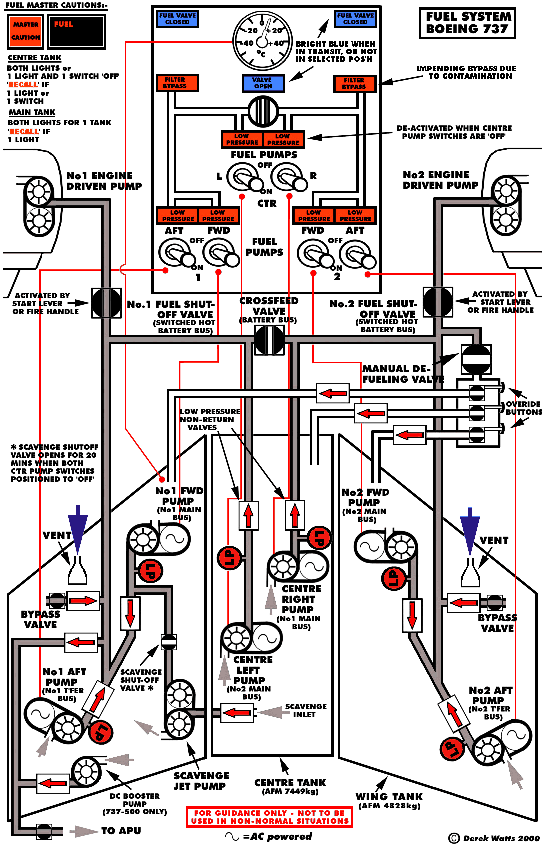
Imagine if our plane had one pilot, one engine, one radio, one big fuel tank, and one fuel line. If any one of these components failed, it would be a disaster. Engineers call this a system of possible single point failures, meaning that if any of these parts of the system fail, the entire system would fail, and perhaps catastrophically.
The framers of the U.S. Constitution looked at government and society the same way. They saw their work as risk management. If one branch of government failed by becoming too powerful or corrupt, others could step in to correct it, or provide alternative methods of government while it was repaired. External to government, the framers codified freedom of speech, press, assembly, association, religion, and yes the absolute separation of church and state as another citizen layer level checks and balances. Citizens get to observe, write about, protest, and challenge their government as a way of assuring that the government always serve at the pleasure of the citizens.
I want these essays to reach beyond sympathetic readers. Research suggests exposure to information outside our usual media environment can produce learning and moderate attitudes, while conformity experiments show group pressure weakens when people respond privately (Broockman & Kalla, 2025; Asch, 1956). That’s why I use paid social media advertising: meeting someone in their scroll gives them room to explore an unfamiliar idea on their own terms. My writing stays free; reaching new audiences does not. You’re not paying for more access to my writing; you’re helping distribute it. If you think that’s worth doing, a $5/month subscription helps fund the outreach that makes it possible.
The freedoms of speech, press, and assembly provide a check on the government itself. And due to the unique power of religion, the codified separation of church and state made sure that government and religious institutions existed in a competitive relationship. Government was not to impose a religion on the people, nor could it restrict the people from practicing faiths of any kind. Religious institutions were free to exist, but they did not have governmental power to impose their interpretation of God on everyone else.
Now imagine a government and society without this distributed design. Imagine that there would be one person with totally consolidated power and wealth. Let’s call this person a king. Imagine that there was no such thing as Congress or the judicial branch, so that the king has both the power to make laws as well as send people to jail for breaking them. Imagine that there was no boundary between church and state, so this king also was the head of the church, and was followed as a spiritual leader.
This is a system of possible single point failures.
Let’s imagine that the king was a good, virtuous person. The society might be OK for a time. All leaders, eventually die, however. Imagine our king died. The singular source of leadership ceased to exist. Who would take over all of the institutions I just mentioned? This would result in catastrophic failure for a government and society.
The king scenario I just walked through has happened many times in history. Ancient imperial Rome, in particular, was rife with civil wars. Roman emperors had multiple titles and responsibilities:
Imperator: Emperor. With this came the power to execute laws.
Tribunicia Postestas and Princeps Senatus: Tribune and leader of the Senate. This gave the emperor the power to make laws.
Pater Patriae: Father of the fatherland.
Pontifex Maximus: High priest. This basically gave the emperor control of religion.
Dux and Dominus: Duke and lord, which are titles of leadership of the military.
Let’s string all this together for an example of how you would address an emperor named Trajan:
IMPERATOR CAESAR DIVI NERVAE FILIUS NERVA TRAIANUS OPTIMUS AUGUSTUS GERMANICUS DACICIUS PARTHICUS PONTIFEX MAXIMUS TRIBUNICIA POSTETATE CONSUL VI PATER PATRIAE
Which translates to: Emperor Caesar Nerva Trajan, Son of the Divine Nerva, Most Revered, Conqueror of the Germans, Dacians, and Parthians, Chief Priest, Holder of Tribunician Power, Consul Six Times, Father of the Fatherland.
Now that is a concentration of power. Every time an emperor died, an immense vacuum was created, and all of society had to hold its breath while the next concentration of power established itself. The only methods available for this transfer of power were assassinations and civil wars.
Let’s step forward to today. We are currently experiencing several concentrations of power in our government and society:
Oligarchs: individuals who have accumulated both immense wealth as well as power and influence, such as Elon Musk, Jeff Bezos, Larry Ellison, etc. Wealth alone isn’t enough to be considered an oligarch. The wealth must be orders of magnitude higher than most of the wealthy, and that wealth must be paired with accumulated power.
Corporate Consolidation: mergers and private equity takeover of major corporations such as:
CBS, Paramount and Warner Brothers, and CNN, representing a unique opportunity for corporate leadership to control media.
SpaceX, which is more than a rocket company. It is also an artificial intelligence company, and internet service provider which can control internet access for hundreds of millions of people.
Boeing, the only American manufacturer of civilian jets, only has competition from Airbus and Embraer, European and Brazilian companies. We have seen the quality of this company’s work degrade in recent decades without American competition, yet their prices and profits have been steadily increasing.
Private equity buy-ups of real estate, health insurance, and agricultural companies. Is it any mystery why the costs of our housing, medical care, and food are skyrocketing while the quality of all are also decreasing?
The American Presidency: the President and the oligarchs in his circle are wielding their power to pressure an entire American political party into submission, resulting in the collapse of the legislative and judicial branches of the American government.
Let’s first consider the oligarchs, and let’s consider a maximal example. What if one person had all the money? We may see Elon Musk become the world’s first trillionaire. Musk, already, if he wants, has enough money to raise an army. Imagine if he partnered with others who had in excess of $100 billion. This league of oligarchs could wield more power than many of the world’s governments, and certainly challenge the U.S. government.
Let’s next consider corporate consolidation. One example dear to me is that of beer. In the 1980s and 1990s a few big corporations made most American beer, and it mostly was watery filler. Now, every community in the country has several breweries again, who compete with as well as support one another. This isn’t to say that corporate consolidation isn’t happening, but corporate consolidation that gets out of control leaves the entire country drinking 30 packs of Bud Light. Right now, we’re experiencing the Bud Light version of housing, healthcare, and food in America. Dwindling competition between companies means the quality of housing, healthcare, and food can decrease, and prices can increase. You can go many other places in the world, and experience better food, health care and housing at a much higher quality at lower prices than those we pay for in the United States.
Now let’s look at the executive branch of the United States. Both corporations and oligarchs are pumping vast amounts of money into both the Democratic and Republican parties. Is it any wonder, that like food in America, politics has a very low quality, and also a huge monetary cost? The least qualified, least experienced, and least virtuous among our entire population have risen to the highest offices. The executive branch we have right now is being aided by members of both parties who are accepting vast corporate funding to build and calcify an autocracy.
From a systems engineering point of view, this looks like a system of single point failure risks. Imagine if the corporate portfolio that contains Paramount Pictures and Warner Bros. Pictures, Paramount+, HBO Max, CBS, Nickelodeon, MTV, CNN, TBS, and TNT were to fail? What would replace all of these organizations? What would happen to the tens of thousands of people employed in this organization of merged corporations? Is there a graceful failure mode for this complex system? Can the airplane safely land?
Now, imagine if Elon wanted to restrict internet for the entire country. Imagine if oligarchs as well as the Congress started building monuments to the President (this is actually happening).
Right now, our society is vulnerable to single point failures. The framers of the U.S. Constitution tried to prevent concentrations of power for this reason. At the moment, solutions to this problem are difficult to come by, but this essay serves to point to the problem.
What eventually will happen, whether we come up with reforms or not, is that oligarchs, corporate portfolios, and the overpowered executive branch will collapse under the weight of their power, greed, and responsibilities. This may not happen for 10 years or 100 years, but it will happen, because all oligarchies and all autocracies fail. There is simply too much society to manage by too few people, especially if those people do not have the requisite training, or interest in understanding the complexity of the systems over which they have power. My recommendations are as follows:
For oligarchs and corporations:
no one person should be allowed to accumulate more than 0.2% of the GDP of the country. This would still enable entrepreneurs to amass $60 billion, calculated at the level of the current GDP of the United States. This could be accomplished with reasonable tax policy.
corporations and conglomerates of corporations which achieve a value of more than 5% of GDP, trigger automatic government regulation and oversight so that we the people still wield power over them via our government.
In order to de-couple the incentives of the government and corporations, and ensure there is not an incentive for politicians to confuse loyalty to citizens and loyalty to corporations:
corporate donations to politicians and political parties should be illegal.
and a ban of all government elected officials from trading stocks and taking corporate lobbying jobs after their terms.
term limits for Congress and the Supreme Court.
And that is just a start. One excellent and efficient take on this is from the venture capitalist, professor, and entrepreneur Scott Galloway on his podcast Pivot, on which he is a cohost with the technology journalist Kara Swisher.
We simply cannot allow individual citizens, or corporate boards to amass wealth and power that rivals entire branches of our government. Why? Because we the people do not elect CEOs, or oligarchs, or corporate boards, yet they exert power over our society.
This, exactly, is what the framers of the U.S. Constitution, and the fighters in the Continental Army were against. Right now, corporations and oligarchs that have benefited from the free society founded by the secular enlightenment thinkers who wrote the Declaration of Independence and the U.S. Constitution, are tearing down that very framework. They are creating a network of single point failures because their incentives are to accumulate wealth and power. In addition, they have an absence of disincentives, or deterrents in the form of public shame, or reasonable tax policies for both individuals as well as corporations.
When tax policies contain loopholes and carve outs for corporations and wealthy individuals with the staff leverage and benefit from them, wealth inequality can rise to a level that society cannot sustain. A metric of power inequality is the Gini Coefficient. This is a number between 0 and 1, that represents the accumulation of wealth. A Gini Coefficient of 1 means one person owns 100% of the society’s assets. A Gini Coefficient of 0 means that there is perfect wealth distribution throughout society. The Gini Coefficient in France before the revolution in 1788 was 0.5-0.6. The Gini Coefficient in the United States in 2025 was 0.5.
We should think of the Gini Coefficient of 0.5-0.6 as the red warning light on an aircraft dashboard.
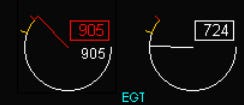
We know what happened in France in 1788. We know what happened in in the Thirteen Colonies when too much power was concentrated by too few, and again in the United States when robber baron industrialists accumulated wealth and power in the 1890s. In the last case I mentioned, the government responded with trust-busting anti-monopoly legislation and enforcement, and this action may have preserved our country. It’s time we re-commit to anti-oligarch and anti-monopolistic practices with new trust-busting policies.
In my view, it appears that societies either find ways to correct with policy, or that a corrections happen catastrophically when the power centers of society start to fail, such as the riots and civil wars after the fall of Julius Caesar.
I want these essays to reach beyond sympathetic readers. Research suggests exposure to information outside our usual media environment can produce learning and moderate attitudes, while conformity experiments show group pressure weakens when people respond privately (Broockman & Kalla, 2025; Asch, 1956). That’s why I use paid social media advertising: meeting someone in their scroll gives them room to explore an unfamiliar idea on their own terms. My writing stays free; reaching new audiences does not. You’re not paying for more access to my writing; you’re helping distribute it. If you think that’s worth doing, a $5/month subscription helps fund the outreach that makes it possible.
If you enjoyed this essay, you might also like the following:
Comments
Nothing yet. Say the first thing.
Sign in to join the conversation.