
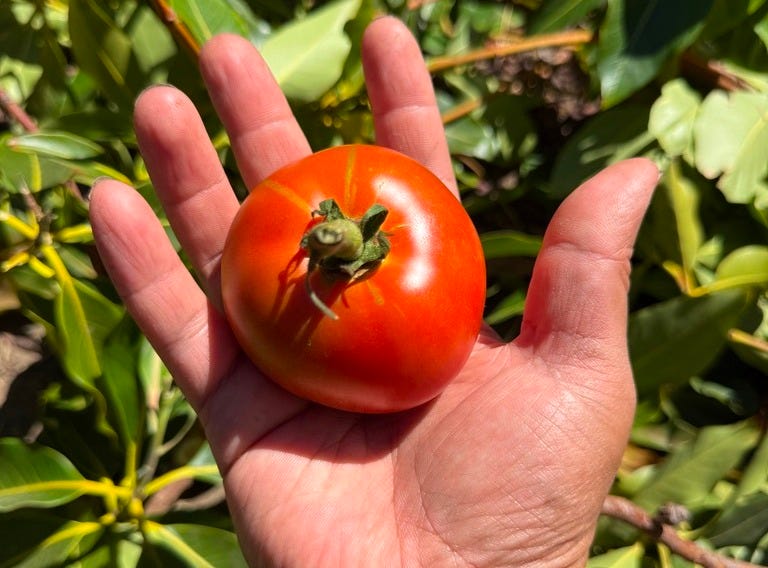
I haven’t finished the temple cuisine series yet (look for it Sunday!). But I am plucking the damaged green tomatoes to spurn the caterpillars and making salads of them with aromatic, flowering Thai basil, salt, sugar and lemon juice. I season them with oil infused with unused jalapenos, ginger and green onions, also flowering and too woody to eat fresh.
I haven’t finished editing the ekiben documentary (late 2026 release fingers crossed!). But I am fretting over tiny stalks of cilantro, dill, and basil, slipping a finger underneath their slumped stems to check their strength underneath the relentless sun. I am gathering fallen leaves from the yard to spread as mulch, and admiring the mosaic of changing colors as they dry, and the way they keep my soil healthy and bring the worms to the surface.
I’ve planted a garden for the first time ever this year, and I think it’s changing my life. One immediate sign is how I’ve reversed my personal ban on Crocs and floppy garden hats. Is it possible I’m pulling this off? Please vote in the poll below.
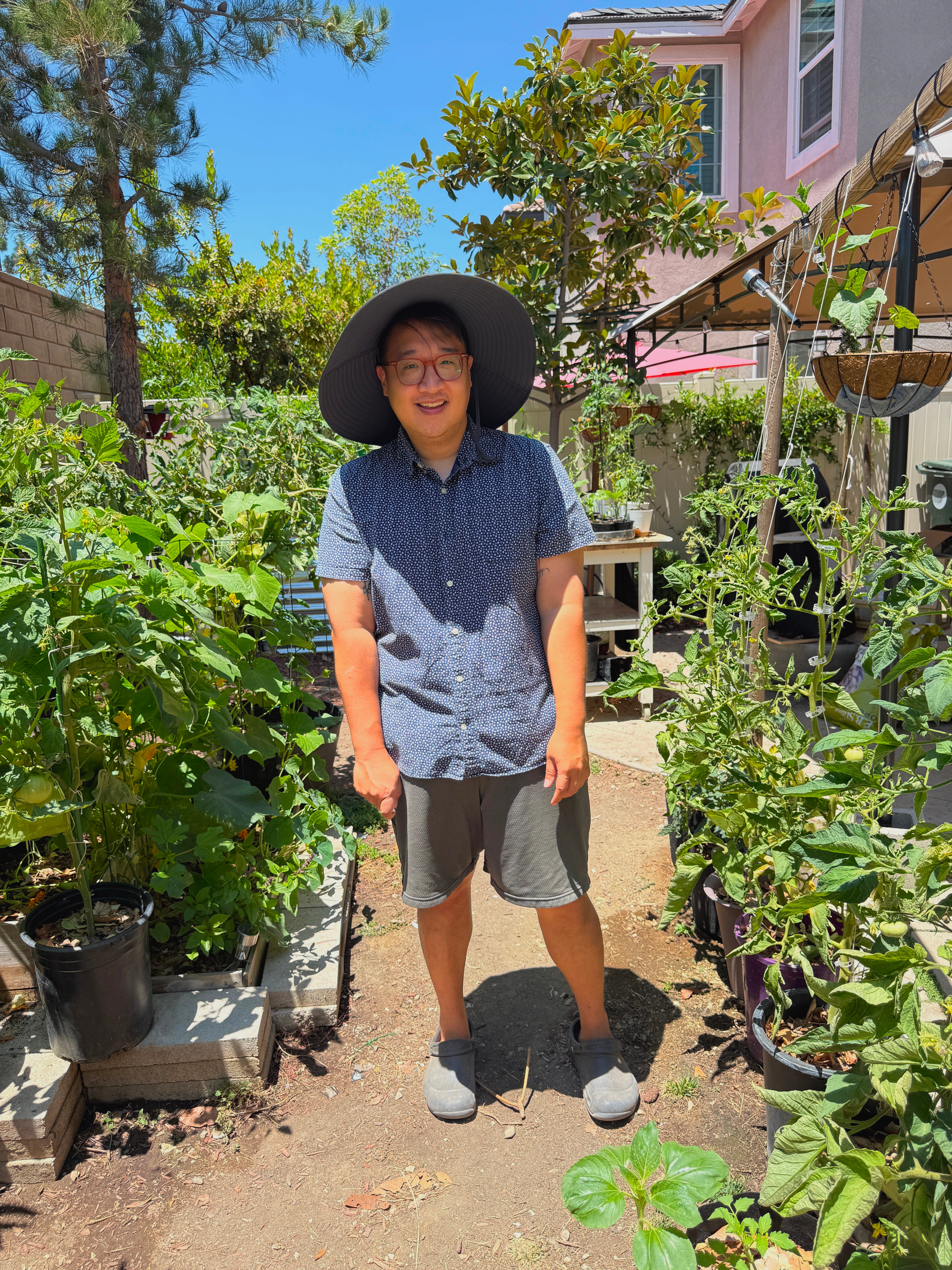
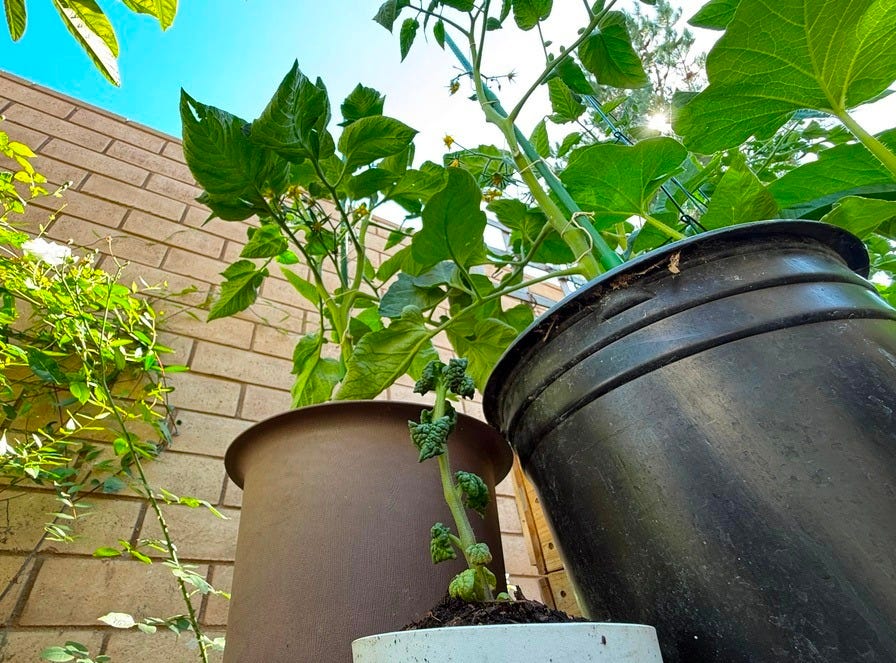
Growing things pulls on my emotions in a way I didn’t anticipate. I’m painfully proud of my tomato plants, which began as seeds in late March, outgrew their trellis and now tower over me. And after the panic subsides, I can marvel at the intensity of my dismay when I discover that raccoons have uprooted my pepper plants for the third time, as well as the the patience I’ve learned replanting them.
Sometimes watching my plants I get the distinct feeling they’re watching me back. Plants are alive obviously, biologically. But what is this feeling that makes me squeeze my eyes shut as I sever the top of a mis-planted kabocha squash I raised from seed? Why do I lay its body gently atop the compost pile with such mourning and regret? Why do I need a separate photograph for each time one of the dozens of flowers in my native aster blooms?
When I spotted caterpillars burrowing in my tomatoes, I felt such a powerful, competitive instinct awaken in me that my first thought was to make them all extinct. Then my cucumbers froze on the vine without pollination and it occurred to me that none of this could happen without bugs, without nature. Gardening is a conversation, and I’d been monologuing.
A week after I surface-sowed seeds for a fresh bed of herbs, a nest full of house finch chicks hatched down the street and began to mow down everything at soil level. They quickly lost their fear of me and soon I realized their hilarious, chirping raids of my garden also helped keep them free of insects and debris. I began to enjoy the fact that my seeds were nourishing them. I installed a bird bath and bird feeder. Now that they are fully grown and flown the nest, I find that I miss them.
Gardeners, I can see you now. I note the dirt underneath your fingernails, the way your eyes linger on unusual greenery and the appraising looks you give the sun. I recognize the plant and composting analogies in your speech and prose, which are insinuating themselves into my own.
I’m taking landscape drawing and heat-tolerant gardening classes at Sarvodaya Farms, an edible urban nursery in Pomona founded by Rishi Kumar, and thinking about the history of gardening, and why our relationship to food and the land is so broken. On reporting trips to the temples, I encounter several commercial farms from an era when this area produced citrus, stone fruit, olives and cattle.
I’m attending native herbs lecture/walk at California Botanic Gardens, the largest such garden dedicated to native plants. I sit beneath a three hundred year old oak tree and learn about how this area was once a food-producing woodlands for the Tongva, who built seasonal campgrounds and harvested acorns, walnuts, and elderberries and chia seeds.
And finally I’m reading. Gardening is an endlessly interesting subject, especially in Southern California and I have some recommendations.
Tomatomania is Southern California’s annual celebration of the tomato a, a pop-up garden sale that gathers hundreds of new, rare and experimental varieties in a single place. It’s expanded to 17 events this year, some out of state, and I missed them all. Next year! There’s a cookbook, too.
The Rodale Book of Composting: I never expected to read a book about composting cover to cover. But it turns out composting is a fascinating subject with deep lore and many different cultural permutations, which makes it exactly the kind of subject worth exploring in a textbook format. Did you know that the University of California invented one of the most popular methods? That bio-reactors - which heat and power homes and greenhouses with exhaust heat from compost piles - are actually a thing outside video games?
Gasa Gasa Girl,Sayonara Slam and the Mas Arai series: These books flow so well, telling their stories efficiently, with some of the most specific and vivid characterizations of AAPI characters I’ve read in literature. Each of them is peppered with intriguing, little-known details about Asian American diaspora communities and institutions, such as how Japanese Americans used to call Koreatown Uptown, and a forgotten Japanese garden and stone lantern behind a parking lot in Dodger Stadium. Mas solves mysteries the police can’t by wielding gardening insight and tapping an extensive Japanese American diapora network.
Mas’s creator, Naomi Hirahara, has also done incredible work in non-fiction, chronicling the history of Japanese Americans in Southern California. A Scent of Flowers, a history of the Southern California Flower Market, is an institutional history commissioned by the original Japanese American vendors that founded it. A Taste for Strawberries is a biography reconstructing the voice of independent Nisei farmer Manabi Hirasaki, the first Japanese American to serve on the board of directors at Driscoll. And Green Makers is her history of Japanese American gardening in Southern California.
Wisdom of the Last Farmer; Epitaph for a Peach: Mas Masumoto is one of those writers who makes it look too easy. Writing is at most his second or third job, after running the family farm, educating the public on organic heirloom farming and filing a column for the Fresno Bee. Yet he knows how to make you want a peach more than anything else in the world. He also writes vividly about family, legacy and what it’s like to watch his father grow old. From the clues on Mas’s Instagram, I believe the legendary peaches should be headed out to stores this month. If any regular readers manage to find one, let me know where!
Pomona Queen by Kem Nunn: You might know Kem Nunn as a writer of surf noir novels, one of which inspired “Point Break.” But he grew up in Pomona and he makes his hometown come to life. Pomona Queen is the name of a variety of local oranges that ends up figuring in a plot twist.
One Straw Revolution by Masanobu Fukuoka: A series of essays describing a method of minimally disruptive, low-effort natural farming that deploys mulch, companion planting and cover crops to produce yields comparable to that of modern farming. Fukuoka’s farm in Ehime prefecture was located in Iyo. I’ve actually traveled through Iyo via the Iyonada Monogatari, but discovered this book too late to have planned a visit. There are a lot of deep observations about his land formed over a long period of time, and they are very satisfying to read.
FRANK ELSEWHERE:
I’m excited to be joining the Los Angeles Reporting Collective for the Los Angeles Food Journalism Summit! I’ll be doing a conversation with a guest about the world of food outside restaurants - more details to come.
Project C x Google Journalism Creators Startup Lab: I’m joining the inaugural class of this training program for creator journalists, where I’m hoping to pick up some skills and strategies to make this newsletter more than just an interesting thing to read. I’ve been kicking around ideas for a podcast, a regular Q and A, events, a book club and also another zine.
Comments
Nothing yet. Say the first thing.
Sign in to join the conversation.