
There is something about pregnancy and postpartum that makes women feel uniquely vulnerable, and I don’t mean that negatively in any way. When I say vulnerable, I mean it in the most human sense of the word. These are both seasons marked by enormous physical, emotional, and psychological change. We’re navigating a body that no longer feels familiar, stepping into an identity we’ve never occupied before, and carrying the newfound responsibility of wanting to do right by someone we love more than ourselves.
Naturally, because this new role feels so important and heavy, we look for guidance. We read the books, listen to the podcasts, ask other mothers for advice, and spend hours searching questions that didn’t even exist in our minds a year prior. There is nothing wrong with wanting to be more informed or wanting to do your best for your child. The problem does not lie in the fact that resources for mothers exist, but in what has been built around our desire for reassurance.
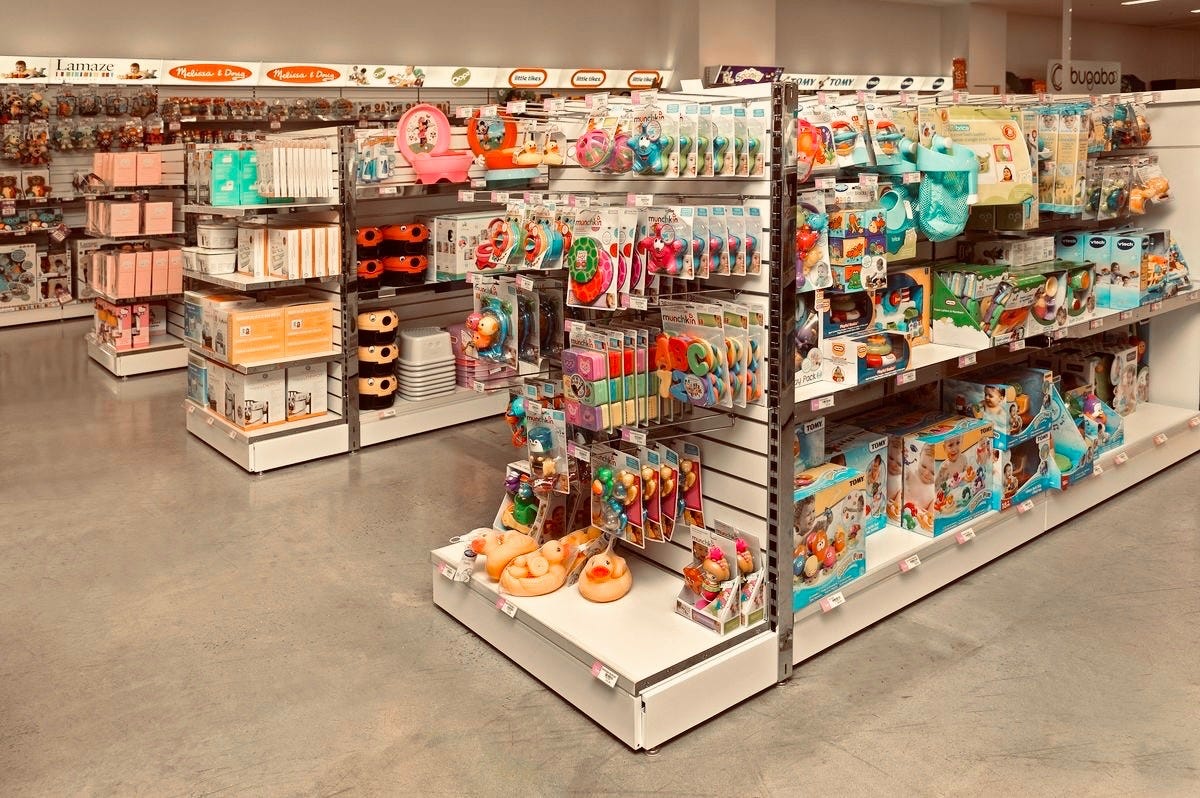
Somewhere along the way, we started to lose the plot. Motherhood stopped being a life experience and started to become a consumer market.
What strikes me isn’t simply the volume of products aimed at pregnant and postpartum women, although that alone is staggering. The thing that stands out to me most is the messaging that accompanies them. Women are rarely told outright that they aren’t enough. Instead, we are presented with a subtler narrative: there is always another purchase to make, another method to learn, another habit to adopt, another system to implement, another expert who knows something you don’t. The implication is rarely explicit, but it is almost always there.
You could be doing more.
You could be doing better.
And if you cared enough, you would.
This message lands harder when we’re pregnant or postpartum than it would in almost any other period of life. This is because these are seasons in which many of us are already questioning ourselves.
Am I feeding my baby the right way? Am I bonding enough? Is this normal? Why doesn’t this feel as instinctive as everyone said it would?
The uncertainty is very real, which is precisely why it becomes the perfect ground for marketing tactics. An anxious customer is far easier to sell to than a confident one.
I don’t believe most companies set out to exploit mothers. There are many companies that create products that genuinely improve people’s lives, and many educators and creators offer thoughtful advice with the best of intentions. But good intentions don’t erase the incentives of the system itself. Marketing has always relied on identifying a gap between who we are and who we want to become. The larger that perceived gap becomes, the easier it is to sell the bridge.
When the customer is a new mother, that gap often sounds like this: “A good mother would know this. A good mother would buy this. A good mother would do more.”
That is the point where I begin to feel uneasy.
This is because motherhood has become one of the few experiences where love, in its purest form, is routinely transformed into a sales strategy. The deeper a mother’s desire to protect her child, the easier it becomes to convince her that protection is something she can purchase. We have built an entire economy around the fear of getting motherhood wrong, and in doing so, we’ve replaced confidence with consumption.
The motherhood industry doesn’t have to convince women to love their children. That part is already guaranteed. It only has to convince them that love, by itself, isn’t enough. It needs us to believe that truly good mothers read more, buy more, optimize more, and worry more. Once that seed is planted, every new product can present itself not as another thing to own, but as another way to prove our devotion.
I can’t help but wonder what this costs women. I don’t even mean financially, although it certainly does. I’m talking about psychologically. What happens when every scroll through social media reinforces the idea that motherhood is a skill to improve on rather than a relationship to nurture? At what point do we stop asking what our children actually need and start asking what the algorithm has convinced us we’re missing?
Perhaps the most harmful message lies in the idea that mothers, themselves, are perpetual projects in need of fixing. This goes far beyond product recommendations. And I don’t think that’s a harmless narrative to sell to women during one of the most emotionally vulnerable seasons of their lives.
The irony is that the more insecure a mother becomes, the more profitable she is. When a mother feels insecure, she’s far more likely to buy another course, another monitor, another routine, another supplement, another checklist, another promise that this one thing will finally make her feel like she’s doing enough. A secure mother is much harder to sell to.
This might be why we rarely see confidence sold to mothers. If we truly believed that our love, attention, and presence mattered more than endless self-improvement, much of the marketing directed at mothers would have to change.
Mothers don’t need less information. We have more access to helpful resources than ever before, and many of them really do make parenting easier.
What we do need is more discernment about who profits from our fear.
Because the most profitable thing a mother can be isn’t informed.
It’s insecure.
No posts
Comments
Nothing yet. Say the first thing.
Sign in to join the conversation.