
I have met many leaders who can speak thoughtfully about inclusion, psychological safety, values and culture.
They know the language. Often, they believe deeply in what the language represents.
And yet the people around them may experience something different.
A meeting can be described as inclusive while the same voices continue to dominate it. A leader can value challenge and still respond defensively when it arrives. An organisation can commit to belonging while some people remain far more able than others to speak, influence and recover from mistakes.
This does not always mean that the stated commitment is false. It means there can be distance between what we believe, what we intend and what our behaviour produces.
That distance is where much of the real work of leadership begins.
Leadership development often concentrates on what people should know. Knowledge matters. It gives us language, frameworks and ways to interpret what is happening. But knowing is not the same as doing, and doing once is not the same as changing how we lead.
The question I keep returning to is not simply, “What does this leader understand?”
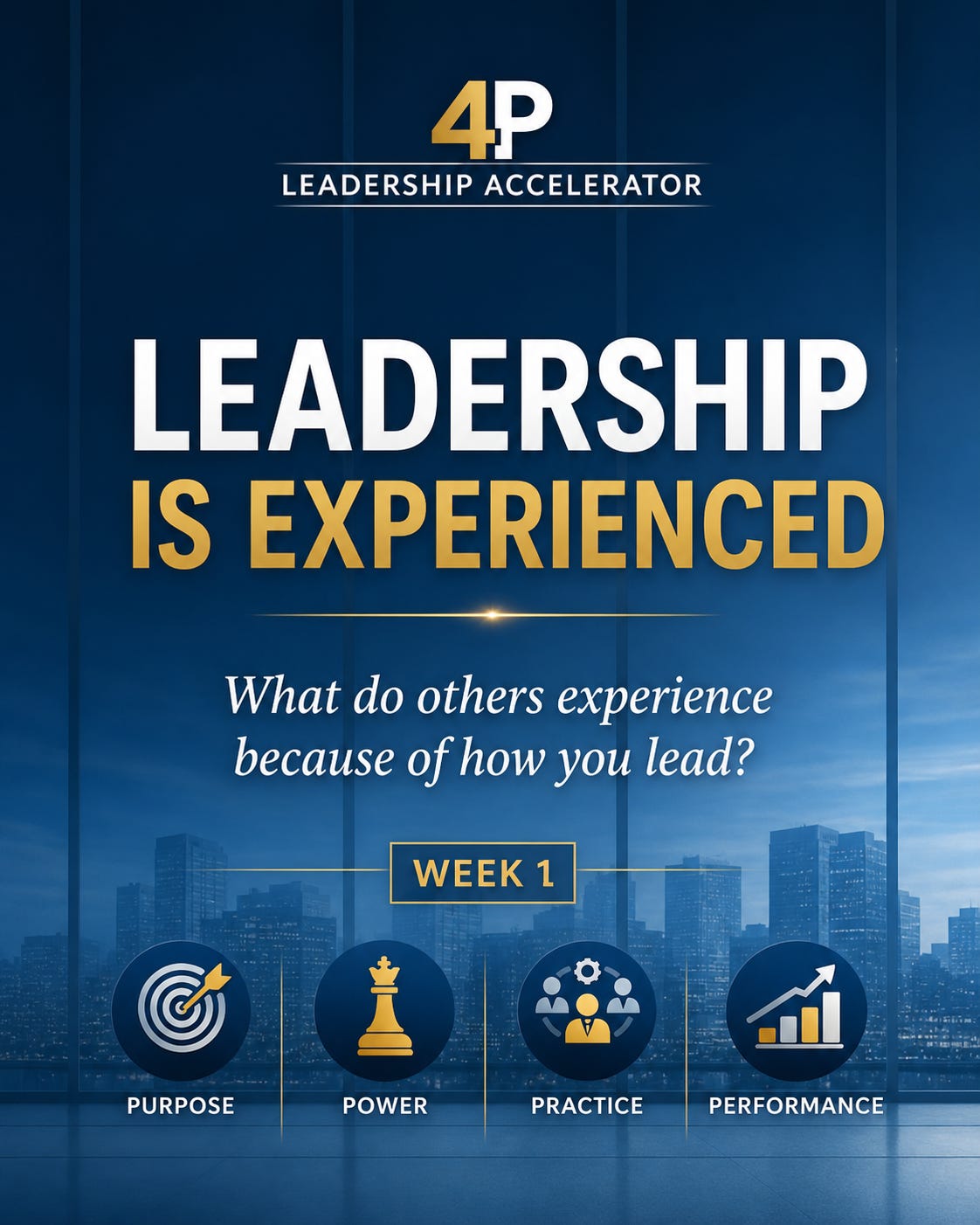
It is, “What do other people experience because of how this person leads?”
That question asks us to look beyond self-description. It makes room for feedback, context and contradiction. It also asks us to resist the temptation to turn one difficult piece of feedback into a total judgement about a person.
People are more complex than that. So are organisations.
The 4P Leadership Accelerator grew from a belief that leaders need a sustained way to explore this space. Purpose, Power, Practice and Performance provide the structure. The work itself happens in the meetings, decisions, relationships and moments of pressure that make up everyday organisational life.
Over the next eight weeks, I will share more about that approach and about the first four pilot licences beginning this autumn.
I will also share something of the leadership promise I am continuing to explore in my own work:
Intellect without intimidation.
Influence without ego.
Challenge without diminishing others.
These are not claims of perfection. They are a way of naming the practice.
Comments
Nothing yet. Say the first thing.
Sign in to join the conversation.