
Imagine this: Your team has pouring hours into creating the next campaign.
They cleverly iterate on targeting, testing creatives, and polish every line of copy.
The results look promising at first, but then as if on cue, your reach starts to edge up and just like that—another campaign starts to cost as much to run as it does to bring in new business.
What felt like a winning strategy is now forced to eat spend from other campaigns and channels. So much for a growth lever. What did you do wrong? Nothing! That was best-effort work!
Now - rinse.
Repeat.
It's only May 2025.
Q2 isn't even done yet. Team burnout starts to knock.
You’re not alone—rising acquisition costs are the silent killer of profitability for growing e-commerce shops. Brands are pinched as it is with shipping, tariffs, returns. But here’s the thing—this challenge isn’t a curse; it’s the elbow in the ribs you may need to rethink your strategy.
Here are 5 marketing channels that don't require extensive spend but they must be learned—so start now. Use the evidence-led method to guide your craft as you win and fail in new channels. For more-sustainable growth, trust your team to experiment and find pathways to profit.
It’s mostly new customer acquisition costs that are climbing across every platform. Higher spends, increased ad competition, and shifting consumer behavior have made it more expensive than ever to bring in net-new customers.
In e-commerce it costs five times more to acquire a new customer than to keep an existing one (HBR). Customer retention and repeat purchases must be one of your priorities in 2025. Current customers already know and trust your brand, making them more likely to purchase again to maximize lifetime value (LTV).
Introduce Loyalty Programs: Reward repeat customers with points, discounts, or exclusive perks.
Upsell and Cross-sell: Use targeted recommendations to offer complementary products or collections of items they’ve already purchased.
Personalized Engagement: Send tailored email campaigns based on a customer’s past behavior. Personalized emails can lead to six times higher transactional rates compared to general emails.
Start a Subscription Plan: Offer customers the convenience of a regular delivery schedule based on their product usage, and tack on an attractive discount for their loyalty.

Every small improvement in retention contributes directly to lowering acquisition costs. Tools like Klaviyo and Postscript make personalized engagement easier by automating behavior-based campaigns around the specific product use case. Consider these experiments to flatten your retention curve:
send-time and frequency around product consumption (ie. 4 weeks for toothpaste, seasonally for chocolate, fiscally for finance)
SKU bundling and cross-sell for top-sellers
quantity bundles to maximize AOV (think about enhanced use cases)
offer cosmetic varieties for collectors and limited editions for status-driven buyers
Organic channels aren't just cost-effective—they should be the cornerstone of your long-term strategy. You should be planning to overtake a percentage of your paid traffic every cycle once your domain authority and content engine mature. By building a strong SEO foundation, you create a compounding asset that reduces reliance on ads, lowers CAC over time, and drives consistent, high-intent traffic that scales with your business.
Generate your Evergreen Content: Optimized blog resources, product pages, and guides generate ongoing traffic long after publishing. Start with keyword-focused content informed by tools like Ahrefs and SEMrush. Layer in language-model AI tools designed for writing like Jasper and Claude to expand and refine winning content into a hub-and-spoke content model.
SEO Overtakes Paid: As brands mature and scale traffic with paid acquisition, the workhorse of SEO comes in to take the credit and save your budget. Propel this strategy forward by sending paid traffic to targeted content that will eventually earn its rank in the organic SERP.
Community Building: Host webinars, ask for user-generated content, and interact through social platforms to ensure ongoing engagement of your flagship content.
You should be planning to overtake a percentage of your paid traffic with organic
Experimenting in SEO is less practical because we're dealing with an algorithm not a population of people. However, you can test your content a hundred ways and find patterns that fit your customer profile:
title testing and accompanying visuals for clickthrough-rate (cheap display ads for less than $200)
format types for all content pillars to find engagement patterns and multiply reach
sentiment and tonality for a target audience (Claude.ai is the best free GenAI for this, I personally use Jasper.ai first paid tier for this)
reading level and syntax (use grade-levels at Hemingway.com)
Nothing builds credibility like a glowing recommendation from a happy customer... or a hundred. Word-of-mouth marketing is the most affordable method to acquire customers but it can be hard to scale deliberately online. Happy customers who share your brand with their friends naturally extend your reach, compel action through their trust and add you into entirely new networks.
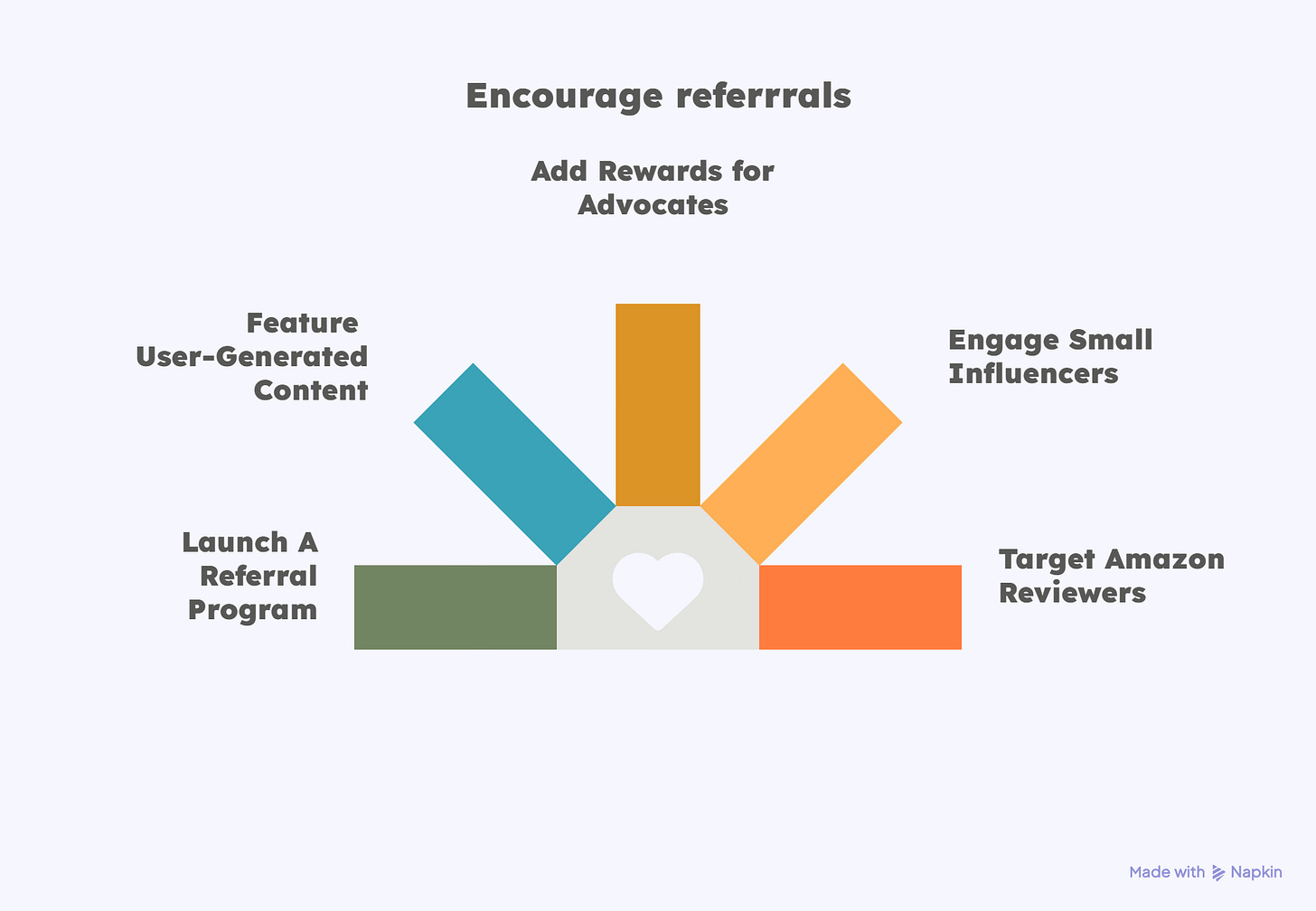
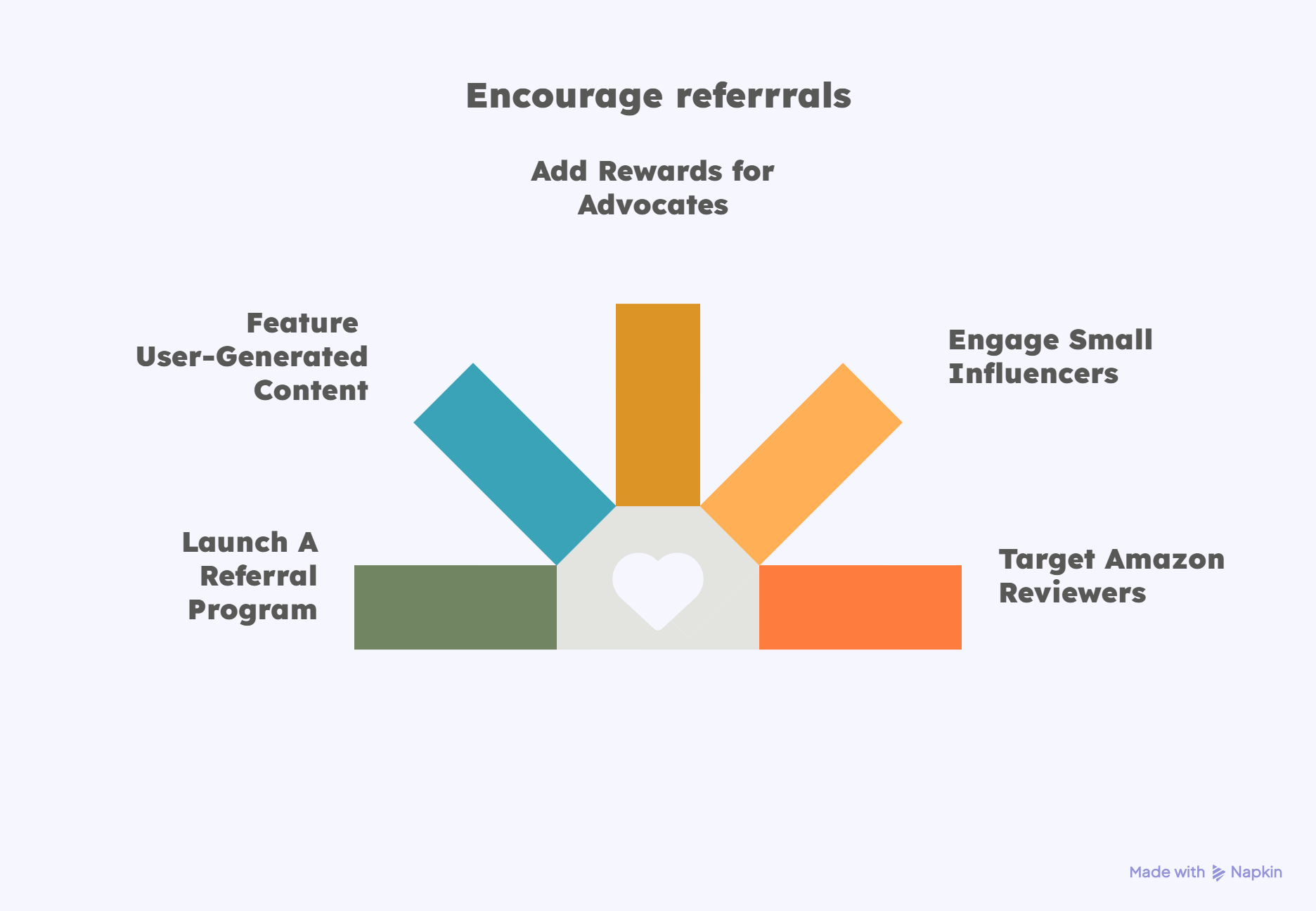
Launch a Referral Program: Offer incentives like discounts or gift cards for customers who refer friends. Be authentic when asking for the sale.
Feature User-Generated Content: Encourage customers to share photos or videos of your product in action, then showcase their posts as social proof on your sales pages or use them in your ads.
Add Rewards for Advocates: Affiliate platforms like PartnerStack allow teams to easily track and incentivize approved evangelists by providing structured rewards for every successful new lead. The number of options is pretty insane. No matter your model you can find a fair incentive for referrals.
Ask small influencers in your niche: some influencers aren't established enough to demand a paid stipend for a review - seek out the small-but-growing players in your niche and ask for an honest review to get in front of their viewers.
Amazon reviewers: a new one I've seen lately: make a list of people who leave Amazon reviews for popular books on your topic. These are vocal individuals with opinions, naturally. Find them and reach out asking for a review of your product on the reviews site of your choice. Also the language used in these reviews is often ripe for verbatims.
Validation experiments for a referrals channel suffers from low-volume trap. It's difficult to measure a change at the top of the funnel, change hands, then measure the outcome back in your house again. However, you can tweak your message with all sorts of discovery research:
test what language works to get prospects to act on your CTAs
interview customers to understand what features of your product are most viral
run a Product Box experiment to get verbatims from your customers and design a 5-star unboxing experience they would talk about
My favourite category of spend-reduction strategy. Your focus must shift to optimizing the value of your existing traffic. This is where conversion rate optimization (CRO) shines. You bought all that traffic! Treat these visitors to the best experience possible and remove all fear, uncertainty and doubt before asking for the sale or signup.
There's SO MUCH capability to test here! The reasons why CRO is such a testable discipline is due to the massive surface area, the variety of content, the interaction time spent on by users compared to ads, the trackable nature of web behavior, etc. It's an endless science.
There are platforms by the hundreds here too. Whether you're optimizing mobile checkout or improving product descriptions, CRO drives funnel efficiency and ensures your ad spend pays off.
For founders wondering how much investment to make here, know that there are full-time CRO experts gainfully employed at many SaaS startups pre-Series A, and they're always busy. The learnings they uncover assist in product-market fit, targeting, messaging and more. My two cents:
Look for a growth generalist you can promote after you raise, they would own non-product growth later.
If you must, you can put CRO work on your CS team. They have the customer and product knowledge to be effective in the short term, but obviously should focus on support as you scale.
Audit Your Funnel: Identify weak points in your sales funnel where users drop off. Fix broken flows and simplify your checkout process. I audit across a few dimensions: usability, emotional triggers, and problem-solution awareness.
Leaner Sites, Bigger Gains: Simplify navigation and reduce page clutter. Fewer distractions lead to improved focus and higher conversions.
Test and Adjust: Run A/B tests on landing pages, calls-to-action (CTAs), and product page visuals. Even minor tweaks can compound into measurable gains.
Think Beyond the A/B Alphabet: just as there are many letters in the alphabet after A and B, there are countless experiment formats beyond a simple A/B split. Use the right tool for the job. Split tests are good evidence when you already have something that works, but less so when you're exploring something brand-new.
Hire me to review and fix your funnel: did you think I'd miss a chance to help you? I've been fixing funnels for 15+ years as of this writing for B2B SaaS and DTC e-commerce. Especially great at emotional motivators for "boring" SaaS. (I sold tax software, try me.)
I've added +29% new customers with a complete product lineup change.
I've turned +24% mobile traffic into buyers using accessibility changes and product comparability features. Kept a stable paid mix: that's pure new revenue.
After COVID, I helped +24% new-to-category Canadians overcome anxiety to file their taxes by creating emotional content that dissipated their fears and doubt.
Collaborations with complementary brands can spur growth at a fraction of the cost of running ads. Co-marketing and partnerships allow companies to tap into each other’s audiences and share the benefit.
Ever wonder why so many craft brewers create collab beers? Half for the fun of it and half for the tap (get it, tap?) into each others' audiences. A tasty and affordable tactic.
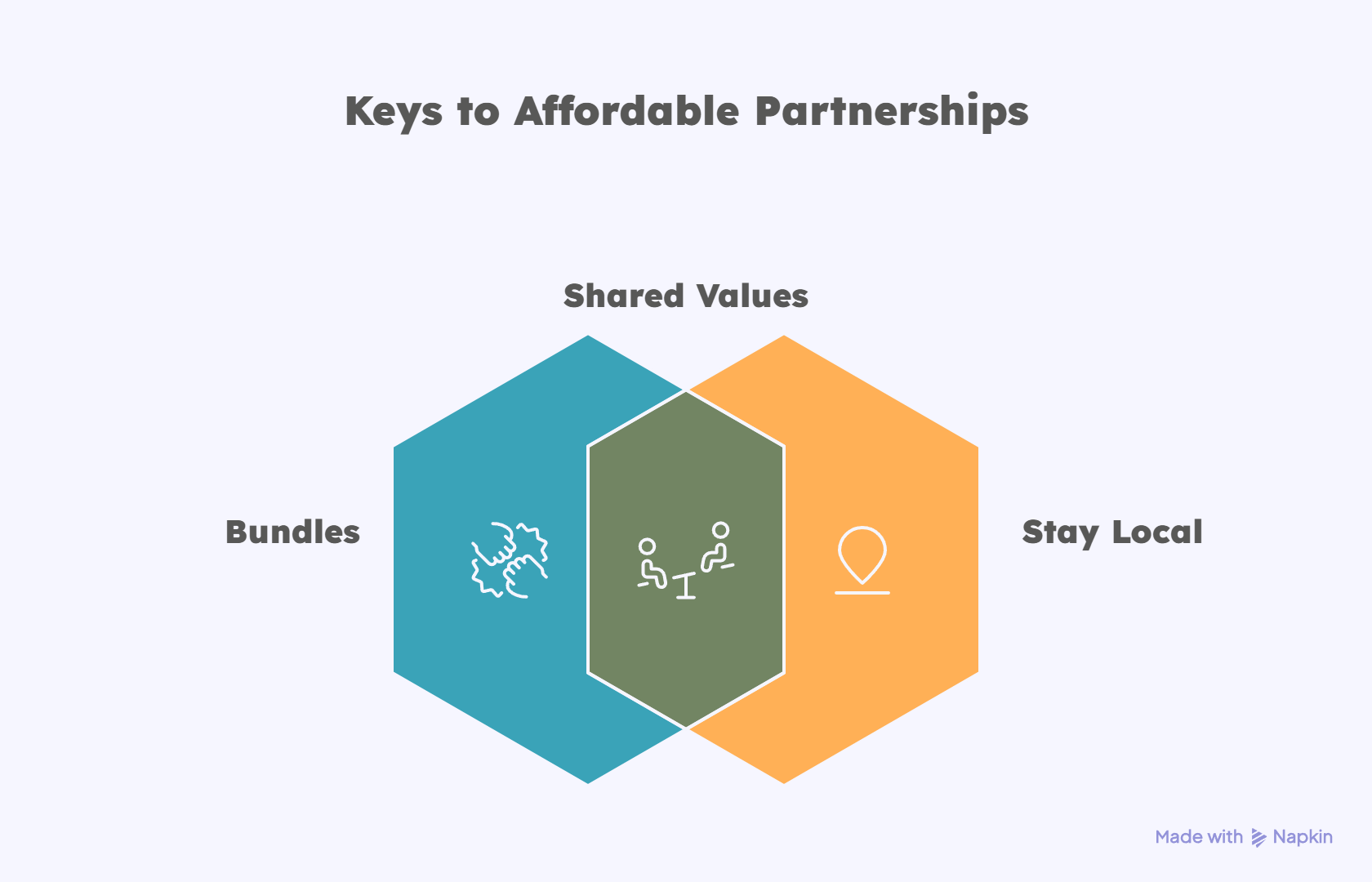
Choose Brands with Shared Values: Look for complementary companies that align with your audience. A skincare brand might partner with a wellness brand to create seasonal bundles. SaaS products that serve different markets or funnels can collab to solve complex problems for enterprise clients.
Bundle Offers: Combine products for a co-branded promotion that incentivizes purchase while exposing both brands to new audiences.
Stay Local: Regional collaborations generate trust and buzz by their proximity. It can feel inauthentic to reach too far outside your region unless there truly isn't a partner nearby.
Trust is key. Effective partnerships feel authentic and add value, ensuring audiences welcome your contribution rather than tuning out.
One of my strongest-ever career growth campaigns was at a pre-Series A fintech, the result of Quickbooks partnering with our service to send us qualified leads through an API connection. We benefitted from the trust that came from the Quickbooks Intuit brand name. They benefitted from our service keeping their customers cash-flush. Then Intuit poached me. Fairytale ending!
Make tightly-targeted campaigns more efficient by employing these affordable channels to boost every dollar. Find new ways to serve your current customers. Explore no-cost channels like organic search and partners. Nurture relationships with influencers your audience also loves.
Each of these activities will help your brand lower CAC and sustain growth over the long haul. It’s messy out there, good luck!
- Rhys
Comments
Nothing yet. Say the first thing.
Sign in to join the conversation.