
I’d like to hope that most readers working in healthcare companies already understand why it matters to work closely with patient advocates across project lifecycles, product launches and strategy development. But for anyone encountering this properly for the first time, it is worth starting with the basics: who is a patient advocate, and what do they actually do?
A patient advocate is someone with lived experience of one or more health conditions who raises awareness, challenges assumptions and helps make visible the needs of people who may not be able, or know how, to speak up for themselves.
They often work closely with health organisations to provide insight, contribute to advisory boards, support research, review content, speak to media and bring the power of personal experience to campaigns. More than that, they help make sure healthcare organisations are acting in ways that genuinely reflect patients’ needs, rather than what teams assume those needs to be.
So how can companies work well with patient advocates and avoid the obvious pitfalls? How has the landscape changed? And what does “good” look like in practice?
To get into these questions, I spoke to Trishna Bharadia: one of the most experienced and respected advocates and engagement specialists in the industry.

Trishna is a multi-award-winning patient advocate, patient engagement specialist and founder of The Spark Global. Through the consultancy, she works with pharma, CROs, med comms agencies, publishers, charities, digital health companies and patient groups to bring lived experience into healthcare, research and medicines development. She also lectures on patient engagement at the Centre for Pharmaceutical Medicine Research, King’s College London, ensuring that the next generation of pharmaceutical executives are well-versed in the what, why and how of working with patients.
Trishna’s advocacy started in 2008, when she was diagnosed with relapsing multiple sclerosis at 28. Her first experiences of treatment were, in her words, “not optimal”. She and her family had to push for information, support and appropriate care, and she saw how much a patient’s experience could be shaped by their ability to fight their corner. Trishna, whose heritage is South Asian, had English as a first language, some health literacy and family support. Many others do not. “I realised that actually many people in my community don’t have that,” she told me, “and aren’t necessarily understanding even the need to advocate for yourself, or how to go about doing it.”
Trishna got involved in voluntary work with MS organisations including the MS Society, MS Trust and Asian MS. A move to an MS specialist centre, led by a clinician who believed in patient empowerment, helped build her confidence. Speaking at education sessions led to speaking at pharma offices, then conferences. “It just snowballed,” she said.
Her advocacy work now centres on helping organisations involve patients properly across projects, disease areas and systems — from clinical trial materials and plain language summaries to advisory boards, congresses, campaigns and patient authorship.

So, according to Trishna, and reflected in wider guidance on meaningful patient engagement, how can health comms leaders find the right advocates, work with them well and build campaigns that are stronger because of that involvement?
Start with the community, not the campaign idea
The strongest collaborations begin before the creative route is fixed. Map who already has trust in the community: charities, support groups, specialist nurses, community leaders, online creators, researchers and advocates with established experience. Be clear about whose perspective you need and why. A high-profile advocate may help with reach, but they will not necessarily represent newly diagnosed patients, carers, underserved communities or people with more complex access needs.
Process matters
If an agency is running work on behalf of a pharma company, the patient still experiences that agency as part of the company. A vague brief, slow contract, inaccessible format or confusing expenses process does not feel like background admin. It tells the patient how seriously their contribution is being taken. Put the basics in place early: clear roles, fair payment, realistic timelines, accessible formats and a simple route for raising concerns.
Ask, don’t assume
Good practice starts with asking about accommodations and adaptations, from travel and meeting breaks to preferred ways of contributing. Some advocates may be best placed to join a workshop; others may add more value through written feedback, content testing, interviews or social media development. Trishna gave the example of needing special assistance at an airport, only for organisers to assume she also needed an accessible hotel room. She did not. Even within one health condition, needs vary hugely. “You can have 10 people with MS in one room,” she said, “and every single one will have different needs.”
Recognise nuance
Companies used to treat “patients” as one broad group, often brought in to validate work near the end. Better engagement is more specific. A newly diagnosed patient, experienced advocate, caregiver, community leader and patient author will bring different expertise. One person cannot represent an entire population, so build a mix of voices around the objective. The same level of segmentation companies apply to HCPs should apply here too.
Build engagement into the infrastructure of your projects
Create processes that involve patient advocates early enough to shape the brief, format, language, asks and follow-up. Do not wait until you’re about to launch to ask advocates to endorse your campaign. Make them part of your project team from the start.
The best campaigns will come from relationships built early, with people who understand the community, can challenge the brief and are given enough context, time and respect to shape the outcome. For health companies, that means finding advocates through trusted networks, being clear about the role you want them to play, paying them properly, building in flexibility and showing what changed because they were involved. That is the difference between using a patient voice and working in partnership with a patient advocate.
🤩 PRInspiration
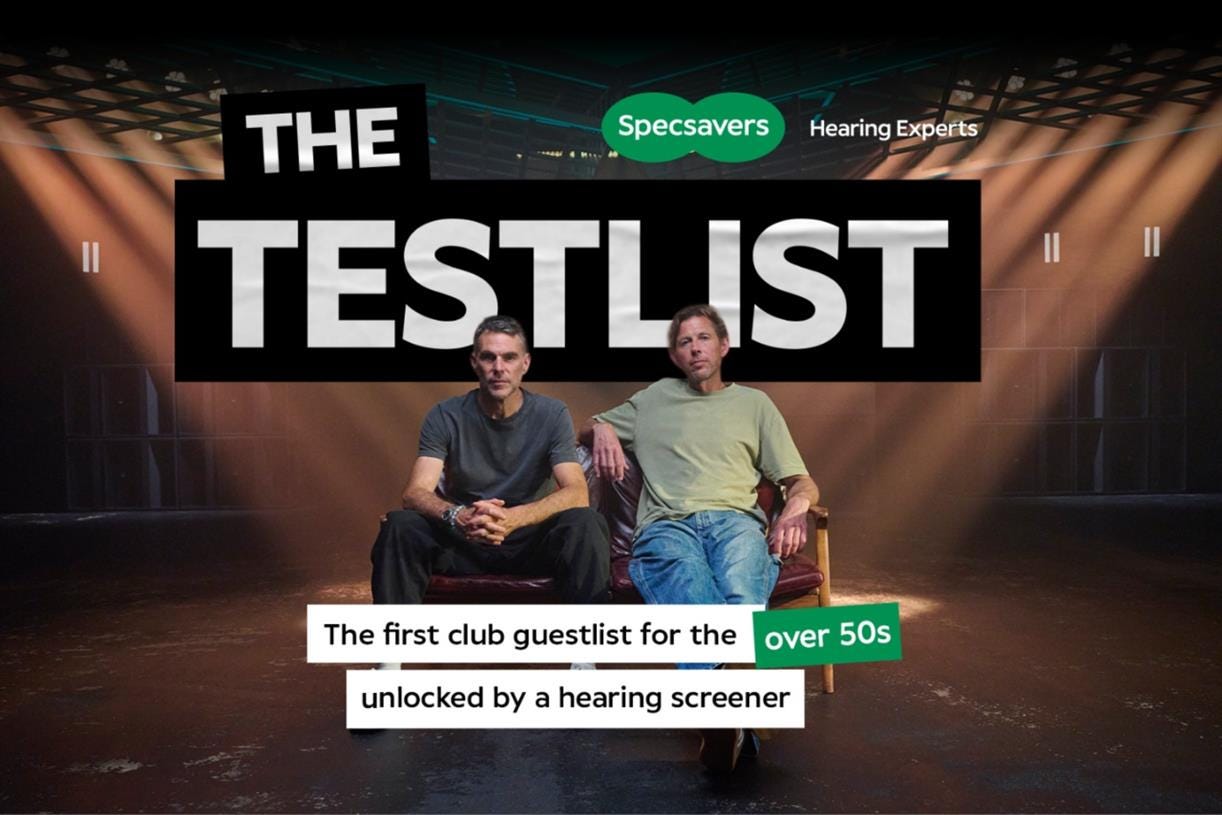
The ever-creative Specsavers team have smashed it again with this clever campaign that turns a boring health check into a cultural badge of honour. The Testlist, offers over-50s the chance to access exclusive live music events by first taking a free three-minute online hearing screener. Fronted by Groove Armada and built around the insight that the generation that created rave culture is still filling dancefloors today, the campaign reframes hearing health from a sign of ageing to a means of staying connected to the experiences people love.
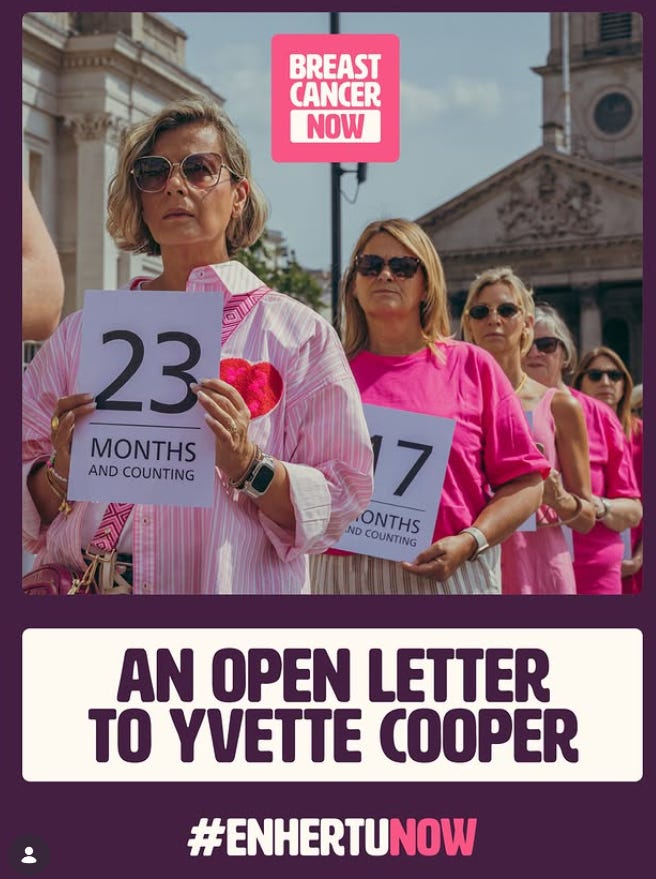
Breast Cancer Now turned a complex access-to-medicines debate into a deeply emotive visual statement by staging a queue in Trafalgar Square to represent the thousands of people waiting for NHS access to the breast cancer drug Enhertu. Women living with incurable metastatic breast cancer, campaigners and families stood alongside empty pairs of shoes symbolising those who had died before gaining access to the treatment. The campaign quickly picked up traction on social media, and their petition has already got over 74,000 signatures, owing to the power of the striking imagery, patient voices and a clear call to action to put pressure on decision-makers.
📚 I’m reading…
Why comms leaders need to be business leaders first
My July column in PharmaTimes Magazine features an interview with Abigail Epstein, Head of Communications, UK and Ireland, at Takeda, and asks what it really means to add value as a health comms leader in 2026.
Hardware meets high jewellery: introducing the tech-cessory
Fed up of your wearable health tracker ruining your look? Fear not, you can now spend hundreds of pounds to bedazzle it, reports The Times.

📻 I’m listening to…
On The Rox
Roxhill Media has been speaking to top journos to source practical advice for UK PRs, including “Why PRs should get their clients on late-night radio” and “How to pitch personal narratives”.
Uncovering the objective truth in health tech journalism
Host of The Healthtech Podcast, James Somauroo, is joined by Cate Lawrence, Senior Journalist at Tech.eu, to explore what the European healthtech ecosystem actually looks like from the press box, how stories get chosen, what makes a startup worth covering, and why the data gap between innovation and clinical impact remains so wide.

I’ve spent much of the last month on what felt like a UK & Ireland Grand Tour, bouncing between Scotland, Ireland, England and Wales whilst juggling a laptop and unpredictable internet connections. Here’s hoping for fewer hours on motorways throughout the remainder of the summer!
Thanks for reading For Immediate Release. If you enjoyed this post, please share it far and wide.
No posts
Comments
Nothing yet. Say the first thing.
Sign in to join the conversation.