
I’m using AI at work. You’re probably using it too. And your boss is almost definitely telling you to “just get AI to do it”. But what should we really be using the tech for – and what must we keep human at all costs?
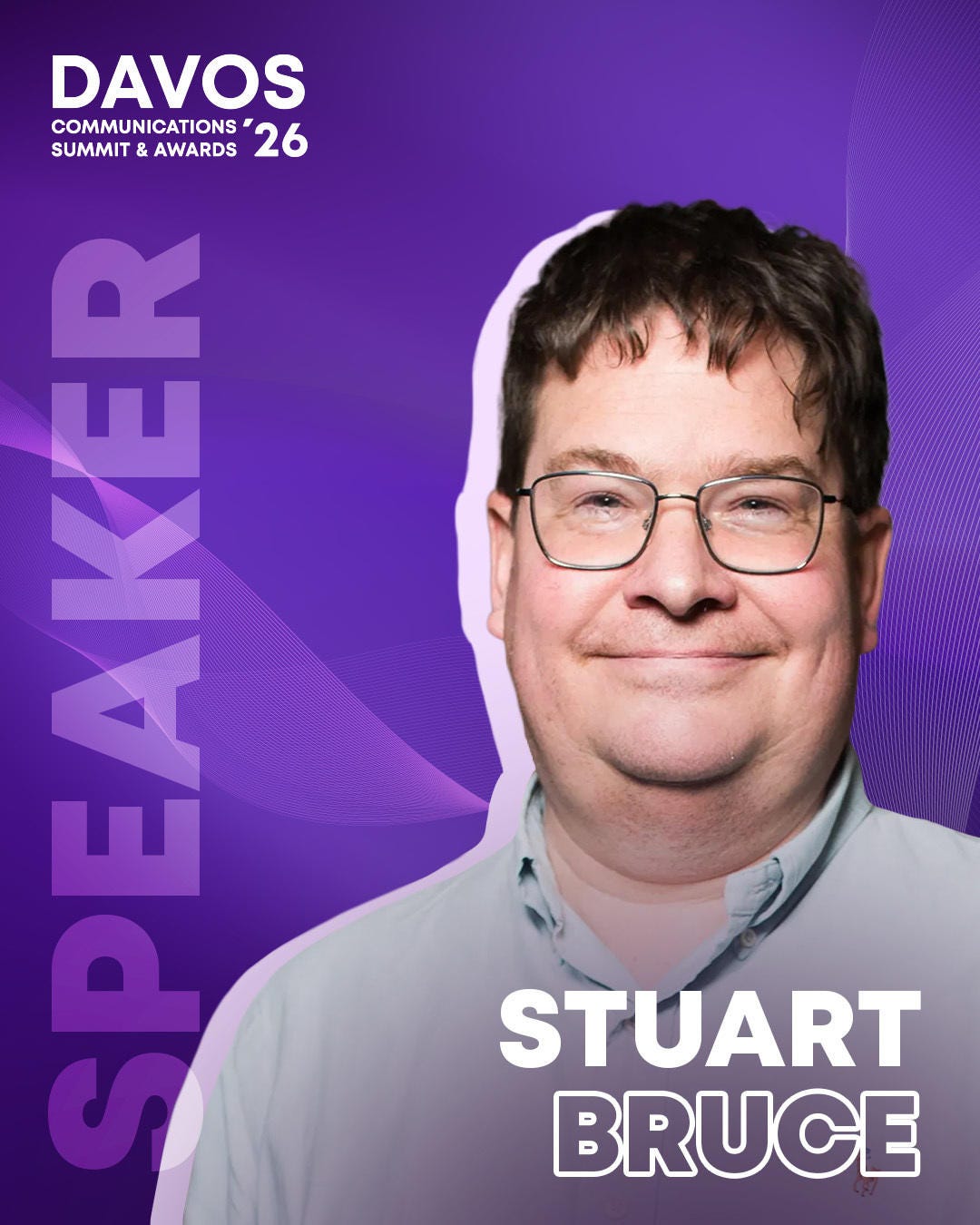
To get some answers, I sought out The PR Futurist himself – aka Stuart Bruce - the PRCA’s official AI partner, an in-demand agency advisor, and one of the best-known voices on AI in PR and corporate affairs.
I spoke to Stuart about where PR teams should actually be using AI today, why many agencies are still only scratching the surface, and what health communicators need to understand about GEO, AI visibility and trust.

1) The best use of AI in PR is not where many teams start
Stuart was clear that content generation is overrated as a use case for AI in PR. Comms people are strong creative writers (and enjoy it!) so the bigger opportunity is using AI to strengthen the thinking around the work: interrogating ideas, stress-testing messages, and spotting missing detail in planning docs and timelines.
Stuart talked about using AI as a ‘critical friend’ for strategic work: asking it what a hostile journalist might question, where the holes are in an argument, or how different outlets might frame a story. In that sense, the value often lies in challenge rather than authorship.
2) Most agencies still have an adoption problem
Stuart’s view is that many organisations say they are using AI internally, but on closer inspection the usage is often shallow: a bit of research here, an occasional prompt there. The result is very different from a business where people at every level are using it regularly to improve their work and save meaningful time each week.
What seems to separate the stronger adopters is their appetite to experiment and to build new habits with AI embedded. For leaders trying to improve adoption rates, Stuart emphasised the importance of training, experimentation and repetition, including simple ideas like a team “prompt of the week” or “prompt of the day”, where everyone tries the same use case and shares what worked. That kind of routine matters because it makes AI part of a team’s working rhythm.
3) The real gains come from workflow, not novelty
Based on the advisory work he’s delivered to dozens of agencies and in-house teams, Stuart told me he’s seeing strong results where AI is used to improve planning and consistency against agreed frameworks - which is especially useful in dispersed teams or those stretched particularly thin.
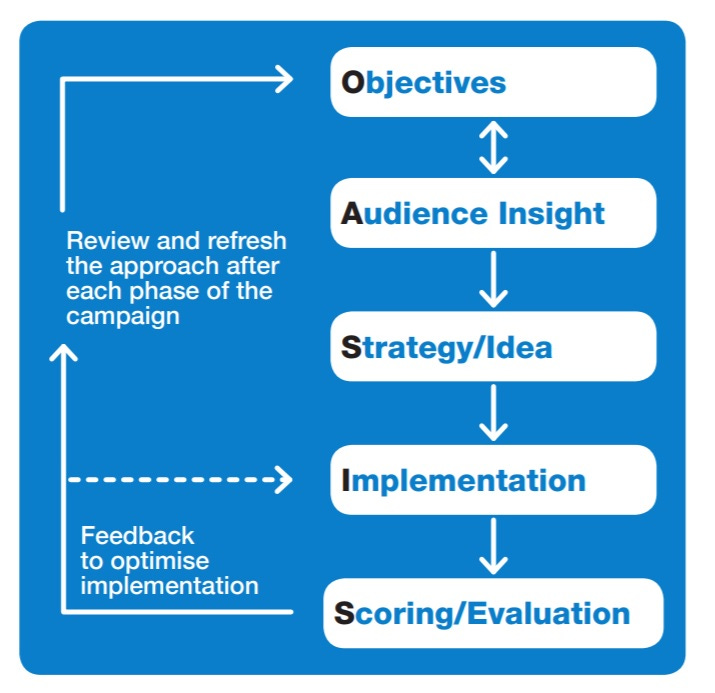
This doesn’t necessarily mean that agencies need to panic-build a library of bespoke internal tools by next week. Adoption tends to work when AI is built into familiar workflows, backed by training, and treated as behaviour change rather than a shiny tech rollout. He pointed to the UK Government Communication Service as one of the strongest examples of scaled adoption. The team has embedded AI into communications planning through its existing OASIS framework, rather than treating it as a separate experiment.
4) GEO matters, but not in the simplistic way some may suggest
On GEO, Stuart’s framing was especially useful. He argued that PR teams should not think about it simply as a new flavour of search optimisation, but as a sign that AI is becoming a stakeholder in its own right. Just as a journalist, analyst or policymaker absorbs information from multiple sources and produces something new, AI systems are now doing a version of that too. The challenge is whether your organisation appears in AI summaries, and – most importantly - whether the information surfaced about them is accurate, current, well sourced and fair.
That distinction is important. Traditional search mostly surfaced what already existed. AI-generated answers synthesise and frame. That means PR teams have a much bigger reputational stake in what appears. It also means the old instinct to focus narrowly on Google rankings is not enough.
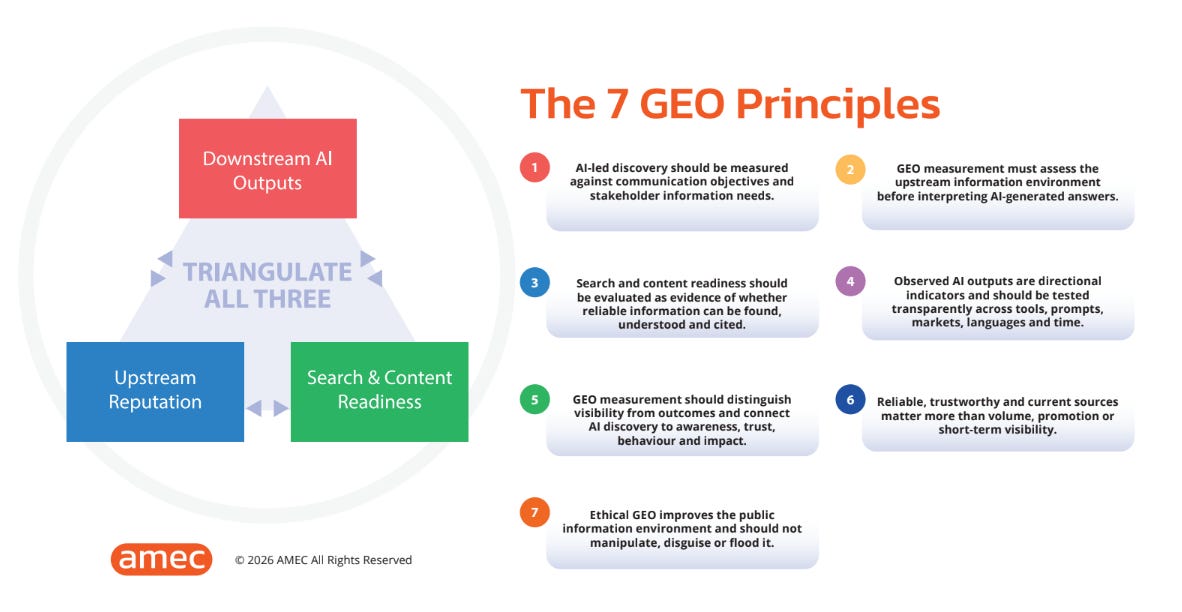
The timing of this conversation felt especially relevant, following PR Week reporting that AI has now overtaken media relations as the top investment priority for UK PR firms. At the same time, AMEC has just launched its new GEO Principles and a practitioner guide, designed to bring more rigour to how communications teams measure AI visibility and outputs. Stuart welcomed that shift, arguing that the industry badly needs better standards and less hype.
5) If you want accurate AI visibility, start by fixing your information footprint
His advice on improving AI visibility was reassuringly aligned with the priorities your comms team will already be working towards: developing a credible, consistent information footprint. If a story appears in earned media, the same facts should also exist on your website. If you have expert spokespeople, their biographies should clearly state their expertise on your site and on LinkedIn. The more consistent the touchpoints AI can find, the more likely it is to generate a reliable answer.
He shared a useful example of a university caught up in an industrial dispute. Its statements to media were precise, but they lived only in journalists’ coverage. The opposing side, meanwhile, had a much richer and more distributed digital footprint: website content, social posts, media commentary, repeated framing. AI systems naturally had more material to draw from, and so their answers reflected that side more strongly.

6) The next big issue is trust
One of the most interesting parts of our conversation was Stuart’s argument that organisations also need to think about the social licence for AI. In other words: even if a company can deploy AI, have they thought properly about how employees, customers, patients or other stakeholders will feel about it?
That struck me as especially relevant for health communications, where trust, clarity and explainability matter enormously. But it applies to every instance of AI rollout. If AI is introduced without proper communication around what it does, where the limits are, how decisions are made, and what safeguards exist around bias, accessibility or sustainability, scepticism is inevitable. The critical role for comms teams is to help organisations establish trust and buy-in ahead of AI transformation.
The comms lesson I’m taking away
If I had to boil Stuart’s advice down, it would be this: use AI to sharpen judgement, not replace it. Build habits before chasing the next shiny thing. Treat AI visibility as a reputation issue rather than a search issue. And remember that good AI use in PR still depends on the fundamentals: clear thinking, credible information, good training, consistent messaging and stakeholder trust. The agencies and in-house teams that get those basics right will be in a far stronger position to succeed in this new era of communications.
Want more from Stuart? Find him on LinkedIn.
I’ve been listening to…
📻 BBC Radio Sounds: Rethink… how we age. Biological aging, cellular regeneration, and the new science of epigenetics.
📻 The Guardian Audio Long Read: After a hard-fought victory to legalise medical cannabis in the UK, why is it still so hard to access?
I‘ve been reading…
🌍🤱 Lilia Sebouai writing in The Telegraph about 3 low-cost medtech innovations from British research teams aimed at preventing avoidable maternal deaths in some of the world’s poorest countries
🏥 Reflections from Arundhati Parmar in MedCity News about UnitedHealthcare’s bold PR play: they gave unprecedented access to journalists and others in order to show how the company is trying to reduce friction in healthcare. “The goal was to change hearts and minds. Did the insurance behemoth succeed?”

📆 Events for your diary
2nd July: Women in PR Summer Party
8th July: OHT Oxford, Investing in Inclusive Innovation, Networking drinks and panel discussion
9th July: AireFest, a Healthtech “day festival” in Leeds
14th July: OHT London, Crash & Learn: Healthtech Fails and What Came Next, Breakfast and panel discussion at Hale House
Thanks for reading For Immediate Release! If you enjoyed it, please share this post with your colleagues and friends.

No posts
Comments
Nothing yet. Say the first thing.
Sign in to join the conversation.