
Hello, we hope the year has started well for you! We’re excited to continue our monthly newsletter and meet-ups in 2026. We’re currently looking for speakers for our upcoming sessions, so if you’d like to share insights from your city, we’d love to hear from you. Please fill in the form here to get involved.
For our first newsletter of 2026, Ashlay, an urbanist from Myanmar, has curated a selection of urban news from Yangon, the country’s former capital. We hope you enjoy reading it and we invite you to join our upcoming online meet-up on Yangon by Ashlay as well 🙂
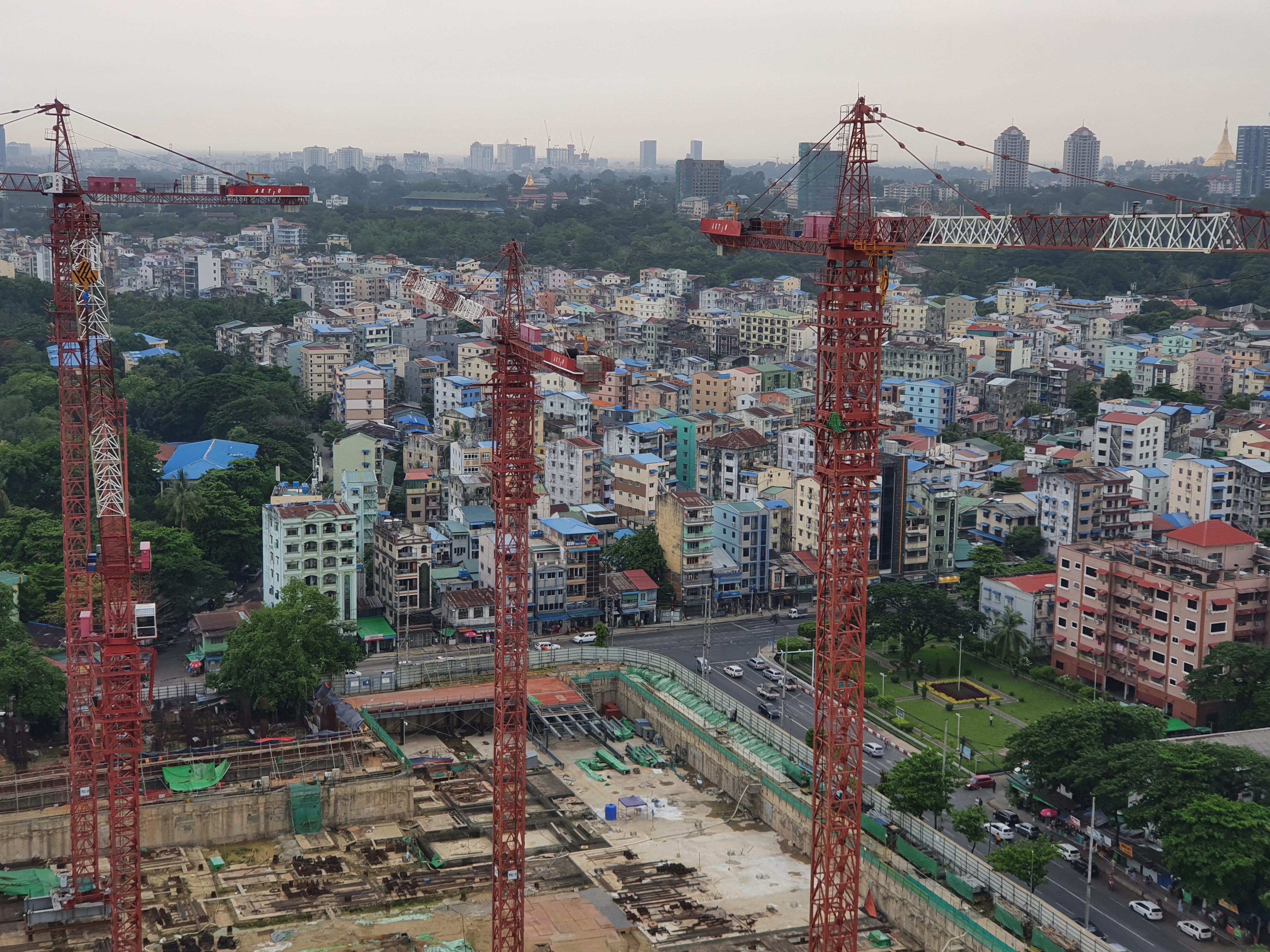
I’m Ashlay Yoon, an urbanist from Myanmar with a background in architecture, art, and cultural projects. I am interested in how cities reveal their realities through everyday life, through routines, spaces, and the quiet contradictions that often go unnoticed. Growing up in Yangon, I’ve come to see it as a city where things look normal on the surface but feel deeply abnormal underneath, especially following the 2021 military coup.
Unlike other cities and towns in Myanmar that face active armed conflict, junta airstrikes, or natural disasters, Yangon often appears calm. Life seems to go on as usual. But this is a façade. A fragile sense of normality masks daily struggles, ranging from urban poverty and electricity rationing (often limited to four to eight hours a day) to stalled development and environmental degradation. In some neighborhoods, communities live surrounded by garbage and clogged drainage systems. While much of this waste is generated locally, some has been shipped from abroad, inextricably tying Yangon’s everyday struggles to global systems.
Simultaneously, Yangon has become a shelter for those internally displaced by war and natural disasters. Despite limited resources and growing pressure, the city continues to absorb new arrivals, even as daily life becomes harder for everyone. Following the devastating earthquake in Sagaing and Mandalay in March 2025, fear has quietly settled into Yangon’s daily rhythm. Many residents worry about when the next major quake might strike. For those in aging apartment buildings or high-rise housing, this anxiety is constant. Yet, for most, there is little choice; life continues in the same buildings, carrying the same risks, folded into daily routines.
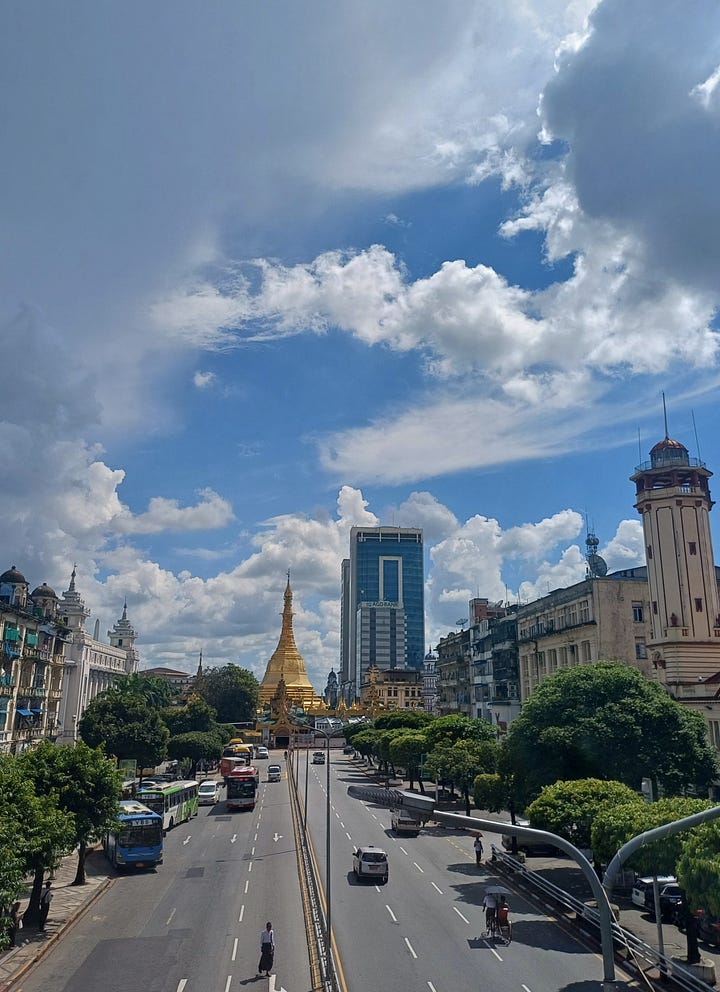
Inspired by writings such as “Yangon, an anxious, frenetic city where ‘everything looks normal, but is abnormal’” by Alexandre Mandri, I curated this selection to help unpack what is currently shaping the city. Yangon carries a quiet sense of hope for a post-revolution future, often expressed in the parting words of its people: “Let’s meet again in Yangon.” Through these topics, I hope to offer a grounded glimpse into how the city continues to function, adapt, and endure.
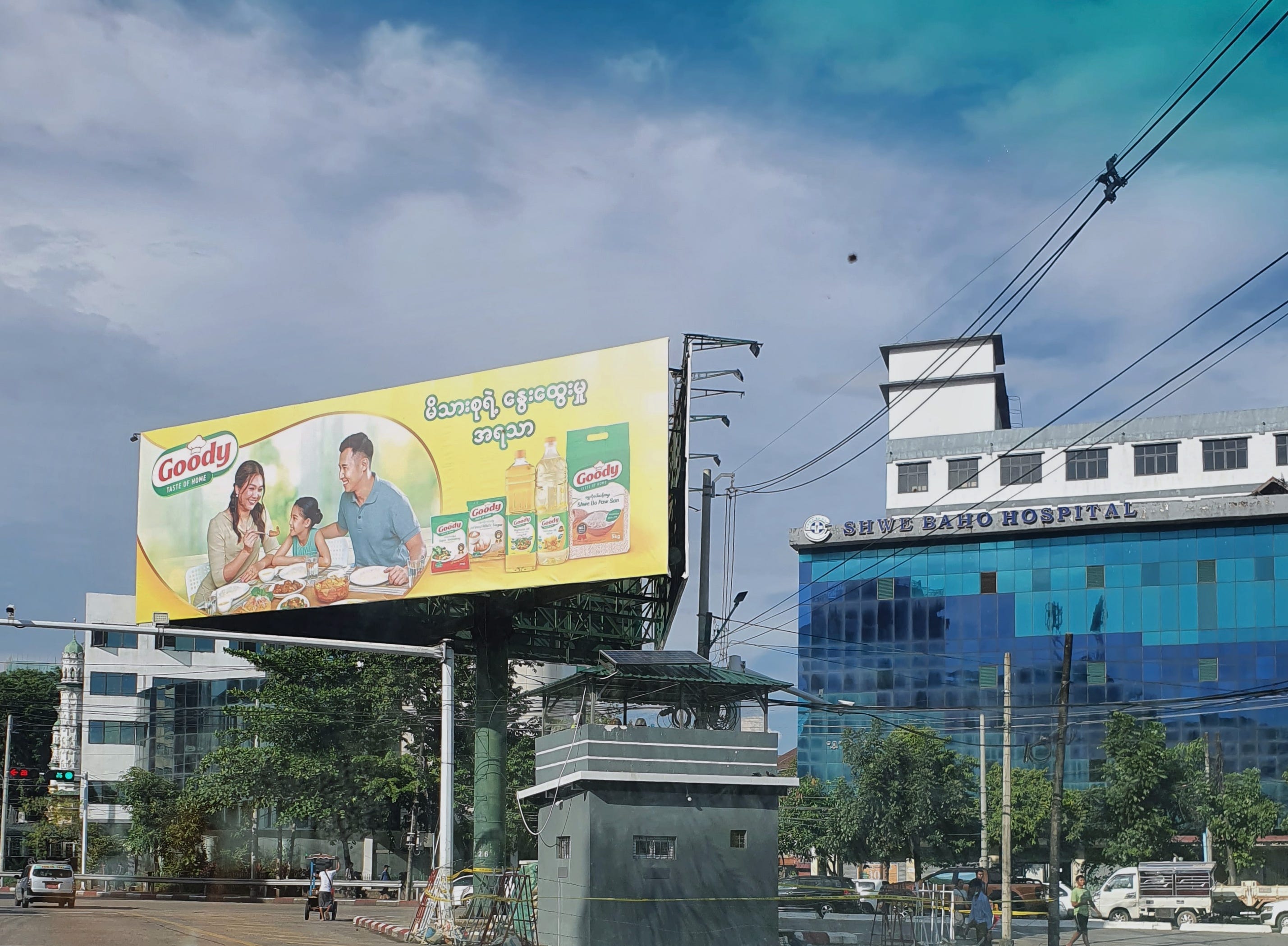
Yangon Stories - This platform offers live perspectives and narrative mapping of Yangon’s reality, nuances that official statistics or headlines often miss. It demonstrates how people navigate and resist structural violence, memory, displacement, and exclusion in the city’s everyday spaces. It is a valuable resource for anyone seeking a more grounded, human view of Yangon’s urban condition.
Yangon, a city tragically halted from its long-awaited development and transformation - This article explains why Yangon feels suspended between potential and crisis. It provides essential historical and political context for understanding the city’s current condition, where development is halted, public services are strained, and everyday life persists under a cloud of uncertainty. It connects well with the theme of Yangon appearing normal while remaining deeply abnormal.
Yangon, an anxious, frenetic city where ‘everything looks normal, but is abnormal’ - This article resonates strongly with the lived experience of Yangon today. It describes a city caught in a paradox: streets are busy and shops are open, yet normal life feels fragile and uneasy. It articulates the atmosphere many residents feel but rarely speak aloud, making it an important lens for understanding Yangon beyond the headlines.
Urban Poverty: Unpacking Yangon | United Nations Development Programme - This report puts numbers and structure to the experiences of many Yangon residents. It explains how poverty in the city is defined not only by income but also by access to electricity, housing security, services, and opportunities. It is essential for understanding the pressures faced by both long-term residents and those newly displaced into the city.
Yangon squatters living in trash and afraid to speak out - This podcast episode reflects life in Yangon’s informal settlements, where people live amid piles of trash. It explores how waste accumulates in the city and how communities cope with deeply inadequate management systems. The report also touches on surprising global links, noting how plastic from countries like Poland has ended up in Yangon’s environment.
Since 2021, many student initiatives, local NGOs, and urban organisations have either gone on hiatus or continued their work quietly underground. There are now very few public updates regarding cities like Yangon or Mandalay. I hope the resources shared above help offer a clearer picture of the reality in one of Southeast Asia’s largest cities during this ongoing period of poly-crisis.
For our first meet-up of 2026, Ashlay Yoon will be talking about the urban news picks from Yangon. Come join us!
📅 Sunday, 15 February, 2026
🕰️ 17:30-19:00 (JST)/ 9:30-11:00 (CET)
On Zoom / Sign up from here
We aimed to expand our platform of urbanists around the to get together online and share ideas, cooperate and foster a community and we were delighted to have participants from diverse places and discuss topics related to cities and were inspired by these conversations.

If you have any inquiries please reach out at info@forcities.org
No posts
Comments
Nothing yet. Say the first thing.
Sign in to join the conversation.