
Hey there, welcome back to Footnotes. Here’s our quarterly recap of things worth your time, running-adjacent and otherwise.
A couple weeks ago, I interviewed Zoë Rom about diet culture, food myths, and endurance culture. This Friday, June 12 at 10AM PT, we’ll be chatting live on Substack Live to dig deeper into diet culture, endurance sports, wellness grift, and more. Find the livestream here
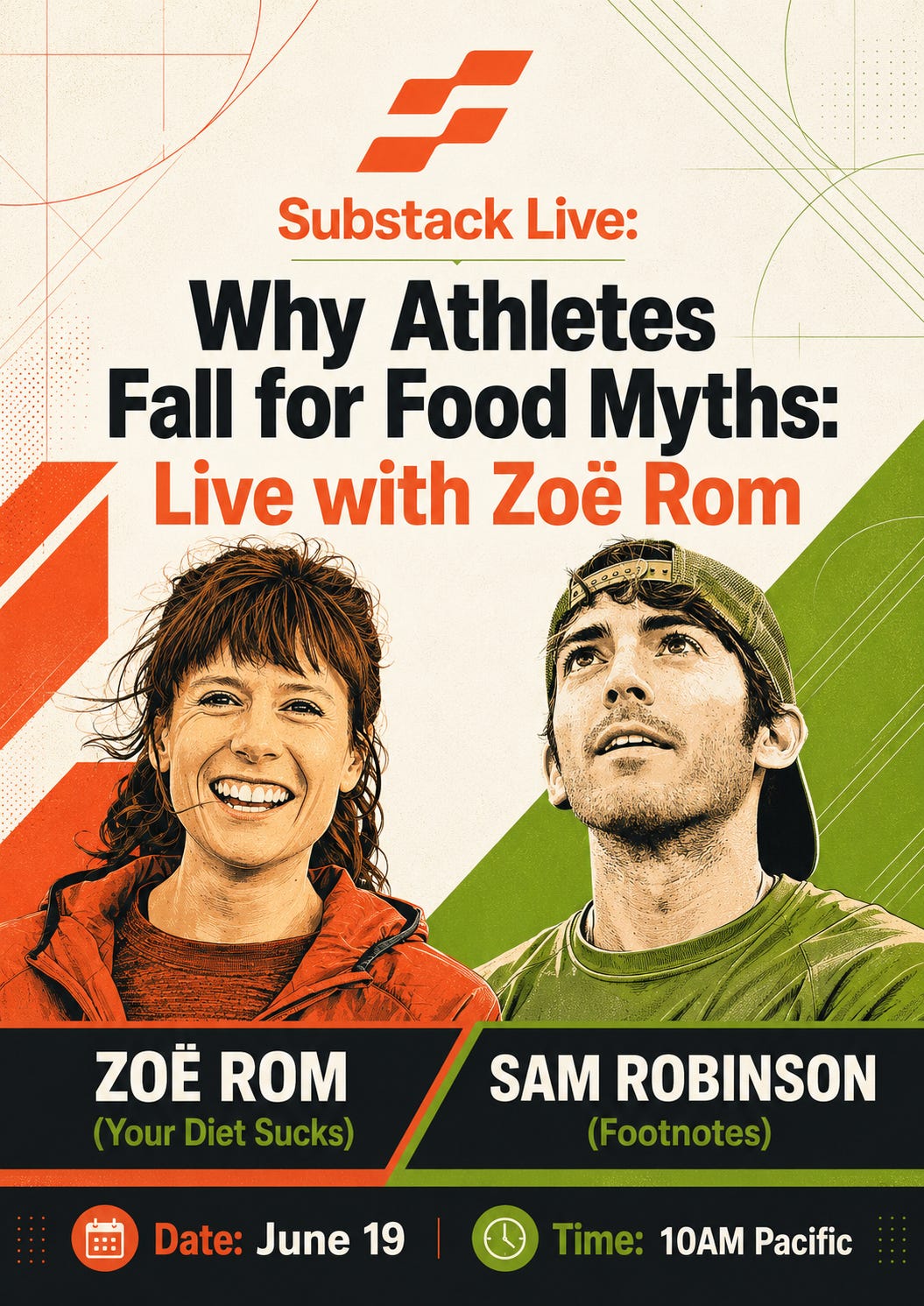
We’ll talk about athletes, food history, and culture, but also topical chatter about podcasting, cultural history, and diet culture in the era of Trump and MAHA.
Come hang out with us on Substack, bring your questions, tell your friends. Here’s last week’s post if you missed it:
Does Your Diet Suck?
·
Jun 1
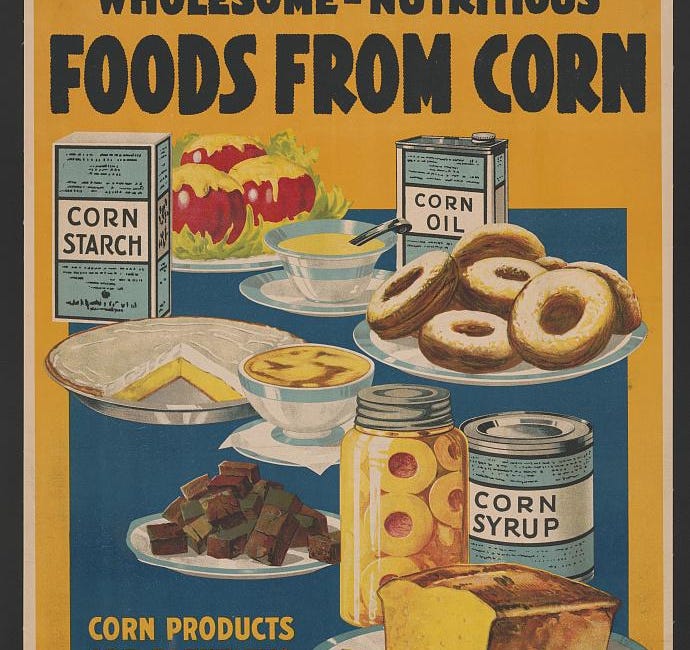
Last week, I went to Whole Foods and nearly had a panic attack in the yogurt aisle.
Is the solution to male loneliness choreographed dance with lads?
I stumbled upon this music video last month and have watched it at least 30 times since then. It’s 8-minutes of prep-school chaos, a bizarre love child of A Clockwork Orange and Sillitoe’s Loneliness of the Long-Distance Runner—every second thrums and hums with seething male id.
What exactly is this thrashing depiction of teenage revolt actually critiquing? Technology? Politics? The crushing weight of expectation upon young men? Hard to say. But the single-shot dance set piece over the last four minutes is probably the best thing you’ll watch this month.
Lee Glandorf has penned a fun history of women’s track shorts. Featuring cool photos of running shorts over the years, I loved learning how shorts styles grew nuanced and divergent as the running boom developed in the 1970s and 1980s. (Bring back nylon sprinter shorts, you cowards!)
As an athlete, I effing love bread. So I was definitely going to inhale this article. But as I read last month’s Atlantic cover story, I kept wondering how something so silly—an earnest attempt to determine which restaurant in America has the best free bread—could be such a masterclass of prose. Funny, absurd, and surprisingly poignant work from Caity Weaver.
My favorite free bread might be the garlic breadsticks from the fast-food Italian restaurant Fazoli’s. What is your favorite free bread from a restaurant?
My knee is messed up again. (I’m finally getting surgery next month). But at least I get to watch some movies while I’m on a spin bike. With all the Rocky films on Netflix this summer, I rewatched Oakland’s own Ryan Coogler’s Creed. And yeah, this movie still rocks.
Rewatching Creed made me think about how liberalism needs better role models, including fictional examples. There is, as Marlene Laruelle has aptly noted, an imaginative gap for liberals in 2026: many of our ethical practices are class-bound, revolving around farmers markets, electric SUVs, and pronouns. That makes a lot of what urban liberals sell as “the good life” unappealing, or simply unavailable, to many Americans.
Lately, I’ve been thinking about how we might reimagine ethical practices of strength and character as more central to liberalism’s core values of tolerance, autonomy, community, creativity, and individualism. Adonis Creed might be a fictional hero that helps us envision the practice of those ideals.
Michael B. Jordan’s character looks like everything Andrew Tate, Clavicular, and other looksmaxxing wannabes aspire to be. And guess what? He’s also caring, considerate, and kind.
Creed cares for his sick coach. He supports his musician girlfriend’s ambitions. He’s gracious to opponents in both victory and defeat. He has expansive views of family, that include kin beyond blood relatives.

Coogler’s film shows character and virtue not as buzzwords for locker room speeches, TikTok videos, or tweets, but as values requiring discipline, kindness, humility, and constant attendance.
Anyway, Creed is a good movie.
“As a mother of two young children, I keep getting asked how I plan to raise them in the age of AI.
This is my attempt at an answer.”
Despite so much chatter about AI, this post punched through for me. Given that the market value for specific skillsets will remain unclear for some time, Judith Dada argues we should instead focus on teaching children how to foster a sense of self, intrinsic motivation, resilience, curiosity, and imagination.
I found Dada’s a helpful perspective in regards to raising our daughter. But even if you don’t have kids, there’s value in reading for your own navigation of a world increasingly entangled with artificial intelligence.

That’s all for this week. Thanks for reading. We’ll be back soon with a topical story for the summer heat. 🥵
No posts
Comments
Nothing yet. Say the first thing.
Sign in to join the conversation.