
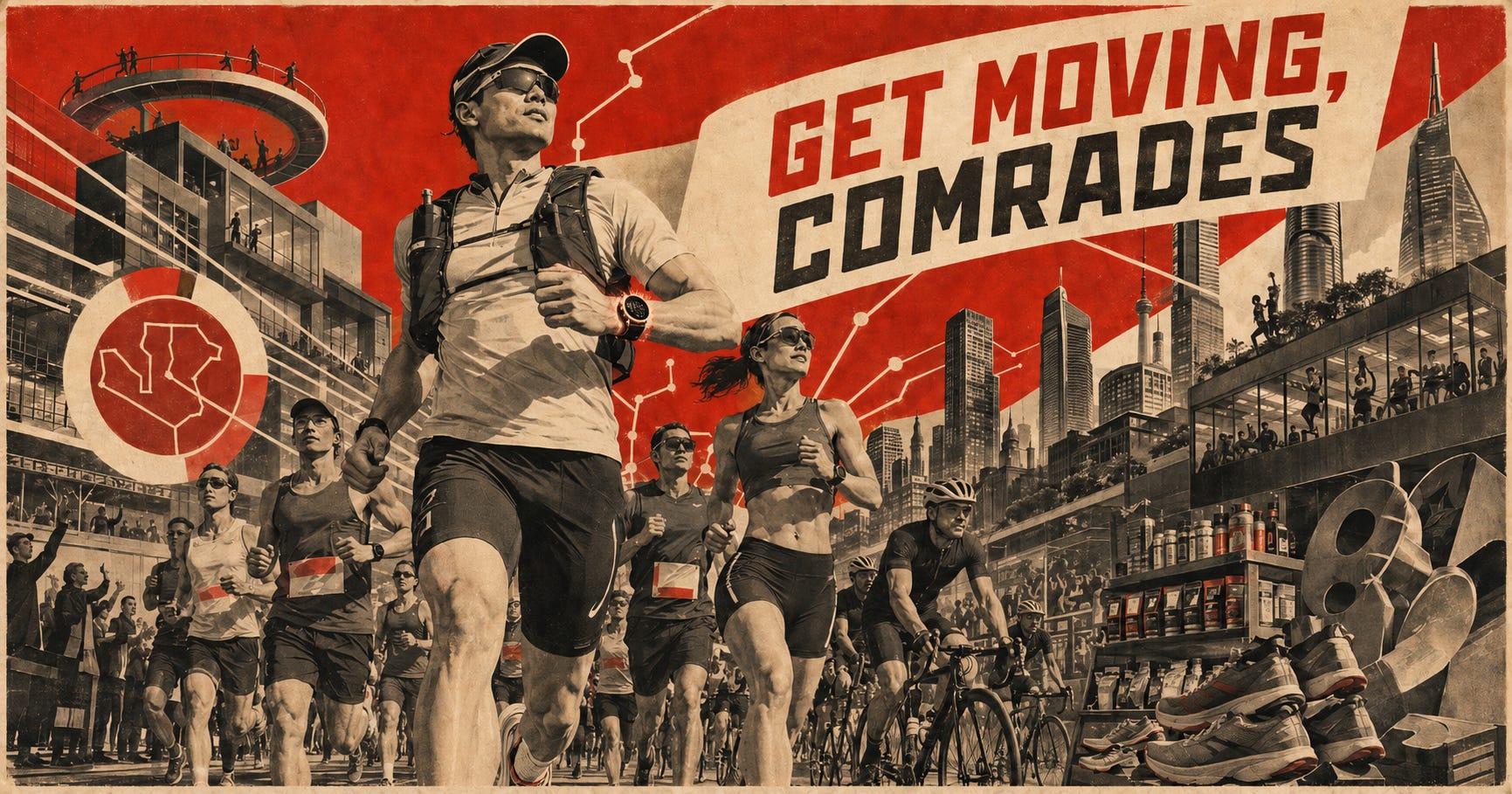
A spectre is haunting the western world—the spectre of movement.
All the powers of the old economy have entered into holy alliance with this spectre: luxury brands, multinational sports companies, grocery distributors, a constellation of apparel start-ups, supplementeers, and pharmaceutical companies.
Where is the area of social life where movement has not been feted by these powers? Every brand has a run club. Pilates is a household word. White House Cabinet members film themselves doing pull-ups.
Leggings are work attire. Injecting peptides is mainstream. AOC is doing deadlifts. Everyone is proteinmaxxing.
To paraphrase Gramsci, an old world is dying, and the new world of movement struggles to be born. Now is the time of monsters.

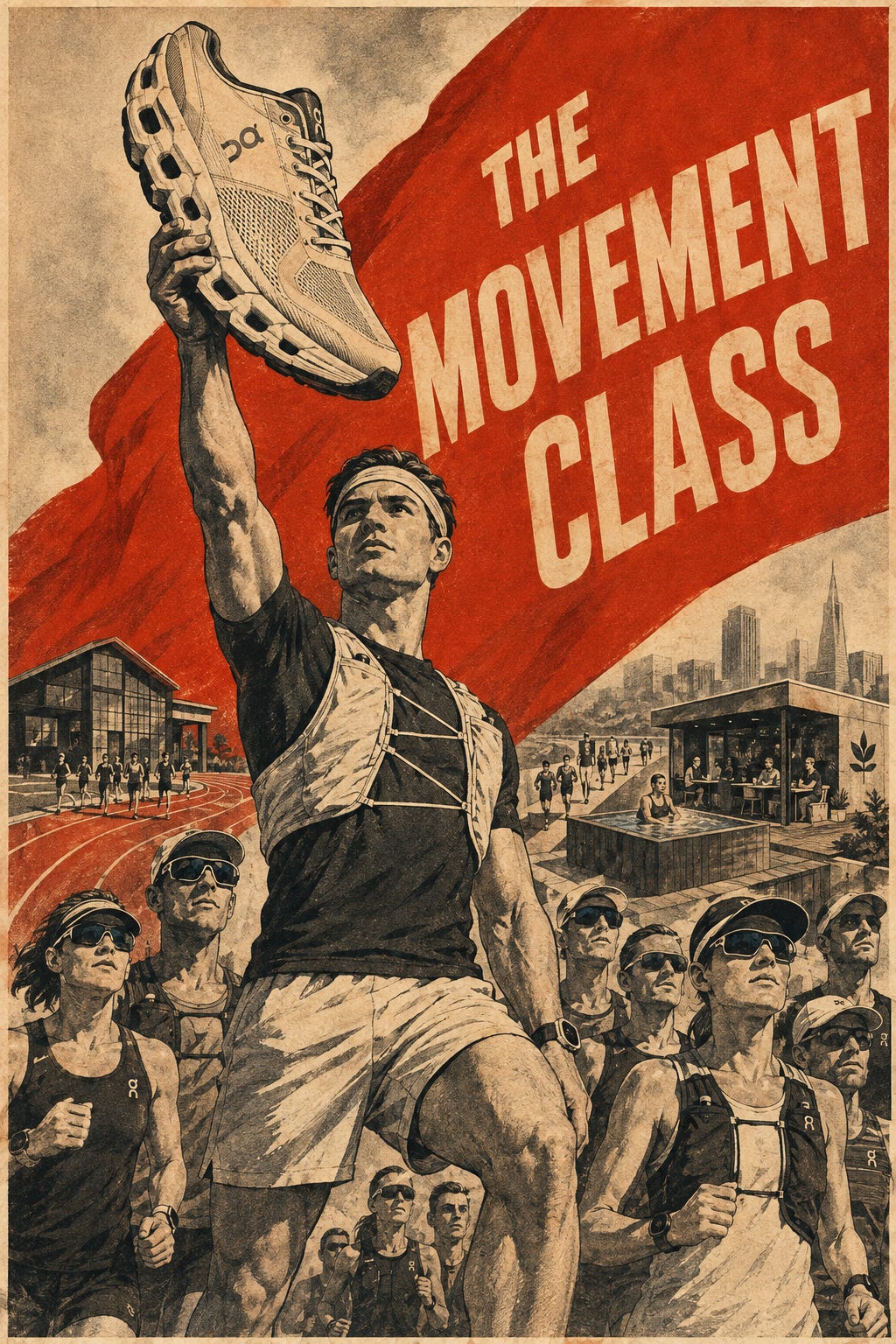
Okay, I’ll stop parroting dead Marxists and tell you that in June, co-founder and CEO of On, David Allemann, described the rise of a new social group—the Movement Class.
“A Movement Class is emerging,” Allemann wrote on LinkedIn, in an announcement about the shoe brand’s partnership with upscale grocer Erewhone. This class is defined less by traditional status symbols—the convertible, the McMansion, the handbag, the watch—than by its physical activity.
The social group is shaped by run clubs, gyms, and daily rituals of movement, recovery, and care. For this class, Allemann concluded, “sportswear is no longer a utility. It has become identity. A second skin for how people live, not just how they perform.”
It is that and more.
In a fun piece of analysis, brand strategist Oana Leonte argues Allemann’s post is actually a thesis mapping a broader shift of capital allocation onto changing social values.
She observes that private equity is rushing into fitness events like Hyrox, while luxury brands rent storefronts at marathon finish lines even as biometric firms like Whoop and Oura fundraise eye-popping amounts of cash.
To those examples, I’ll add the latest explosive growth of running clubs, race events, independent content producers, and an army of fashion-forward sportswear apparel startups, offering the same synthetic Vietnamese-made fabric but luxury coded for bourgeois consumption.
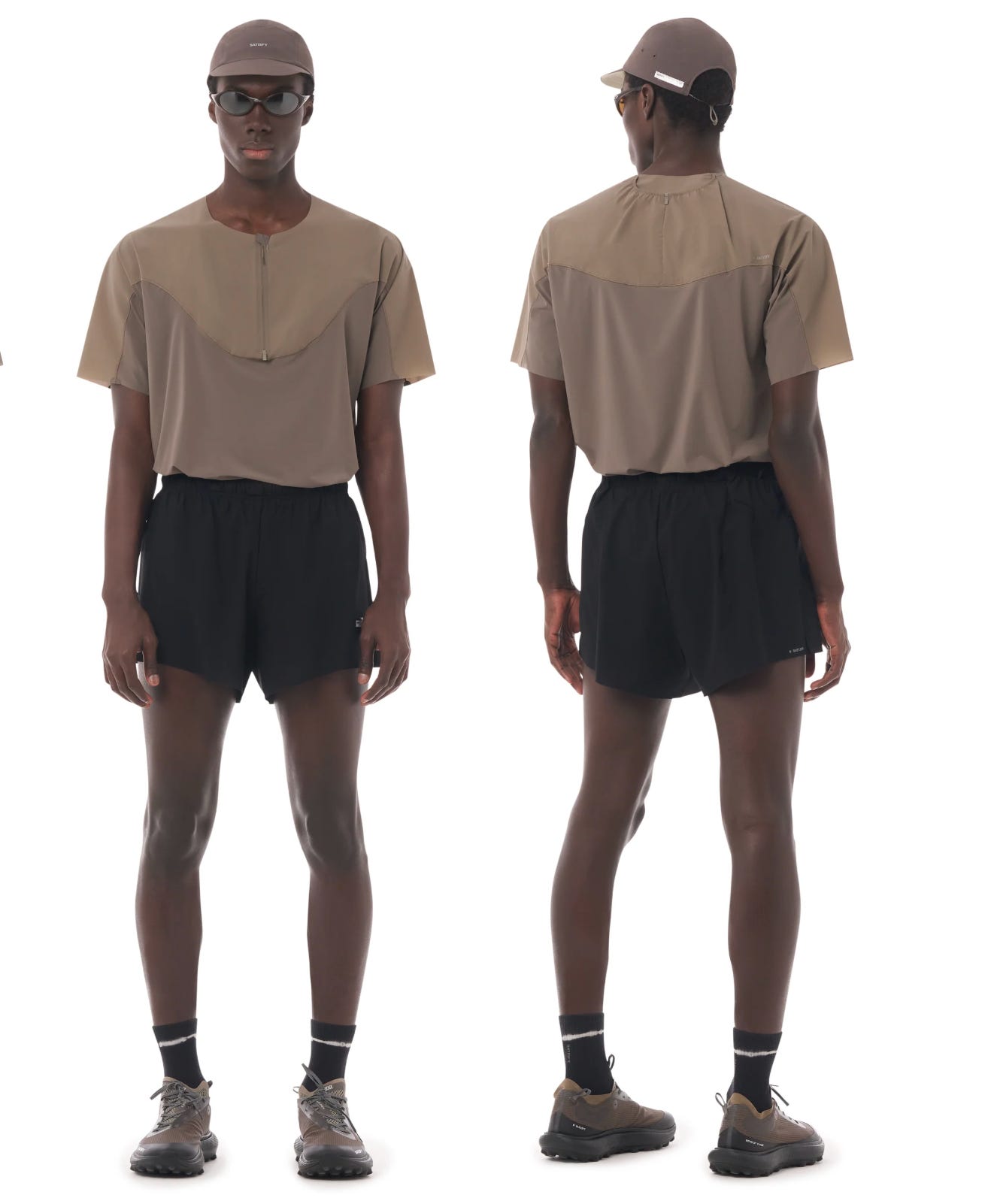
But don’t fixate too much on the stuff itself. This, Leonte argues, is not merely a market reconfiguration of luxury; it’s not Ferrari edging out Porsche in Q3 car sales or Patek Philippe taking market share from Rolex. Rather we are witnessing an evolution of how cultural status is acquired and signified.
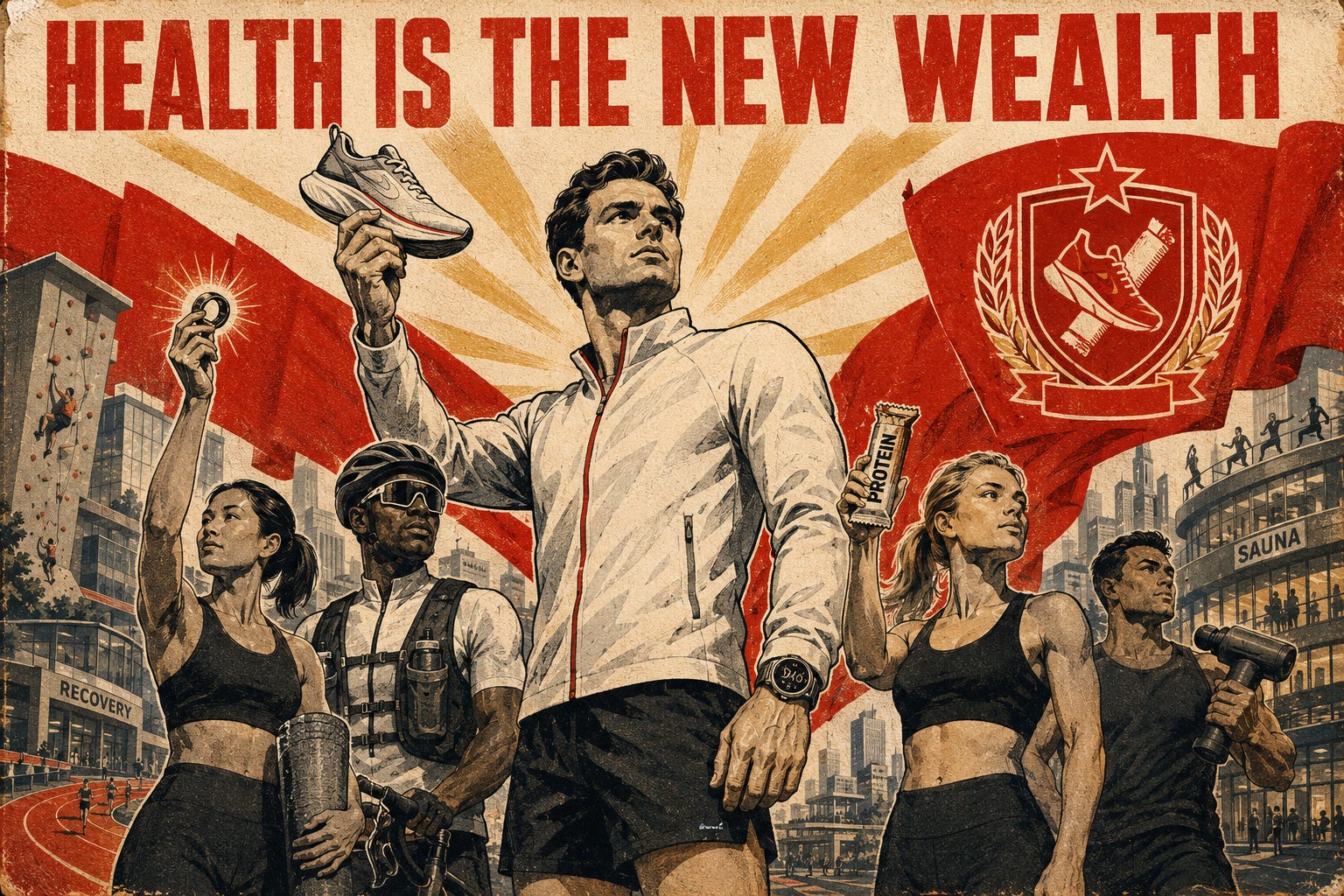
Elites are shifting the signifiers of taste from material objects to something that cannot be easily purchased: toned arms and shoulders, ripped torsos, a marathon time. As Leonte puts it,
Status used to be a possession. You bought it, wore it, parked it in the driveway, wore it on the wrist. What luxury capital has understood—earlier than most brand teams—is that status has migrated from the thing you own to the thing you do. A Hyrox experience cannot be bought. The entry fee is months of training, and training is time, the one resource no amount of money can buy. It is also, more importantly, a community and a shared identity.

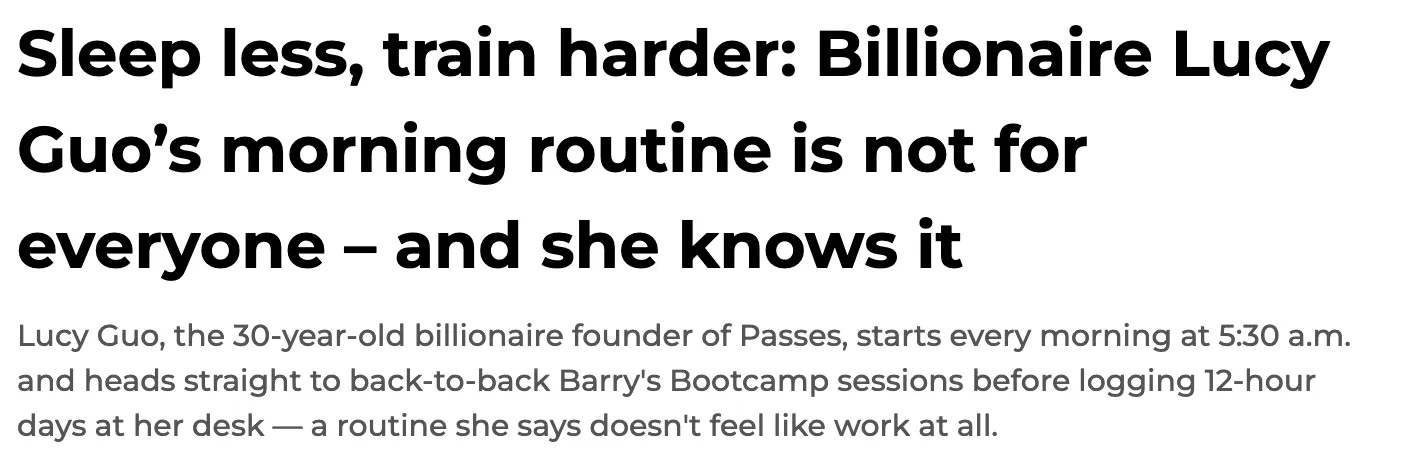
Perhaps the clearest embodiment of this new movement elite is Lucy Guo, entrepreneur and influencer.
Guo, who displaced Taylor Swift as the world’s youngest female self-made billionaire, co-founded Scale AI before starting a venture capital firm, and, more recently, a creator platform. Despite her wealth, Guo does not spend ostentatiously. She shops at Shein and gets around in a Honda Civic.
She also has a highly publicized obsession with Barry’s Bootcamp, rising early most days to complete 1-2 classes before long hours of work. This summer she celebrated completing her 3,500th Barry’s class.
Long gone are the days of paunchy executive barons, kitted in Valentino and chauffeured in luxury cars between sluggish managerial jobs and martini lunches. Also gone are the days of the pasty tech-nerd CEO—neurasthenic white males hiding beneath slovenly hoodies and noise-canceling headphones.
Today’s movement elite are active, sweaty, bedecked in well-fitted polyester. They’re more diverse, more female, more cosmopolitan. They work long hours, have impressive resumes, and are generally hot. (Even Mark Zuckerberg, pioneer of founder hoodie fashion, does combat sports now.)
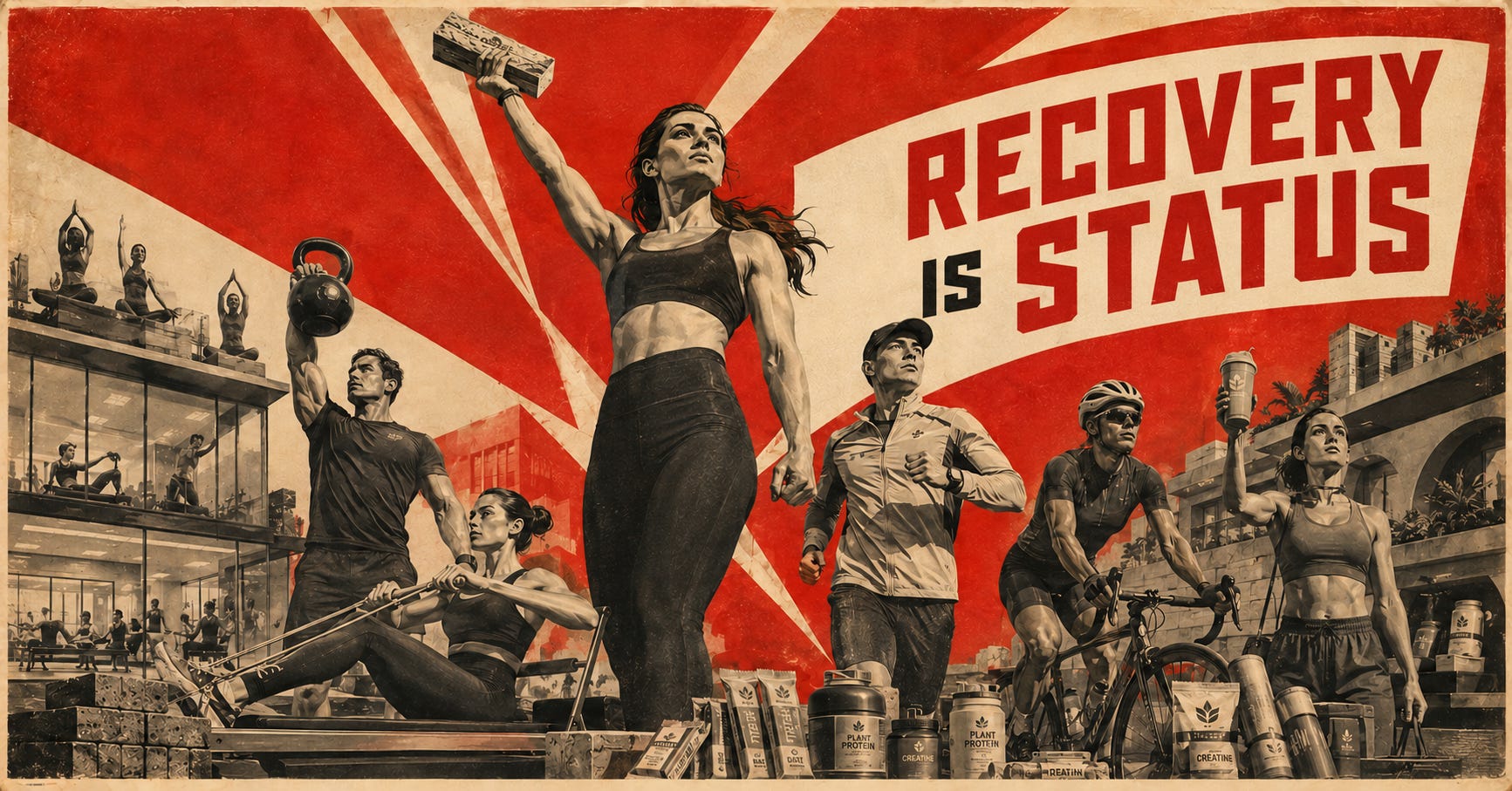
The “founder” set is just the leading edge of a wider professional culture. Their ethos—often understood as “optimization culture”—champions the mindset that life can be measured and maximized through metrics and the instrumentalization of leisure. It has cascaded down to the upper-middle class, which is falling in line to stay relevant professionally and culturally.
This consolidating movement class and its consumer patterns are most acute in the metropoles of New York, Miami, Atlanta, the Bay Area, and LA, where it’s reshaping America’s urban landscape and consumer taste. Supershoe-kitted run clubs. Pilates studios awash in bisexual lighting. Maurten energy gels and creatine gummies. Upscale grocers and organic slopbowl chains.
Maybe you’ve not encountered this yet. But movement-class optimization trends are coming for us all.
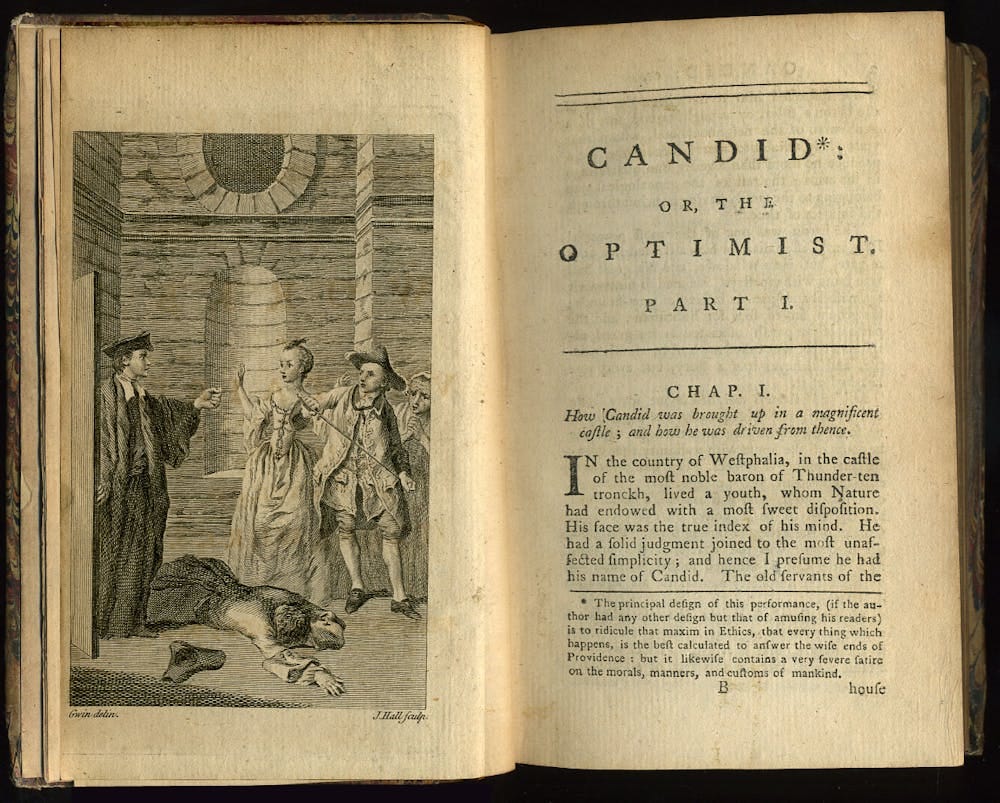
The OED dates use of the verb optimize to 1817, meaning “to act optimistically or as an optimist.” The noun “optimism” entered English through translations of Voltaire’s Candide, ou l’Optimisme, the famous satire of Leibniz’s doctrine that God, having considered every possible world, built the optimum, or the best one available. If you’ve read Candide, you know the low opinion Voltaire held regarding Leibniz’s philosophy.
Optimism may have entered the English language as an insult, but by the mid-19th century optimization acquired a technical meaning of making a technical system as effective as possible. By the late 1990s, “search engine optimization” was a problem for even non-technical professions, as ordinary people started applying “optimization” to their websites.
In 2004, the term “life hack” was coined during the O’Reilly Emerging Technology conference to describe shortcuts tech workers use to complete their work. As optimization shifted from websites to the people who built them, self-help writers like Tim Ferriss adapted software developer techniques of workflow management and task outsourcing for a mainstream audience.
Today Ferriss’s ideas in books like The 4-Hour Workweek seem almost quaint. His goal was to “hack” his way to passive income so he could learn tango in Buenos Aires or disappear to some faraway beach. Now, however, hacking is the point. One hacks away at life so that one can keep hacking. One unlocks time for further optimization—marathon training, 20% work projects, creative side hustles—across one’s professional and physical life.
It’s within this milieu that artificial intelligence is being developed.
Recently, I sat through a technical talk where the speaker discussed deploying “swarms of agents” to handle many aspects of his job. The goal of this automation was not to relieve him from work, but rather to create “an infinite backlog” of tasks. Chains of LLMs would enact never-ending loops that constantly surfaced more work to be done. His job would never be completed.
This is the ideological scaffolding within which artificial intelligence is being deployed, not one that sees automation as a relief from menial labor, but as a seismic innovation to promote more production, more growth.
Unsurprisingly, many are encountering this intense optimization circuit and thinking, “Nope. No, thanks.”
Millennials, whose lives have been a steady march of optimization—childhood sports teams, GPA fixation, SAT and AP prep, college, the knife-fight of building post-Recession careers, pandemic, and now AI displacement—are entering midlife where the prospect of grinding through further optimization is not only grim, but spiritually void.
This manifests as shifts from social-media feeds to private group chats, to music and sports clubs only discoverable through word of mouth, to unplugged hiking trips, to a cottage industry of “retreats” where the cultured escape their phones for long weekends of meditation, writing, rationalism, music, sex, or all the above.
Together with the optimization tendency, the escape impulse has created what Priyanka Desai recently called “the Millennial Midlife Crisis Barbell.”
One set of Millennials spends on loud optimization—the run club rave, the expensive Pilates, the continental breakfast of supplementary pills, powders, and injectables. This group codes rightward; think Enhanced Games, crypto, Steven Bartlett podcasts, and the Miami tech scene. They are AI-optimistic and performatively use Grok.
The other set, Desai observes, spends on privacy:
Privacy is becoming a luxury good. Being unfindable, unphotographed, off the grid for a weekend. That’s a real asset now for a generation that spent twenty years legible to everyone.
This is the deep Millennial urge to own a house at Stowe or Sea Ranch, to send your toddler to a Waldorf, to buy a Light Phone, to run a 100-mile ultramarathon, to quit your 6-figure project management job at Apple to become a sheep farmer in Sonoma. This group codes leftward; think trail running, Arizmendi co-ops, Ezra Klein podcasts, and buying carbon offsets to fly to Chamonix. They are AI-skeptical but secretly use Claude.
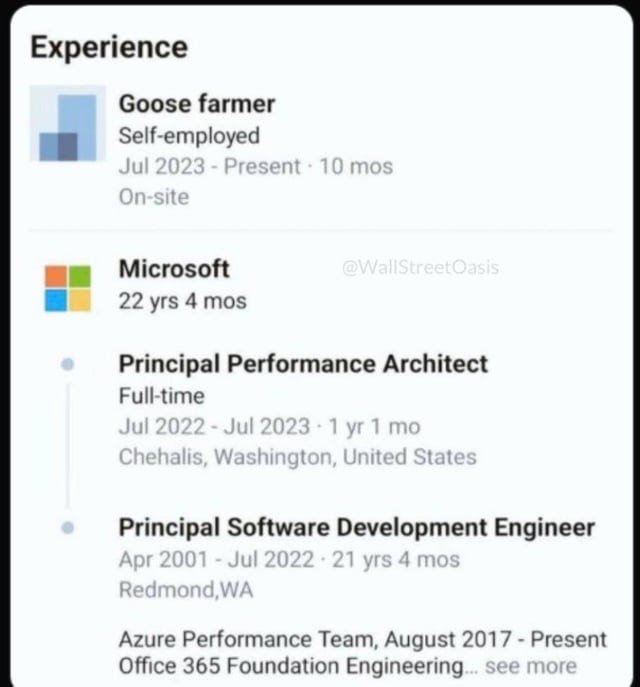
The optimizing hustler and the de-optimizing sheep farmer, both Desai and Leonte point out, are reacting to the same cultural exhaustion. Existence feels like a job, so the optimizer works harder to solve the problem. The de-optimizer sees the impossibility of conditions on the ground and pays to escape it.1
The key insight is that both outcomes are markets.
I find Desai’s barbell formulation helpful because it reveals that many of the cultural contours that shape our partisan divisions are largely differences of consumer preference.2
Moreover, I don’t think we are doomed to this latest cultural configuration of capitalism—trapped between the Scylla of optimization and the Charybdis of banal escapism. I see the seeds for new forms of solidarity within the optimizing tendencies of the movement class.
Bear with me, as I try to work this out.
There is, to my mind, nothing wrong with working to improve oneself. Laboring to make oneself better able to confront the world and one’s circumstances is the foundation of both education and most religious traditions: the notion that while you are a flawed, ill-informed, mistaken creature, as a human you can always endeavor to make yourself better.
I often think about a great scene in the otherwise mediocre sci-fi film, Star Trek: Nemesis. In it, Patrick Stewart’s Captain Picard confronts Shinzon, a brutalized clone of himself, played by a deliciously dour young Tom Hardy.
Raised in brutal conditions to be a violent tool for political ends, the Hardy clone has committed atrocities. But Picard reasons that all people have within themselves the ability to aspire beyond themselves. That includes the villainous clone.
“There was a time you looked at the stars and dreamed of what might be.”
Picard argues the virtuous choice is always possible; we can always choose to make ourselves and the people around us better. It is a radically optimistic view of human nature.
This is the great potential of the movement class: that it could introduce a new optimism into our society and politics if only we might re-imagine what a good life could mean. The problem with optimization culture is not its relentlessness, but rather the purposes to which all that effort toward self-improvement is placed.
I think of the better reasons for which we might labor upon ourselves. It’s lifting weights not for the gains, but to be able to help an older neighbor with their groceries or carry your child when she’s tired; it’s learning to code to get a better job and provide for your extended family; it’s starting a run club not for the brand opportunities but to make a third place for the neighborhood; it’s getting fit to serve your nation or community.
The movement class is here. God, help us. But maybe a new revolution waits within it. It certainly contains those that, like Picard, look up at stars and dream of what might be.
Thanks for reading.
That’s all for this week. Thanks for reading. You can reject the dictates of the digital marketplace by printing this newsletter and mailing it to your extended family. Or just share it using the button below.
Desai argues that another distinctive facet of the Millennial midlife crisis is the cessation of desire. GLP-1s don’t just reduce hunger, they turn down desire more generally: “Trials keep finding reduced alcohol cravings, and the anecdotal reports go further: less impulse shopping, less doomscrolling, less of the itch generally.”
So what happens when an entire consumer economy built on appetite suddenly encounters consumers don’t want anything?
It’s also more encouragement for orienting our politics away from post-material culture wars of identity and back toward challenges of material production and supply of housing, transportation, and education.
No posts
Comments
Nothing yet. Say the first thing.
Sign in to join the conversation.