
This is a newsletter about the special series called The agentic patient, which explores the best practices of AI use among patients. The series is part of Faces of Digital Health - a podcast that explores the diversity of healthcare systems and healthcare innovation worldwide. Find out more on the website, tune in on Spotify or iTunes.
I was recently invited to give a talk about patients and AI for AMS Healthcare in Canada. Due to a relapse of my chronic condition in the past year, I have plenty to share on the topic. But since I’m just one patient, I started searching for and interviewing other patients in different contexts and countries on what they use AI for, which tools, and what kind of prompts. I wanted to know exactly what they’re asking and what other patients might find helpful too. Let me start with my story.
My relationship with AI in the last 12 months resembles the curve of falling in love: it started with curiousity when my health started deteriorating. I have been living with IBD for 22 years, without bigger issues in the last 15 yeas, when I started suffering from increased problems that required stronger and stronger therapies. I got the first biologic therapy, and had to wait for it to start working. The challenge was that the treatment I decided for, usually required 6-14 weeks to take effects.
While I was waiting to get better, my admiration for AI started growing. When I was between visits, I had no access to my specialist. But I had bloody diarrhea, was loosing a lot of blood and had 100 questions AI was eager to answer. It prompted me to request blood tests from my GP, which revealed that I urgently need an iron IV infusion. It outlined what to expect in my patient journey during those grueling weeks while I waited to see if the treatment would be effective. It wasn’t and we had to change therapy two more times in the next 3 months.
Once my health improved, I started researching AI with more curiosity rather than desperation. I fed different chatbots the same prompts about my health, which was still on the path to stable. However, despite the same prompts, I started getting subtly different outputs from different systems. Gemini suggested I should take it easy with exercise, while Claude implicated that my ability to exercise isn’t problematic for my health. Which one was it? I fell in doubt and confusion about trusting AI.
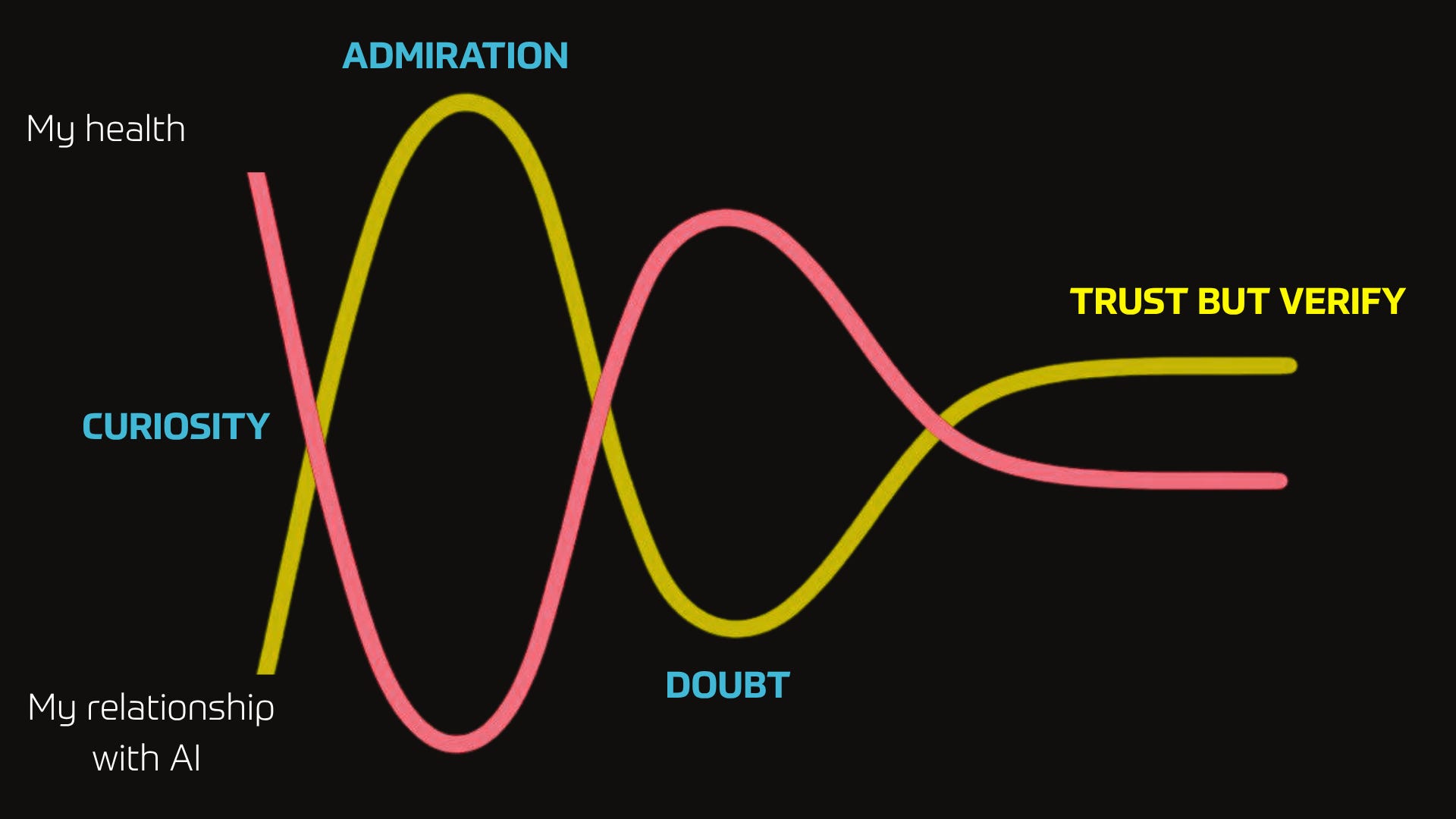
Then, after months of relative peace, I suffered a sudden complication - unexplained blood in my stool, quite a significant amount of it. Instead of going straight to ER I consulted AI. I wanted to get an idea about the seriousness of my situation, my options, possible outcomes and what doctors would do if I did seek medical care.
After a night in the ER, where much of what had been suggested in an earlier AI conversation became reality, my trust in AI landed somewhere in between. I see the value of chatbots, but also believe caution is essential. AI outputs need careful verification, and patients should use them with that in mind.
One thing is important to mention here: when I used AI to know what to expect in the ER, I used it to be informed. Eight months earlier, when I was between specialists visits, I used it out of desperation and because this was my only consultant and I couldn’t get answers from the healthcare system when I needed them. I think this is crucial: if patients had a choice between chats with clinicians and AI, I know I would choose clinicians. But sometimes that’s not an option and AI is the only voice available.
I believe AI can be very helpful for patients and is changing the information asymmetry between clinicians and patients that was huge in the past. But just changing access to information doesn’t give patients the medical knowledge to interpret AI outputs.
Let me give a concrete example. My father-in-law was worried about ongoing chest pain that hadn’t been explained after an ER visit, where all the standard tests had been done and come back inconclusive. I gathered details: his medications, symptoms, and medical history and gave to to an AI chatbot. But instead of asking AI for a single interpretation, I asked it to assess the situation from five perspectives: geriatric medicine, gastroenterology, hematology, vascular medicine, and cardiology.
The possibilities quickly became complex and overwhelming; far beyond what I could interpret. In the end, the only advice I could give my father-in-law was to:
monitor his symptoms,
make a diary of when the pain starts, how long it lasts, what type it is and how it changes and
take that data to his physician.
Caution is essential with AI. But the fact is patients are and will use it. So how can we get the best out of it?
As part of Faces of digital health podcast I launched a podcast series called The Agentic Patient that explores how patients use AI. News articles at the moment fall into two buckets: either hyping how AI solves unsolvable medical problems or warning of dangers such as increased anxiety, or patients not seeking medical care when they should.
With The Agentic Patient, I want to get to actionable insights and guidelines. Write down and share which tools patients use, which prompts when chatting with AI, the safeguards they rely on, and what more can be done to ensure its safe and responsible use. This is not a project about glorifying AI, but a project hoping to contribute to health AI literacy.
So far, based on my research, patients using AI fall in three groups:
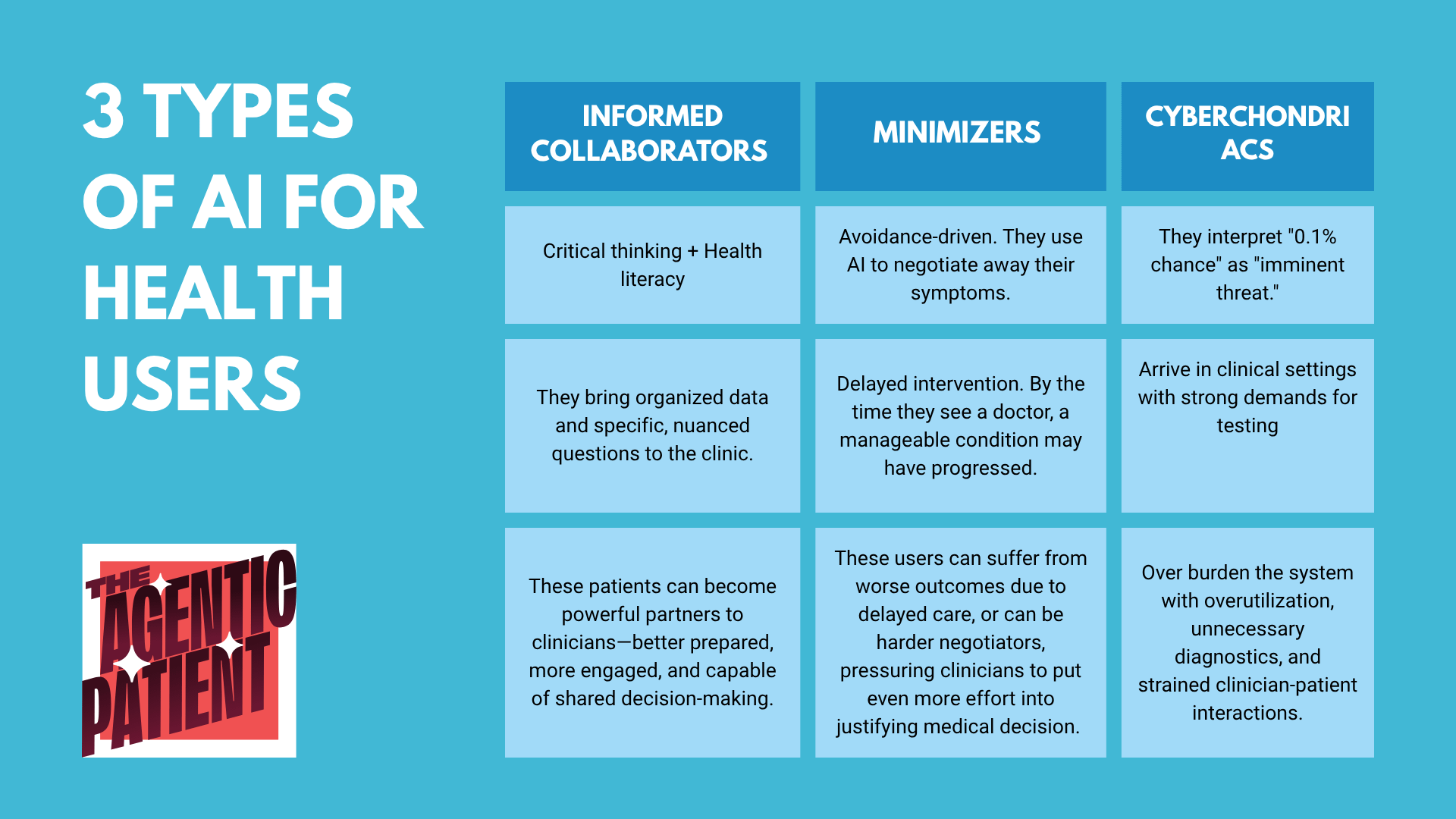
Informed Collaborators: patients who have digital health literacy, think critically and steer AI in the direction helping them structure their data and become a valuable collaborator with the doctor, enabling faster better outcomes.
Minimizers: AI is tricky: it will go in the direction you steer it to. If you seek reassurance, AI will provide it. These types of patients might delay their treatment and suffer complications.
Cyberhondriacs: These patients are prone to anxiety, and will go down the spiral of the worst possible outcome even for minor issues. These patients might drive healthcare utilization and add unnecessary cost to the system.
The operational question for health systems in 2026 is not whether to engage with patient AI use. How do we make sure they get the best out of it?
So far, through the interviews with patients, I came to…
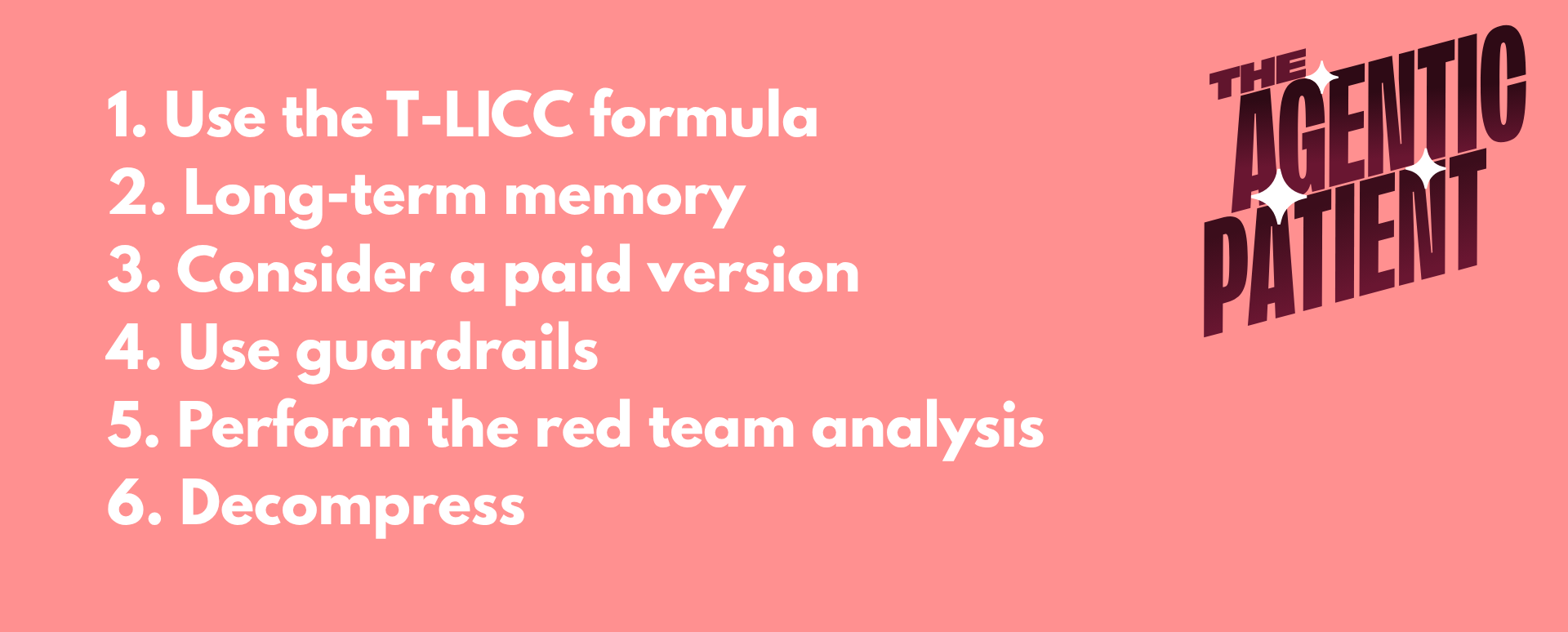
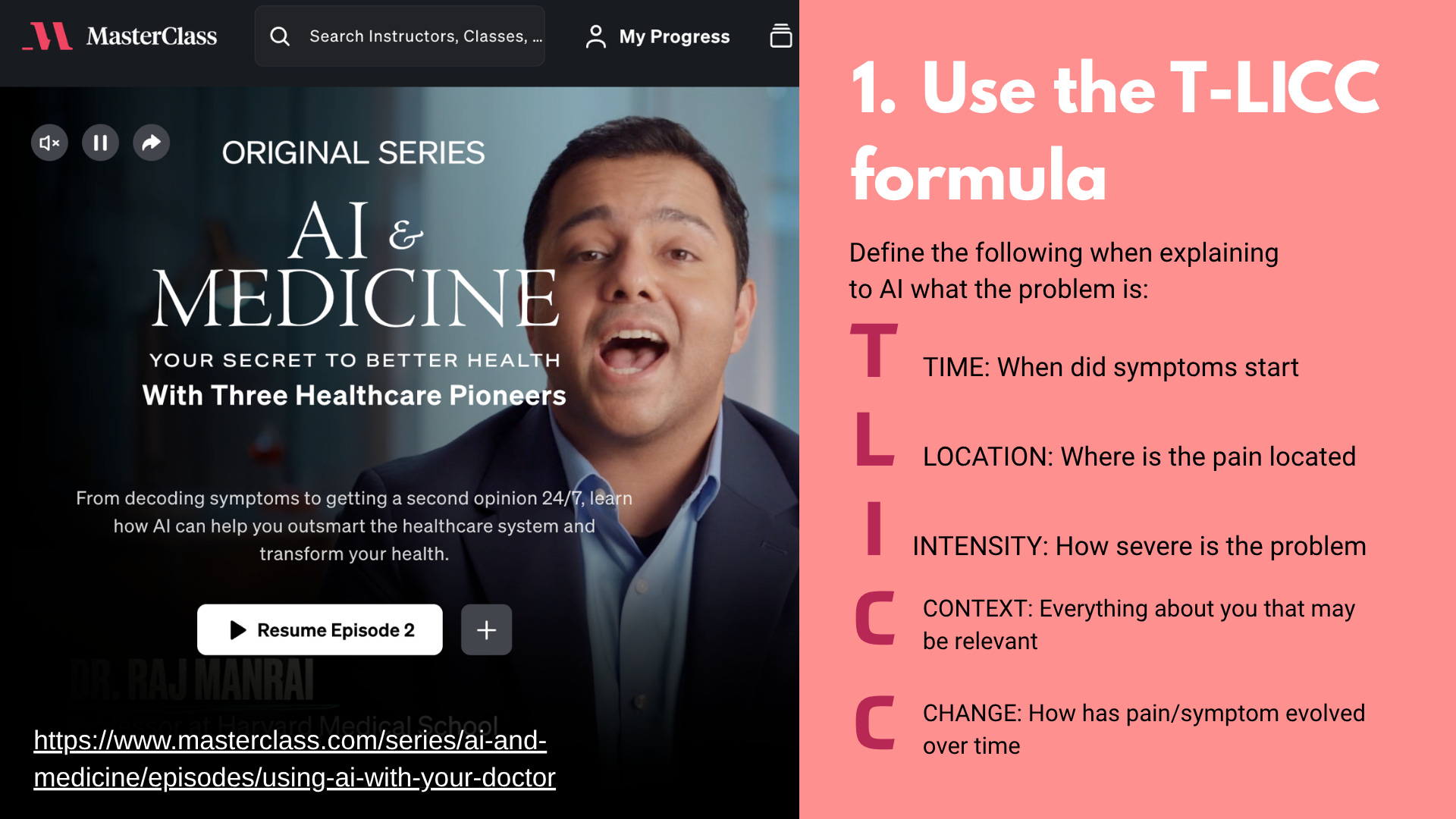
Masterclass recently released a course, prepared by doctors, to help people get the best out of AI. The immediate advice is to think what the doctor might ask you upon a visit. And that is: when did symptoms start, where is the problem, how did it change over time, add relevant context in your medical history.
This will enable better data privacy, but more importantly, will give you access to the latest models. They tend to improve in quality exponentially with each version.
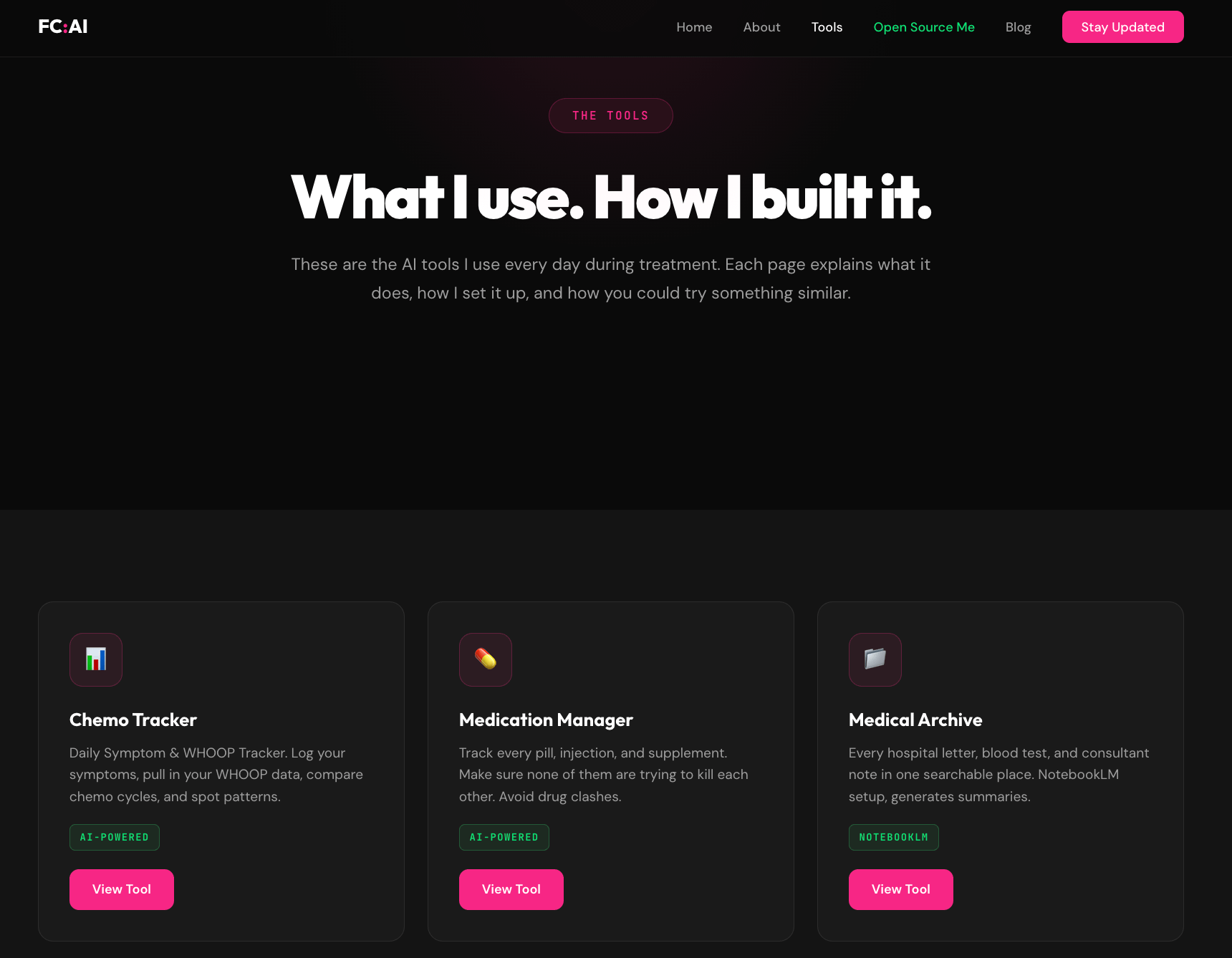
Russ Read Barrow from UK, author of https://fcancerwith.ai/ created a toolbox for managing his cancer. His advice is to not give too many jobs to the same model. In his journey, he used Claude for symptom tracking, Notebook LLM for searching through history and Google docs for copy-pasting all his chats with AI. He learned the hard way that chatbots have a history cut-off - the chats get lost, while AI retains the context in its memory, to be able to talk to you further.
Using guardrails refers to giving AI concrete boundaries for its research. While in Canada, a clinician said simply the prompt “Don’t hallucinate”, massively improves AI outputs.
A more concrete limit would be to ask the chatbot to “Base your answers on the German clinical guidelines” if you live in Germany. Or, when you work with research, tell AI to “add at least 5 credible sources to any conclusion”. Don’t forget AI doesn’t only hallucinate answers, it can hallucinate links. It’s key to always check the sources AI draws answers from.
As Dale Atkinson, a cancer patient advocate from the UK warns: “AI pulls information from Facebook groups and social-media doctors who may not be credentialed. It uses the logic that the more instances something is mentioned, the more likely it is to be true.This is the opposite of how evidence works. The quiet doctors doing hard work are the ones to look for, and the model will not surface them unless you force it to”
Dale was given a terminal cancer diagnosis, but used a research approach to solve his cancer. He took the research first, AI second direction.
ChatGPT was his literature triage layer. He fed in his diagnosis and medical letters, asking "if you were in my shoes, where would you start?" and getting a reading list. He then manually read roughly 4,500 papers over three-to-six months, initially cover-to-cover, later skimming for the sections that actually mattered.
It is worth mentioning that before getting sick, Dale was a financial crime investigator, which gave him necessary skills to read dense regulated documents, which he was then able to transfer to reading medical papers.
Today, Dale doesn’t have signs of cancer and talks to patients on a daily basis.
One of the things he noticed is that patients use one AI model for prompt preparation and another for execution. For example, they ask one AI chatbot to ask them 20 relevant questions and once they answer those, they use that output to continue research in a different model.
Demetri Giannikopoulos is Chief Innovation Officer at RadAI, overseeing clinical integration of AI in radiology across US health systems. He has lived with multiple sclerosis for roughly twenty years. His wife is a nurse practitioner and a cancer survivor. Demetri doesn’t use AI for his condition management, he did however use it to find the best insurance plan for him.
Demetri’s opening rule: “Never ask a simple question because you’ll often get a simple answer, and that can take you down the wrong course.”
For insurance, a single copy-pasted plan summary missed the loopholes; only pulling the full underwriting document surfaced the real cost structure. His analysis used 50+ pages of source material, cross-compared three plan options simultaneously, and factored in his wife’s expected utilization.
His key advice is also to ask AI to “perform a red team analysis”. This is a term AI will recognize and it means it should create a critical analysis of all the outputs it gave so far and any missing critical points it hasn’t touched upon.
I would add the red team analysis prompt should be used with caution, because it could also give you a grave diagnosis for a minor symptom and send you down the anxiety spiral.
This tip comes from me personally: when you get too “sucked in” AI discussions, especially if it start confusing you, take a step back. Take a break.
The four patient cases above spoke about how AI helped them. But with the true aim of increasing AI health literacy, the Agentic Patient Series covers less positive examples as well. Diana Ferro, a clinician-researcher and data scientist working at the intersection of health, technology, and ethics at Bambino Gesù Children's Hospital in Italy, has seen problematic impact of AI as well:
parents using AI to deny rare-disease diagnoses,
adolescents using AI as a pro-eating-disorder coach,
young people with weak support systems finding AI easier to talk to than a clinician, including, she notes, in contexts tied to self-harm.
She vividly describes: “We are witnessing wars between two people using two AIs to prove each other wrong. The parent’s ChatGPT contradicts the oncologist’s AI decision-support tool, and the child, pays the price.”
I truly believe that by sharing best practices of AI use, we can help more patients achieve better outcomes. However, one should never forget that while AI can assist in organizing information, summarizing data, and helping users prepare for medical consultations, it is not a clinician and does not provide medical advice, diagnosis, or treatment.
I will keep sharing best practices. To go beyond what’s shared in this newsleeter, go to more detailed discussions summaries and recordings of each interview on the Agentic Patient tab on the Faces of digital health podcast website.

Dale Atkinson and Russ Read Barrow will join HIMSS Europe. Dale will share his story in on the 20th May, in the session: Money talks: Financial Impacts of EU Policy, where he will highlight what policymakers should invest in to have the full picture about patients and consequently improved outcomes and lower healthcare costs.
Russ will join the panel discussion How do we define appropriate autonomy vs. full autonomy? in the session Working With AI Agents: Redefining Roles, Autonomy, and Trust in the Workforce, on 20th May 16:30-17:30.
Join us in Copenhagen!

No posts
Comments
Nothing yet. Say the first thing.
Sign in to join the conversation.