
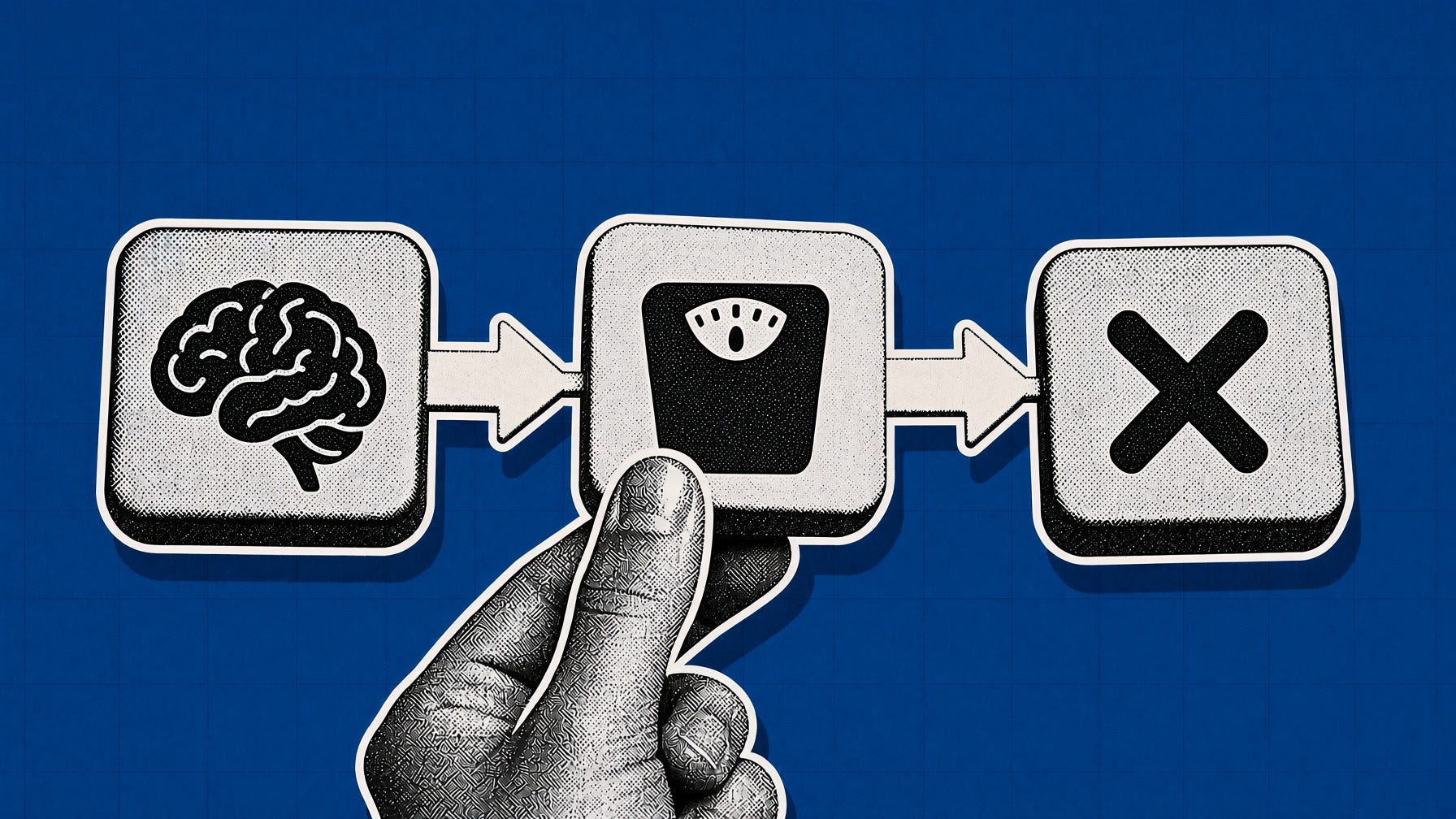
Everyone wants to focus on the fun parts of investing.
Finding the idea.
Building the model.
Watching a thesis play out exactly the way you said it would.
But the moment you actually put money on the table, you inherit a second job you never applied for:
Managing yourself.
Sitting still when nothing is happening
Buying when it feels awful
Not buying when it feels amazing
Selling something you were publicly loud about
Admitting a thesis broke
Doing nothing for eleven months in a row
None of these are intellectually difficult.
They’re just hard.
And that gap, the one between knowing the right move and making it, is where most people’s returns quietly go to die.
You can be right about the company and still lose money because of what you did at 9:01 on a red morning.
Here are the 7 biases doing the most damage, what sets each one off, and what actually helps.
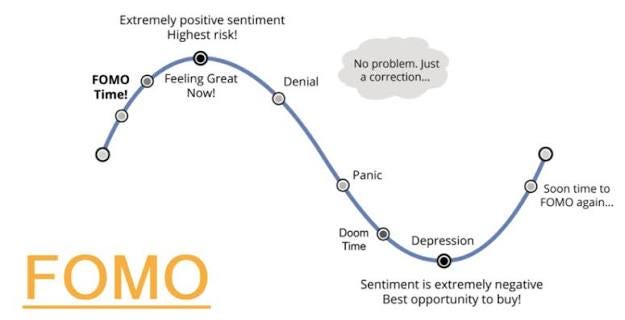
This is the expensive one.
You buy something because it’s moving without you. The thesis gets written afterward, backward, to justify a decision the chart already made for you.
It fires when you see:
A parabolic move in something you looked at once and passed on
Screenshots of somebody else’s returns
An asset going from “niche” to unavoidable
Cash in the account that feels like it’s doing nothing
The damage is that you enter with no thesis, which means no exit either.
Think about that for a second. If you can’t say why you own it, you can’t ever say why you’d sell it. So you end up holding through the whole round trip, all the way up and all the way back down, because you never had a reason to do anything else.
You also treat the price move as information. Up 300% feels like validation. All it tells you is that it went up.
Three things help.
Keep a watchlist with entry prices written in advance, when you’re calm.
Wait 48 hours between “I want this” and clicking buy. Most FOMO doesn’t survive two days.
And run the silence test: would I want this if nobody was talking about it?
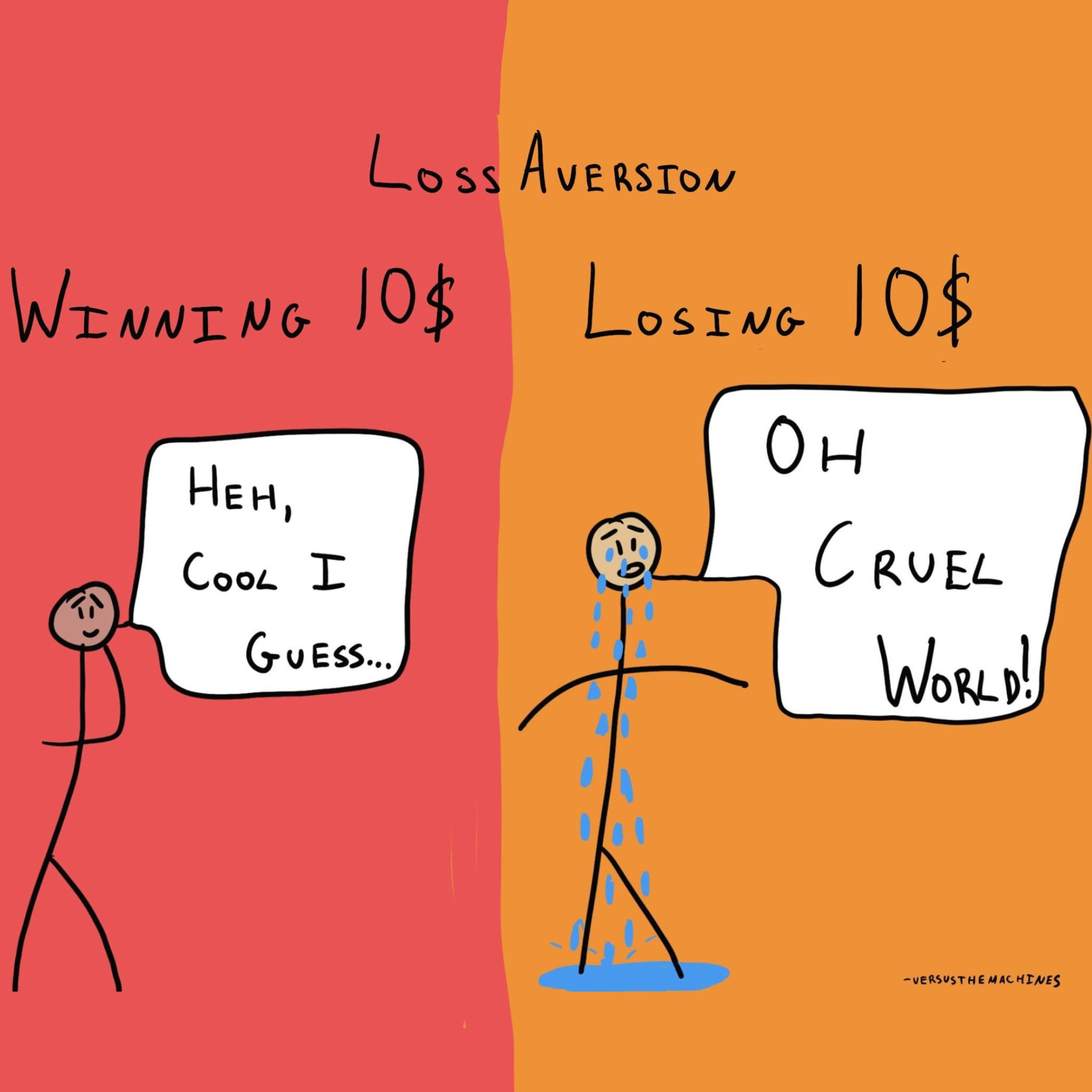
The research on this one is unusually good.
Losses hurt more than equivalent gains feel good. Kahneman and Tversky described the shape of it in 1979, in the original prospect theory paper. The rough figure everyone quotes, that losses land about twice as hard, came out of their follow-up work in 1992, where they put the multiple at around 2.25.
Either way, you start organizing your behavior around avoiding pain instead of around making money.
The trigger is almost always something you can see.
Unrealized losses sitting there in red, every single day
Having told people about the position
A stock dropping right after you bought it
Your cost basis being visible in the app
So you sell winners to bank the good feeling. And you hold losers to postpone the bad one.
That has a name, by the way. Shefrin and Statman called it the disposition effect back in 1985. It sits downstream of loss aversion, and the distinction is worth holding onto, because the disposition effect is the specific behavior that does the damage. Loss aversion is just the wiring underneath it.
Then there’s the break-even trap. “I’ll sell when I’m flat” is a plan built around your ego. The stock has no idea what you paid.
Most of the fix is about what you let yourself look at.
Write the sell thesis on day one. What specifically would make me wrong?
Hide the cost basis when you review the portfolio.
Then ask the only question that matters: if I held cash today, would I buy this at today’s price?
If the answer is no, you’re not an investor in that name anymore. You’re a hostage.
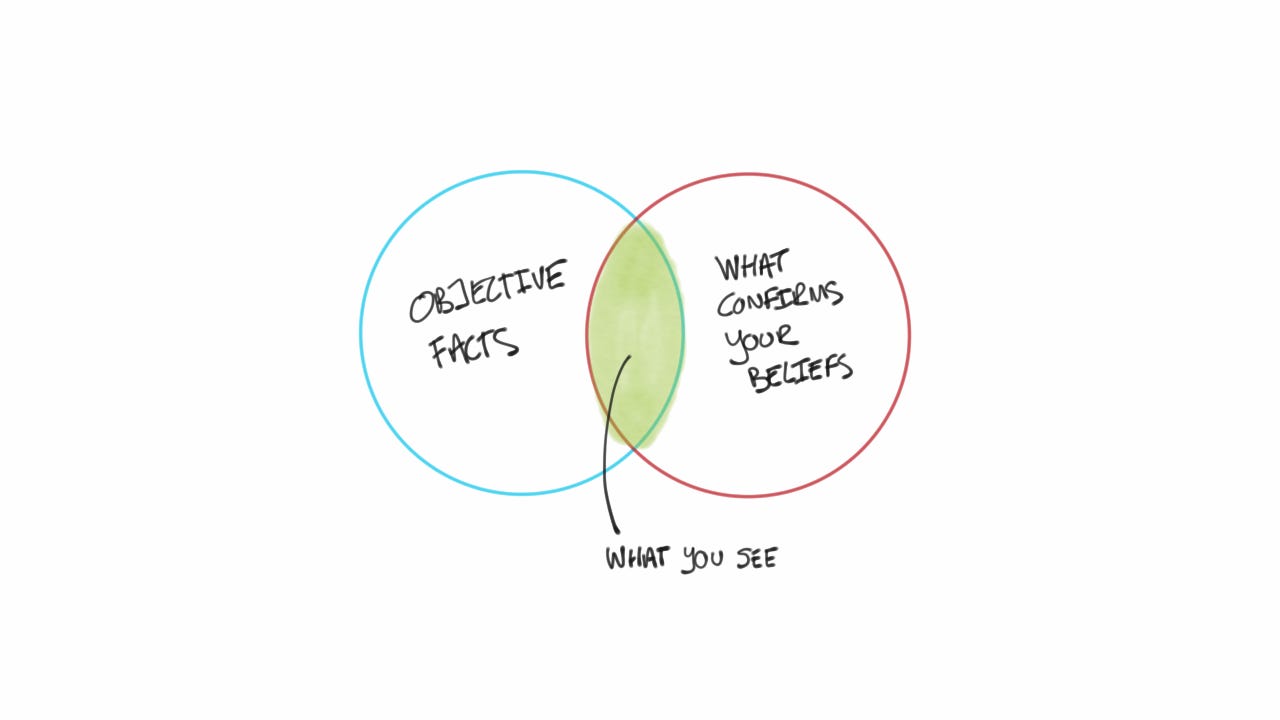
Nobody thinks this one applies to them.
Your brain filters information to support what it already wants to believe. The moment you own something, you stop being an analyst and start being a lawyer.
And it gets worse the more you’ve already committed.
Owning the position
Having posted about it publicly
Six hours of research you don’t want to write off
A feed that will happily show you thirty bulls and zero bears
It shows up in small ways first. You search “why is X undervalued” instead of “X short thesis.” The query decides the answer before you read a word.
You dismiss every bear as someone talking their book.
You read the earnings call as evidence, forgetting that IR exists to sell you the story.
And you treat the absence of bad news as good news, when usually it just means you haven’t looked hard enough yet.
The only real defence is doing the bear’s work yourself, before you have anything to defend.
Write the bear case in full, before you buy. Not a token paragraph. Make it good enough that it genuinely bothers you.
List three falsifiers. Specific data points that would make you sell.
Then run a pre-mortem: it’s three years from now, this thing is down 60%, write the story of what happened.
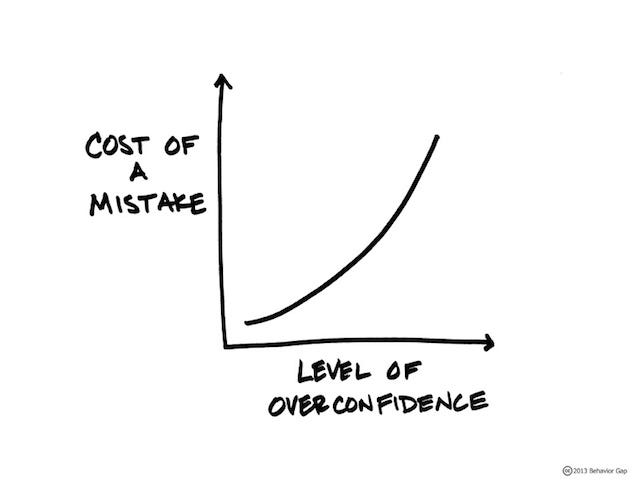
This is the one that shows up right before the drawdown.
You overestimate your skill and the precision of your own forecasts. Everyone thinks they’re an above-average driver. Same energy.
It builds quietly, usually off the back of:
A winning streak, even a short one
A bull market, which makes almost everybody look competent for a while
Being right in public, which turns a view into an identity
Expertise in an adjacent field
That last one catches more people than you’d think. Being a brilliant surgeon or a brilliant engineer transfers approximately zero skill to security analysis, and yet.
Then the sizing goes. You size up after wins, which means your biggest bets ride your least-tested edge.
You give point estimates. “It’s worth €47” is a confidence claim wearing a number costume.
You hold fifteen positions that are all the same bet in different clothes and call it diversified.
And eventually somebody reaches for leverage, which is where overconfidence stops being an expensive habit and becomes a terminal one.
The antidote is written records, kept before you know how things turned out.
Keep a decision journal. Thesis, expectation, confidence level, date. Without it you’ll rewrite your own history and never notice you did.
Judge the process for the first 20 or 30 decisions. Results carry too much noise at that sample size to tell you anything about whether you’re any good.
Force ranges instead of points. Bear, base, bull.
And benchmark honestly against a cheap index, after fees, after tax, including the trades you’d rather forget about.
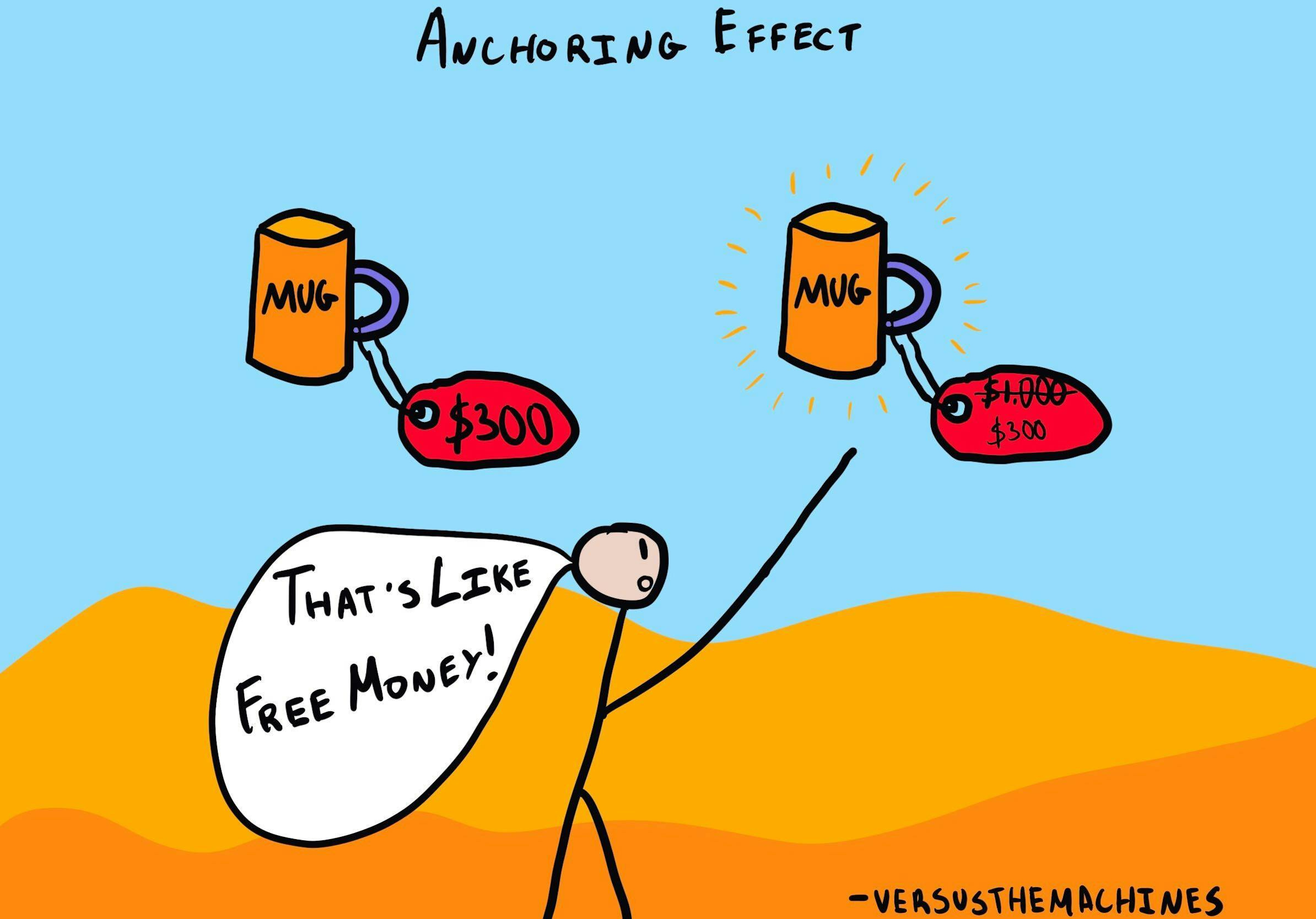
Anchoring is a measurement problem.
Your brain grabs the first number it sees and measures everything against it. Even when that number carries no information at all.
It will happily grab any of these:
The 52-week high, which is just where optimism last peaked
The price you paid, which is meaningful to exactly one person on earth
Round numbers
An analyst target, an IPO price, whatever it happened to cost the day you first noticed it
Here’s how that plays out. A stock was €200. Now it’s €80. You call it cheap.
But down 60% from a bubble is still expensive. And down 60% on a broken thesis is a value trap with a discount sticker on it. The old price tells you nothing about the business.
The reverse hurts too. You refuse to buy a genuine compounder because it’s up 40% since you first looked at it, as if the market owes you the old price back.
The fix here is mostly about sequencing.
Build your valuation before you look at the quote. Awkward, slow, and it works.
When something falls hard, rebuild the thesis from scratch rather than asking “is it cheap now.”
Compare against your alternatives today. The question is always versus what else.
The dangerous part is that this one feels like research.
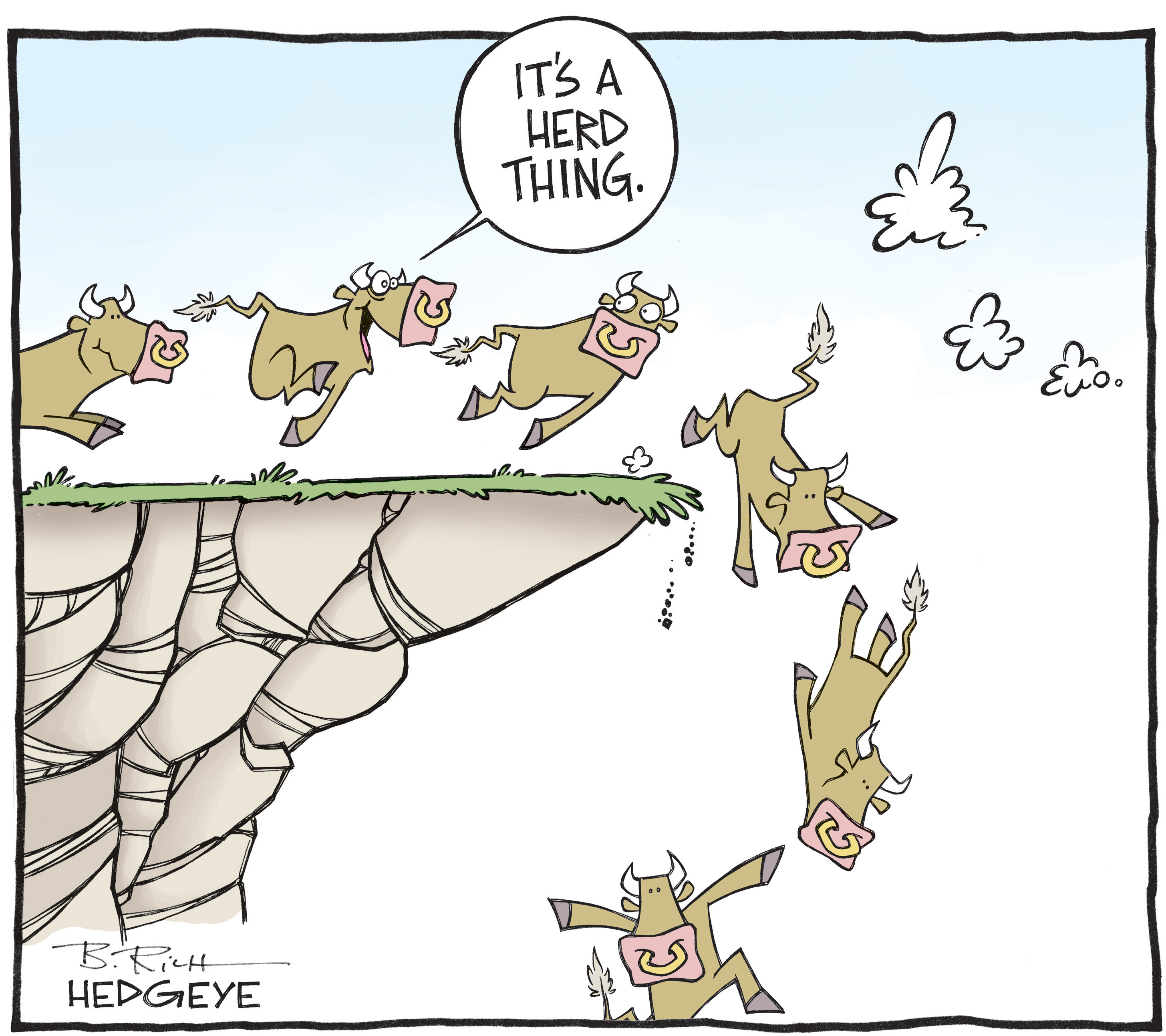
Crowd psychology, or herding if you want the shorter word, which is the one I’ll use from here.
You act because the room is acting. Worth separating it from FOMO, since the two get lumped together constantly. FOMO is the chart pulling you in. Herding is the people, and it works even when nothing has moved yet.
It comes from the room around you:
Group chats and trending tickers
Everyone in your circle owning the same three names
An authority figure whose conviction you borrow instead of building your own
The social discomfort of holding a lonely view
That last one is real, and it’s also roughly where the returns live. Being early and being wrong feel identical from the inside, give or take.
What you end up with is a portfolio of crowded trades that all unwind together. Feels diversified. Isn’t.
You assume this is a meme stock problem. It isn’t. Consensus quality names get bid to silly multiples by the exact same mechanism, just with better manners and nicer slide decks.
You outsource due diligence to someone with a big following and an unknown cost basis.
And then you capitulate at the bottom, which is herding too. Same bias, opposite direction, worse timing.
Owning your own numbers is basically the whole defence.
Track where each idea actually came from. If most of them trace back to the same five accounts, that’s your real portfolio construction process.
Do the model yourself, even a rough one. It’s what lets you sit through the noise.
Fish where the crowd isn’t. Small caps, unfashionable geographies, boring industrials.
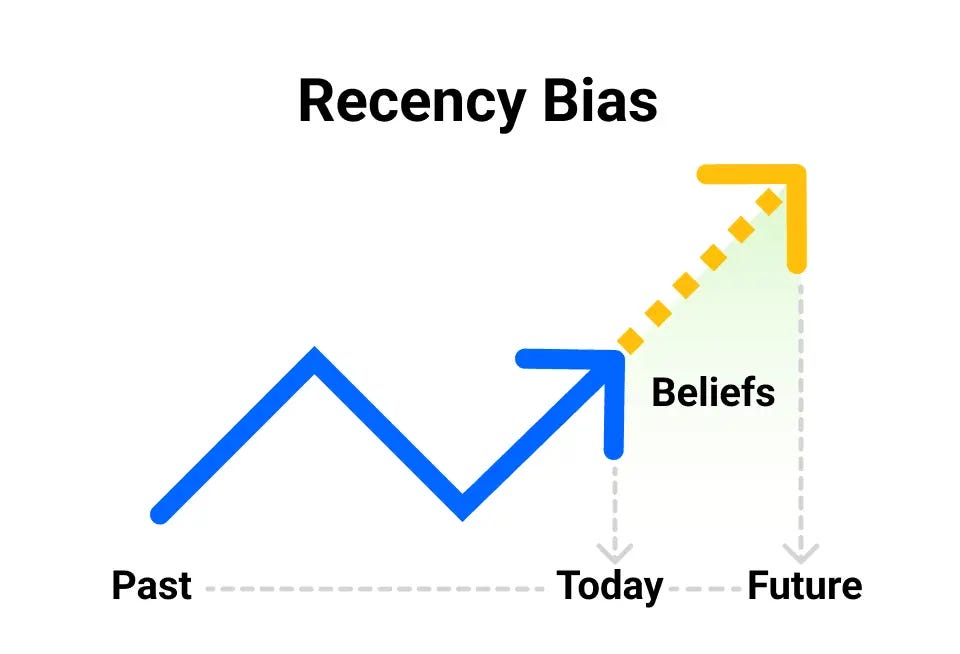
Recency is where allocation decisions go to die.
Whatever just happened feels permanent. Your forecast becomes an extrapolation of the last eighteen months, dressed up as analysis.
It sets in after:
A long run in either direction
One dramatic event you lived through with money on the line
Backtests that quietly start in 2009
Your own recent P&L, which is the loudest dataset you will ever look at
So markets are up for a year and a half and you assume they always will be. They crash, and you assume they never recover.
You extrapolate a margin that was a cycle peak.
You measure your risk tolerance at the top, which is like testing your swimming ability in the shallow end.
And you abandon a sensible allocation after a bad stretch. Usually right before it starts working again, which is the part that stings.
Zoom out before any big allocation decision. 10, 20, 30 year charts.
Then look at how long the drawdowns lasted. Depth is the number everyone quotes. Duration is what actually breaks people.
Use base rates instead of the recent sample.
Write your allocation policy while you’re calm.
And rebalance on a calendar rather than on a feeling.
I want to be honest about this, because most articles on this topic end with “be aware of your biases,” which is useless advice and everyone reading knows it.
Awareness doesn’t work.
You will read all seven of these, nod along, and then do at least three of them within the next quarter. I do. Everyone does. These aren’t bugs you can patch out. They’re standard-issue human wiring, and they get louder precisely when the money gets big enough to matter.
So the goal isn’t to become emotionally perfect in the moment.
The goal is to build a process that doesn’t require you to be.
Six things. Each one takes an afternoon at most.
Automatic contributions. Money goes in on a schedule, whatever the market is doing. This removes the single most damaging decision you make, which is the one about when.
Pre-set rebalancing dates. Twice a year is plenty. Put them in the calendar today, while nothing is on fire, because you will not choose to rebalance in March 2020 if it’s left to your mood.
Written buy criteria, decided before the position exists. Three lines will do. Quality bar, valuation bar, starting size. If a name fails one of them, it doesn’t get bought while you go looking for a reason it should.
Written sell criteria, same. This is the three falsifiers from earlier, formalized. If none of them have triggered, you’re not selling because the price moved.
Position size caps you don’t renegotiate. Pick a number and write it down. 5%, 8%, 10%, the level matters far less than the fact that it’s fixed. The cap will bind hardest on the name you’re most confident about. That’s the whole point of it.
A decision journal you actually keep. One paragraph per decision. Thesis, expected outcome, confidence, date. Ten minutes a position, and it’s the only tool on this list that gets more valuable every year you keep it.
That’s the whole trick. You make the decisions once, in advance, in a quiet room, and then you spend the next ten years just executing them.
Rules beat discretion.
Not because rules are smarter than you.
Because rules don’t panic.
Happy compounding,
Yorrin
Comments
Nothing yet. Say the first thing.
Sign in to join the conversation.