
Cell phone bans are moving fast across K-12 schools right now. Some districts are acting on their own. Others are responding to state mandates. Either way, school leaders are stuck with the same hard question: how do you cut the distraction without cutting off students who genuinely need their devices.
On a recent episode of the Flipboard EDU Podcast, I sat down with Callie Zauner of Luxor Workspaces to talk through what that balance actually looks like on the ground.
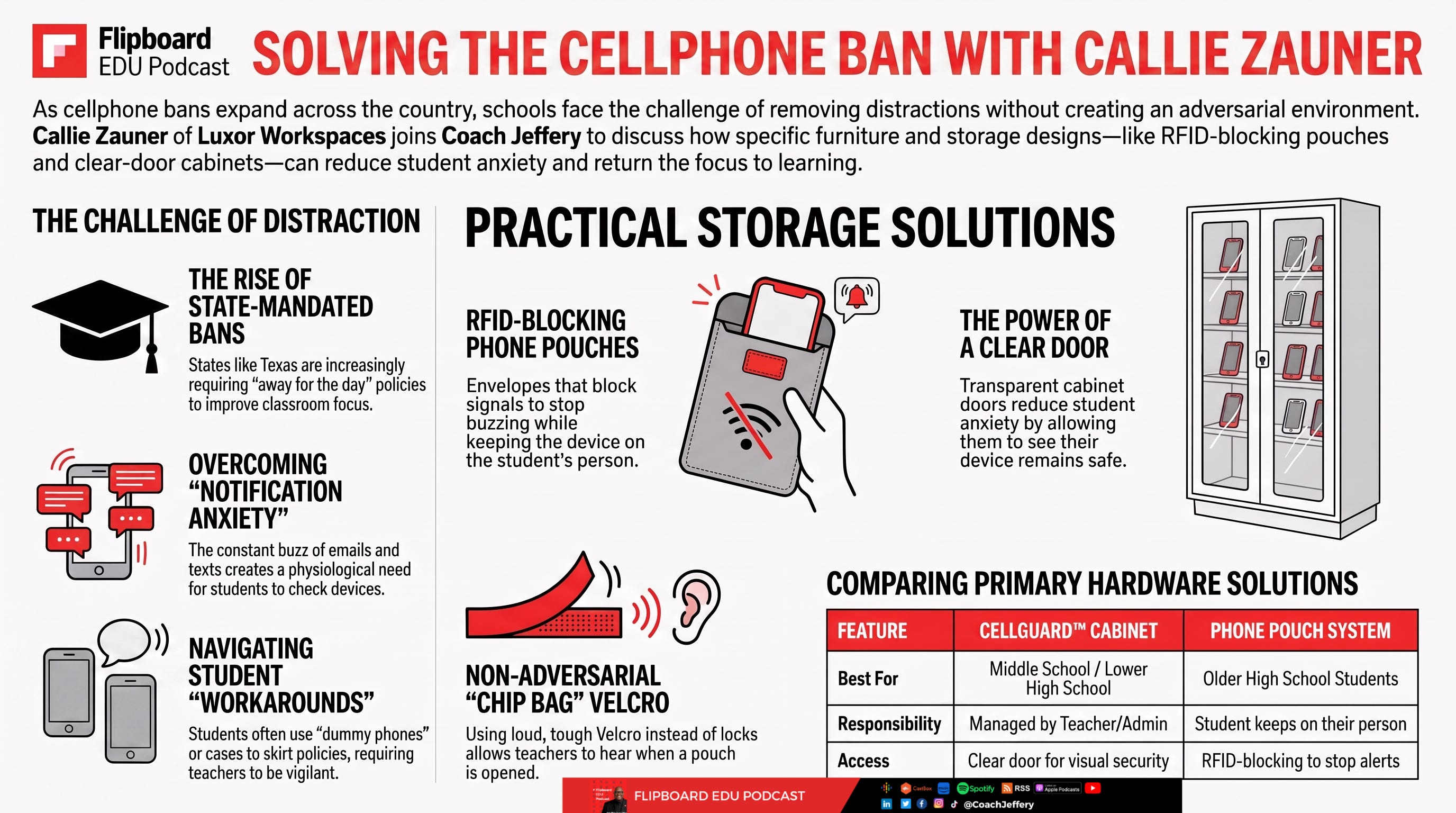
Phones and smartwatches are everywhere in classrooms now, and they pull attention in ways that make it hard for teachers to hold a room. Kelly put it simply: the goal is to remove the distraction and hand the classroom back to the teacher.
But there is no single fix. A small rural campus and a large urban high school are not solving the same problem. School size, existing culture, and district resources all shape what actually works.
Teachers are the ones who catch the workarounds. Dummy phones. Devices hidden in sleeves or bags. They are also the ones stuck confiscating a phone and dealing with the pushback that follows.
Too often, district policy gets written without teacher input, even though teachers are the ones enforcing it every day. If a policy is going to hold up in a real classroom, the people running that classroom need a seat at the table before it’s finalized.
Luxor built more than one solution because schools do not all need the same one. RFID-blocking pouches work for older students who can manage more responsibility. Some pouches lock. Others seal with a simple Velcro strip loud enough that tampering gets noticed. The locking decision is left to each district, partly to avoid turning every confiscation into a confrontation, and partly to keep emergency access simple.
Lockable cabinets with clear doors serve a different need, especially in middle schools. Students can see their phone is still there. That small detail cuts down on the anxiety that comes with handing a device over to someone else.
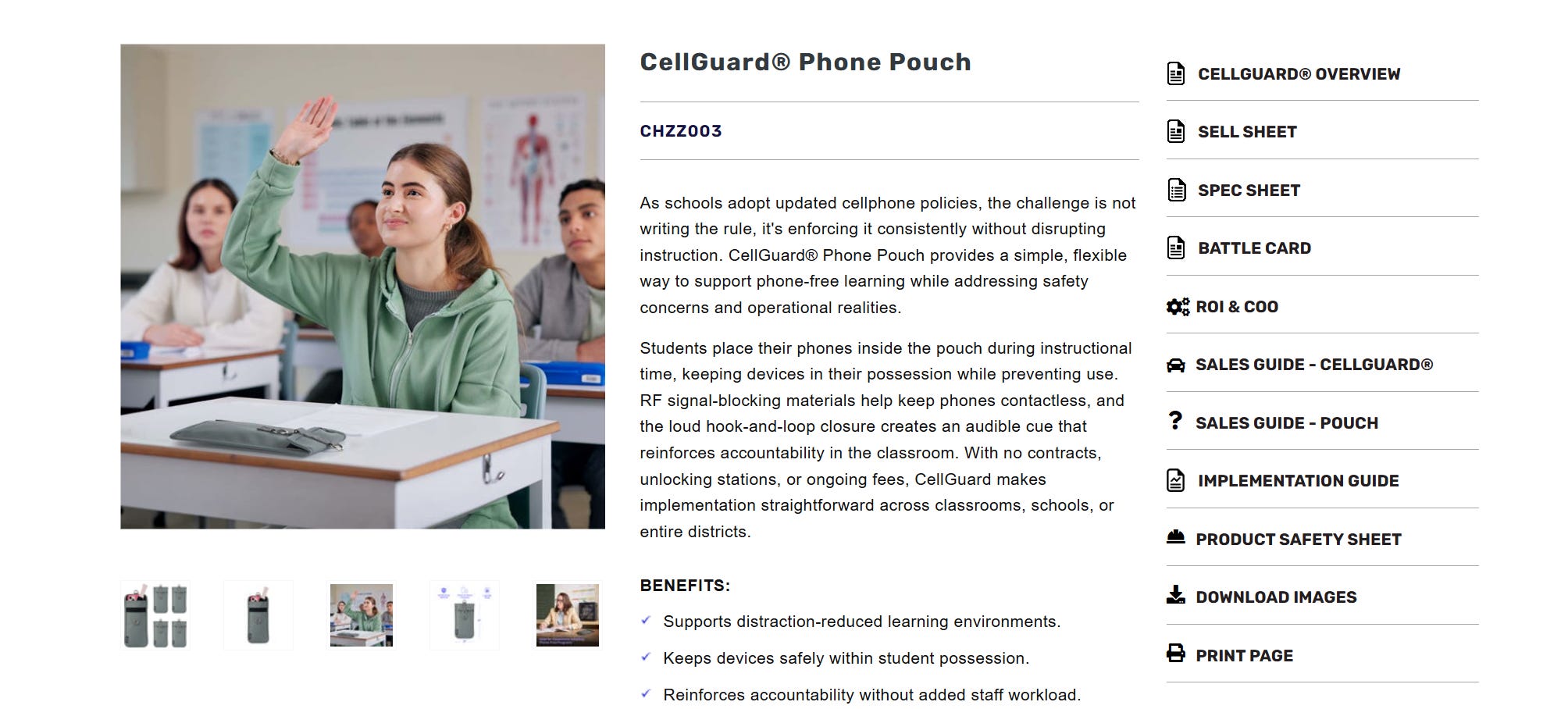
Younger students and stricter policies tend to point toward cabinets. Older students, especially in upper grades, tend to move toward personal pouches with more responsibility attached.
Campus size matters too. A smaller school can roll out a new policy faster and adjust it faster. Before adopting anything, leaders should be answering a few direct questions:
Are devices locked away centrally, or managed classroom by classroom?
Do students get access during passing periods?
What can realistically be enforced given the size of the student population?
One thing Kelly and I both noticed: as phones come out of classrooms, some of the old tools are coming back. Whiteboards. Mobile stations. Getting students up and moving instead of staring at a screen. Post-pandemic teaching is starting to blend digital tools with hands-on, collaborative learning again, and that shift is showing up in what schools are purchasing.
A phone ban cannot be one-size-fits-all. Some students rely on devices for medical alerts. Some need them for accessibility or language support. A policy that ignores that reality will fail the students who need it most.
This takes real conversation with families, staff, and students as the policy evolves. It is not a single decision. It is a set of layers that has to keep adjusting.

Kelly’s read on the next five years: schools keep pushing technology forward for learning, things like coding robots for younger students, while also leaning back into social engagement and analog tools that build responsibility.
The job for every educator and every solution provider in this space is the same. Keep the student at the center. Build for focus. Leave room for flexibility.
EVERY STORY IS A PLUS.
Listen to the Flipboard EDU Podcast for ideas that help educators collaborate, communicate, and educate.
No posts
Comments
Nothing yet. Say the first thing.
Sign in to join the conversation.