
The ergonomic chair worked.
A meta-analysis of 24 randomised controlled trials and 4,086 workers found that ergonomic interventions significantly reduced lower back pain — with an odds ratio of 0.53 after sensitivity analysis.
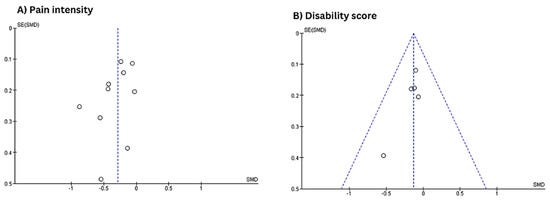
The same meta-analysis found no significant improvement in disability scores.
The chair reduced the pain. It didn’t reduce the disability.
That’s not a failure of ergonomics. That’s the limit of what a chair was ever going to do — confirmed by the largest synthesis of RCT evidence in the field.
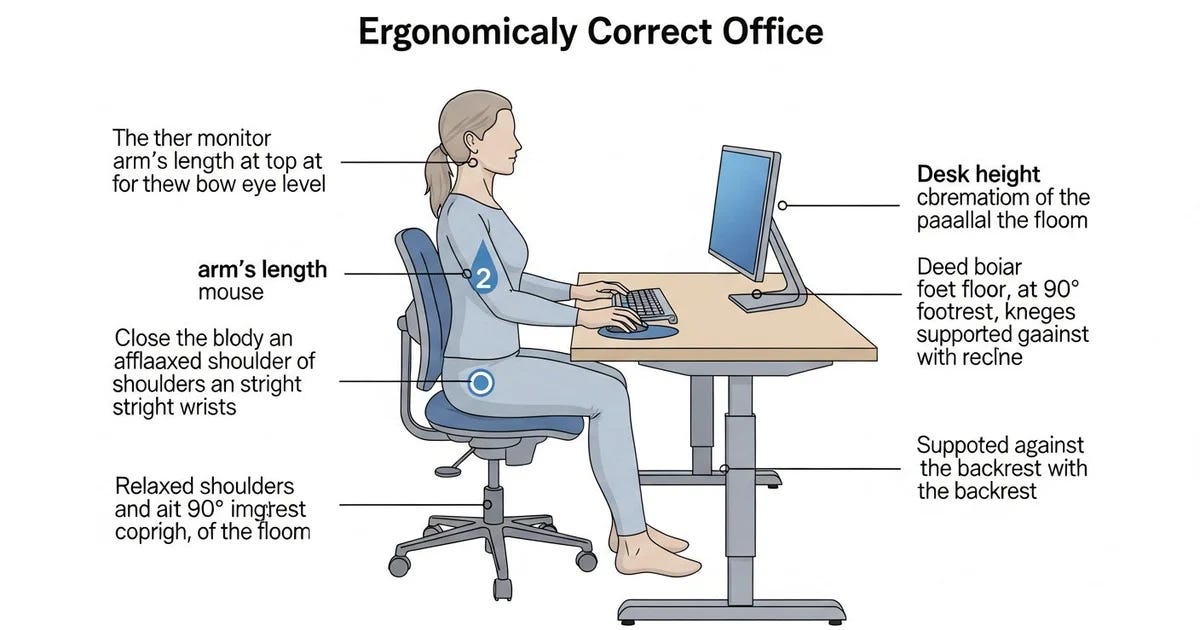
A 43-year-old project manager in Düsseldorf had the full setup.
Adjustable chair. Lumbar support. Monitor at eye level. Sit-stand desk. He used all of it correctly.
His lower back still ached. His neck still tightened by 3pm.
A 5-year prospective study of German workers would later confirm what his setup missed: among workers who exercised in their leisure time, sitting at work — even 25–35 hours per week — showed no significant association with neck or shoulder pain.
Among workers who didn’t exercise outside work, the same sitting hours raised neck pain risk by 46%.
The desk was correct. The hours away from it were the variable that mattered.
If your back and neck pain persists despite a well-configured desk, the ergonomic setup is doing its job. It’s just not doing your job.
Pain reduction and disability reduction are two different outcomes — and the research confirms that ergonomic intervention addresses one significantly while barely moving the other. Disability requires what chairs cannot provide: tissue capacity built through movement.
A 2025 systematic review and meta-analysis published in the Journal of Clinical Medicine analysed 24 randomised controlled trials involving 4,086 workers across multiple occupational settings.
Pain intensity: Ergonomic interventions produced a significant reduction — SMD −0.28 (95% CI −0.43 to −0.14, p = 0.0001).
Lower back pain reported: Significant protective effect — OR 0.53 (95% CI 0.40–0.70, p < 0.00001) after sensitivity analysis.
Neck pain: Significant — OR 0.59 (95% CI 0.39–0.89, p = 0.01)
Disability scores: No significant improvement — SMD −0.13 (95% CI −0.28 to 0.03, p = 0.10)
[Source: Santos W et al. Efficacy of Ergonomic Interventions on Work-Related Musculoskeletal Pain: A Systematic Review and Meta-Analysis. J Clin Med. 2025;14(9):3034. PMID: 40364066 → https://pubmed.ncbi.nlm.nih.gov/40364066/]
A 2024 prospective study published in the Journal of Occupational Medicine and Toxicology followed 2,082 German workers for 5 years using the S-MGA national cohort.
Among workers with no leisure time physical activity:
Sitting 25–35 hours/week at work: neck pain PR = 1.46 (95% CI 1.18–1.80) — statistically significant.
Same sitting category: shoulder pain PR = 1.30 (95% CI 1.03–1.64) — statistically significant.
Lower back: PR = 1.32 (95% CI 1.07–1.63) — statistically significant.
Among workers with any leisure time physical activity:
No statistically significant associations between sitting time and any MSC.
[Source: Dang THA et al. Impact of sitting at work on musculoskeletal complaints of German workers — results from the S-MGA. J Occup Med Toxicol. 2024;19:9. PMID: 38539214 → https://pubmed.ncbi.nlm.nih.gov/38539214/]
WHAT EVERYONE TRIES:
Better chair / lumbar support / sit-stand desk / ergonomic training — as the primary intervention for persistent back and neck pain
WHY IT FAILS AS A COMPLETE FIX:
The 24-RCT meta-analysis confirmed ergonomic interventions produce significant pain reduction. They produced no significant improvement in disability. The 5-year prospective study showed that sitting-related pain risk was only significant in workers who did no leisure time exercise. The chair addresses the acute pain signal. It doesn’t rebuild the tissue capacity that determines long-term disability.
WHAT WORKS:
Ergonomic setup as the pain management layer — combined with leisure time physical activity as the tissue capacity layer. Both are necessary. Neither alone is sufficient.
What the Disability Finding Actually Means
Pain and disability are not the same outcome.
Pain is the signal. Disability is what the tissue can and cannot do. Reducing the signal without rebuilding the tissue leaves the worker pain-quieter but no more capable.
The meta-analysis found ergonomic interventions produced a statistically significant improvement in pain intensity and in reported pain by body region. The disability score moved in the right direction — but not significantly.
This is precisely what you’d expect from an intervention that changes the load environment — reducing the stimulus — without changing the tissue’s capacity to handle load. The chair reduces the input. Only movement builds the output.
What the 5-Year Study Actually Confirmed
The most important finding in the Dang study is what didn’t happen.
Among workers who exercised in their leisure time — even the ones sitting 35+ hours per week — sitting at work was not significantly associated with neck pain, shoulder pain, or lower back pain.
Among workers who didn’t exercise outside work — the risk was significant, consistent, and dose-related.
Sitting wasn’t the variable. Whether you moved when you weren’t sitting was the variable.
The chair matters. It doesn’t matter more than what happens after you leave it.
The ergonomics meta-analysis raises that interventions should be combined with physical therapy and exercise — but doesn’t cover what kind or why. The gap is tissue capacity building: why muscle loading outside of work hours specifically protects against sitting-related pain accumulation. This isn’t covered here, but it’s the mechanism the Dang study confirms without explaining.
NO HANDOFF — the gut piece doesn’t map to this gap cleanly. The gap is exercise physiology, not gut microbiome. Handoff excluded correctly.
If you want to know exactly what exercise layer your specific back and neck pattern needs:
We review every application personally.
We say yes to roughly 3 in 10.
→ Apply here: https://tally.so/r/441DXr
Not ready? The full protocol is below.
Here’s the exact combined protocol — the ergonomic floor that reduces pain, the leisure movement layer that rebuilds capacity, and the weekly structure that makes both sustainable across a full working week.
Comments
Nothing yet. Say the first thing.
Sign in to join the conversation.