
Today I’m budgeting for a 26-year-old Graphic Designer living in Fayetteville, NY with their parents. They take home $2,400/month from their full-time job, and with freelance income they make anywhere from $150 to $1,300/month extra.
Their top financial goals are:
Build a budget that’s balanced for their current income
Build a safety net for when they need to move for a new job
They value putting their money towards Food & Dining, Travel, and Savings.
Let’s dive in!
After taxes and payroll deductions, they take home $2,400/month from their full-time job. On top of that, their branding side business brings in anywhere from $150 on a slow month to $1,300 on a great one. Because this swings so much, I'm building the core budget around the $2,400 they can count on every month, and assuming a minimum $150 from the side business.
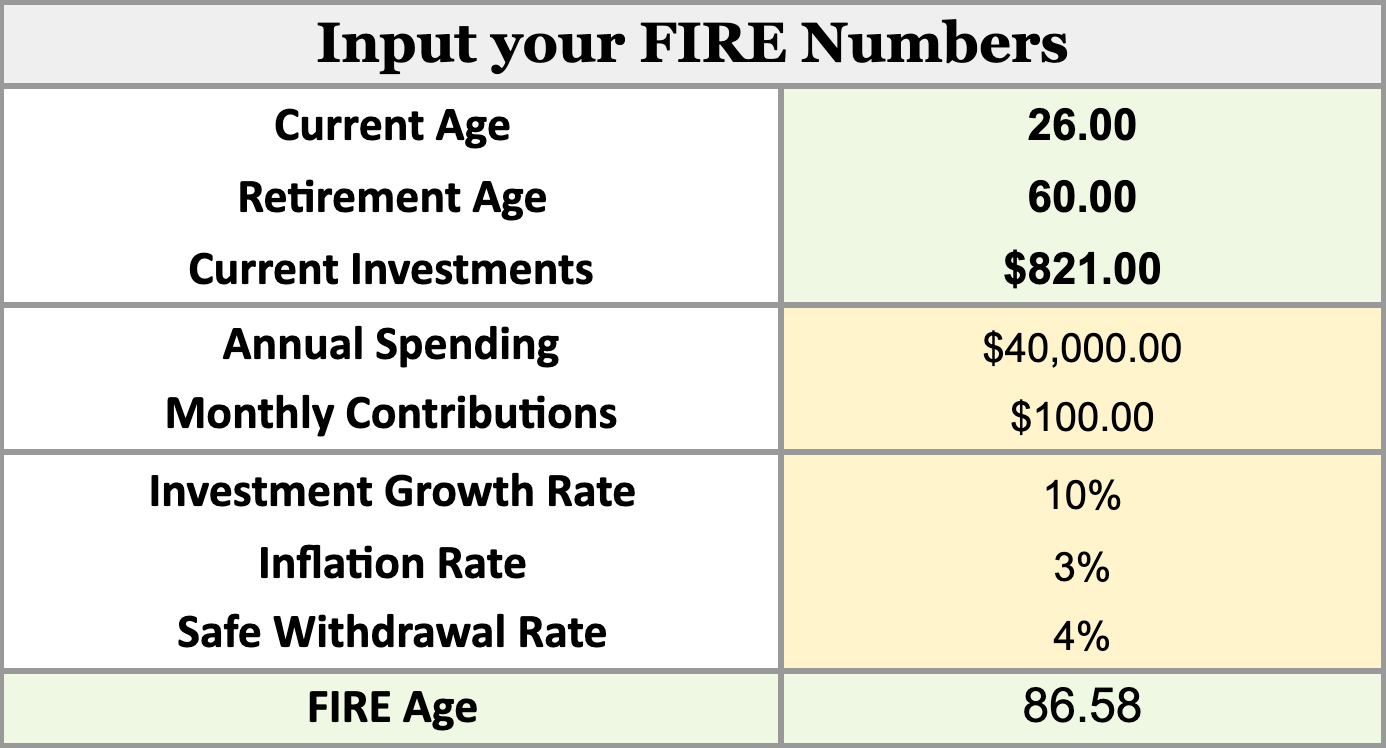
They currently have $821.51 saved for retirement in an IRA. Each month they contribute $50, and their employer matches $50, for a total of $100/month going toward retirement.
At their current contribution rate, they’re on track to retire around 86. Their goal is to retire at 60.
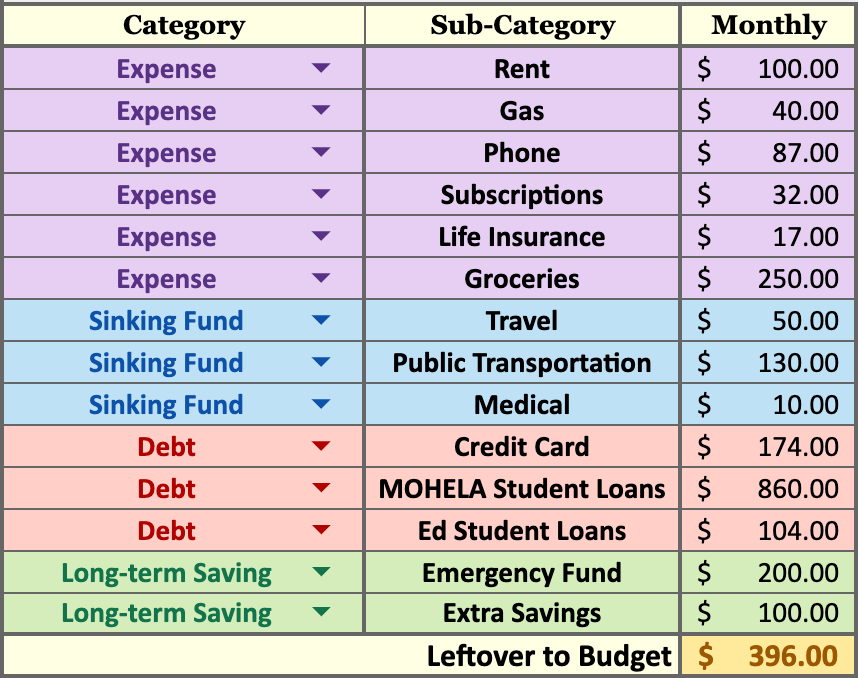
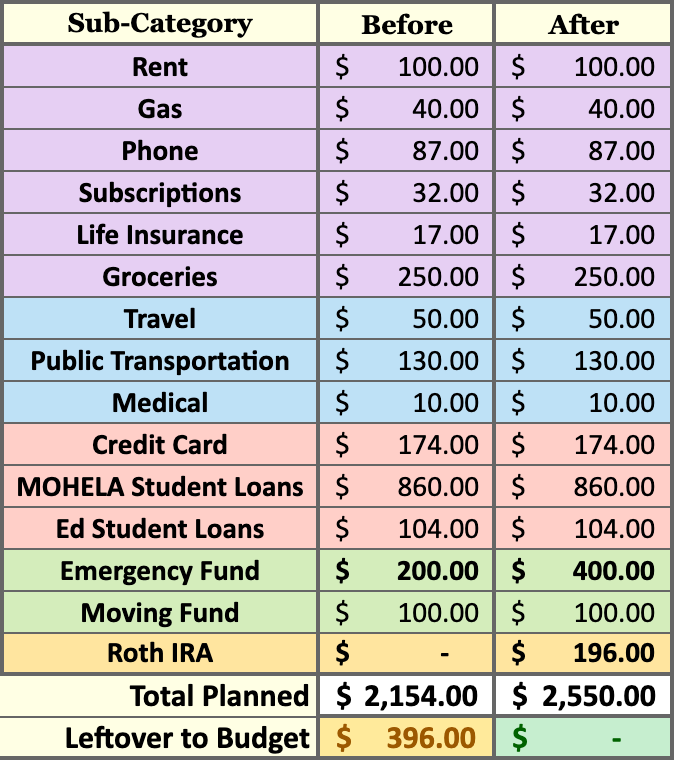
Rent comes in at $100/month (living with family), groceries are $250, and gas is $40. Altogether, living expenses come to $526.
They have three sinking funds totaling $190/month.
But what eats up most of their budget is their debt:
Their current debt is:
MOHELA Student Loans: $113,000 at 5.6% — $860/month minimum
Greenpath (Chase Credit Card): $3,800 at 2.2% — $174/month minimum
Ed Student Loans: minimum $104/month, unknown balance but hoping for forgiveness
Between these three, debt minimums add up to $1,138/month, close to half of their take-home pay.
Between expenses, sinking funds, debt minimums, and savings there’s about $396/month left over.
They plan to increase their income by moving out and getting a new job, but because they are living at home they are at an extreme advantage no matter their income. I recommend really focusing on building up their side hustle while their expenses are lower and they have lower risk.
They have a goal to build a safety net for when they need to move for a new job, and this is one of those moments where a little prep now goes a long way. When this happens, they’re going to need a security deposit and first month’s rent all at once, very likely their own car since they currently share one with their parents, and a bigger emergency fund to match their higher monthly expenses.
The good news is they’re not starting from zero. They already have $2,218 in their Emergency Fund plus $540 in a separate savings account. We will turn that separate savings account into their “Moving Fund.”
We will bump their Emergency Fund savings from $200 to $400 and keep their Moving Fund at $100/month. We need to move that Moving Fund into a HYSA as well.
By the end of 2027 they will have around $4,618 in their Emergency Fund and $1,140 in their Moving Fund. I would put any extra money made from their side hustle towards their emergency fund + moving fund to speed up that savings.
All of their debt is below 6% interest, which tells me they have wiggle room to start investing.
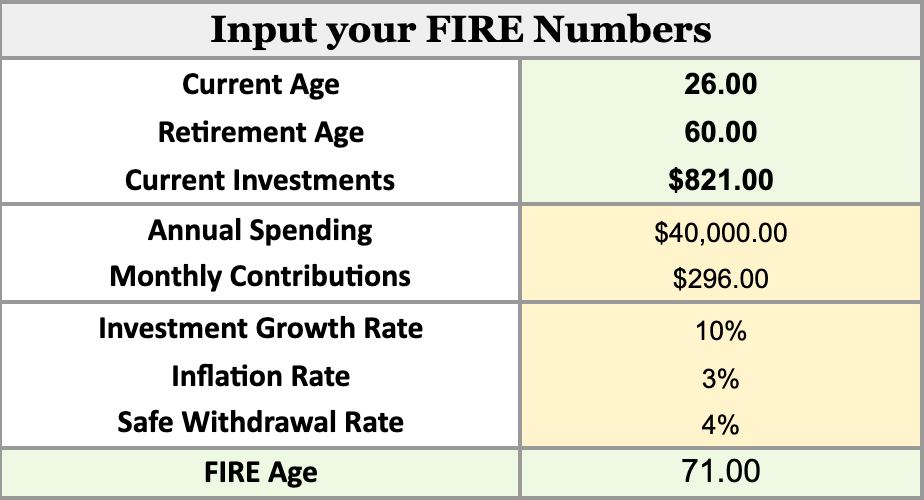
I would put the remaining $196 in their budget towards their Roth IRA. Just this small shift will reduce their retirement age by 15 years.
I also don’t want to put off investing until the debt is gone. They are young, only 26, so building a habit of investing in their Roth IRA will help them towards their goal retirement age of 60. Time in the market is soooo important!
At 26, with lean expenses, a start on emergency savings, and a side business already bringing in extra income, they're in a great spot to make these small shifts that will make a big difference later. Boosting their savings is important as they prepare to move out—with their high minimum debt payments this will be a non-negotiable.
Friendly neighborhood disclaimer: I am not a licensed financial professional and this is not financial advice. These are the changes I would personally make based on assumptions and the limited data I have received. Please do your own research and work with a professional for your unique situation.
Comments
Nothing yet. Say the first thing.
Sign in to join the conversation.