
In 1986, my parents bought the first new car they had ever owned—a Renault Alliance. At the time the Alliance was a sprightly upstart in the North American car buying scene. Detroit was floundering and the Japanese were dropping bomb after bomb on our automotive industry, and the French were wondering if there was any space for them in the North American marketplace. (Plot spoiler: there wasn’t.)

Picking up the new car involved something that is virtually unheard of now: making an appointment with the service department. Back then, it was understood that new cars would inevitably need “sorting out,” and it was normal to bring the car back for service a week or two after taking delivery. It was expected that something would be wrong.
I bought my first new car in 2002, with other new vehicles following in 2004, 2007, 2012, 2017, and as recently as 2021. The idea of buying a new car and immediately booking an appointment with service is anathema now, and I fully expect that my modern vehicle will give good, reliable service for at least a hundred thousand miles. My current 2019 GMC Yukon just turned 165,000 miles, and the only non-maintenance and non-regular-wear-items I’ve had to replace on it were the front anti-sway bar bushings and end links1. God willing, I will at least double the mileage in this truck before it needs anything serious.

For those of us old enough to remember the days of leaded fuel, could you have imagined getting that many miles out of a drivetrain with little more than oil changes, spark plugs (maybe one set, if that!), and a few other occasional bits and bobs? Heck, I’m old enough to remember when it was normal to take a car to an engine shop to get the head rebuilt when the odometer was hitting the mid to high five digits.
But go to a classic car show and listen to people bemoan the quality of new cars. Never mind that they towed most of those classic cars in on large trailers pulled by glistening new trucks. And never mind that standing in the wake of one of those classic cars smells awful. Despite this, they’ll talk as if nothing good has been manufactured since 1972.
I love classic cars as much as the next person, but the truth is that cars have never been better than they are right now, and they’ll continue to get even better.
So it goes with cars, and so it goes with guns.
“They don’t make ‘em like they used to!” echoes loudly when someone buys a gun and immediately discovers a problem with it. Angry posts are made on social media, and a legion of other “experts” immediately chime in to bemoan the steady decline in quality. As sure as day, the conversation will inevitably bask in how companies don’t value craftsmanship anymore, how there’s no pride in product, how quality control is non-existent, how the lawyers and accountants have taken over everything, etc.
In Smith & Wesson Collecting land, I often hear collectors proudly declaring that they won’t own any post-lock gun. This refers to the oft-discussed late 1990s deal between the Clintons and Smith & Wesson, which effectively saved the company from financial ruin in exchange for adding the world’s stupidest key lock to its guns. For most collectors, the sight of the lock (affectionately referred to as the “Hillary hole”) is a bellwether of everything wrong with the company’s guns—real or perceived.
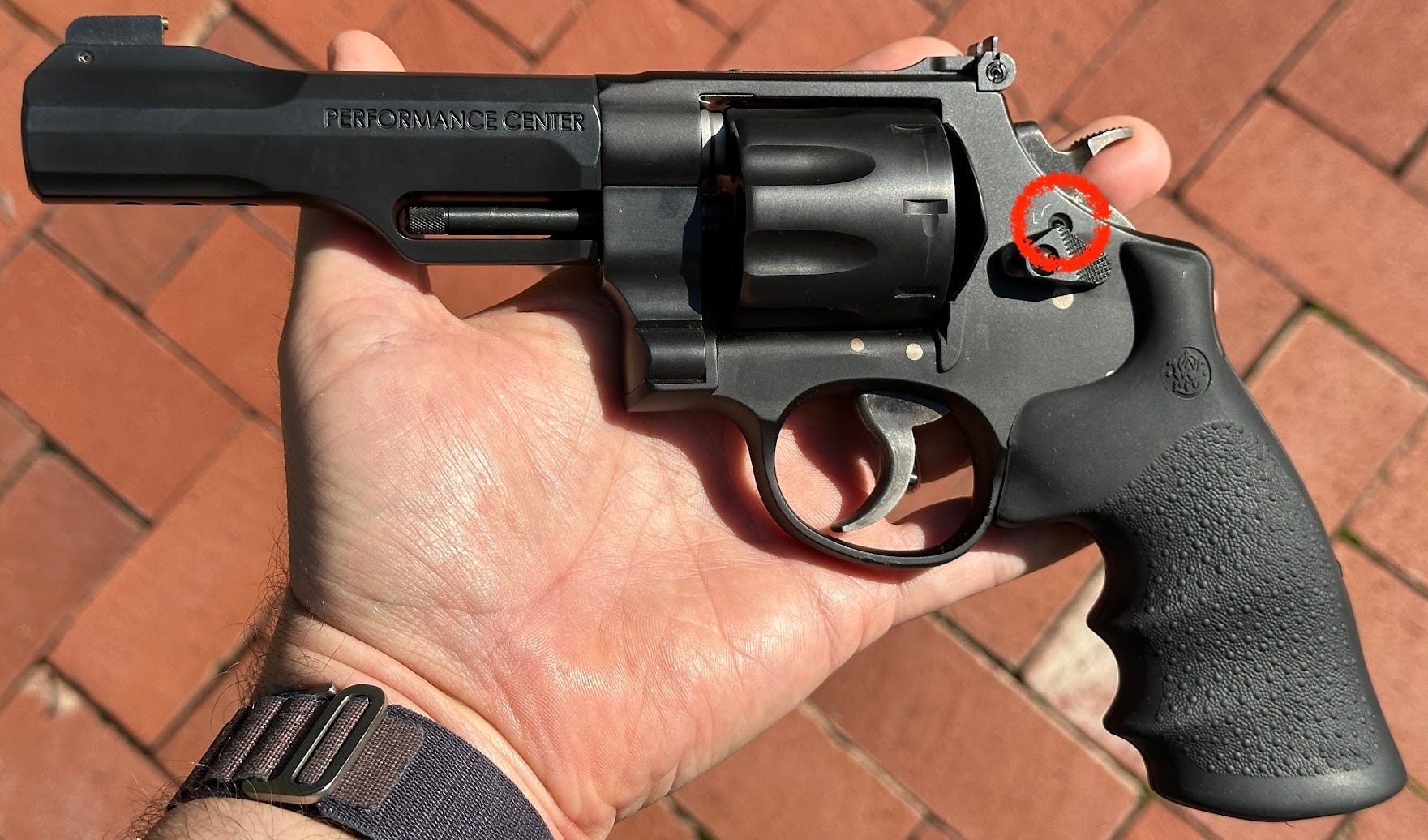
Some years before this, the demarcation point for “quality” was “pinned and recessed.” This referred to the pinning of barrels and the countersinking in the back of the cylinder, which would allow cartridges to sit flush with the back of the cylinder.
Before that, it was Bangor Punta’s acquisition of Smith & Wesson in the 1960s. Real gun collectors wanted real guns from when the company was family owned, by God!
Before that? Who knows. It was probably the prewar guns. Or just the large frame top-break revolvers. Tip-up revolvers before that. Or only the guns that crossed the Delaware with Washington. And for all we know, those soldiers were complaining about the quality of their guns too.

The Smith & Wesson archives have plenty of Depression-era letters from customers that bought guns that they found unsatisfactory. One letter in particular lambastes the customer’s .357 Registered Magnum that he had just received, which many would regard as the finest production revolver ever manufactured. He lambasted the company for what he perceived to be poor fit and finish, poor accuracy, and poor everything-else. Whether there was merit to these complaints or not is unfortunately lost to time … but the letter makes specific mention of a decline in quality—something that, according to the writer, would never have happened a generation prior.
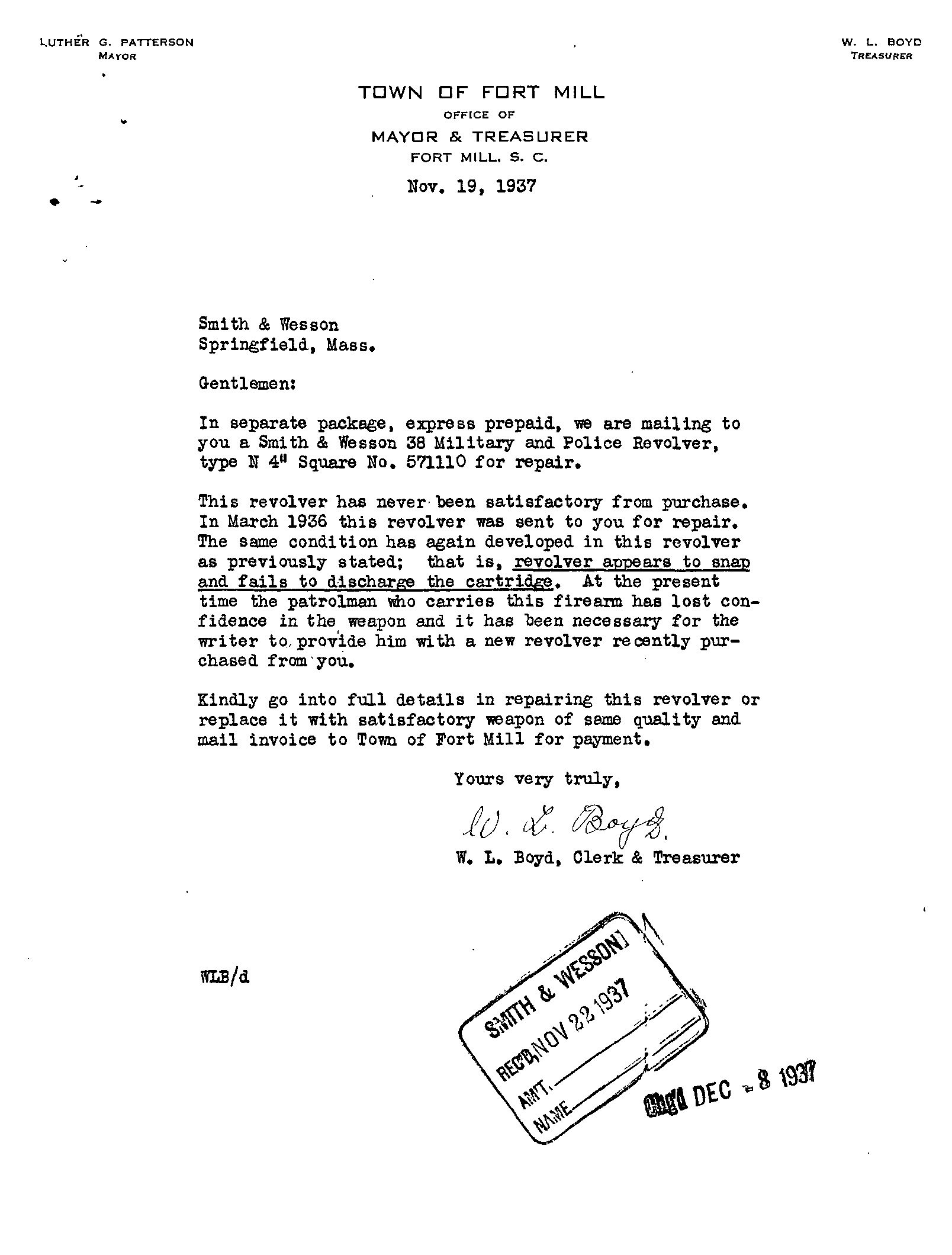
And for those that aren’t familiar with this particular gun: the .357 Registered Magnum was the world’s first revolver chambered for the. 357 Magnum cartridge, which was introduced by Smith & Wesson in the mid-1930s. Every .357 Registered Magnum revolver was entirely bespoke—customers had broad latitude to pick the barrel length, sights (and sighting), finish, grips, and a variety of other small accoutrements. Every gun came with a postcard, and if the customer mailed it to Smith & Wesson, they would receive a hand-calligraphed certificate “registering” the gun to them. It was a great idea, but Smith & Wesson only made about 6,500 of these revolvers before deciding that it was more economically viable to limit production to a small handful of catalogued configurations.
The Registered Magnum was a halo product by any measure, which is part of why collectors now pay four and five digit sums of US dollars for them. But despite having been made by the company’s most talented craftsmen in an era when men spent decades mastering the machinist’s and gunsmith’s art, not all of them were perfect.
A full-length treatise on how gun manufacturing has evolved over time would take many volumes, but suffice to say that American gun manufacturing has long been on the vanguard of modern manufacturing technology. In fact, the American System of Manufacture (the mid-19th century term for what we now call “mass production”) was very much a product of industrialization during the Early Republic.
Guns—especially revolvers—are complicated little machines. Cocking the hammer and pulling the trigger of a revolver invokes a mechanical symphony of tiny levers and springs that gives them such a satisfying mechanical feel. Many pistols share this mechanical complexity, and I believe strongly that a lot of the appeal of firearms is this mechanical honesty. Other than a few boutique luxury items like fountain pens and mechanical watches, I can’t think of many other machines that have done such a good job of resisting modern tech (especially computers and AI).
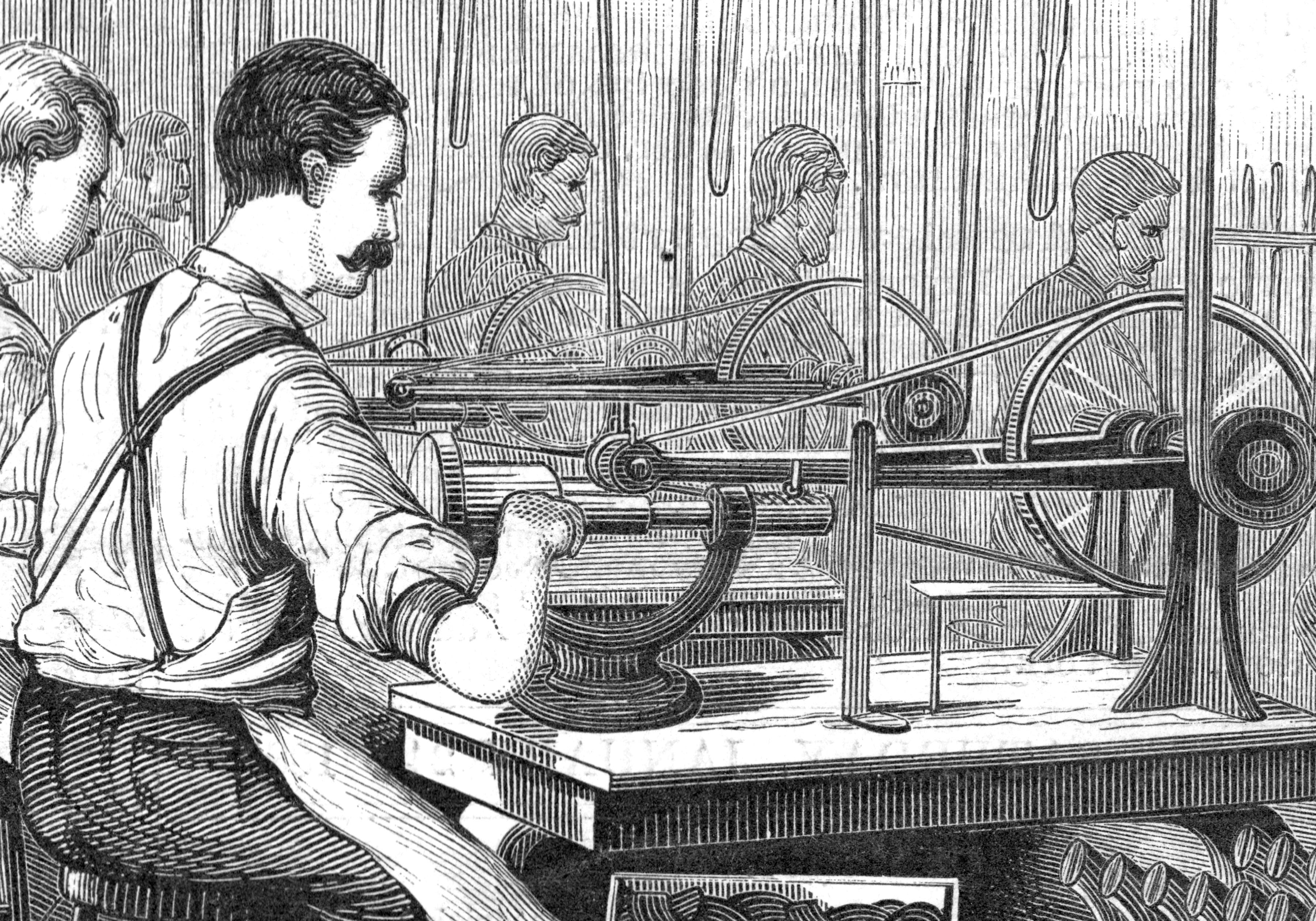
Mass-production is another challenge entirely. It’s one thing to make a working prototype of a machine—especially in this day and age of 3d printing and desktop CNC, where tinkerers can make stuff that was pure sci-fi a decade ago. But tooling up to make a million perfect machines is an entirely different proposition, which is why so few companies do it—especially with any longevity.
Cars that go a hundred thousand miles before needing a major service have spoiled us. Appliances with network connectivity and complex firmware have spoiled us. Even in the purely mechanical world, watches like the Omega coaxial movement achieve levels of accuracy that simply weren’t possible 20 years ago.
A lot of this has to do with the tremendous advances in manufacturing technology. Cars move down assembly lines much like they did a hundred years ago, but robots now perform the manufacturing operations with accuracy and precision that exceed what humans are capable of. Sophisticated design software allows engineers to simulate real-world performance long before prototypes are made.
Engineering a new product will never be a perfect science, but we sure have come a long way.
Buyers today can go into a gun store and purchase a polymer-framed pistol for less than $600. It will shoot several thousand rounds before needing anything more than a drop of oil and a quick swab from a bore brush. There are plenty of torture tests on YouTube that reinforce this assertion.
Let that sink in for a second: Can you imagine a revolver from the 1960s shooting a few thousand rounds with only a few drops of oil? I can’t.
Gun quality didn’t drop. Our expectations went up, and the old guns weren’t actually as good as we think they were. Nostalgia is a powerful narcotic, and it’s easy to forget (if we ever knew it) that grandpa’s revolver may have needed a trip or two to the gunsmith to get it running right. And grandpa sure didn’t put two cases of ammo through it before thinking about maintenance.
Every generation looks back with reverence, and it looks forward with suspicion. Thankfully, they’re wrong.
Of course, we should expect that modern guns leave the factory with properly secured front sights and cylinders that are made to spec. And I get it, that it feels like a betrayal when they don’t. These expectations are proof of how far we’ve come.
The next time someone at a gun show tells you “they don’t make ‘em like they used to,” go ahead and agree with them. They make ‘em better.
About two months after I posted this I had to have the top end of my engine rebuilt. This was largely thanks to General Motors’ Active Fuel Management system, which upended about a century’s worth of thoroughly reliable valve train engineering with a complicated system of hydraulically deactivated lifters that would, in essence, “shut off” part of the engine when the computer decided that you didn’t really need the power of a V8. It’s still a problematic technology and the achilles heel of the otherwise bulletproof LS engine, and when I had this work done I cheerfully opted for the “AFM Delete” kit. My average mileage has dropped maybe a half a mile per gallon, but I no longer have to worry about the stupid AFM lifters wetting the bed.
No posts
Comments
Nothing yet. Say the first thing.
Sign in to join the conversation.