
In developed economies, the individual credit score is the core enabler of consumer and small business finance. This score is used to determine the riskiness of an individual borrower when providing access to credit cards, home loans, car loans, rental contracts or any financial activity where the user is not paying upfront. Without a credit scoring system, any business selling to a customer that cannot pay in full upfront must determine the credit-worthiness of each potential customer on their own - dramatically narrowing the universe of customers with whom they are willing to do business.
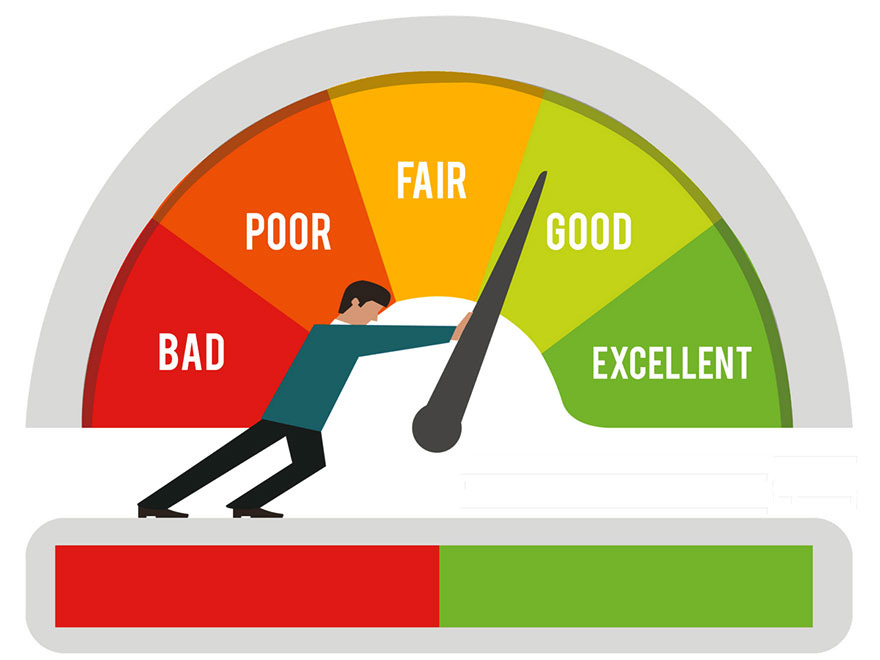
In many parts of Africa, credit scoring mechanisms are in their infancy. This means most consumers do not have a readily available score by which third party financial service providers can assess risk. Building that scoring infrastructure is a significant task and is further hampered by the fact that most consumers in Africa don’t have formal jobs or formal paychecks and make most of their purchases in cash at informal marketplaces. In other words, the systematic documentation of economic activity is orders of magnitude less than what you may find in developed countries.
As a result, a number of lending startups entered Africa attempting to leap-frog traditional credit scoring systems by using different proxies for credit worthiness. In East Africa, this includes Tala and Branch who attempted to provide loans based on scraping mobile phone or social media data as a means of predicting credit worthiness or enforcing repayments. Local payments players such as Mpesa also innovated in the space through their Fuliza overdraft facility where customers can complete payments ostensibly based on data from their Mpesa payment histories. Fuliza works in partnership with Commercial Bank of Africa. Branch has now acquired its own stake in a Kenyan Microfinance Bank. As the market matures, different configurations will emerge.
But in each case lending decisions and credit algorithms draw on private data. The outcomes of that lending are only known by the lending company. In other words, there is no common information sharing across credit providing players that can help the next lender decide whether or not to provide a specific customer with credit. The lack of cooperation leads to perverse incentives on the part of the borrower. For example, an individual can take out a loan from Lender A and then pay it back by taking a loan from Lender B, who then can be paid back with a Loan from Lender C. This can go on and on until the individual borrower disappears or dumps their mobile number, leaving a trail of non-performing loans and higher interest rates for legitimate borrowers.

In order for credit to proliferate, the decision not to repay a loan must have universal consequences. A consumer must expect that poor decision making with one lender will be known by other lenders - regardless of mobile phone or bank account number. So if an individual borrows from Lender A and fails to pay back that loan, Lender B should be aware of this fact so as to make an informed decision to lend to that individual. Alternatively, good credit decisions such as paying back the loan on time should also follow the individual for a period of time, ultimately allowing lenders to offer better rates to less risky individuals.
Right now in Africa, bad behavior can be expunged with a relatively inexpensive new SIM card, while good behavior must be rebuilt one lender at a time. The system can even encourage irresponsible borrowing for those who figure out how to game it. And many do try.
In the absence of a universal credit scoring mechanism, lenders end up lending small amounts to anyone as a means of identifying who may actually pay them back. This approach results in high interest rates to cover losses as well as coercive tactics to force the borrower to repay including debt-shaming and similar methods that are not sustainable over the long term. The combination of limited credit data along with a largely financially uninformed public can result in a lot of suffering on the part of borrowers and lenders.
The focus of the “financial inclusion” narrative thus far has been on access. The problem with focusing exclusively on access over precision is many people end up in debt traps because access without training in effective personal finance habits results in bad debt. Credit scoring is a metric by which good habits can be benchmarked and simply communicated. A high number is good, a low number is bad. I would even argue extending credit without scoring and education in place can lead to more harm than good.
Education around responsible financial habits at the consumer and small business level is a must. Instead of pushing financial inclusion with products that can lead to debt-traps for those who don’t know how to use them, perhaps mission-driven organizations can focus more on proliferating financial education programs to inculcate beneficial financial habits.

As most African countries are now instituting standardized government issued identity cards, the unique numbers of these cards can be used to track consumers across financial service providers. These financial institutions, be they banks, fintechs or mobile money operators, must share data through a third party entity in order to create a comprehensive picture of any individual’s credit worthiness.
At the same time, such an entity will require regulatory oversight with respect to consumer privacy and consumer protection. This includes reasonable access to the data collected on that individual and a process in place to dispute incorrect data that may appear on their report.
Finally, the data collected is highly valuable as it is the basis for credit decision making. That means data providers can be compensated for access to their data, and financial service providers seeking comprehensive credit data on specific individuals should also pay for that access.
Standard data collected to build this comprehensive score can include:
Payment history: Making payments on time is good, late payments are bad.
Credit utilization: Maximizing use of total available credit shows a consumer is open to over leveraging him or herself, higher risk of default.
Credit history length: Longer period of responsible usage, the better
Credit Accounts: Too many open accounts in a short period of time indicates poor planning on the part of the consumer or an attempt to pay one loan with another.

Ultimately the goal of cooperative data sharing arrangements is to reward consumers with good financial habits with better access to various lines of credit through increasingly automated processes, limiting risk for lenders while enabling commerce for buyers and sellers. Africa’s informal marketplaces are not being replaced by corporate chain stores anytime soon. Credit scoring will enable small traders and business people to scale and expand, resulting in financial inclusion that significantly reduces the suffering associated with failed loans.
No posts
Comments
Nothing yet. Say the first thing.
Sign in to join the conversation.