
Google shares are down roughly 4% after OpenAI officially launched its new browser, Atlas.
Billed as “the browser of the future,” Atlas is deeply integrated with ChatGPT, its operators, and third-party agents. It can make restaurant reservations, complete complex online tasks, and interact with multiple services automatically.
Naturally, headlines are calling this a major threat to Google Chrome.
But as someone who follows Google closely, I don’t think long-term investors need to worry.
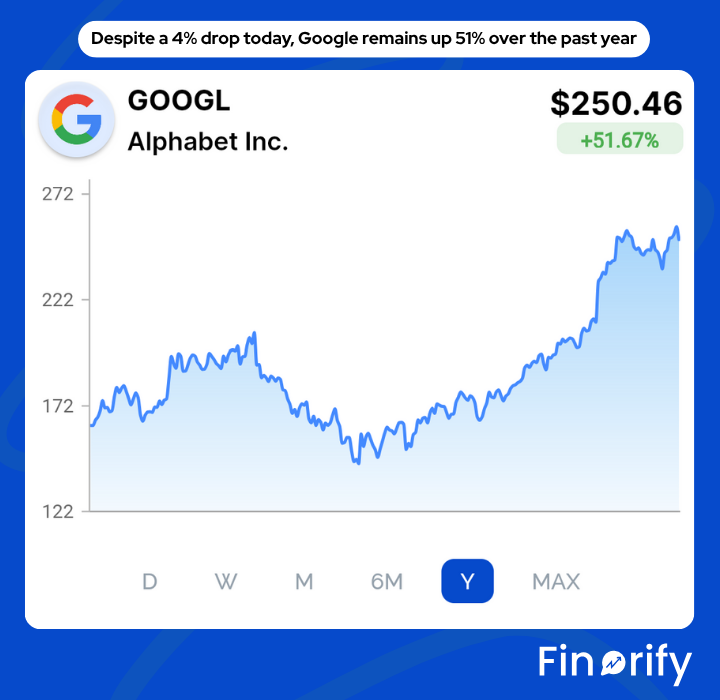
Google is one of the few companies so large that only a handful of events can move its stock by several percentage points in a day. OpenAI is one of those rare players that can.
Investors reacted strongly because this time, the challenge seems direct: OpenAI isn’t launching another chatbot, it’s going after Chrome itself. Atlas is positioned as a full browser, built around artificial intelligence rather than web pages.
That sounds disruptive. But before drawing conclusions, it helps to look at why Google is in a far stronger position than it may appear.
OpenAI can promote its browser through ChatGPT’s massive daily audience — nearly 500 million users. It can display pop-ups like “Download our browser and make it default.”
But Google’s reach is far greater.
Google owns Android. Chrome is the default browser on billions of devices. It’s integrated across Gmail, YouTube, Maps, Calendar, Docs, Photos, Drive, and YouTube TV.
If Google decided to promote Chrome across its ecosystem, every user on YouTube could see a simple message: “For the best experience, use Chrome.”
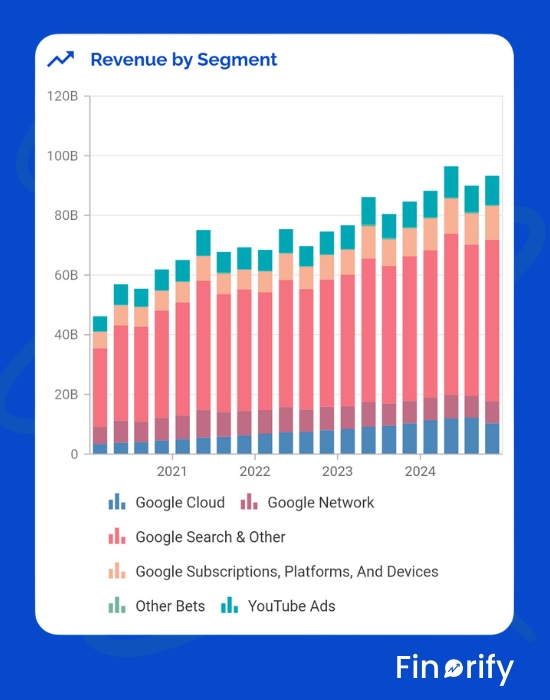
The chart above, shows why this ecosystem matters financially. Google’s revenue doesn’t rely on a single product. Search and YouTube Ads remain core profit engines, but Cloud, subscriptions, and devices are expanding fast. This diversification gives Google resilience and flexibility. Even if one part of the business slows, others continue to grow.
In practice, this means Google can defend its browser position not only with market reach but also with financial power. Each product reinforces the others, creating an ecosystem that keeps users within Google’s world. That is the real advantage competitors like OpenAI have to overcome.
When ChatGPT first launched, it was in a league of its own. Nothing matched its capabilities, and Google had to respond fast. It did.
Since then, Google has deeply integrated AI into Chrome through Gemini. Users can highlight text to ask contextual questions, perform instant AI searches on any webpage, and use AI-driven suggestions without leaving their workflow.
In short, Chrome already has what OpenAI is promising.
OpenAI will face the same issue that many competitors faced before: ecosystem dependence.
Most users’ passwords, accounts, and preferences are already stored inside Chrome, connected with Gmail, Calendar, YouTube, and Android. Asking people to move all that over to a new platform is a huge barrier.
Short-term reactions to product launches are normal, but fundamentals drive the long-term story.
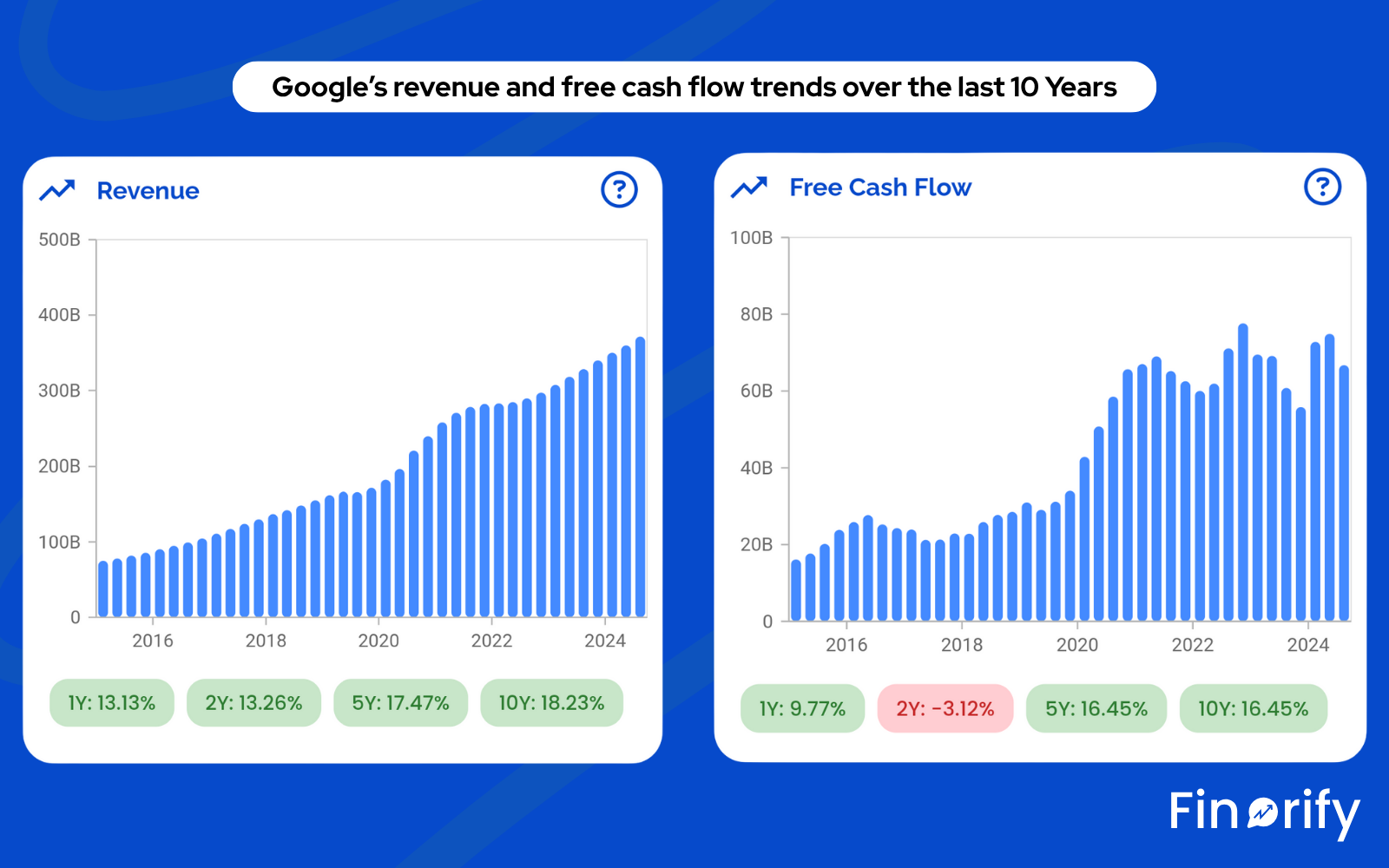
When I checked Google’s key metrics, the picture remained very strong:
Revenue growth: steady double-digit rate
Operating margin: healthy and expanding
Cloud and subscription services: accelerating
Free cash flow: massive and consistent
These numbers confirm that Google’s business strength is intact, even as the market digests new AI competition.
Atlas is interesting, and OpenAI deserves credit for pushing the boundaries of what a browser can do. But it is not another “ChatGPT moment.” When ChatGPT launched, it redefined the user experience overnight. Atlas does not create the same step change in capability or convenience.
Most users will not abandon Chrome for a new browser unless it delivers a dramatically better experience. And right now, Chrome is fast, AI-powered, and seamlessly connected to services people already rely on every day.
Google’s fundamentals remain exceptional:
Search continues to grow.
Gemini is competitive with ChatGPT and gaining users.
Google Cloud is expanding rapidly, now fully powered by Gemini.
YouTube and subscription products such as Google One and YouTube Premium are rising steadily.
For long-term investors, none of that has changed.
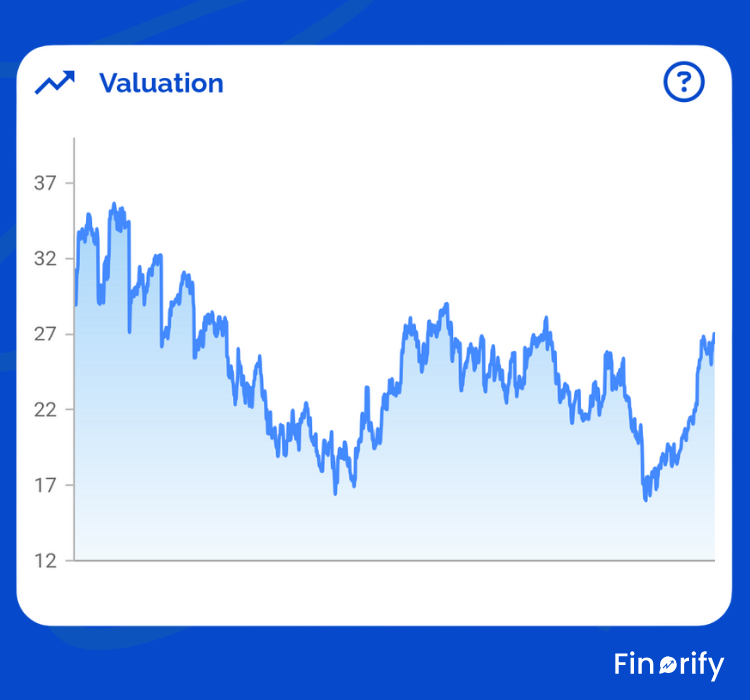
The chart above from Finorify puts things into perspective. Google’s P/E ratio has fluctuated over the past five years, but overall, valuation levels are far from extreme. In fact, compared to its historical averages, Google looks attractively priced given its growth and profitability.
This tells a simple story: the business continues to grow while the stock trades at a reasonable multiple. For long-term investors, that combination is powerful.
OpenAI’s new browser might cause short-term volatility, but it doesn’t change the long-term picture. Google’s ecosystem is expanding, its AI strategy is accelerating, and its financial position remains rock solid.
If the market reacts with another sharp dip, I would see it as an opportunity to accumulate shares in one of the most resilient and profitable companies in the world.
Competition always makes headlines, but ecosystems and execution decide who wins.
OpenAI’s Atlas will likely find its audience, but Google’s depth, distribution, and integration make it very hard to disrupt.
If you want to understand whether this dip is justified, explore Google’s fundamentals yourself in Finorify. You can visualize revenue growth, margins, and cash flow in seconds — and see why short-term headlines often look smaller when you zoom out.
No posts
Comments
Nothing yet. Say the first thing.
Sign in to join the conversation.