
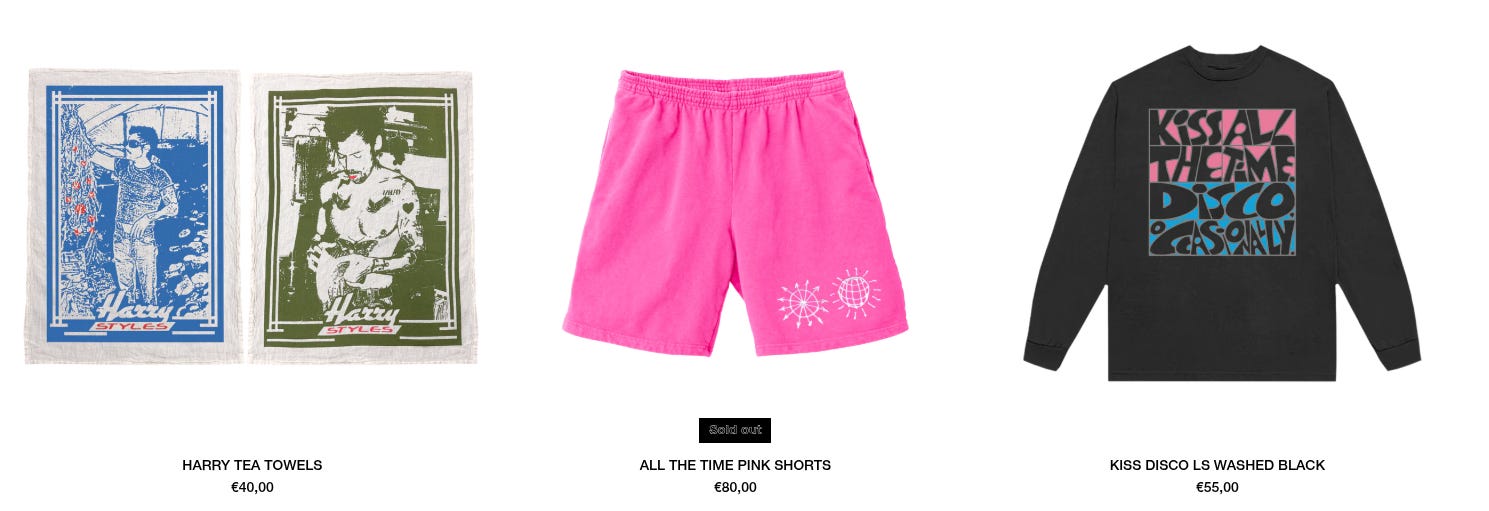
“I don’t want to sell a t-shirt with ‘Stromae’ written on it for forty times its price just to make money. No! I am trying to defend a project and tell people that I’m not taking them for fools. I have been working with graphic designers and stylists for a year; I am a craftsman. I am like a successful baker who wants to make the best bread possible. I want to do things right.”
— Stromae, at the height of his commercial success.
These words serve as the epitaph for Styles’ career, explaining exactly why he has failed as an artist and as a man.

chiara²⁸@spaceoddityxx
2026 e finalmente la gente sta realizzando quanto a QUEL cantante non freghi un cazzo di niente e di nessuno se non di fare soldi. E in primis dei suoi stessi fans, che ha smesso di ignorare (dopo anni) solo ora che gli servono per fare streaming
6:03 AM · May 10, 2026 · 327K Views
32 Replies · 62 Reposts · 2.22K Likes
Welcome to a new installment of Front Line. On the eve of the “Together Together” tour—with heaven knows whom—we analyze the motivation behind the release of “Dance No More”. This track represents the final nail in the coffin of the failed “Kiss All Time” project, which arrived stillborn and aged, like a musical Benjamin Button.


To decode the derailment of the Kiss All Time era and the visual disaster of the recent single Dance No More, we must go directly to the source: the unresolved traumas of the man pulling the strings of our Asset, Irving Azoff.
Azoff, the deus ex machina of the modern entertainment monopoly, is haunted by two great ghosts. The first is purely financial: he never managed to secure Taylor Swift’s infrastructure. In October 2025, in a statement to IQ Magazine that now sounds like a desperate act of self-delusion, Azoff set the benchmark, claiming Styles was “very close” to Swift’s level of commercial and cultural penetration. But the recording industry isn’t governed by press releases, and the mathematics have begun to demand payment.
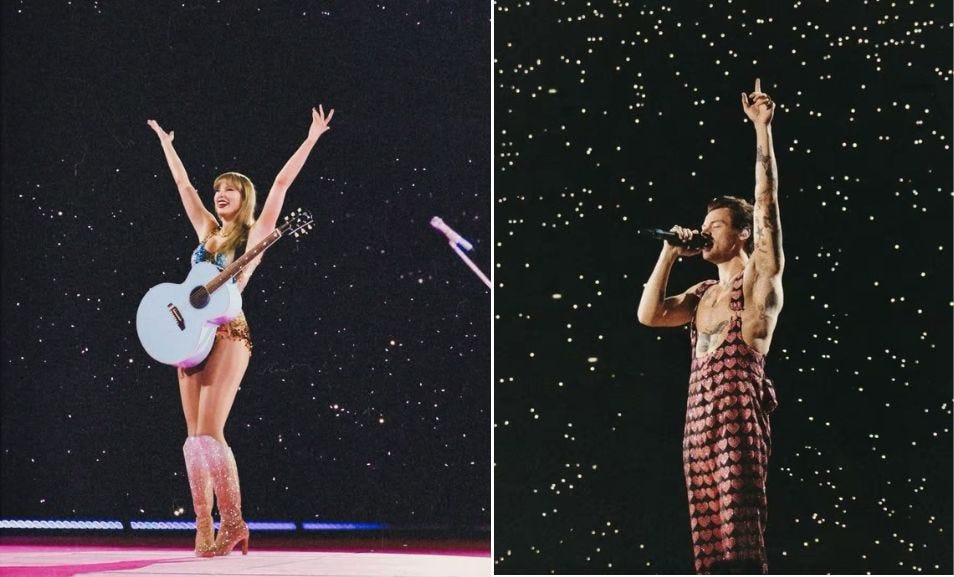
The launch strategy of this latest era revealed the chasm between the two brands. While Swift dominates through calculated scarcity—releasing only two singles from an album that functions as a cultural event—Azoff is saturating the market with three singles in a desperate attempt to find a “hit” that simply isn’t coming.
The overproduction of singles is the definitive sign of a product that cannot stand on its own. If you have to fire three rounds just to launch a tour, it means confidence in the source material is at an all-time low. The Azoff stable has plunged into the desperation economy, forcing the management to burn through a third single and video (Dance No More) at a frantic pace just before the global tour debuts this third weekend of May.
Why this overproduction of releases, bordering on algorithmic collapse? Simple: tickets don’t sell themselves if the artist has vanished from the radar of the collective imagination. The Live Nation machine, of which Azoff and his loyal Michael Rapino are the architects, relies on the practice of dynamic pricing.
To justify sky-high prices and trigger Ticketmaster’s algorithm, constant hype is required. If the organic audience is uninterested in the album, management forces the issue by launching controversial videos for the sole purpose of generating “hate-watching,” keeping the artist in the trending topics on X just before the opening date.
It is the financial technique of “pump and dump” applied to pop: pump up the attention by any means necessary, then cash out. But this time, it didn’t work.

Poema 🐝@astreseok
@zaycaruus Personnellement depuis son dernier album il me cringe de fou. Genre je regarde même plus les mv tellement ça me dérange
10:15 AM · May 8, 2026 · 2.32K Views
4 Replies · 24 Likes
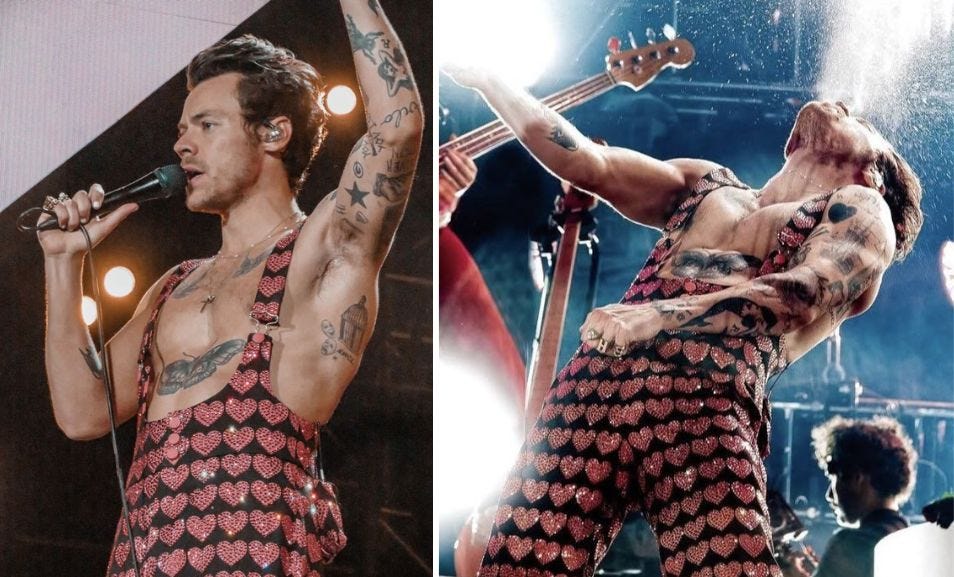
To measure the extent of this aesthetic and structural collapse, we must measure the height from which the Asset is falling. There was a time—only a few years ago—when the Styles manipulation machine bordered on perfection. In previous chapters of FLP, we saw how the North American industry progressively strips pop stars of their depth to turn them into universal Desire Interfaces.
Throughout his solo career, Styles has been the prototype of this “pornification”. This mechanism wasn’t found in grand speeches, but in a seemingly harmless gesture: the so-called “The Whale”.
For those who don’t frequent the arena floors, The Whale is the routine where Styles drinks from a water bottle and then spits it out, misting it into the air to mimic the blowhole of a cetacean.
During the “raw” phase of One Direction, this act was the epitome of horizontal communion. It belonged to the aesthetic regime of collective horseplay, a gesture borrowed from male high school locker rooms: clumsy, unattractive, but profoundly harmless. It was an anarchic spray that elicited a laugh from the teenager in the front row, shortening the distance between the stage and the audience in a reassuring atmosphere of camaraderie.
Transferred into the gargantuan machine of his North American solo career—managed to the millimeter by his shadow management—this same banal gesture underwent a monstrous operation of vertical spectacularization. There is nothing horizontal or friendly about it anymore; The Whale was absorbed, engineered, and transformed into the choreographic climax of the show.
In the new staging, the lights dim to isolate the silhouette. Harry wears shirts made of ultra-light fabrics (or unbuttoned) so that the misted water falls copiously onto his chest, activating the highly effective visual device of the “Wet T-Shirt Trope”.
The directorial focus on the giant screens is no longer on a funny or awkward expression, as it was in the boy band days, but on the toned muscle that contracts. By simulating the spasm of physical exertion, extreme sweat, or—hardly veiled—an orgasm, it creates the definitive image of erotic vulnerability.
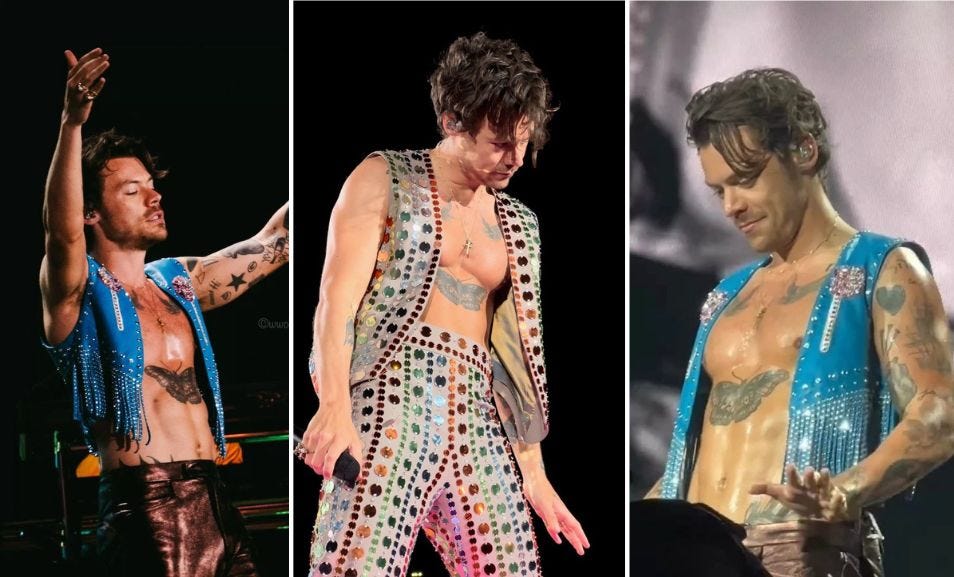
The water transforms the fabric into transparency: the wet body becomes naked, exposed. The idol ceases to be the high school friend and becomes the pornified hyper-object ready for smartphone lenses. This is the moment when, without euphemism, the paying spectator is offered the “Money Shot”.
Here, the industry reaches the pinnacle of its malice by applying the technique of plausible deniability. The pop star co-opts female objectification strategies while cloaking them in boyish ineptitude. A fan can sigh and think, “Haha, it’s just silly Harry playing!” while the neurological short-circuit triggered by the staging forces her to perceive: “He is semi-naked and wet.” Much like FKA twigs uses the pole to justify the striptease, Styles used the “jock game” to legitimize the visual sale of sex, sparing himself the burden of appearing explicitly like a Las Vegas stripper while pocketing all the erotic dividends.
Clumsiness is surgically removed and replaced by a high-yield fetishistic sheen. The Whale plastically demonstrates the true nature of the Stars and Stripes gear: spontaneity cannot exist unless it is encoded for revenue. The individual dies to be reborn as a lubricated, perfect, and domesticated interface.
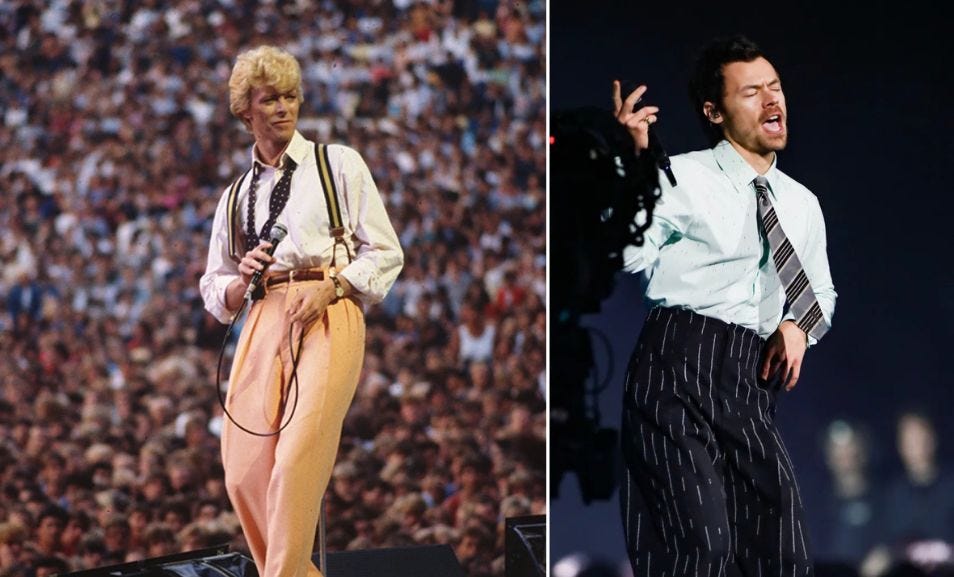
And here we arrive at the present day: the crash of the illusion against the wall of 2026. Age is advancing, the wear and tear is showing, and the “fake innocent” gear is jamming in a music video, Dance No More, which acts as a warning light for the terror currently gripping the upper echelons of Live Nation.
This is where Irving Azoff’s second trauma enters the frame: David Bowie. Azoff’s obsession with the Thin White Duke and his historical inability to control Bowie’s androgynous chaos has driven the manager to impose a grotesque reconstruction upon his docile protégé.
The “suit and tie” look of the Kiss All Time era is a blatant attempt to mimic 1980s Bowie—specifically the Bowie of Let’s Dance and the Serious Moonlight tour. But whereas Bowie used that polished aesthetic to consciously conquer the charts and fund a decade of artistic independence, Styles is being force-fed into it. It is the only corporate template his handlers know for conveying performative queerness in American stadiums.
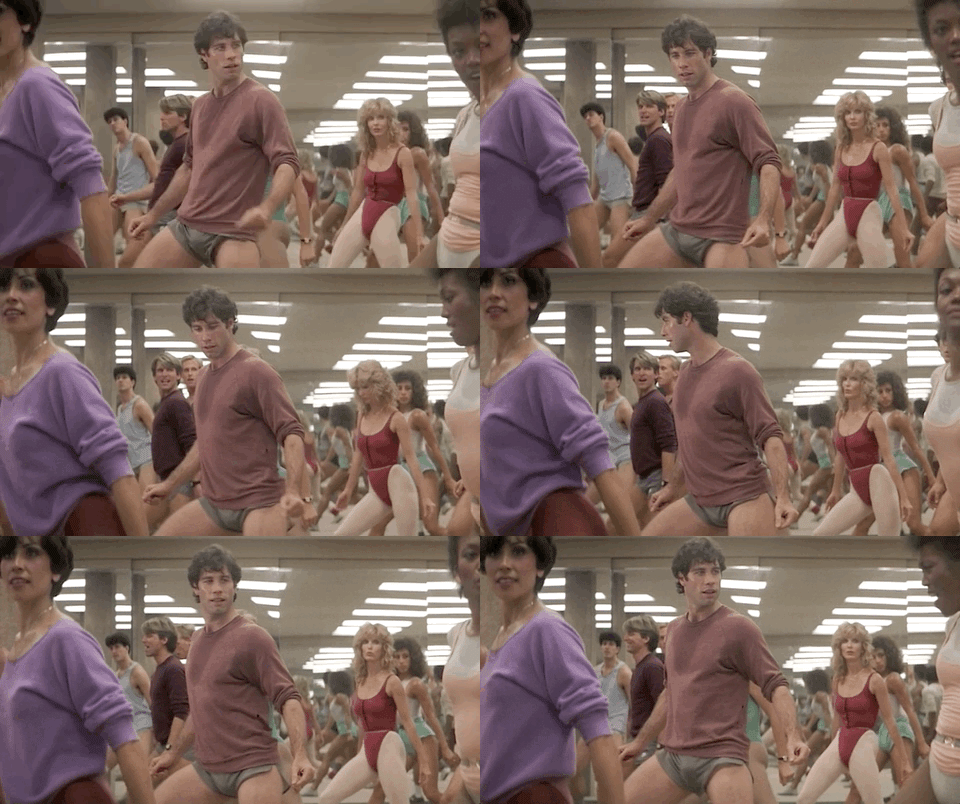
The result is a fast-fashion aesthetic disaster. Dance No More is a head-on collision between the iconic “Perfect” scene featuring Travolta and Curtis, the group dances of a budget holiday resort, and a pretentious imitation of the orgiastic finale from the film Perfume. There is a clear desire to replicate the sweat and clubbing coolness of a track like Troye Sivan’s Rush, but the execution is shoddy; it looks like the version accidentally ordered on Shein.
Further exasperating the audience (who are currently in an uproar on X) is the now-unbearable and stale “dual-track” PR strategy employed by management. Today, these PR moves are as transparent as the watermarks on banknotes.
The sleight-of-hand between the performative homoeroticism of the videos and traditional gossip has become too predictable.

fab@sugaboow
why is he fagging out… he is literally marrying a woman. i’m so done with his queerbaiting…

harry styles feeds @harryfeeds
IM SHAKING?????? HARRY STYLESSSSS
6:32 PM · May 7, 2026 · 3.38M Views
515 Replies · 1.96K Reposts · 59.7K Likes
On one track, social media hype is fueled and the “stan” wallets are tapped via gay kisses on Saturday Night Live and suggestive clips of pseudo-queer orgies. Simultaneously, on Track B (the one dedicated to reassuring boards of directors, Wall Street, and the Midwest housewife), the subject is promptly photographed in the street holding hands with Zoë Kravitz. Generalist media outlets, complicit as ever, spout nonsense about official engagements and rings on fingers just one week prior to the video’s release.
This binary marketing assumes a naive audience, divided between “stans” dreaming of a coming out and tabloid readers dreaming of a wedding. But in 2026, with an increasingly literate public, this strategy is anachronistic. In fact, only three people still believe in this performative “fluid-washing”: the video’s director, Irving Azoff, and the figurehead Harry Styles, who remains terrified of contradicting his dominus.

Valkiria@Valkiria121212
@biebrntion porque hace esto? es una persona totalmente diferente del que hizo sign of the times o esa balada triste de falling, no lo necesitaba...
12:11 AM · May 8, 2026 · 37.5K Views
4 Replies · 2 Reposts · 319 Likes
For the rest of the world, queerbaiting—once used as a sharp cultural lockpick—has been reduced to the equivalent of a cheap wholesale t-shirt: not even good enough to use as emergency pajamas. The “GP” (General Public) is no longer interested in this “now you see it, now you don’t” routine because they’ve realized it’s just brand management.
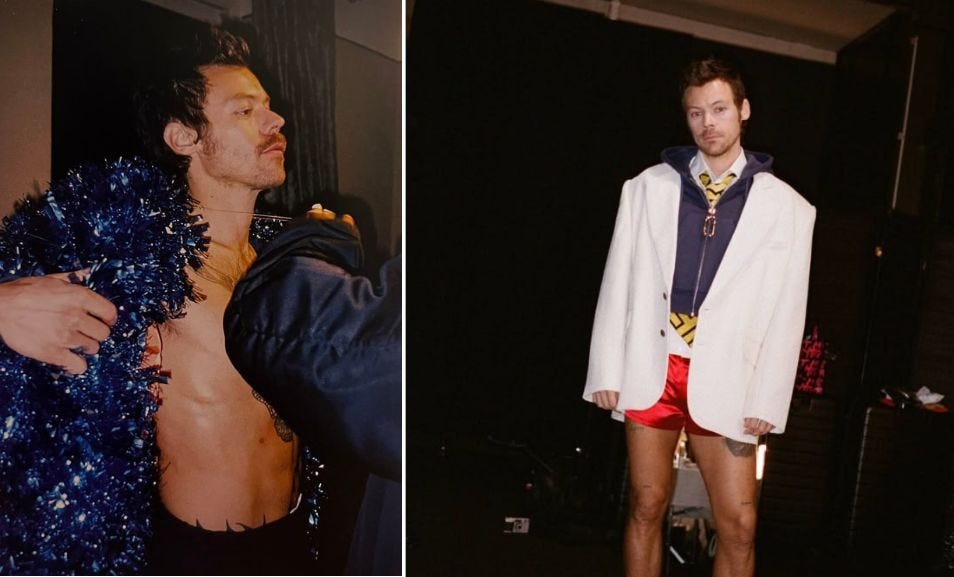
The personality-cult-based pop industry treats the artist’s image as a financial asset subject to depreciation. Styles’ aesthetic shift—perceived by the public as a loss of “appeal” and visual vigor—directly impacts the market value of the project.
The violent rejection of the Dance No More aesthetic forces us to confront a taboo. The recording industry is a meat grinder, but we have traditionally only studied “ageism” in relation to female pop stars. Styles is sadly demonstrating that when a man is pornified and used as a mere surface-level asset devoid of songwriting depth, he is subject to the same “planned obsolescence”.

fire lord yoncé@rickysgroove
Men have their own clock! We don’t like to admit it but it’s true you can’t be the it-boy forever
5:28 PM · May 8, 2026 · 40.3K Views
4 Replies · 7 Reposts · 1.24K Likes
Styles turns 32 in this era, and the consensus (not out of vulgar body-shaming, but because it is objectively the case) is that these are 32 years lived very hard. The hardware is visibly worn out, his body weight has plummeted, and the chest volume—essential for selling “The Whale” choreography—has vanished. Yet, the corporate board still forces him to run that old, fluidly suggestive “camp counselor” software.

ophelio@lovelybride89
This album flopping is just explained by how suddenly women stopped finding Harry attractive. He looks old and he’s bald so everything he does is found cringy. Crazy bc this used to affect women more back in the days

Spotify Numbers • unofficial account @Spotify_numbers
'Kiss All The Time. Disco, Occasionally.' by Harry Styles received 5,915,189 unfiltered streams on the Spotify Counter on May 6 #SN_HarryStyles
2:20 AM · May 8, 2026 · 304K Views
92 Replies · 125 Reposts · 5.53K Likes
If the primary spending motivation for the target demographic lies in projecting desire onto an idealized image, the decay of that iconography compromises the economic sustainability of the tour. If Styles loses his visual “glamour”, what remains is an artist who lacks the vocal or creative stature to sustain a world tour based on music alone. Azoff sold Styles as a long-term investment, but the “product” is deteriorating faster than anticipated.
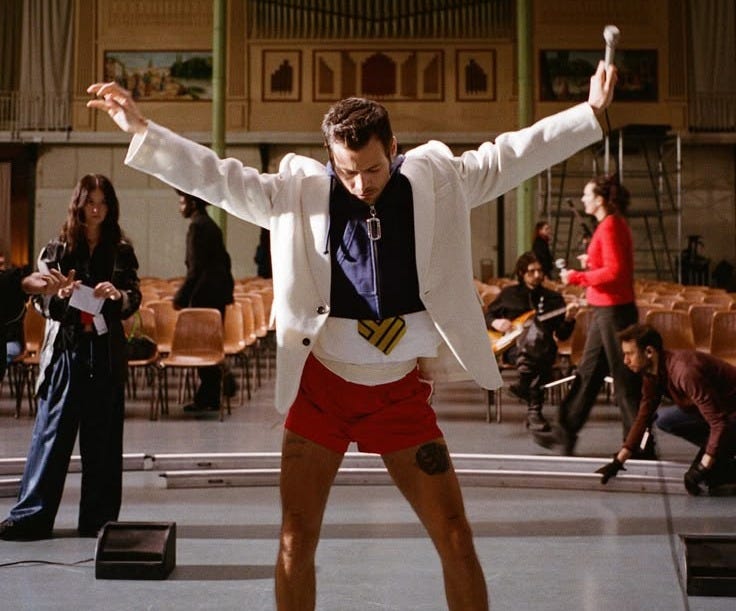
The Dance No More video, with its anachronistic aesthetic references and a staging that borders on self-parody, signals the end of youth as a “use value”, exposing a creative void that no choreographer can fill.

alex@dontblamealex
He doesn’t have the sex appeal to be doing this

Pop Crave @PopCrave
Harry Styles in the “Dance No More” music video.
6:40 PM · May 7, 2026 · 5.88M Views
760 Replies · 9.41K Reposts · 224K Likes
In this context, the Dance No More video acts as a disincentive to purchase. Those undecided about whether to sell their tickets (given the insane costs of fuel and hotels in 2026), upon seeing Styles fall so low, are finally opting for the resale market. Instead of launching the tour, the video is accelerating the flight of fan capital.
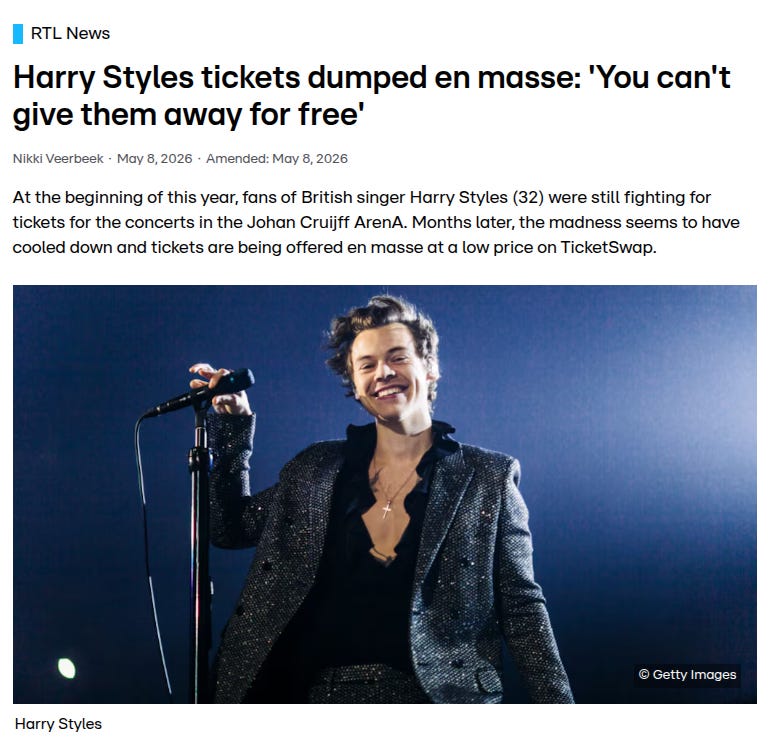
What was the real catalyst that sent panic through the high offices of Live Nation, forcing them to rush the release of a slipshod music video like Dance No More just days before the tour’s launch? The answer is not found in TikTok trends, but in a literal financial bloodbath currently unfolding in the heart of Europe.
The hubris of Irving Azoff and Michael Rapino led them to attempt an experiment in extreme extractivism: importing the “Residency” model—previously reserved for Las Vegas veterans—and applying it to the Together, Together Tour, citing weak justifications mindlessly echoed by the Asset itself.
Instead of absorbing the logistical costs of a standard traveling tour, they anchored Styles to a handful of locations—including ten consecutive dates at the Johan Cruijff ArenA in Amsterdam—effectively dumping the entire burden of travel costs (flights, trains, soaring hotel prices) onto the shoulders of the European fanbase.
The miscalculation was fatal: they treated the audience of a thirty-something pop idol as if they were the upper-middle-class, retired audience of Céline Dion.
The impact on the real economy was immediate. In recent days, the Dutch national press—from RTL Nieuws downward, with a deluge of investigative articles—has been documenting the collapse of this model. The RTL report, the first to break the news, confirms a systemic short-circuit in the “residency” economic model applied to the Harry Styles brand.
The massive influx of tickets onto the secondary market (TicketSwap) at prices far below face value indicates that the strategy of artificial scarcity—concentrating supply in only two European cities to spark a “buying war”—has collapsed under the weight of logistical costs and product saturation. Fans, realizing they cannot sustain travel expenses, are dumping tens of thousands of tickets.
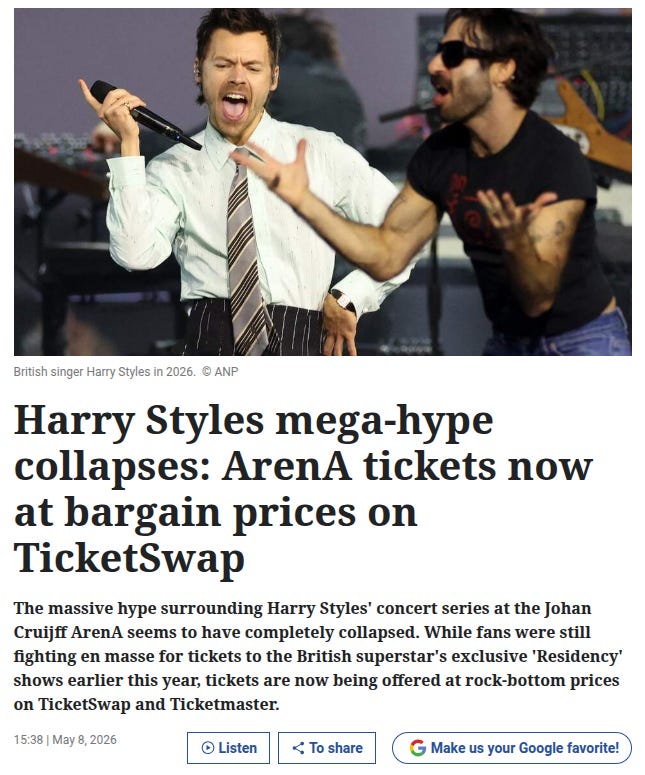
We are talking about standing packages originally valued between €140 and €315 being literally offloaded for €50 to €70 just to mitigate losses. As one local journalist ironically noted: “You couldn’t even pave the streets with these tickets.”
In terms of ticketing, we are witnessing a rare “Front-to-Back” system collapse. Usually, arenas sell out the high-margin front sectors first; in Amsterdam, the exact opposite happened. The third and second tiers (the cheapest and most distant seats) sold out organically, while the exorbitantly priced front rows, the floor, and premium sections boast embarrassing voids. Fans, decimated by inflation, want to be there but categorically refuse to be squeezed for €200 just for arena entry.
But there is an element that transforms this financial debacle into a case study of power dynamics: absolute censorship. While Dutch newspapers and TV stations dissect the disaster without restraint, the Anglophone press is immersed in a tomb-like silence. Not a single major outlet in the UK or the US—markets where Azoff’s PR team distributes or revokes credentials and Golden Circle access like mafia favors—has dared to translate and report on the bubble bursting in Amsterdam. Only a few Dutch or German outlets have taken the trouble to release the news in English.
The fact that major Anglo-Saxon outlets avoid reporting on the ticket “dumping” is a calculated measure to protect the value of the Styles Asset ahead of the tour. Admitting commercial weakness would jeopardize future negotiations with sponsors and promoters.
It is within this informational and financial black hole that the real purpose of Dance No More becomes clear. Live Nation looked at the red maps of unsold floor seats for the coming week and panicked; they needed to create an instantaneous algorithmic short-circuit.
The saturation of singles and the ticket firesale are unmistakable signs of an era that has exhausted its momentum. If this “price carnage” continues, the tour risks opening with visually half-empty arenas, destroying the illusion of commercial omnipotence upon which Azoff built the entire Kiss All Time operation.
This entire gargantuan, multimillion-dollar, and desperate scaffolding is crumbling against the only obstacle Live Nation cannot permanently hack: the General Public.

💋🪩@harrysangelsue
157k likes on that tweet saying harry has no sex appeal … there rlly is a whole other world out there damn
11:02 AM · May 8, 2026 · 46.7K Views
22 Replies · 62 Reposts · 1.82K Likes
When analyzing real metrics outside the manipulated bubbles of social networks, the rejection of this recording era is total. There is an unbridgeable cognitive dissonance between the die-hard “stans”—ready to trend every breath of their idol to validate their own consumption choices—and the cold reality of the outside world. To the General Public, this Harry Styles is no longer interesting. He doesn’t intrigue, he doesn’t scandalize; he simply bores.

Dancing through the lightning strikes@Miss_AshG
2026 Harry Styles is what happens when your entire fanbase centers around the former pre-teens that were obsessed with you when you were in boy band “heart throb” He’s been a nostalgia act this whole time if we’re being honest

Sedgrick @ctrl_sedgrick
What happened to Harry Styles like woah. Nobody cares and I think that’s worse than people not liking you. 😭
6:16 PM · May 9, 2026 · 63.3K Views
10 Replies · 42 Reposts · 1.62K Likes
While the media omnipresence of a Taylor Swift forces even her fiercest detractors to engage with her narrative (thus maintaining her vital impact on the general market), the simulacrum created by Irving Azoff is rapidly sliding into cultural irrelevance. The parasocial pact that held the sensibilities of millions of fans hostage is showing irreparable cracks, precisely because the mechanical artifice has become visible to the naked eye. No one believes in the “romance” of arm-in-arm appearances with it-girls (Zoë Kravitz) alternated with prêt-à-porter homoerotic dances fed to social media.
Ultimately, the Live Nation board knows perfectly well that Kiss All Time will not define the musical Zeitgeist of 2026. The era of cross-sectional consensus is over. From now on, the sole objective of the “Harry Styles” project will be confined to pure, ruthless extractivism: locking the artist inside the gilded cage of a world tour with inaccessible prices to financially vampirize every last cent from the hardcore fanbase that still resists, blind to the decline of their favorite.
Azoff wanted the scalable omnipotence of Taylor Swift; he hoped he had created the new David Bowie. In the end, the system’s infinite greed has left him holding only a tired Frankenstein, stitched together from the scraps of old PR stunts, condemned to dance on command while desperately hoping someone keeps buying the discounted tickets just to watch him.

FLP is an independent publication dedicated to demystifying the music industry by revealing the intricate, often ruthless interplay between finance, art, and politics.
Our goal is to shed light on the inner workings of the ‘Machine’, empowering consumers of cultural products to make fully informed choices and reject corporate manipulation.
All articles are freely accessible. In a market that monetizes division and ignorance, I believe that undeniable facts and deep-dive knowledge have the power to unite divergent viewpoints.
True independence, however, relies entirely on its readers. If you appreciate this deep-dive journalism and wish to support the ongoing research behind FLP, a voluntary donation is greatly appreciated.
Comments
Nothing yet. Say the first thing.
Sign in to join the conversation.