
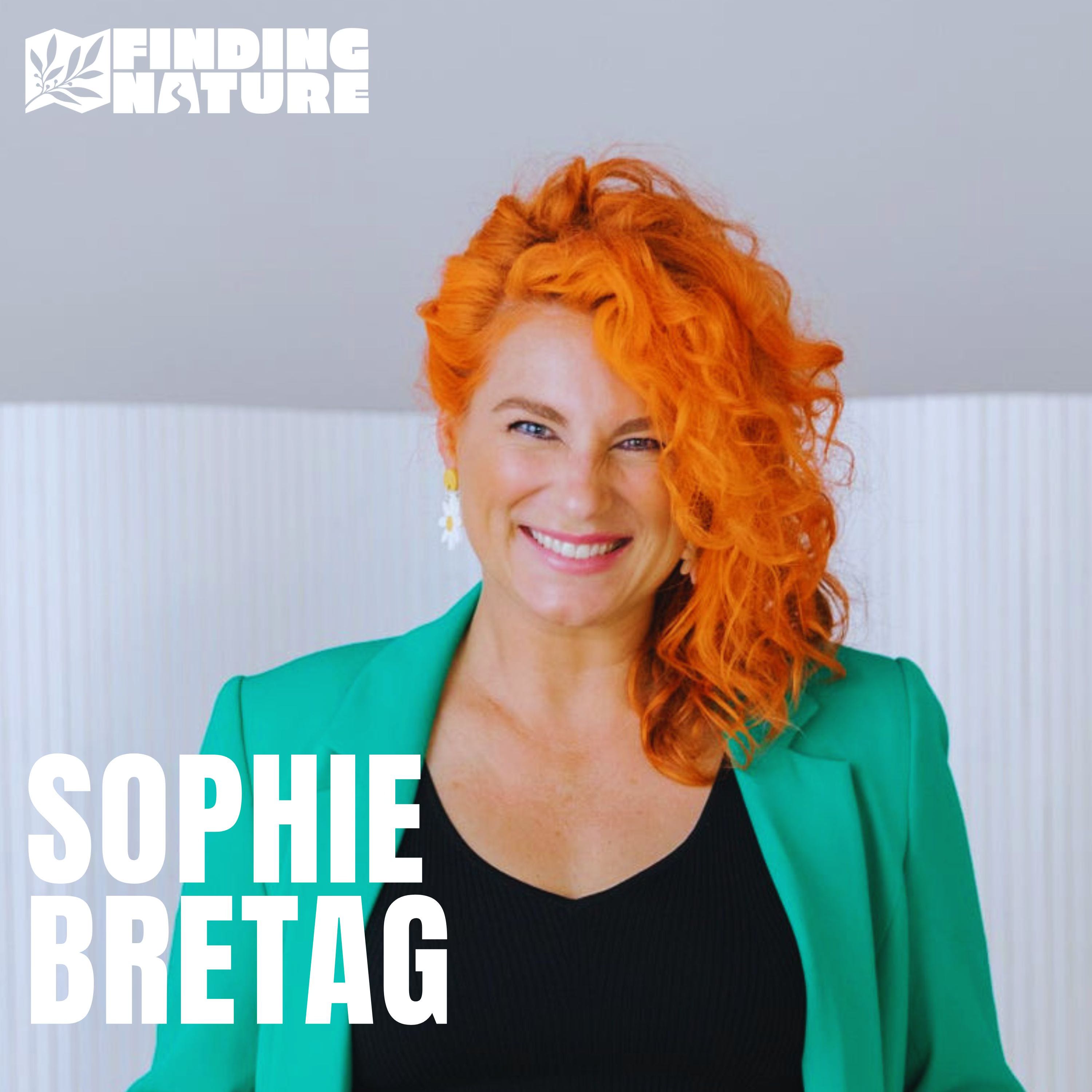
That’s Sophie Bretag, I’m Nathan Robertson-Ball and this is the Finding Nature podcast. The modern professional seems to lead a life of ever-increasing juggling complexity. As the expectations mount and the speed to meet them grow, at the same time trying to manage the circumstances of our individual personal lives and all while supporting friends or colleagues or parents or kids or any combination of relationships, things can seem barely manageable on a day to day basis. Everyone’s busy, everyone wants to do and live well, including me, but what are we losing as we traverse these paths that aren’t for the faint of heart, and what’s it doing to our relationship to work, and how are workplaces and organisational cultures leaving us feeling?
Not great is the simple answer. From exhaustion and burnout to ever rising rates of serious mental health conditions, growing proportion of people working in insecure jobs, the spectre of organisations redundacy’ing their workforces in service to the broligarchy and investor demands. That’s been me and it all got to much for in the past, and that’s why Sophie’s new book ‘The Kind Way; The Life-Changing Metric for Leadership, Success and the Human Spirit’ stood out and resonated so strongly.
Oh god, kindness. Really? That thing we try to instil in children but dismiss as weak or unnecessary or incompatible in modern workplaces - yes, that kindness. Sophie’s book diagnoses the sickness afflicting organisations that disconnect and dehumanise us, that favour productivity over partnership with the people who work in them, and then charts a course where kindness and success are not in tension with the other. The Kind Way spoke to me for other reasons too in how to make good and attempt to reform the places we work through a simple - but not easy to implement - four pillar framework that requires knowing yourself, intention inclusion, nurturing capacity and leading consciously.
Sophie Bretag has lived and breathed organisations - their design, their cultures, their operating protocols - and experienced the fear and despair of serious health episodes several times over. She’s on the show today to help us all remember who we are, that we don’t have to sacrifice how we behave and who we are in the pursuit of high performance, and that being kind may just be the secret ingredient required to put the human spirit back into workplaces.
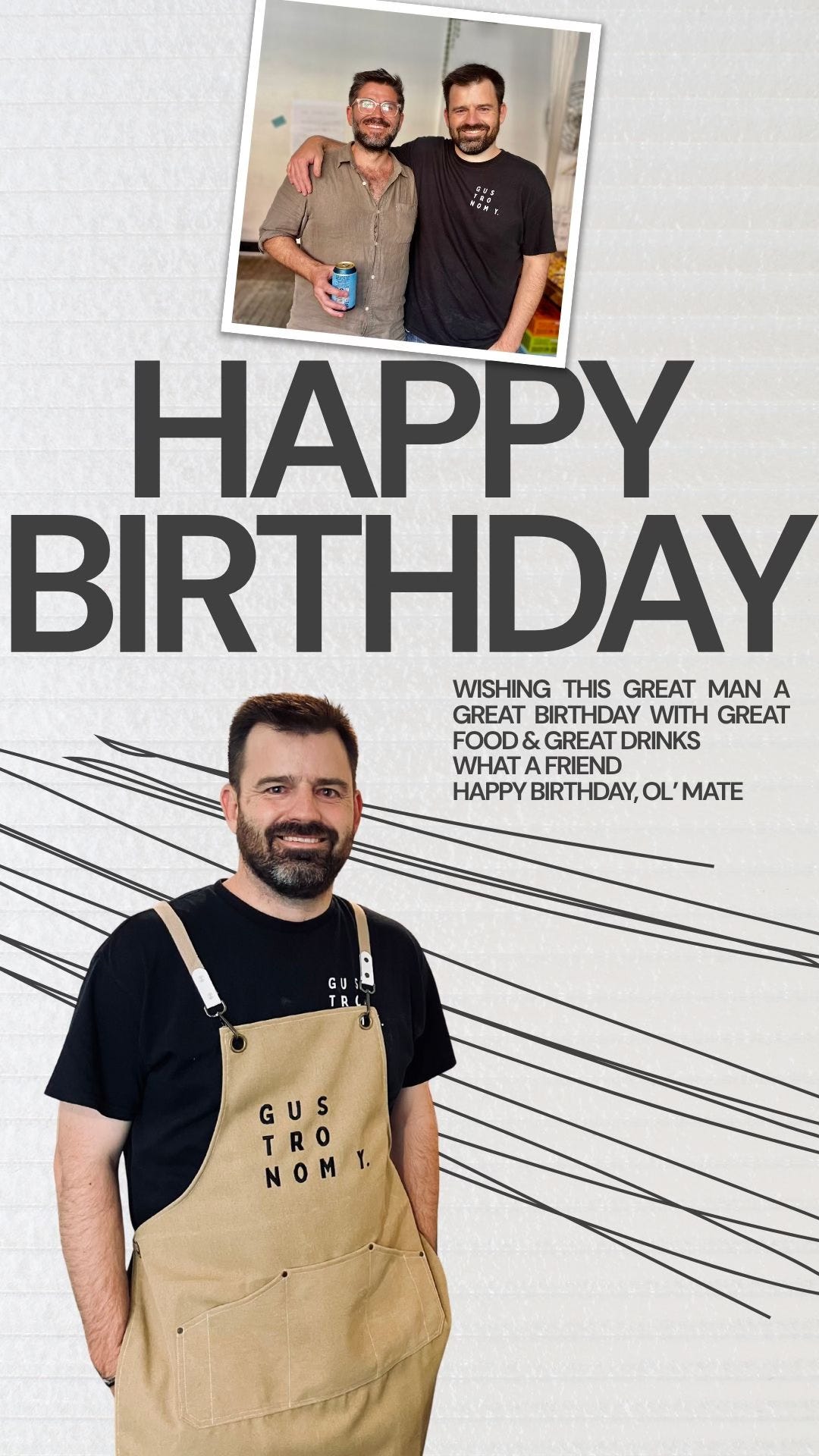
A very big and entirely heartfelt happy birthday to Finding Nature’s literal secret sauce, Gus. Yesterday he clocked up another year around the sun, and it’s pleasure and privilege to have him in my life, his food at the events, and this friendship as a source of comfort and joy.
To many more!
Each week I find three resources from the Altiorem library to supplement the conversation I’ve had. Today, check these out to further your intellectual stimulation and generate your creative juices.
Applying the OODA loop for leadership and company engagement
Holding the Line: A Playbook for ESG Leadership in Hostile Terrain
Women in business leadership boost ESG performance: Existing body of evidence makes compelling case
Last week’s Supper Club write up
Shantaram is one of my favourite ever novels, and a theme of the book is the exploration of life’s greatest mystery (to me) - the universe’s creator, God, Higher Power, the mystery of life and living - however you name it. Khaderbhai describes the philosophical concept of “ultimate complexity” which posits that the universe naturally evolves from simple origins towards a state of ever-increasing complexity. The idea resonates with me, that everything is both dynamic and as a result ever evolving, ever changing towards states of greater and greater detail, the number of shades of grey between the binaries of black and white always growing.
Humanity’s perception of the march to progress over recent centuries has focussed on the illusion of simplifying, or removing complexity, of taking away unknowns under the delusion that we are in control. As I read recently, ‘humans have been waging a war on nature, and now nature is fighting back’. We are nature, and nature is us. Our belligerence regarding the complexity of reality has and still manifests as the destruction and degradation of landscapes and ecosystems everywhere.
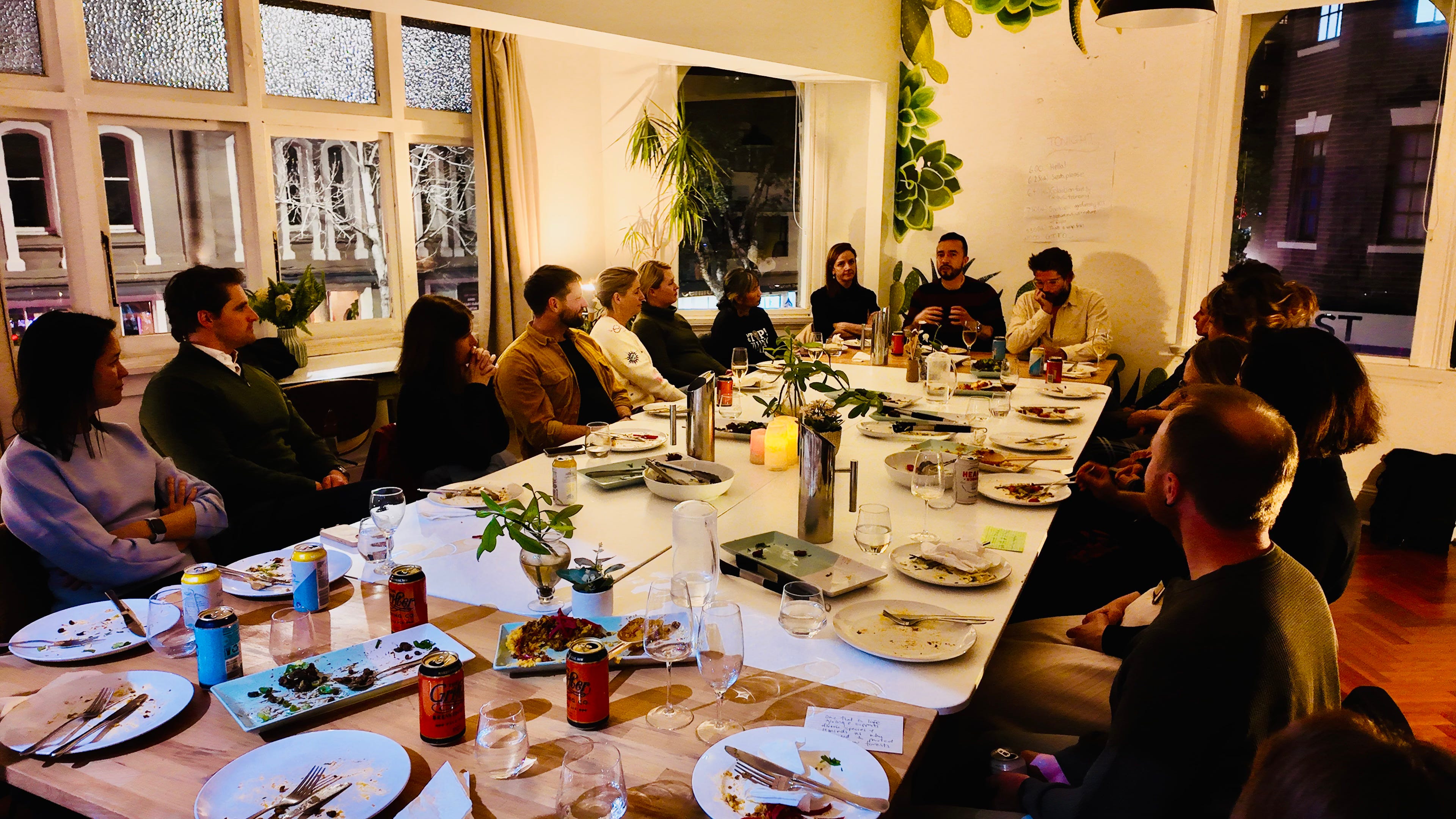
Last night’s Supper Club; ‘Living Systems Regeneration - Our Path To Coming Home’ was all about this. Rupa - Oscar Amaya Hernandez was our special guest and few over the course of hosting about 30 of these nights has someone impressed so comprehensively. His expertise - syntropic agroforestry - is the pursuit of accelerating the process of ‘ultimate complexity’ to create flourishing forests full of food, biodiversity, that hold water and carbon while creating legitimate and enduring sources of revenue and preserving and re-awakening cultural practices. It does sound too good to be true, but the science is legitimate and his and many others work demonstrates the remarkable potential for how nature - and ours with it - can be restored.
It’s not straight forward to pull off, requires deep contemplation before getting into action and an ongoing commitment to managing the evolution of complexity. We chatted about the role of capital, the ability to build experimental plots, how grafting is an essential practice to speed up the growth of these forests as well as how any and all goals for a landscape can be attained with syntropic agroforesty methods.
This was a really special night, and Rupa’s arrival in Sydney - and Australia - is significant. I know many out there who will learn so much from him, but also help him become accustomed to the landscapes of this continent and the potential to make a real dent in the array of living system regeneration needed.
Gus_tronomy was again on fire with the food - Colombian this time to honour Rupa’s heritage.
Thank you to everyone who came, your trust in attending these is deeply appreciated.
Lastly, what type of forest do you want to grow?
Catch this and more on my LinkedIn and Instagram.
"Temper your sense of justice."
The Australian Conservation Foundation have launched a shareholder resolution against Commonwealth Bank this week asking for what should be a straight forward question - what's the plan to stop enabling the degradation and destruction of landscapes on your watch and dollar?
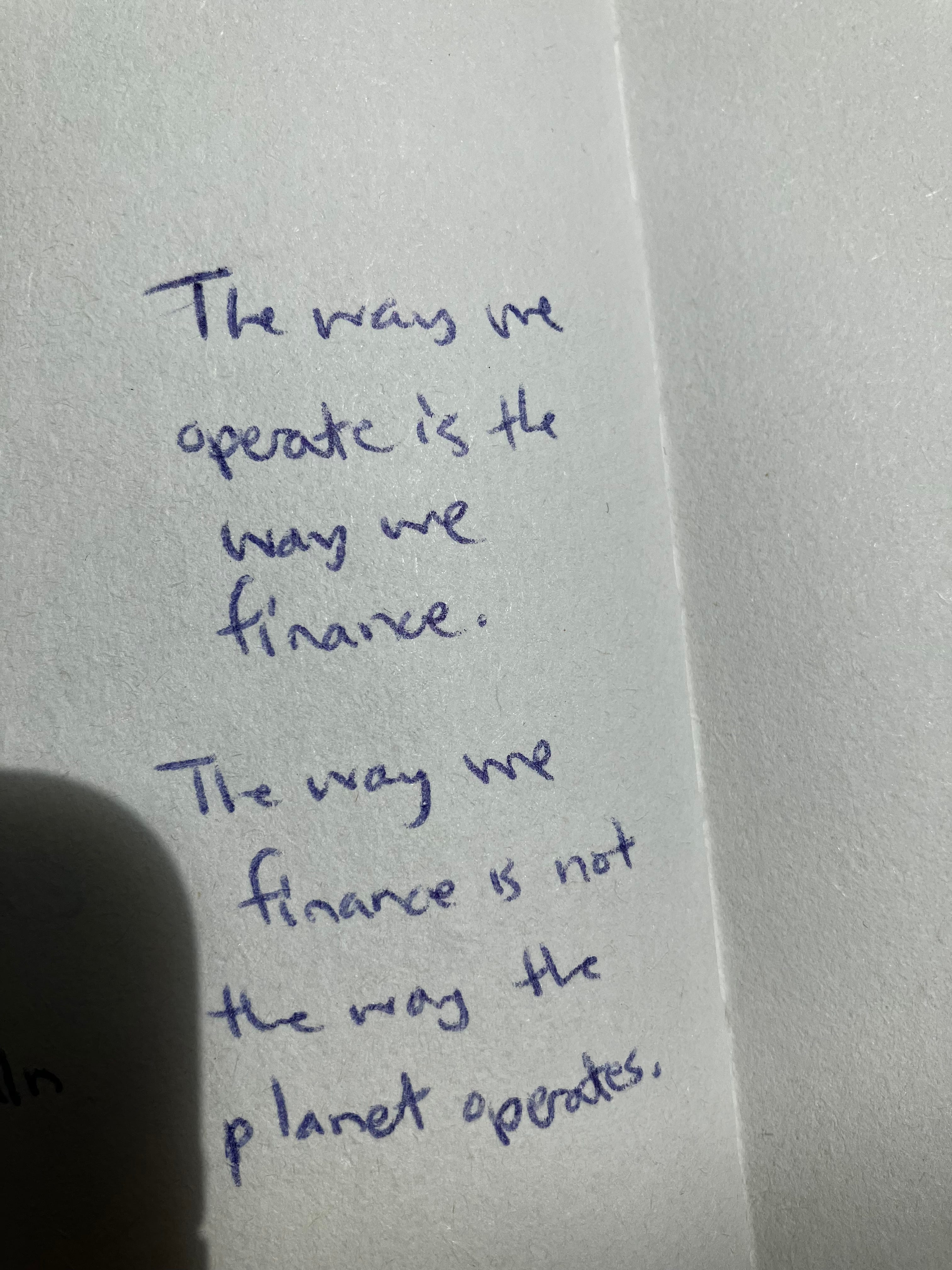
This week I'm going to try and lay out some broader framing and context to help better appreciate the operating priorities, the values informing decision making (shock horror, it's not phoney values nor make believe ethics frameworks) and how it's the people in these organisation who are enabling and facilitating the degradation and destruction of landscapes and ecosystems, not 'banks'.
I want to start the week with the broadest possible framing. A wise man (Chris Andrew) shared the metaphor in the image with me, and we've continued to work and riff on how the financial system locks in damage, loss, worse best decision making for farmers and the potential for ruin without the ceaseless need to repay loans by destroying more land. I heard shocking stories in my time at CBA, dating back to beginning in 2017 when the sector's reputation was destroyed. Much came out in the ensuing Royal Commission and regulator investigations, but what's changed when the underlying products available still favour short term commercial return for the enterprise and leave the interests of people, communities and ecosystems as externalities to be ignored (despite having the means to at least document and disclose them).
It's sad it's come to this. There are excellent and capable people there. In my recent conversation with Katherine Trebeck she spoke about 'system compliance fixes' and that is the crux of its dominant culture. Get along to go along. It's disappointing outside actors are needing to drive this type of action when the purported organisational purpose, values, stakeholder engagement processes and governance controls don't do the thing they're meant to.
So in the spirit of one of the most famous lines from that infamous 2018 Royal Commission and one of the central characters from it, whatever happened to that sense of justice?
No posts
Comments
Nothing yet. Say the first thing.
Sign in to join the conversation.