
Fewer and fewer people, apparently! According to Fast Company, it is all about personal boundaries and sanity.
Here, two things are true at the same time.
One, we are in a massive leadership crisis. I have been talking to a brilliant former CEO who now coaches senior executives, and he notes that the pressure and stress of senior roles is now so extreme, that he fears the best people are turning down the opportunity. So, we are left with a bunch of people who have no business being leaders in the first place.
Two, we have way, way over-centered work in our lives for several decades. Perhaps ambition is changing. The pivot away from overwork is healthy, refreshing, and worth celebrating.
Those two forces — the pandemic and social media — inspired many to reevaluate how work fits into their lives, and question whether the expectations that came with career advancement were worth the trade-off, Escalera says.
According to a recent survey conducted by global HR company Careerminds, one in three workers turned down a promotion last year. The top reason respondents gave for doing so was that they didn’t want to lose their current degree of work-life balance. Furthermore, 16% said the pay increase was not worth the extra responsibility, and an equal proportion said it wasn’t worth the extra stress.
“It’s not that people are necessarily less ambitious, but that they’re defining success differently than before,” says Careerminds certified professional career coach Amanda Augustine. “It’s not enough just to get a better title and a bump in pay. They’re really looking at what that promotion means; not only for my career, but my personal life.”
People sure had a lot to say about this! Reader Allyson Shane Carroll had the comment of the week, wryly asking, “who would have thought that hollowing out middle leadership with constant re-orgs and no investment in talent development would have consequences at all levels?”
Just an idea, but maybe we could use the productivity gains of AI to give people more fulfilling careers? As opposed to an overriding sense that they are expendable resources, training technology to replace them?

My weekly long read this week is a guest post by beloved friend Stephanie Dolmat. She writes about why she left her corporate sustainability job, offering a sharp and deeply uncomfortable critique of the role, the pressures, the corporate virtue signaling, and the unbelievable stress of being someone who deeply cares, feeling cornered into performative, pointless tasks. And it seems to have struck a nerve with readers. We have both been overwhelmed by messages from people saying they felt so seen by the piece:
No, leadership did not really want change. Yes, it was wrenching to have a boss who “got it” and then suddenly get another boss who didn’t. Yes, it felt like backsliding to be unceremoniously moved from an integrated functional team to an island disconnected from company operations. Yes, I was super frustrated that my new boss had too many jobs and didn’t have time for me. Yes, I was constantly scrambling to find ways to get things done while trying to protect my teams. Yes, the endless emails and meetings crushed my soul to the point where my day-to-day felt entirely outside of my control. No, it didn’t seem normal to me either to be crying nearly every day about work. When I was described as a “firecracker” to the Board of Directors, I knew it was not a compliment. When the person who made it all bearable left the company abruptly, I was told “you’ll find a new work wife.” I didn’t. That’s not how any of this works.
That’s not all! The bigger story is about personal transformation, risk, courage, and what it takes to set sail and live a new life on a boat in the South Pacific.
Read it! It’s beautiful. I am so proud to feature her work!
Why I Left My Corporate Sustainability Career
·
Aug 19
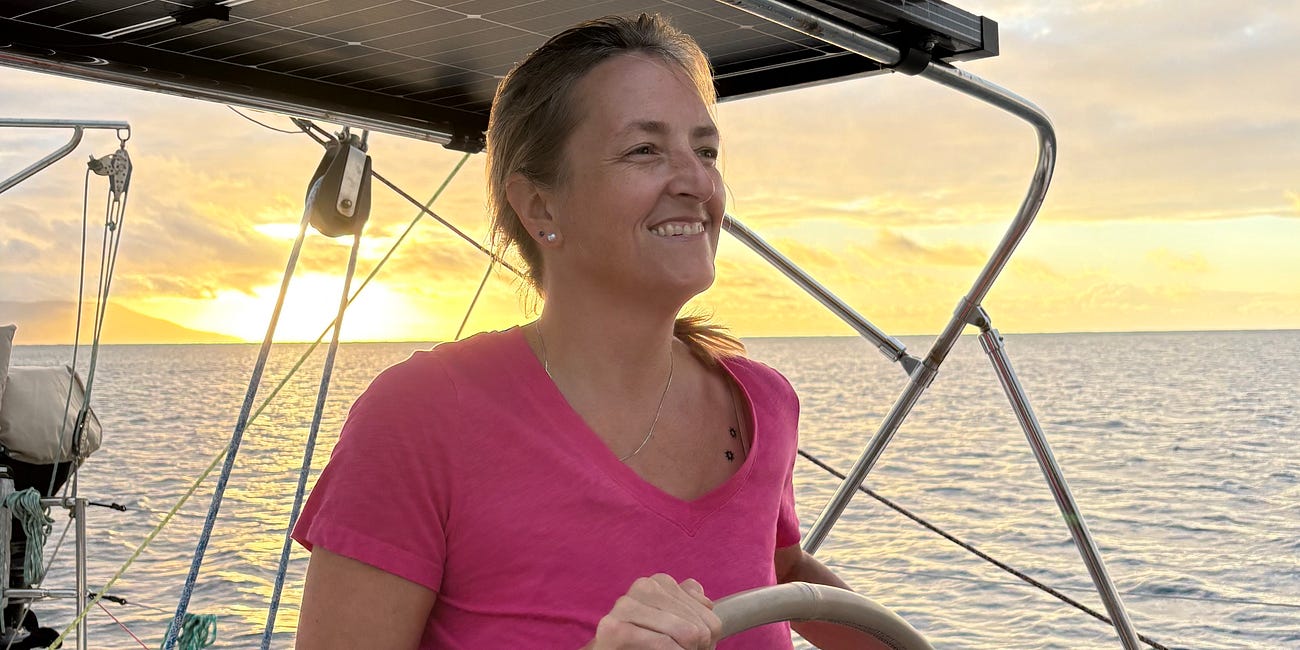
I have never held a corporate sustainability role, despite years of consulting in the space. Today, I am sharing the brilliant account of someone who had such a role, and who left it to follow other dreams and another vision of how to live and who to be. My dear friend
Have you noticed that brands are all maxxing and mogging this summer?
“Marriott recently pitched Labor Day hotel stays for “weekend maxxing,” Harry’s joked that its new razor was great for “jawmaxxing,” and the Cheesecake Factory floated “cheesecake-maxxing.” Carl’s Jr. this summer released a Spicy Chicken Maxx sandwich.”
This is pretty interesting, as looksmaxxing and mogging all have their roots in disturbing, often misogynistic online discourse around incels and pick up artists. Indeed, Clavicular is claiming credit for coining the term.
I spoke to Patrick Coffee at the Wall Street Journal about this, pointing out that, like six seven, when brands dive in, it is usually a sign the term is already over the hill:
“The rush by big advertisers to use “maxxing” and “mogging” may be a sign that the language’s cultural relevance has peaked, said Alison Taylor, a clinical associate professor of business and society at New York University who specializes in corporate responsibility.
As the idea becomes “cringe,” creators who popularized it could resort to even more extreme behaviors to satisfy the algorithms, Taylor said.
Clavicular, for one, doesn’t appear likely to leave the spotlight soon. Last month he released an app called Face Harmony that rates users’ features.
His 10-city U.S. college tour started last week.”
You can read the full analysis here.
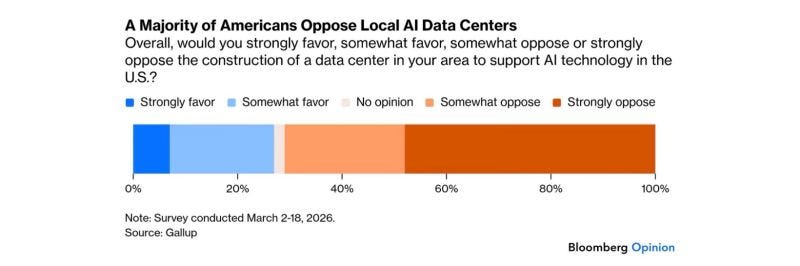
From Bloomberg, Lara Williams’ take is a good read.
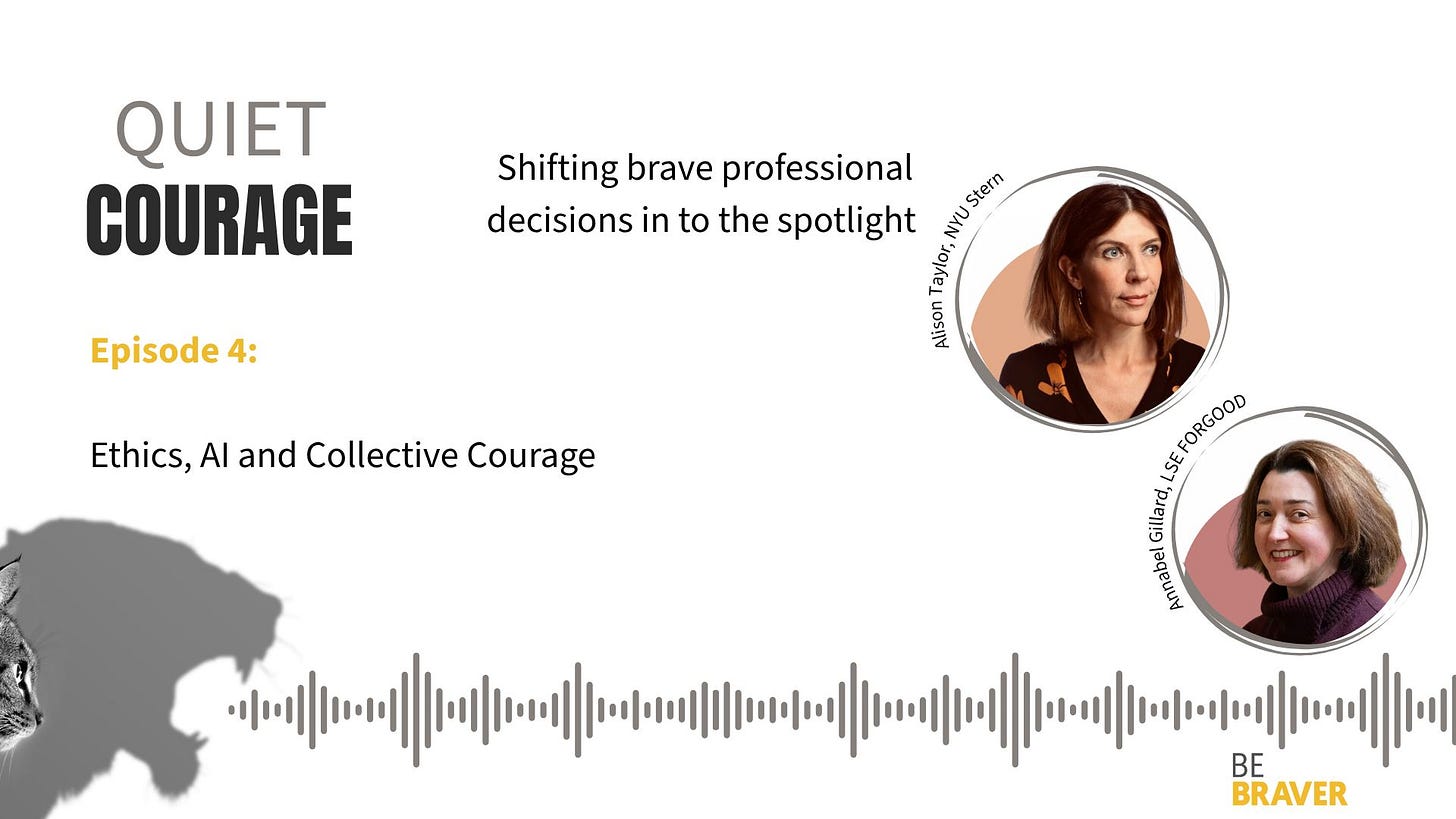
Caroline Pankhurst, host of Quiet Courage, hosted friend Annabel Gillard of LSE FORGOOD and me for an episode about courage in organizations. Caroline explores the idea of courage as a collective capability, shaped by the systems and people around us. Echoing my conversation with Deb McNamara of ClimateVoice on employee activism, we have more courage in community than alone.
Caroline started wondering whether cooperative is the truer word. The second voice in the room. The colleague you check in with first. And as I say on the podcast:
If you just have one other person backing you up in the room, that dramatically changes the dynamic.
The conversation spans what really makes people speak up at work, why it’s so much harder than it sounds, and why “all progress depends on the unreasonable (wo)man.” We also cover fairness, bringing your whole self to work (or not), courage as innovation, joy and growth. And skydiving, conformity, belonging, safety and values. And Eyal Press’s incredible book, Beautiful Souls. Enjoy the listen!
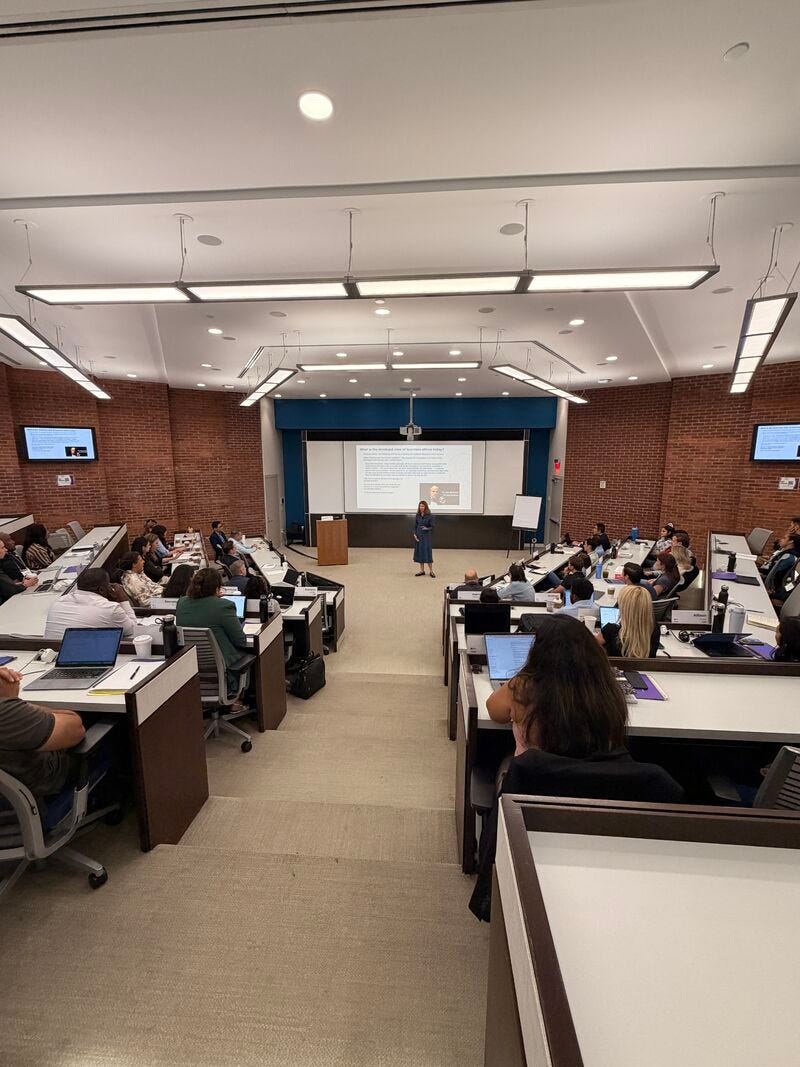
I welcomed the new A28 cohort of the NYU Stern Executive MBA program this week. As always, it was an amazing experience, but a hard re-entry going from no teaching to 14 hours in four days. Still after a week with my beautiful niece and nephew, it felt like a vacation!
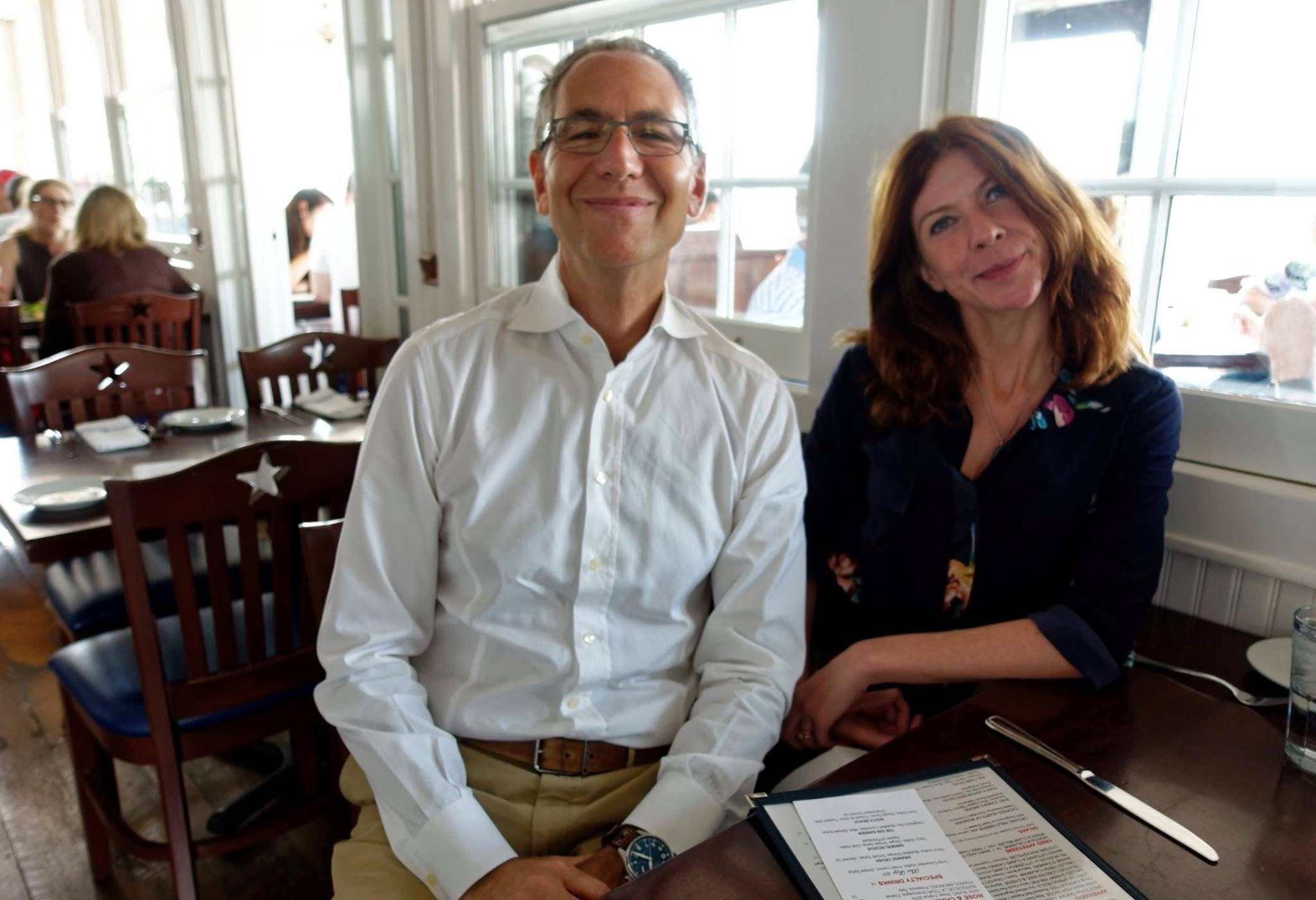
I also got to see one of my oldest and dearest friends, Richard Bistrong, who is an FCPA, anti-bribery, ethics and compliance consultant and so much more. Our friendship has had touchpoints across the globe, from Paris 🇫🇷, Helsinki 🇫🇮, Vilnius 🇱🇹 , London 🇬🇧, and of course, New York 🇺🇸. Here we are, nine years ago!
Have a fantastic summer weekend. I will be eating tomatoes, climbing mountains, and enjoying the beautiful light of late summer.

Alison XX
Comments
Nothing yet. Say the first thing.
Sign in to join the conversation.