
In December 1940, as Nazi Germany was overrunning Europe and Britain was fighting for its survival, President Franklin D. Roosevelt addressed the American people with a warning. The United States, he argued, could no longer afford to stand on the sidelines. It had to become the industrial backbone of the free world.
“We must have more ships, more guns, more planes—more of everything. We must be the great Arsenal of Democracy.”

Roosevelt was not merely describing an ambition. America actually succeeded.
Between 1939 and 1944, U.S. manufacturing volume more than doubled, while the country’s raw materials production, labor force, and manufacturing employment all expanded sharply. An economy that had been emerging from the Great Depression was transformed into a war machine capable of supplying not only its own armed forces, but much of the Allied war effort.
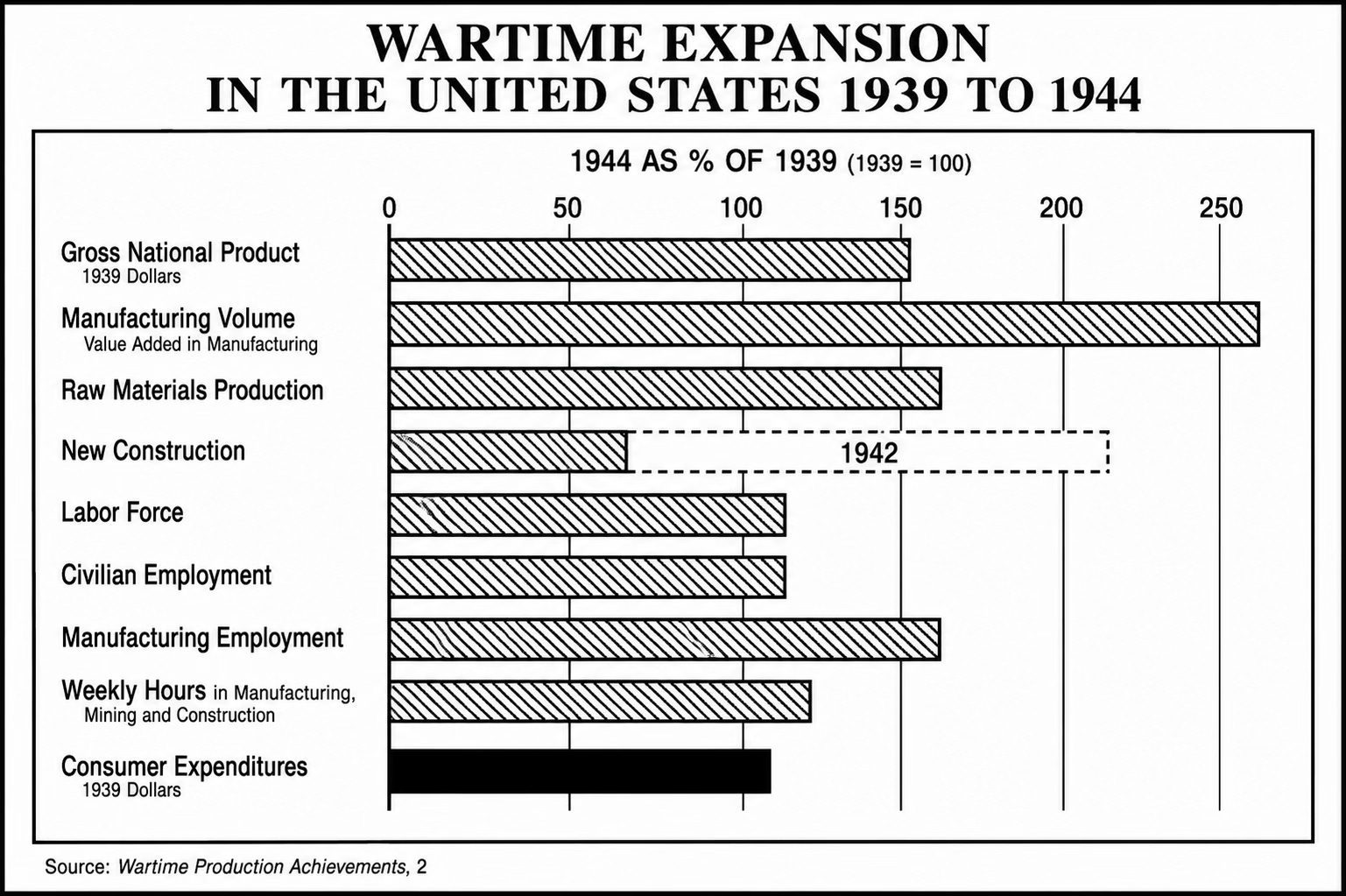
By the time the war ended, American manufacturing had surpassed every global competitor by an unprecedented margin, delivering roughly 6.5 million rifles, 300,000 warplanes, nearly 100,000 armored vehicles, and a vast surplus of trucks, warships, and munitions sufficient to sustain a multi-front campaign and to provision much of the Allied coalition.
The “Arsenal of Democracy” was not a metaphor. It was an industrial reality.
Nearly 85 years later, the U.S. still fields the world's most powerful military and outspends all others on defense. However, America’s Arsenal of Democracy faces deep structural hurdles, with many defense experts arguing that it is largely a ghost of its former self. Its primary constraint is not capital. It is industrial capacity.
Decades of post-Cold War consolidation, offshoring, and budget cuts have left the defense sector leaner, heavily concentrated, and ill-equipped for rapid scaling. Compounding this challenge is the aging military-industrial workforce that struggles with severe shortages of skilled machinists, process engineers, and chemists, leaving vital defense hubs overwhelmed by soaring demand.
The five-month war with Iran has laid bare this problem, making it impossible to ignore.
The United States has used a substantial share of its stockpile of advanced missiles and interceptors, while the Pentagon is now pressing defense companies to accelerate production. Recent reports indicate that U.S. inventories of Patriot and THAAD interceptors have fallen sharply during the conflict, exposing the uncomfortable reality that even the world's largest military cannot manufacture some of its most sophisticated weapons at wartime speed. Estimates show that rebuilding these critical stockpiles will take at least three years.
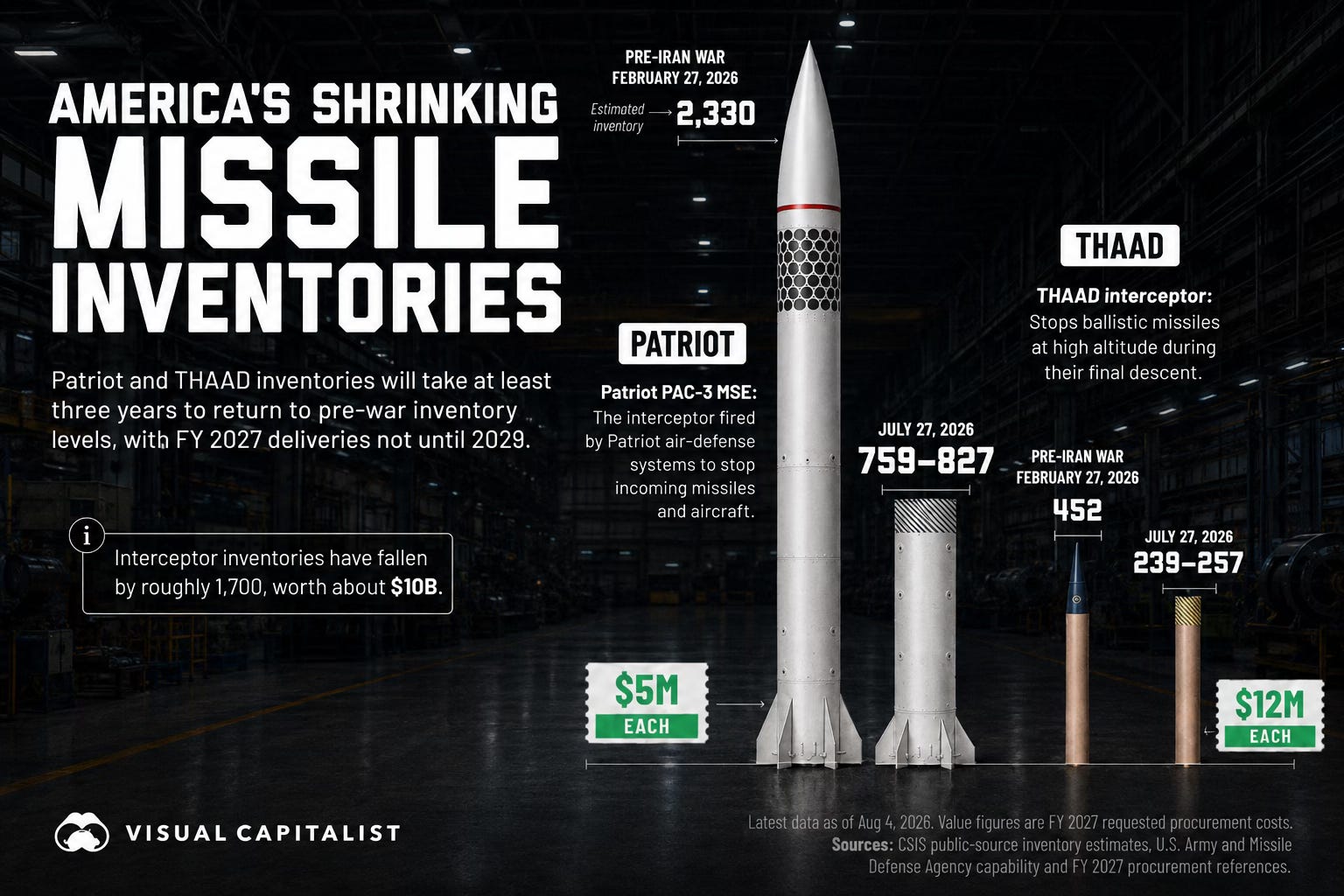
This is not entirely a new problem. The war in Ukraine had already demonstrated how quickly modern warfare can consume precision munitions and how difficult it is to replenish them. But Iran has brought the problem closer to home. Washington is discovering, in real time, that ordering more missiles and producing more missiles are two very different things.
Factories cannot simply be switched on, skilled workers cannot be trained overnight, and complex supply chains cannot be expanded with the stroke of a pen. Missile production requires specialized electronics, propulsion systems, explosives, chemicals, and precision manufacturing, often spread across a narrow industrial base.
Little remains of Roosevelt’s mid-century Arsenal of Democracy in the United States, but ambitions for a modern counterpart are quietly taking shape in the land down under.
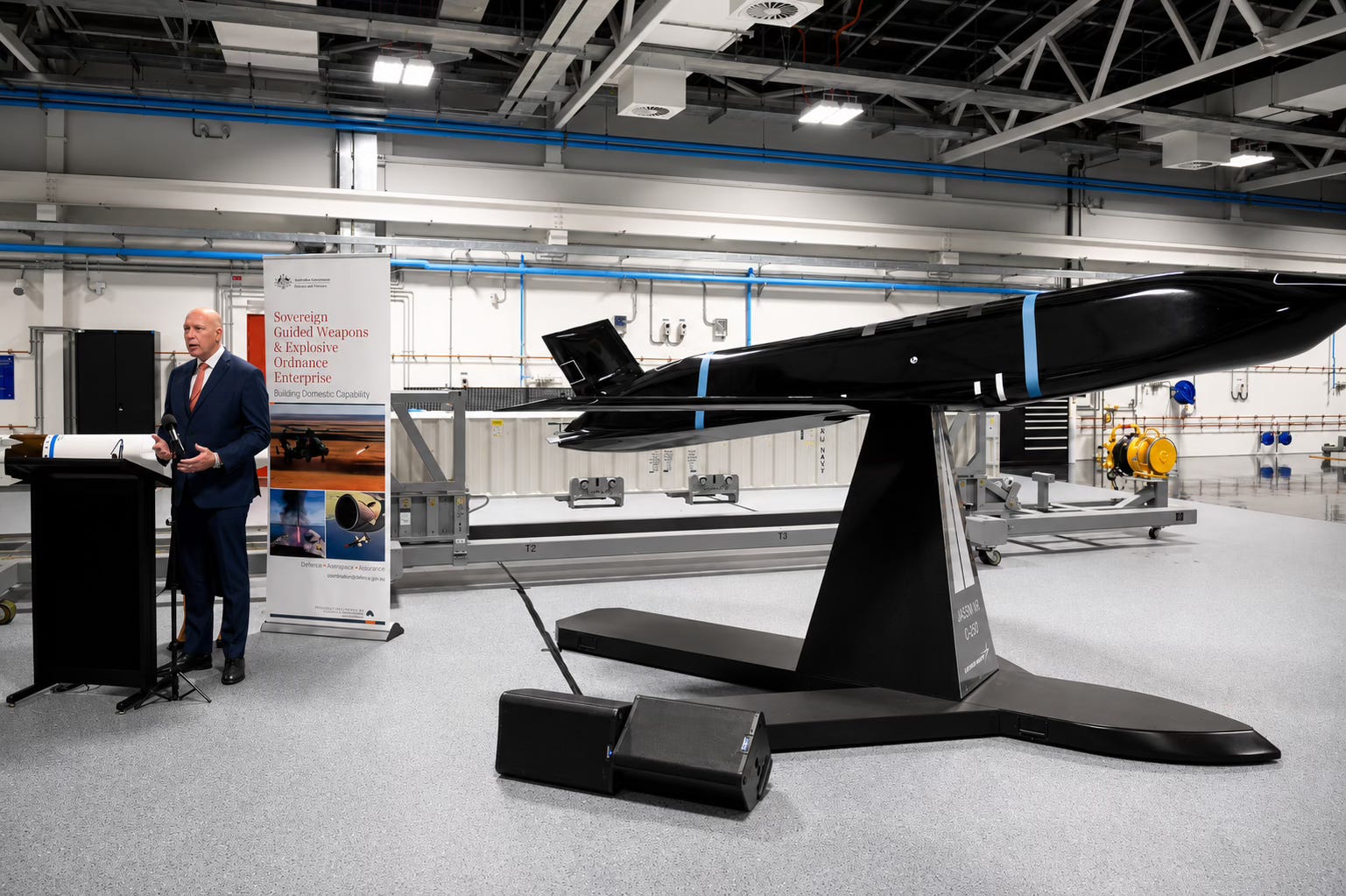
Australia had already reached much the same conclusion years ago. Its sovereign Guided Weapons and Explosive Ordnance Enterprise (GWEO) was not created because of the current war with Iran. The strategy predates it. Australia began building the framework for sovereign missile production in 2023, backed by up to A$21 billion over the decade. The logic was straightforward, as Defence Industry Minister Pat Conroy put it:
“Global production capacity is limited and cannot surge quickly. Australia has not been manufacturing these weapons – that means we are dependent on imports for these critical national security capabilities.”
But “sovereign” never meant doing it alone. From the outset, Canberra sought to integrate its industrial base with the American defence system. In 2023, Australia and the United States committed to building guided-weapons production capacity in Australia, followed by plans for Guided Multiple Launch Rocket System (GMLRS) and Precision Strike Missile production, as well as rocket motor manufacturing.
For the United States, Australia is an obvious place to build that capacity. Not because it is cheap, but because it is trusted. Canberra is one of Washington's closest military allies. It’s a Five Eyes and AUKUS partner, thus a central pillar of the American security architecture in the Indo-Pacific. It also possesses an industrial economy built around mining, metallurgy, chemicals, and engineering, alongside abundant energy and mineral resources. Australia offers something increasingly valuable in an era of fragmented supply chains: a stable country with the industrial foundations to expand production and the political alignment to make that production part of the American-led security system.
Last year, Australia and the United States further strengthened their partnership by signing a Joint Statement of Intent on guided weapons and opening a joint office to deepen cooperation on co-development and co-production. The objective was not simply to create an Australian weapons industry, but to build a resilient and interoperable industrial base that could contribute to the broader allied system, echoing the spirit of collaboration Roosevelt championed during World War II.
That vision is now turning into physical reality. In March, Australia, together with U.S.-based Lockheed Martin, began manufacturing GMLRS missiles at Port Wakefield in South Australia. This marks the first time the system is produced outside the United States. While initial production relies on U.S.-supplied components, Canberra plans to build a high-rate facility by 2029 capable of producing up to 4,000 missiles a year, with the long-term goal of shifting the entire supply chain locally for “tip-to-tail” manufacturing.
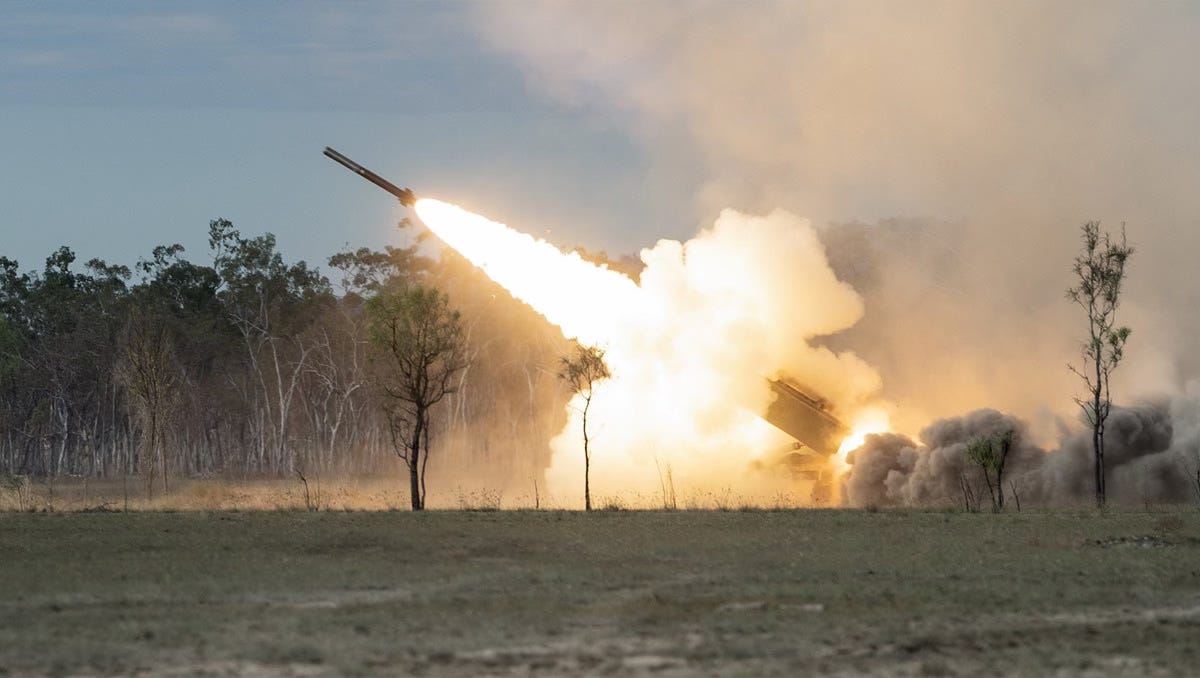
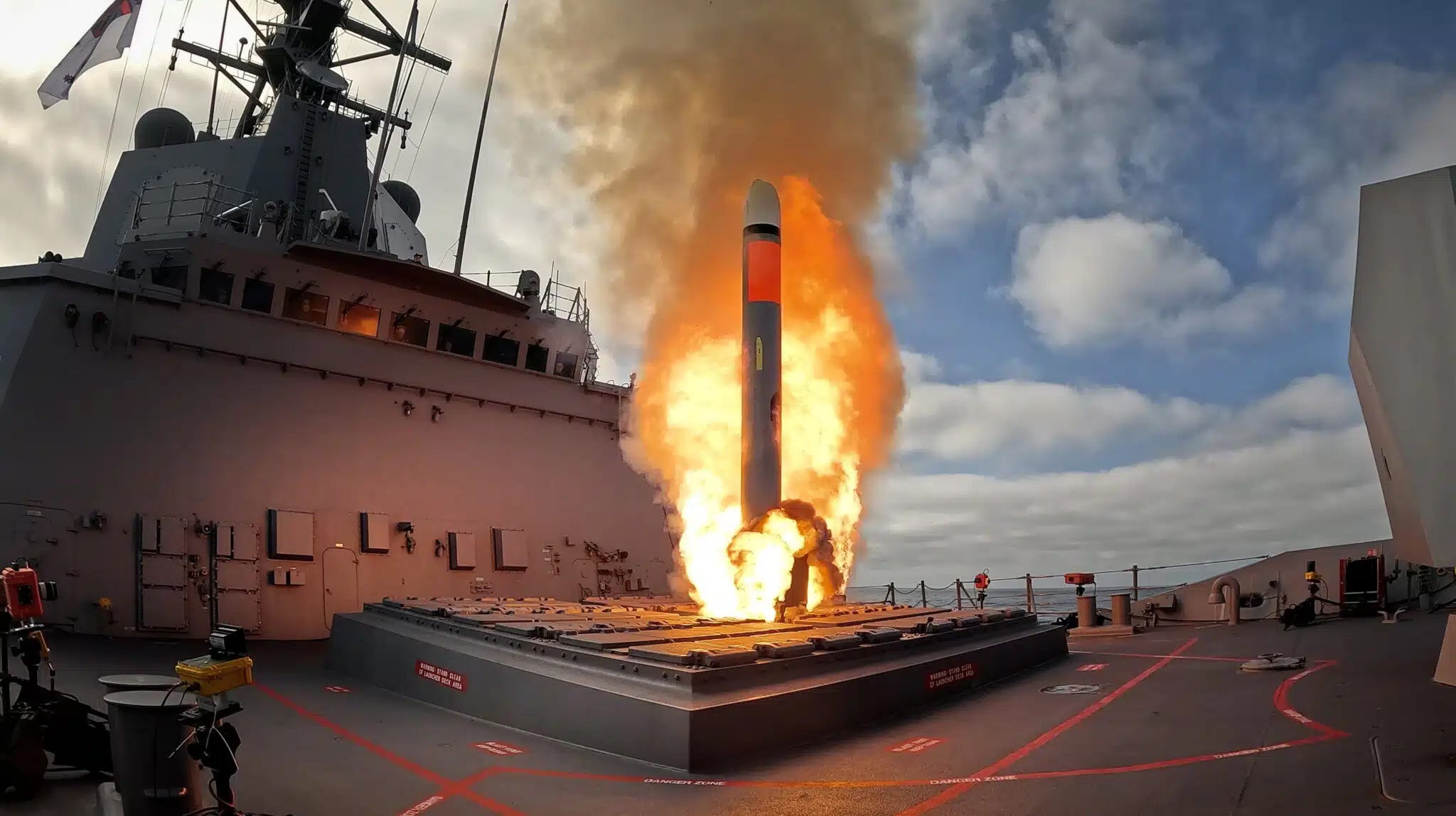
A month later, the first five domestically made missiles were successfully test-fired at the Woomera Test Range. Beyond the milestone itself, the achievement proved that an American-designed precision weapon could be successfully produced outside the U.S. and integrated into the same military ecosystem, creating both a sovereign Australian defense capability and vital extra capacity for global demand.
That distinction is important. Australia wants sovereign capability. The United States gains something else: capacity.
Missiles manufactured in Australia are missiles that no longer need to come from an overburdened American production line. More importantly, this creates a new production node physically separated from the factories the United States currently relies on. The objective is not to replace American manufacturing, but to multiply it through the alliance.
That becomes even more interesting when production is combined with geography.
Tender documents revealed last month show that the United States is planning a permanent war-ready stockpile for the Marine Corps in southeastern Australia. Around US$30 million has been allocated for warehouses and offices in Victoria, with the stockpile expected to reach full capacity by 2028. The plan is designed to provide equipment and supplies for U.S. forces operating across the Indo-Pacific. This means Washington is not merely helping Australia build weapons. It is preparing to store American military equipment on Australian soil as well.
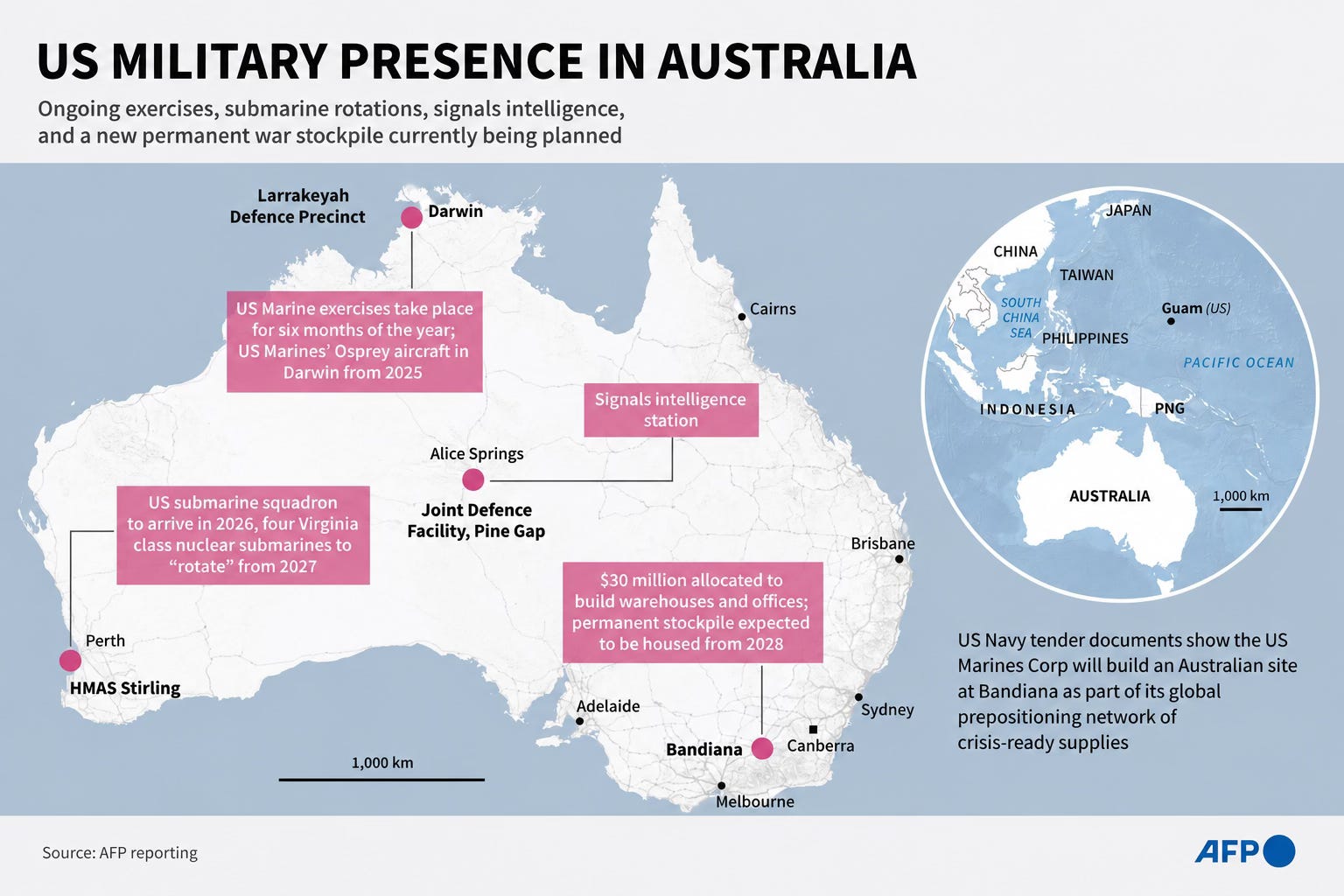
Production and prepositioning solve two different problems. Manufacturing gives you the ability to make weapons, while a stockpile gives you the ability to use them immediately. Together, they forge something far more valuable: strategic depth.
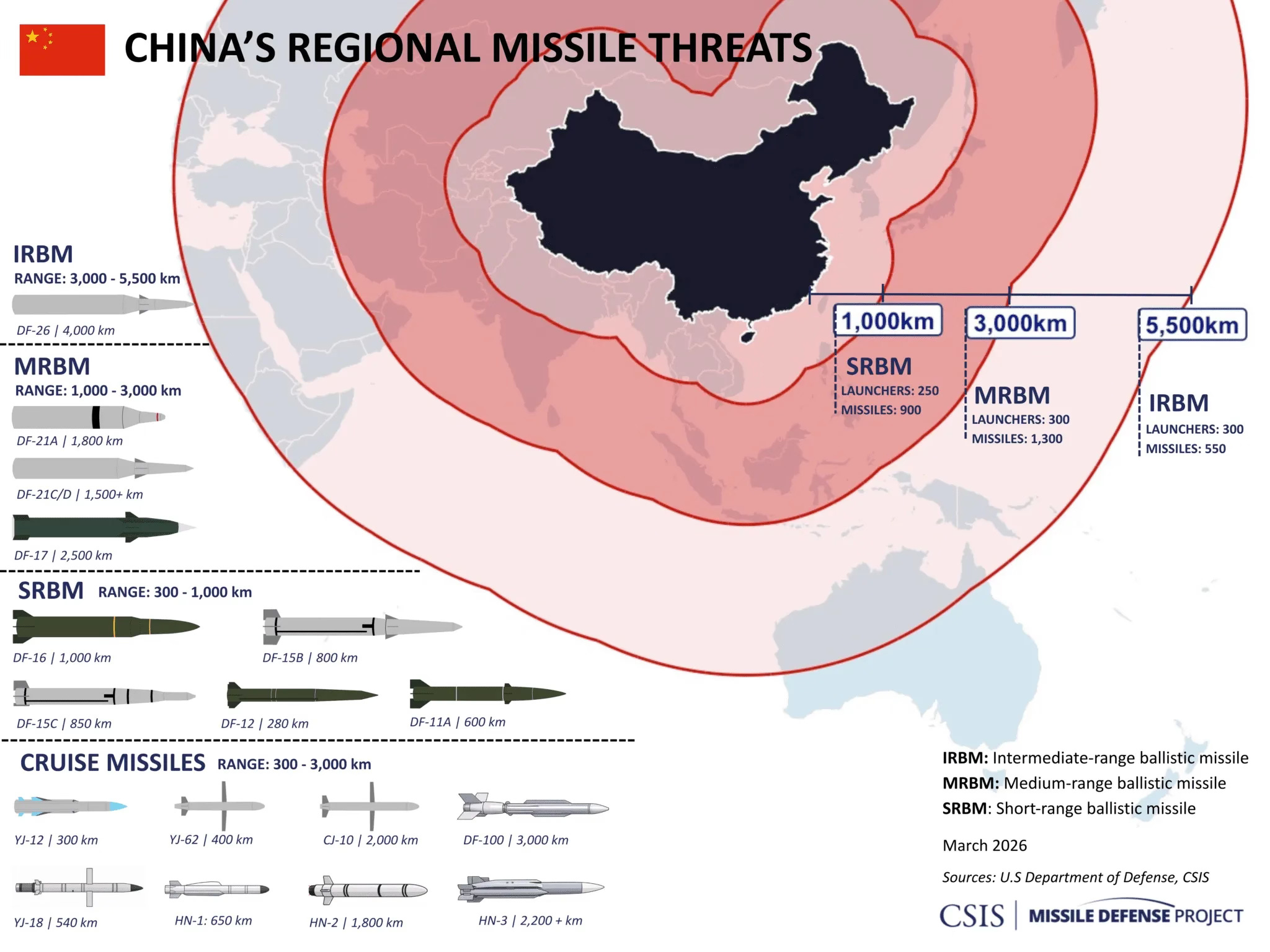
That matters because the geography of a potential war with China would be very different from the geography of the Second World War. American forces in the Indo-Pacific depend on a network of bases and logistics hubs, some of which would be exposed to Chinese missile strikes in a major conflict. The response is increasingly to distribute military infrastructure across a wider geography. Instead of concentrating every factory, warehouse, and supply chain in a handful of locations, the United States creates redundancy.
Australia is particularly useful in this model. While China’s missile reach is no longer confined to the immediate Western Pacific—with systems of up to 5,500 kilometers able to strike parts of northern Australia—the continent’s vast scale still provides critical strategic depth. Its major southeastern industrial centers are estimated to lie outside that northern threat envelope. This allows the U.S. military to establish permanent, war-ready weapons stockpiles on Australia’s southeast coast that estimates suggest remain beyond the range of most Chinese missiles (for now). Australia is therefore not an invulnerable sanctuary, but a secure rear area from which production, storage, and logistics can continue even if the front lines become contested.
The factory therefore matters for what it represents, not simply for what it produces.
During the Second World War, America’s greatest industrial advantage was concentrated inside its own borders. The continental United States possessed the factories, workers, resources, and geographic protection necessary to become the Arsenal of Democracy almost by itself. Today, Washington is attempting to recreate some of that resilience differently: by distributing industrial capacity across its alliances.
China is the obvious reason.
The central question in a future U.S.-China conflict will not simply be who has the most advanced missile on day one, but who can keep producing them on day thirty, sixty, or one hundred. China’s enormous industrial base gives it a formidable advantage in manufacturing at scale. The United States cannot solve that gap with a larger Pentagon budget alone. It needs more industrial capacity—and rebuilding it at home will take time.
Australia offers an early glimpse of another solution: multiply the industrial base across the alliance. Its missile production remains small, the 4,000-missile annual target is still years away, and shortages of skilled labour pose another challenge. But the purpose is not for Australia to become another America. It is to become another node in a larger allied production system.
Kathleen Hicks, then Deputy Secretary of Defense, captured the shift in 2024:
“Today’s arsenal of democracy is not only American. It’s not only western, either. Today’s arsenal of democracy is global.”
Roosevelt’s Arsenal of Democracy relied on concentration: one enormous industrial power producing enough weapons to supply an alliance. The emerging version relies on distribution.
The Arsenal of Democracy is not disappearing. It is finding a new home.
Thank you for reading!
If you enjoy connecting the dots behind the headlines, subscribe for free. New pieces land straight in your inbox.
📨 If you think someone would enjoy this, send it their way!
Comments
Nothing yet. Say the first thing.
Sign in to join the conversation.