
Well, friends, the time has arrived and the summer has started to feel endless. As I see my friends across the country post adorable back-to-school pictures of their kiddos, we still have two whole weeks before Louise is back in action. We’re escaping to the mountains for a couple of nights this week and then spending the final week of our summer in Maine. Not only is there nothing to truly complain about, but I am genuinely excited about both of these trips. At the same time, I’m desperate to be back in a routine and have my uninterrupted work time back. And on top of all that I’m devastated that this is the last and only summer I’ll have a four-year-old around. Four-year-olds are insane but also pretty awesome and I’m starting to pre-grieve my little kid becoming a big kid. So many confusing feelings abound!
As for the books, I’ve had an incredible reading week—probably one of the best of of the year so far. I finished three books I thoroughly enjoyed, all of which might work their way into my best books of the year. Unfortunately I got so long-winded about one of them today, I’ll have to save the other two reviews for next week. Let’s get to it!

This week I read…
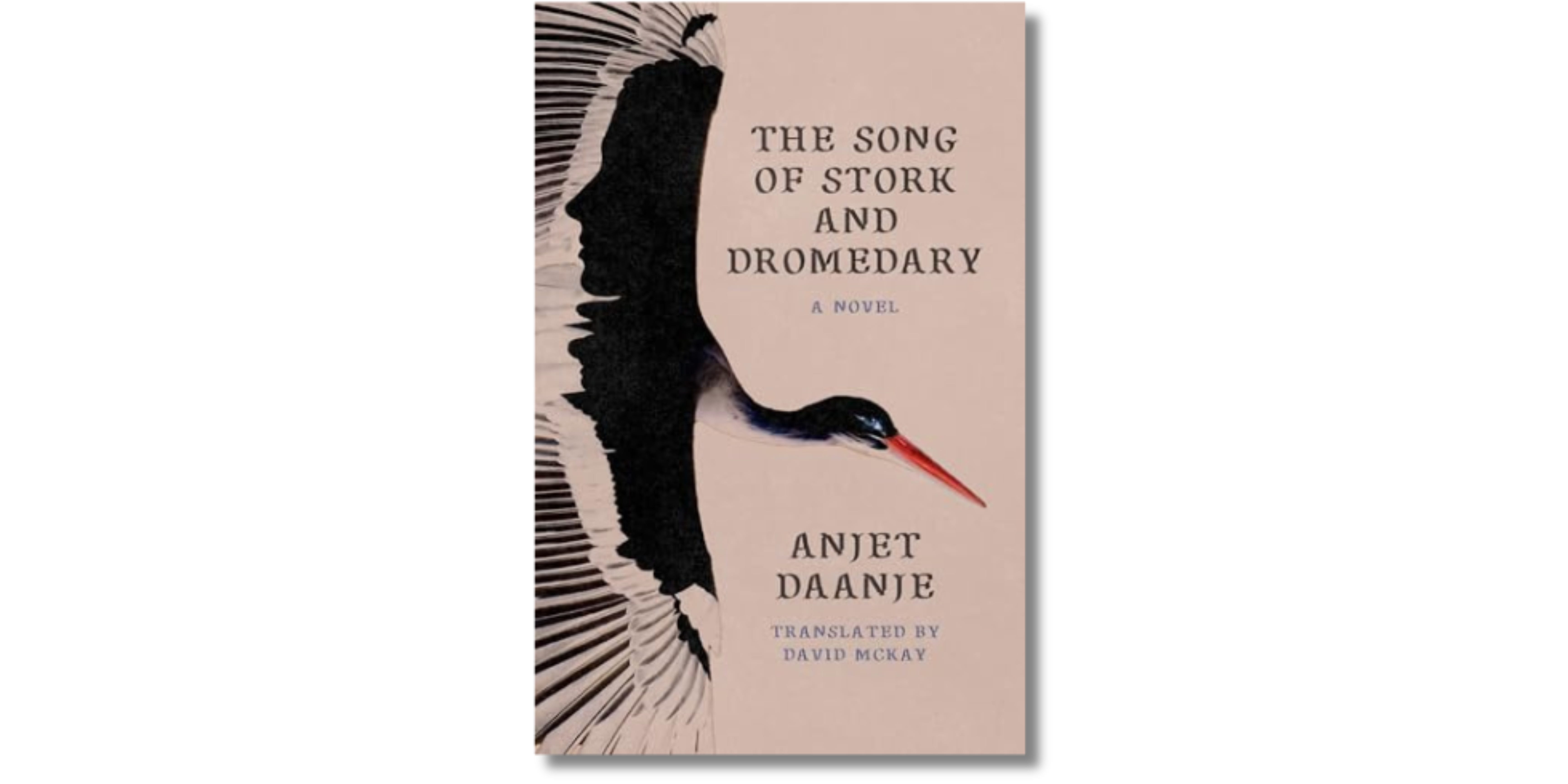
The Song of Stork and Dromedary by Anjet Naanje, translated by David McKay. This 700-page masterpiece begins in the early 1800s with Susan Knowles, a woman grieving the loss of her own child when she begins taking work laying out (or preparing the bodies) the deceased in her village. It’s quiet, contemplative work that allows her to feel close to her dead daughter in her closeness to death. Over the years, Susan is called to the Drayden home too many times as Mrs. Drayden and then her two eldest daughters meet tragically early ends. Over the course of these visits, Susan becomes fascinated with the second youngest Drayden child, Eliza May who seems to carry death with her as a close companion. Susan’s distant observations of Eliza May last throughout Eliza’s short life as she goes on to author the shocking and perplexing novel Haeger Mass. Eventually Susan is called to lay out Eliza May herself which is an experiencing so horrifying and revolting, she leaves her profession all together.
From this point, we follow ten additional point-of-view characters from the 1800s to 2030 and discover the literary afterlife of Eliza May Drayden and her novelist sister Millicent. Some are close connections—Millicent’s husband’s second wife, Eliza May’s biographer—while others are more tenuous—the twins who read and laugh at Haeger Mass or a pair of French sisters who, like the Draydens, spend many of their hours perfecting their piano playing. Other connections are otherworldly, but I won’t spoil those discoveries. Structurally this book is brilliant and playful and twisty. There are eleven different stories each featuring a different focal character. Before each story, Daanje has included interstitial multimedia spreads. There are excerpts from biographies, excerpts from the Draydens’ novels, letters, and poetry—all fictionalized by Daanje except for the poetry, which is Emily Brontë’s verse. As I read I found that that fictional ephemera posed questions, both plot and thematic queries, that the subsequent character section would attempt to answer. Through this pattern as well as recurring motifs and echoed storylines, Daanje lures the reader into a puzzle-like game while exploring the human desire to tell stories and search for meaning.
Much of the joy of this novel is in that readerly search for meaning within the prose and between the lines. This is about that is about interpretation and that requires interpretation. While it is a page-turner, I enjoyed taking my time with it, pausing after each section to consider what Daanje was adding with this new layer and jotting down notes for myself about what I wanted to remember. I loved going into this book with no preconceptions (other than its Brontë sister inspiration) and thinking through what I believe the book is trying to do, which makes me hesitant to offer more of my own thinking. But after reading and loving 700 pages and spending so much time thinking about it, I can’t help myself! If you don’t want any of my interpretative baggage going into your own reading, stop here!
As a reader who has read books by all three Brontë sister novelists alongside multiple biographies, it was impossible not to see the recurring and recursive connections to them throughout. My first thought was that the book felt less like a puzzle than a prism. It seemed to me that Daanje was shining Wuthering Heights and some Brontë biographical details into this prism and projecting a rainbow of themes, questions, and ideas that she deepened and complicated in each chapter of the novel. That still feels like an accurate description but, after learning that Daanje is a mathematician, I think another useful metaphor is that the book reads like a series of equations where she changes the variables to see what new outcomes she might find. What would happen if this type of character did this instead of that? What would happen if this type of love existed in this form instead of that? What if the obsession was really about this? For the first half of the book the prism or the equations feel so spiritually akin to Wuthering Heights (obsession, jealousy, and ghosts who just won’t deign to haunt the right person!) that it’s hard to think of it as its own entity.
She does, however, go on to deepen, complicate, and move beyond her source of inspiration into a larger exploration of how we read literature and how we read our lives. We humans crave answers, certainty, a story to tell ourselves, connections, and cause-and-effect; this book is full of people trying to make sense of their lives as well as the death and devastation around them. Whether it’s the family who believes itself to be cursed, the priest who is unwavering from his religious convictions, or a character spiraling into a world of conspiracy theories, we see an ongoing grasping to understand while experiencing that same all-consuming desire as readers of this perplexing book. What does it all mean?, we ask ourselves, frantically searching for clues and connections. What I find so beautiful is that while this book warns against any obsessive pursuit to make everything make sense, it still invites readers to play along with the puzzle and offers the opportunity to make meaning throughout the reading. The book suggests that the stories we tell ourselves about how we ended up where we are, the ones we repeat to remain close to those we have lost, and even the interpretations that we graft onto the books that haunt us are all vital to how we move through the world. Even the odd and clunky title touches on meaning, understanding, and myth-making, but I won’t risk spoiling that discovery for you. As for the Brontë of it all, while its certainly not necessary to note the connections in order to appreciate what Daanje does, the idea that this book serves in part as a recursive investigation of what Wuthering Heights means to Daanje adds a gorgeous and playful literary layer to the project that absolutely lit me up.
There is so much in this book beyond what I’ve been able to express today—the complicated view of death, the obsessive love stories that haunt the pages, and the bonds between sisters that verge from tender to horrifying—as well as many layers, I’m sure, that I’ve yet to access. This book is one that can be something different to every reader, and I hope you all read it and come back to share your thoughts with me! It’s out Tuesday, August 18th. Bookshop
Now I’m reading…
I started The Wolves of Eternity by Karl Ove Knausgaard. It sounds like some people really loved this one while for others it is the book you just need to get through to arrive at the third and best in the Morning Star series. So far I’m invested but I’m not even 100 pages in so time will tell.
New on my TBR…
My in person book club is reading Family Happiness by Laurie Colwin and my Bookshop purchase just arrived today. I loved Happy All the Time and am eager to be back in Colwin’s capable hands.
💬 Tell me about your week in books! What did you finish, what are you reading now, and what have you added to your TBR?

Authors on their favorite rereads: the case for dipping back in. (Lit Hub)
The DNF discourse has made it to the paper of record. The NYT asked readers, “When is it OK to give up on a book?” (gift link)
What to read after Lonesome Dove. (New Yorker)
In this novels, rich people behave badly. Very badly. (NYT, gift link)
How twenty well-read people make time for books. (Vulture)
The Atlantic reviewed two new books I’m eager to read: A Tender Age by Chang-rae Lee and The Disappearers by Marlon James. (gift links)
3 debut authors discuss how to live in the hypothetical. (Electric Lit)
The best reviewed books of the week. (Lit Hub)

I listened to this emergency podcast about AI and hacking on Plain English and I’m starting to think AI writing bad short stories might be the least of our concerns. I really can’t believe we’re all (and by we I mean people at these companies and people in charge) just sitting back and letting these things go unregulated. What is wrong with us?!
On the completely other end of the spectrum from existential to trivial, I need to share this incredible foundation stick (not an affiliate link). This is the best makeup product I have every used and what I love so much is that I can use just a tiny bit and blend it if I’m just trying to even out my skin tone or use more if I have some serious coverup work to do. Either way it looks so smooth and natural. Highly recommend and comes in many shades.
I watched the season finale of House of the Dragon, and I fear it is a terrible show. The cast is phenomenal, it looks cool, and they’re even making some interesting choices but I feel like nothing can really right the ship after some of the initial structural choices. Having characters we care about outside of the two main warring camps would help a lot, but I also think that there’s something corrupting about simultaneously being locked in by a prequel-like text and having too much freedom because of the sparseness of said text. Has anyone else been watching? What did you think of the season?

For questions, comments, or suggestions, please don’t hesitate to reach out by emailing fictionmattersbooks@gmail.com or responding directly to this newsletter. I love hearing from you!
This email may contain affiliate links. If you make a purchase through the links above, I may earn a small commission at no additional cost to you.
If you enjoyed today’s newsletter, please forward it to a book-loving friend. That’s a great way to spread bookish cheer and support the newsletter!
Happy reading!

Comments
Nothing yet. Say the first thing.
Sign in to join the conversation.