
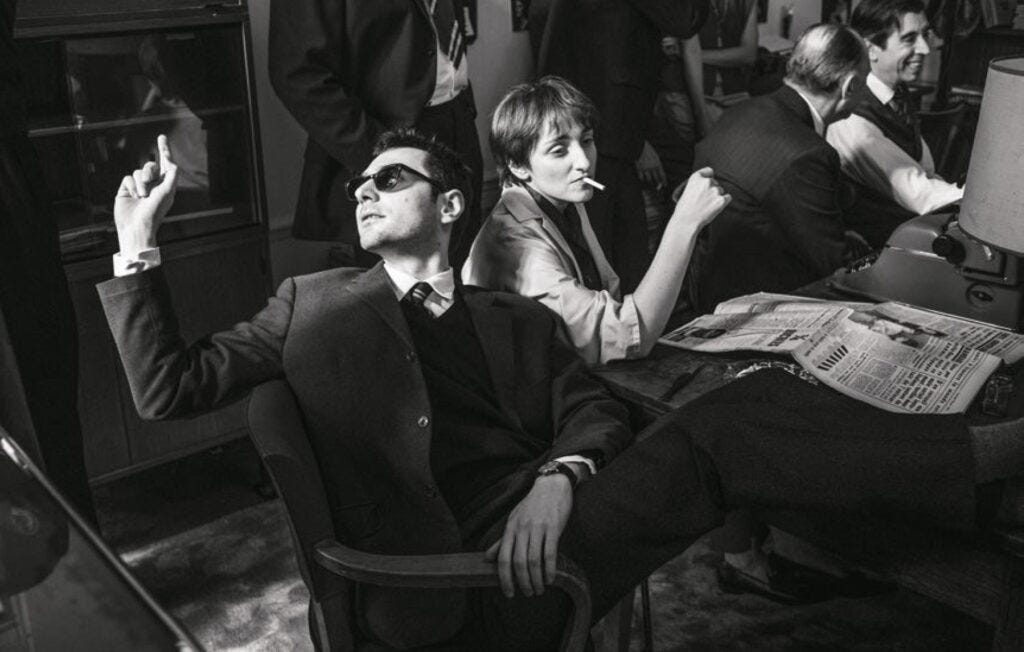
Fergstack will not run on Christmas next Thursday but will return on the second day of the new year.
It’s easy to harbor skepticism toward a film that looks like a nerdy cinephile’s exploration of trivia and personalities which require prior knowledge to enjoy. Since the period Richard Linklater covers with his new film Nouvelle Vague originates (or operates near the beginning of) a “world-historical” cinematic movement (in the critic Richard Brody’s words), a viewer might worry she’ll have one of those encumbered experiences where the meaning of the action has already been so indisputably reinforced by critical and academic establishments that failing to recognize it would mean being a cinematic, well, dunce, and forcing the recognition would sap all the fun out of watching the film.
Even if you minimize the obscure references or labor to invite an audience into a world, you have to allow them to watch first. Linklater already has a relationship with Netflix (they bought Hit Man on the 2023 festival circuit), and introducing the streamer’s vast user base to a body of work it has possibly never engaged with might be what Linklater figures is in the same cultural-historical-dissemination ballpark as Gatsby on a high-school lit syllabus.
Beyond spreading awareness, what are the priorities that govern Linklater’s accounting of how Breathless, Jean-Luc Godard’s first feature, was produced? Brody writes in The New Yorker that recreating the settings and having real-life figures portrayed by lookalikes trained in mimicry amounts to a form of “documentary” mythology. And indeed the impression that develops after perhaps twenty minutes of Nouvelle Vague is not (as various press blurbs have claimed) a stylistic imitation of Godard’s actual filmography. We don’t see wild jump cuts or characters breaking the fourth wall to address the viewer; when the camera watches handheld, the image is still easygoing, not excoriating. In that way Brody is right about myth-making, since Linklater allows his characters to present themselves, an act that always adds fiction to biography.
But because the simulacra of Paris apartment interiors and location shoots from Breathless are so precisely constructed, and because our ersatz Jean-Paul Belmondo can be hard to tell from the original, I found that the “documentary” part of Linklater’s process resembled something like a lost document. Putting Roberto Rossellini in a car with Godard after giving a speech to the Breathless team is like getting reassurance directly from your idols, rather than in a book about them. Brody prefers the book—he doesn’t care about the veracity of the “details,” and in fact he wrote a definitive book on Godard. But the lines in the script are so dense with information, considered nouns, that I would find it shocking if each did not have some basis in recorded or printed interviews. (The New York Times confirms that at least a few of Godard’s lines are pulled from Godard on Godard, his book of criticism, which I haven’t read, and from Cahiers du cinéma, the famous magazine he wrote for.)
Affording these magical bits—bits of ideology, of practical instruction—the space for incantation, to be uttered into the open, all around the apparatus, the teeming life, that birthed Godard’s first film…that’s like placing yourself among the greats, so that you can be reminded of what you’re already sure you believe, or of what’s worth believing. But maybe this isn’t accurate—what if agonizing over the recreation of twenty days’ tournage on Breathless warped Linklater’s sense of spontaneity? Then again…what if the close study of the circumstances that led to that spontaneity mean that the orchestrator of this study will know very well when he’s close to discovering the circumstances again?
Ranked below is the best advice I heard in Nouvelle Vague, or maybe not the best advice, but the most thought-provoking—advice that led me to question my beliefs, or which felt radiantly reflective of a feeling or experience I’ve had, or which can’t possibly be true if applied narrowly, which I may well reject after a long period of consideration, but if cheeky or absolutist in order to pry previously unknown material out of a production, which might be more useful, more devastating than advice defined by restraint.
Godard says this after complaining that he hasn’t made a movie yet, to which his friend Suzanne Schiffman says, “but you made a court métrage!” Godard’s best friends, Francois Truffaut and Claude Chabrol, have beat him to directing features. He wanted to do it by age 25. This feeling of having to play catch-up might be why Godard commits so wholeheartedly to his filmmaking philosophy on the Breathless set. If he had more time to settle into the craft, if he hadn’t had so much time to think about cinema before creating it himself, he might be more amenable to watching on-set conventions exact their impact before deciding to banish the ones he hates.
Why didn’t Godard play with more shorts before attempting a feature, as is the contemporary habit of upstart indie filmmakers? What’s the inherent problem with a short film? Aside from its frequent and reasonable aim of serving as a proof of concept for a bigger project, the omnipresent indie short of 2025 is a method for testing whether a person is good at directing—directing actors, assembling teams, shooting in blandly decorated kitchens. The indie short is made possible by accessible film technology and digital tools, and its proliferation has dovetailed irritably with the endless cycle of self-promotion on Instagram.
But directing a short, while perhaps useful for testing aesthetics, doesn’t really augur a knack for handling a feature form, the balancing act of pacing and character development and payoff (naming the constituent elements feels absurd so I won’t add any more). It’s hard to tell whether a short film is fulfilling, and that’s because it isn’t strictly a medium: what can be eight minutes can also be eighteen or thirty. I think Godard, in thrall to the form of a feature, would bristle at any visual art claiming to hold even a sliver of the power of a long-métrage. That claim would indicate that the whole can be broken into parts, which ignores the feature’s rigorous standards: a director must mold her trove of ideas to fit the crevices of a beginning, middle and end, whether across a 90-minute runtime (the studio-system average) or unwieldy arthouse spans. Television, with its arbitrary assumption of eight or twelve or four or 24-episode runs, continues to amplify the misconception that any length can work for a story told with a camera. Godard might want us to remember that the feature is good because it is challenging, hard to nail, because there is something startling—something perfect—about what can start and end when the only information we have was given to us recently.
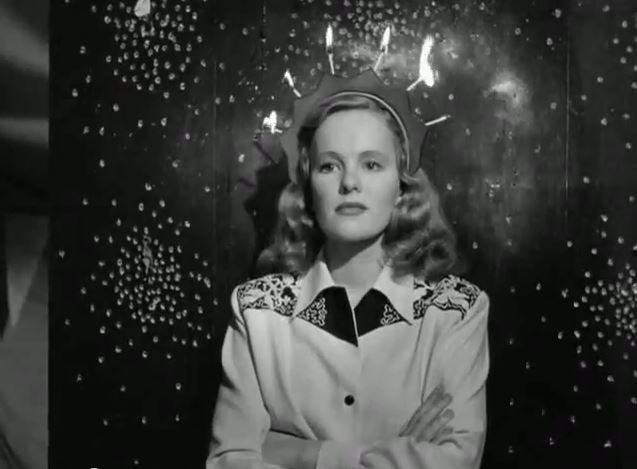
Godard says this off-handedly to his producer while in Cannes for the premiere of Truffaut’s The 400 Blows. To me this piece of advice can be construed as a warning, that the film you think you want to make might be better contained within stakes and situations which lend themselves to specifically cinematic tension. Put another way: simplicity, however tried and true—and a viewer is hardly sick of spotting their hundredth gun—can re-contextualize a filmmaker’s obsessions.
I only figured out recently that an object like a gun (I tried to think of a less violent object, but the gun is the most effective) could give structure to a script that I wanted to be about, I don’t know, tortured queer love. It’s not the same flavor as formula (not the dreaded “hero’s journey”) but it means that, even if you drop the gun into the story without care or foresight, its presence could still wreak something awesome. Take, for example, Gun Crazy, one of my favorite films, which should on paper develop like a hoary B picture—the plot is as silly as a guy and yes, a girl falling in love over their shared pathology for shooting pistols, but not to kill (not strictly), instead as an object fetish. The film stealthily becomes magmatic, pushing into corners it finds because its paramours are hungry, then unstoppable, then delusional, then afraid and sincere.
I also thought the Godard line highlighted the main weakness in Linklater’s portrayal of the Breathless shoot, which is the power of Godard’s actors, particularly Jean Seberg. Linklater’s is essentially a confused position. Raoul, the cinematographer, comments offhandedly at one point that the actors will save the movie, but he’s not the auteur—perhaps he’s not much more than a technician (his main experience shooting with the Éclair Caméflex camera used for tournage was during World War II). I was unsure whether the comment coming from him was a sign that I should assume the opposite, but I waited for more clues about the Breathless team’s views of our actors’ power and they did not appear.
The worst scene in the film is the last, and I knew it would involve the shot where Seberg refuses to pick Belmondo’s pocket after his character dies. That’s because this moment on set produces the harshest standoff between Godard and Seberg, who can’t stand Godard’s lack of preparation or his inscrutable maxims. Eventually Godard lets Seberg make her own choice. We’re denied a view of that choice until a test screening of Breathless, where Truffaut, Schiffman and Chabrol are present. It is, as the film’s fans will remember, Seberg imitating Belmondo’s trademark move, to rub his thumb over his lip.
But why is this the button of the entire Linklater project? I took issue in general with the glimpses of Godard calling shots on set, of doing the reacting he has so many words to describe, because the shots never went on for very long. But I think it’s really wrong to frame Seberg’s sudden choreography as the endpoint of all Godard’s directing decisions. It’s such a quintessential example of actorly instinct, of a performer summoning a memory or a new or recycled image and searing it into a frame. This happens even on sets with bad directors. We believe, take for granted, are relieved when we retrieve that instinct, confirm that it’s in an actor’s bones. I wish that Linklater had acknowledged it more affectionately.
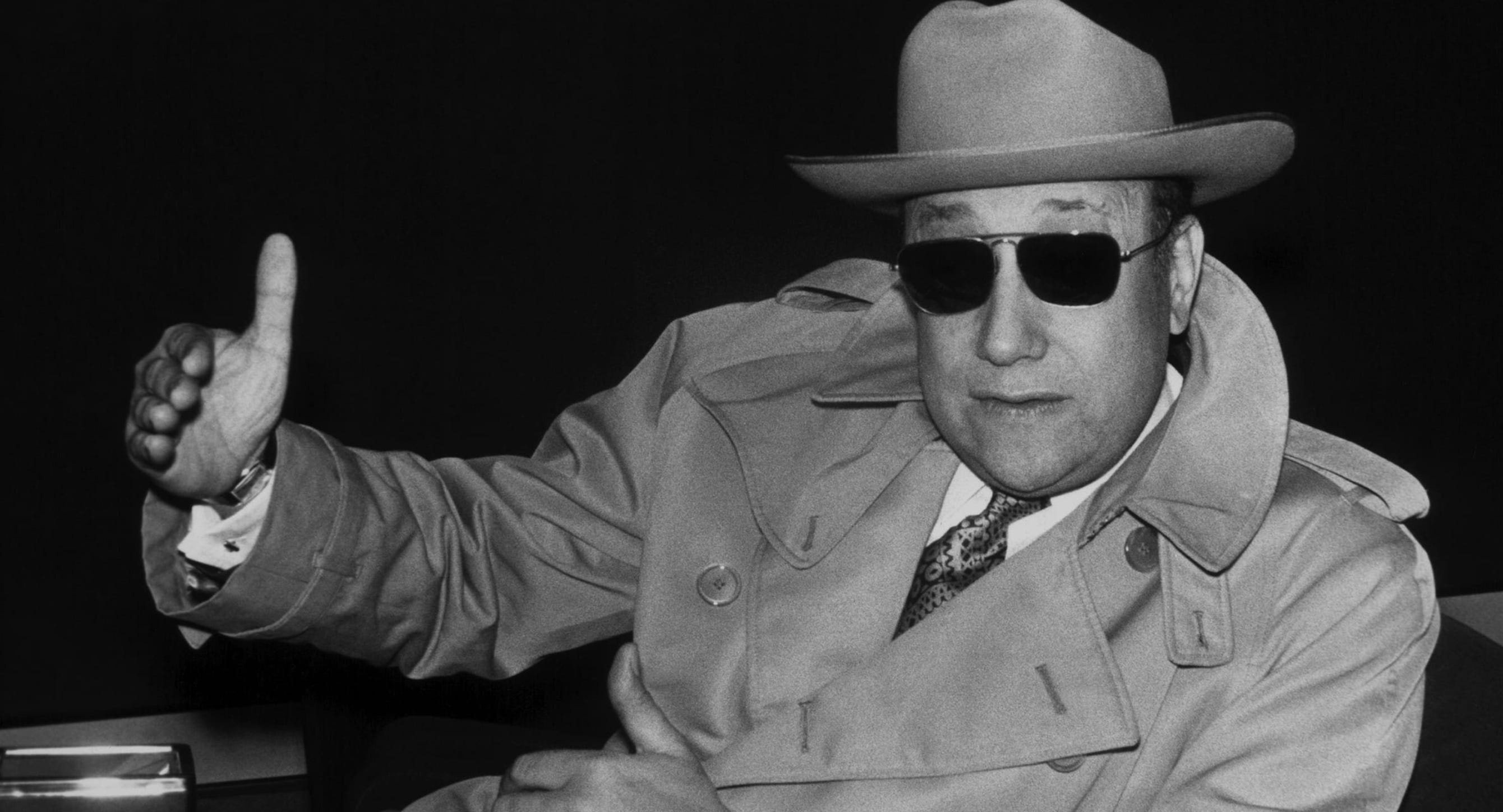
The director Jean-Pierre Melville (thirteen years older than Godard) says this to his friend when Godard visits the set of his film in the lead-up to tournage on Breathless. The advice is reflexive, visceral and triggering enough to me that I don’t want to dwell on it too long. All I will say is that upon hearing it I immediately remembered boiling down the experience of receiving advice while having a beer with a writer friend a few days ago. I told this friend that understanding my own feature (called Sparks, which I wrote and directed last year) proved a matter of knowing that I couldn’t do it alone—I needed to hear notes from friends, experts, veterans, as much as I needed to spend months without revisiting or rewatching any part of the film.
But then I had to balance this knowledge with the realization that at least 50 percent of the feedback I got shouldn’t be used (with the other 50 percent supremely valuable). Separating those two halves had me feeling unmoored, moody, unpredictable for long periods which never led to closure...they just kind of petered out until they were forgotten. I now think seeking and receiving postproduction notes is the hardest part of making a film.
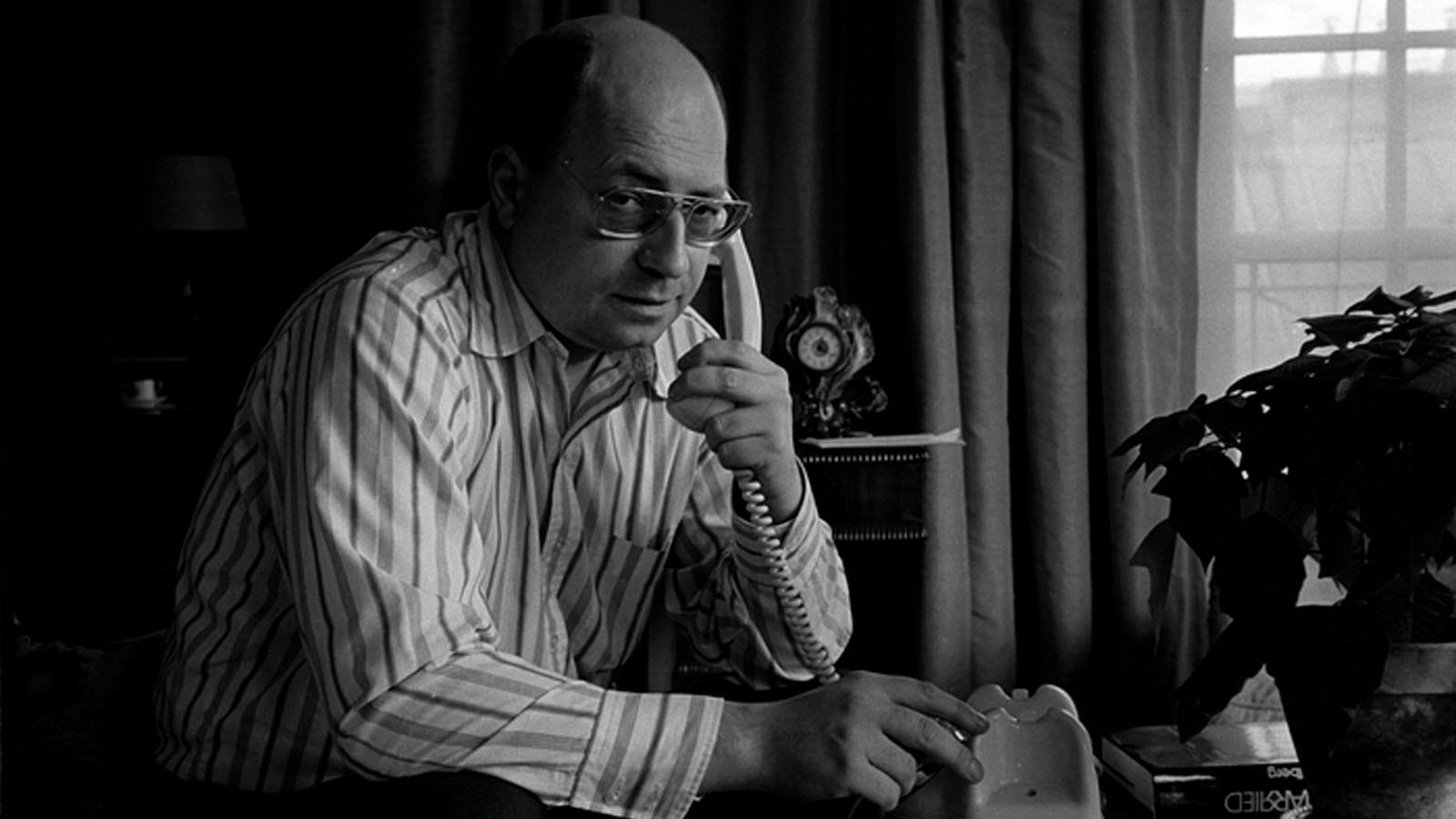
Godard’s assistant director Pierre Rissient quotes this line from the philosopher Jean-Paul Sartre on the first day of tournage. He is doing that AD thing where announcing a tolerance for trouble is a manifestation of resolve, though we never do see Rissient particularly stressed out, maybe because when Godard wraps a shooting day after two hours of shooting, Rissient doesn’t have an unfinished schedule to review, whereas Godard’s producer knows to fear that there won’t be enough material for a movie.
Sartre’s words may also be a preemptive cover for everything Godard does that seems insane and unsympathetic. Even though (as I’ll address with a “better” piece of advice) the “leisure” component of Godard’s filmmaking approach doesn’t exactly reek of desperation, we witness an urgency in his insistence on certain conditions which almost suggests that if those conditions were not met, he might suffer a breakdown. The quietude and cheekiness core to Godard’s self-expression might also signal a fragility, the end result of working through psychic questions and conclusions which are I guess conscious of how easily they could be attacked, felled.
On some level, Breathless itself is “the desperate case,” the last possible vessel for Godard to reify his beliefs. His aura of influence is inseparable, as is noted by Brody, from his aura of cool. He might know, savagely and uncompromisingly, that he can’t stay cool past a certain age, not without building a filmography. Breathless was always going to be the starting point for everyone looking to collect their Godardian sentiments, whether or not they saw many Godard movies.
It would be nice if as a culture we welcomed breaks in composition, in a jar moving from one surface to another, in the sky “suddenly” turning pitch black between shots that concern one contained conversation. Godard says this line when the script supervisor is indeed fretting over a viewer realizing that objects have shifted without explanation. If Godard has his way, then reality without continuity is exclusively the domain of the camera. So…the camera creates its own reality? Can a viewer accept this? What if we want a world that feels true to both the camera and to its characters’ lives? Is that impossible?
“No” is the easy answer, since all the time we believe in films whose images we adore, films whose continuity is wholly accounted for. But because the statement is obvious from an emotional standpoint—why would we want the perception of our lives to feel like a consistent, predictable sequence?— Godard is probably egging us on, especially because allowing his script supervisor to move the object in question would have an imperceptible effect on his shot. But if the effect is imperceptible, why bother disrupting the precious molecules in the air around the shot?
This is the piece of advice I will most seriously consider, because I think—unless a scene has many complex moving parts and maybe a flying elephant or blimp—the viewer does so much filling in of the blanks on their own that they’re liable to invite a change of color in a tee-shirt, a movement of spectacles from forehead to the V-neck in the V-neck sweater. It sounds nice to welcome these shifts, whether or not their combined imperceptibility adds up to perceptibility, or in the event that their background ambience leads somebody to do something crazy.
The romanticized association of his new, real profession with a pastime his publicist works to invent—by planting a story about Godard holding up a garage—is a classic slippage between Godard the filmmaker and Godard the personality, but the contingency in the phrase also lumps art with crime. One’s flourishing would seem to bolster the other, which kind of means that for Breathless to turn out well, criminal activity should germinate, maybe spill over into Godard’s next films (it does).
But committing crime is about seeming innocent, which is often the same as laying about, sitting idle. The notion of failing to pack a shooting day with every possible cinematic idea you can imagine feels conversely like an affront to filmmaking as a furious, feral method for trying and executing, for using the momentum of one idea to blast off into fevered mini-eras of productivity. Is Godard wondering when he says this line—and when he feigns sickness to march about a bar and play pinball—if all that momentum is wrong, if it’s enacted as a capitalization on an adrenaline rush, rather than as an exploration of an intellectual stance?
While on the Sparks set I wondered (it wasn’t too often) whether I should be more fastidious, take harder stances on the environments I wanted. I was mostly decisive, but sometimes I couldn’t pin down the wrong parts of a scene. Were the performer and their lines mismatched? Was the performer’s charisma missing? Maybe those were unfixable realities. But when we got rained out for a half day in the desert—the only instance of running behind schedule—I hardly found that I could relax and indulge in some heretofore uncared-for rumination. I was worried sick. My producer Lola and I begged our DP to grab two slo-mo B-roll shots, which actually immeasurably helped the sequence in which they featured.
This attraction to making use of every inch of the production timeline doesn’t mean I’m not intrigued by down time, a.k.a. off days. I wonder what would happen if we chose our off days spontaneously. I loved watching the cast and crew indulge in Lake Tahoe (a 45-minute drive from Reno) and dive off rocks and chatter on beach towels. There are probably too many boundaries between that comfort, that intimacy, and the shift back to stressing over whether you’ve had enough time to dress or light a giant school-bus interior. If we had more time to ponder, more time to get it right, more time from more money (“money is time,” another Godard line, was cut for time), maybe carving out pseudo-salons would collapse distance between the critic’s corridors and the creaky low-budget set. Or maybe the really hard thinking was what Godard distilled into his aphorisms, which became his advice, without allowing them to take a toll on his energy. If our stints of leisure have been preceded by a rich, unhurried intellectual discourse, maybe after a point—and while on set—we won’t need to think at all.
No posts
Comments
Nothing yet. Say the first thing.
Sign in to join the conversation.