
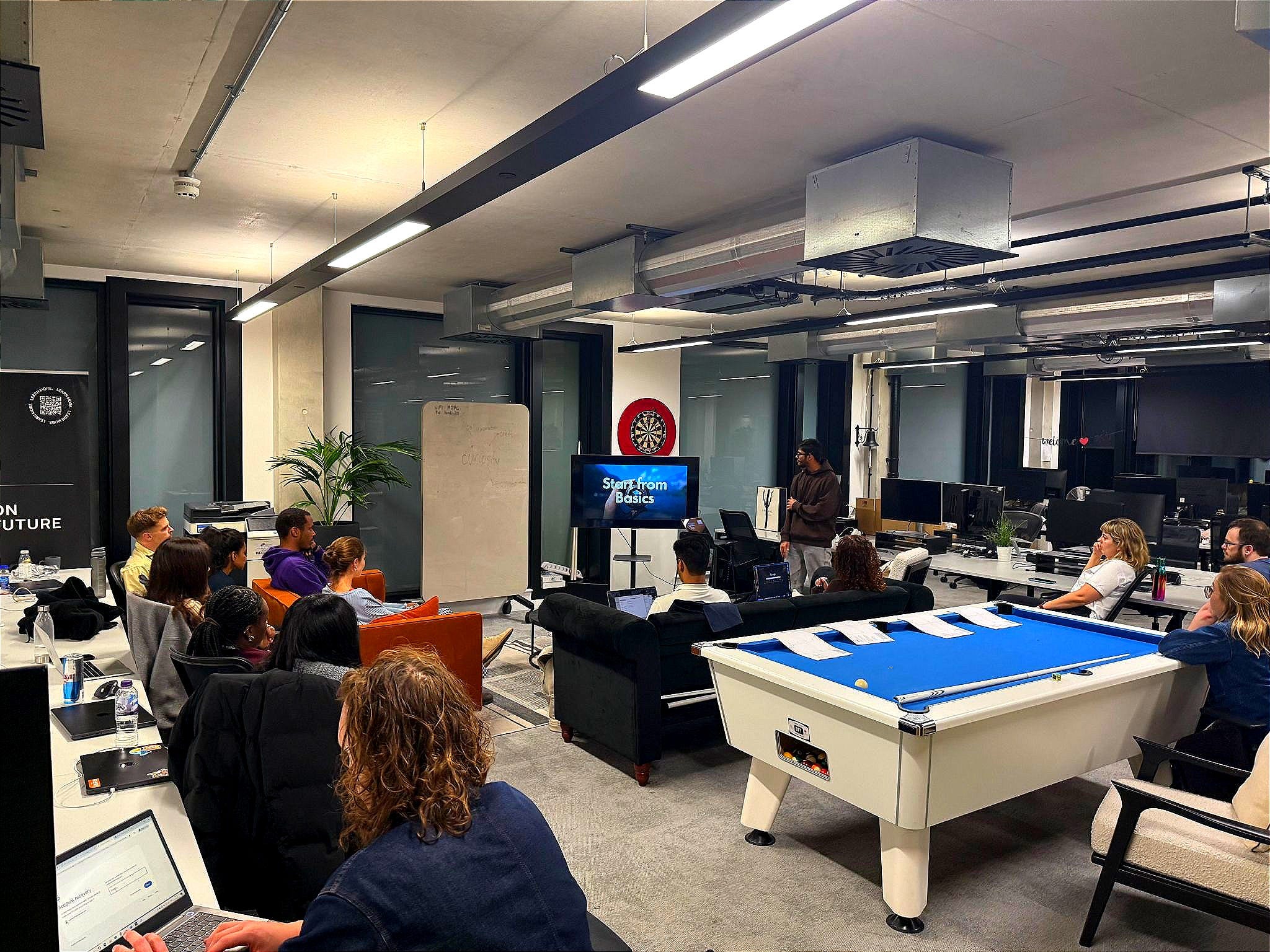
Last week, I had the opportunity to attend one of Experience Haus’ Curiosity Sessions in Shoreditch, Building Agentic Experiences a monthly event that brings together creative minds, designers, and technologists to explore how we can learn by doing. These sessions are more than just talks or workshops; they’re living experiments in creativity, collaboration, and innovation.
When I arrived, the first thing that struck me was the atmosphere. The space buzzed with quiet focus screens glowing, laptops open, coffee cups scattered across long tables. People were deep in conversation, sharing notes, sketching, and experimenting. You could tell this was a community of people genuinely curious about pushing boundaries.
The theme of this particular evening was Building Agentic Experiences using
Vibe Coding, and funnily enough, it felt like perfect timing for me. My own platform, CameThru, was built using a vibe coding approach blending intuition and creativity with structured thinking and heavily influenced by my background in IT Infrastructure Project Management. So it was a great opportunity to see how others were approaching the education side of vibe coding, especially from a creative design perspective.
Here, the focus wasn’t on the technical stack or deep engineering, but rather on the creative process, how UX and UI designers can use tools like agentic AI to speed up their work, prototype quickly, and bring concepts to life.
The session, led by Parth Loliyania (Senior Product Designer at Publicis Sapient), explored how AI can take care of repetitive, mechanical tasks while allowing designers to stay in their creative flow. Using Google’s AI Studio, participants experimented hands-on, testing ideas, iterating on designs, and sharing results in real time.
What I really liked about this session was that it wasn’t just a presentation it was participatory. We all had to actually get involved, which made the experience far more engaging and memorable. In my view, this is the future of events: where audience participation becomes part of the learning itself.
We were given a live brief and only a short amount of time to bring it to life. The task was to vibe code an app example that Parth had shared on screen. As you can see in the video below, this was the outcome I came up with.
The process started with sketching or wireframing each screen to plan out our approach, before moving into AI Studio to mock up the concept using different prompts. It was fascinating to see how varied everyone’s ideas were each person approached the challenge differently, bringing their own creativity and perspective to the table.
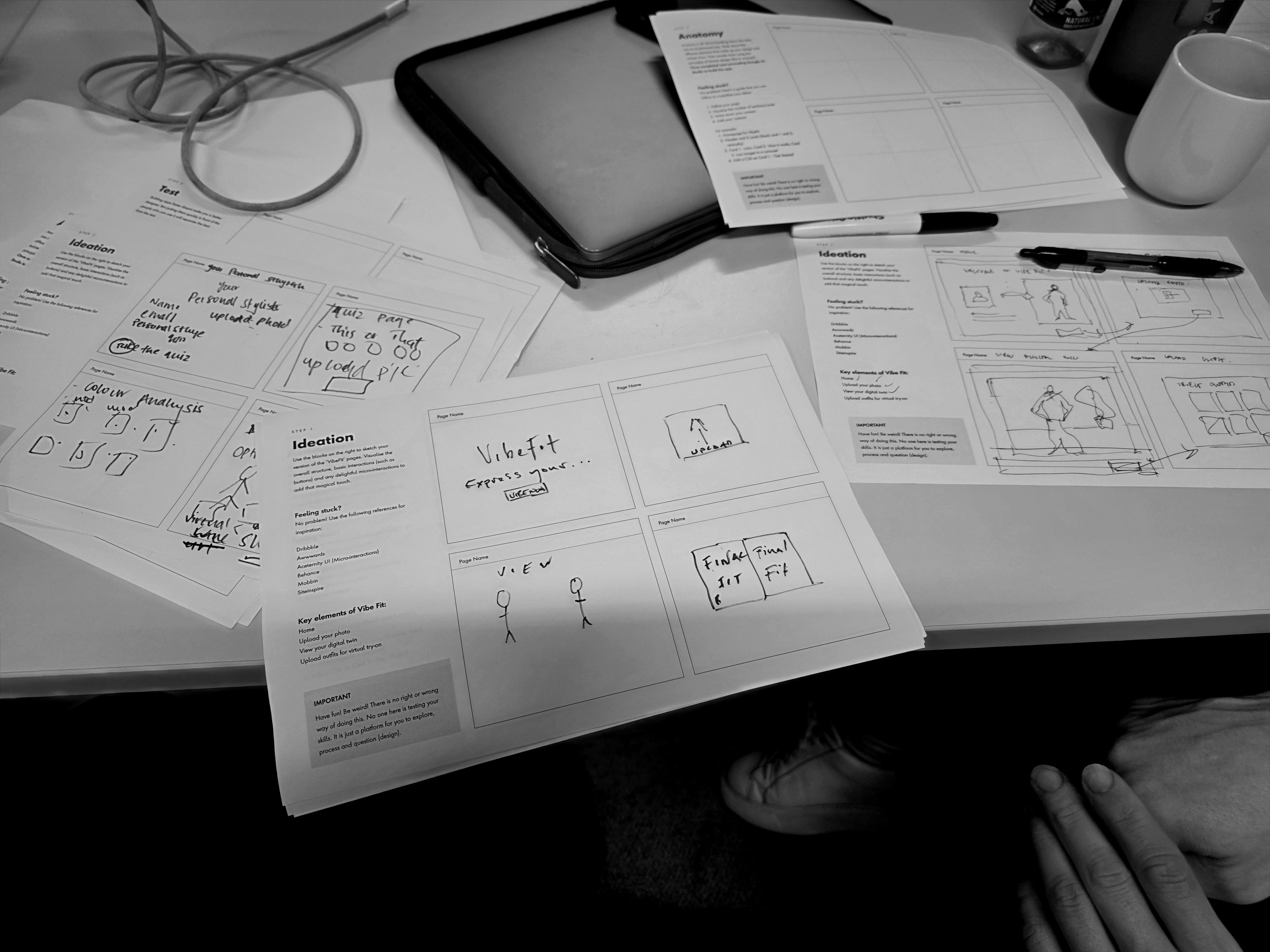
Having some prior experience with prompting myself, I found it useful to guide the AI by making it clear that the goal was to build a prototype, not a full-stack app. That distinction helps the AI stay focused on layout and flow, which is exactly what you’d want in a client-facing prototype scenario.
Overall, it was a really collaborative and dynamic environment people learning from each other, asking questions, solving problems together. It captured exactly what makes Experience Haus so effective: learning by doing, here was mine called VibeFit
When I was vibe coding CameThru, I was working entirely on my own and while that can be rewarding, it can also be isolating. When you hit a roadblock or run into an issue, there’s no one to turn to for quick feedback or fresh ideas. In contrast, a space like Experience Haus fosters collective learning where collaboration becomes a catalyst for progress. You can see the power of community in how quickly people build confidence and momentum.
There’s also a subtle sense of friendly competition that pushes everyone to do their best work that “let’s see what you come up with” energy that keeps you sharp but still supported. It reminded me how much we thrive in environments that balance creativity, challenge, and connection.
After the session, I had a great chat with Amit Patel, the Creative Director at Experience Haus, who’s doing incredible work building this kind of ecosystem. What he’s created is more than a design school it’s a creative incubator that connects learning with real-world application. Participants don’t just learn theory; they actively work on live, active projects that mirror what happens in industry.
There’s even a chance that we might collaborate in the future possibly around CameThru’s app interface and branding story. But the potential synergy between their “learn by doing” philosophy and my own approach to building products definitely stood out.
And as always, it was great to meet new people in the creative sector people who are genuinely curious, forward-thinking, and passionate about the intersection of design and AI.
For those unfamiliar with them, Experience Haus is a design education provider that helps professionals pivot, upskill, or refresh into creative roles.
A key feature of their courses is that students are either paired individually or in groups to work on live design challenges. As they progress, they apply their learning to create real deliverables that evolve into solutions to those challenges and these projects can then be added to their portfolios, showcasing their practical design skills.
Courses run from eight to twelve weeks, with new cohorts starting throughout the year. Interestingly, there’s no cost for businesses to take part. Experience Haus simply seeks out challenging briefs from across industries to give students meaningful, hands-on experience.
The best challenges usually involve several user journeys for example:
a booking flow,
an e-commerce journey,
or completing a specific digital task.
Having an accessible target audience (or help reaching one) also makes the process smoother.
If you’re a startup struggling with traction, clarity, or differentiation, it could be a perfect fit for their Product Strategy and Management course.
For broader, service-level challenges, there’s their Service Design course.
And if understanding your potential users is key, their User Research programme would be ideal.
It’s a powerful model: students get to test and apply their skills on real projects, while businesses benefit from fresh ideas and creative insights.
Overall, my time at Experience Haus was genuinely inspiring. The learn by doing philosophy, the creative energy in the room, and the collaborative approach all resonated with me deeply. Spaces like this are where the next generation of designers and builders are being shaped and I left feeling more inspired than ever to keep building, collaborating, and learning.
#experiencehaus #ai #innovation #learnbydoing #vibecoding #designthinking #creativity #uxdesign
No posts
Comments
Nothing yet. Say the first thing.
Sign in to join the conversation.