
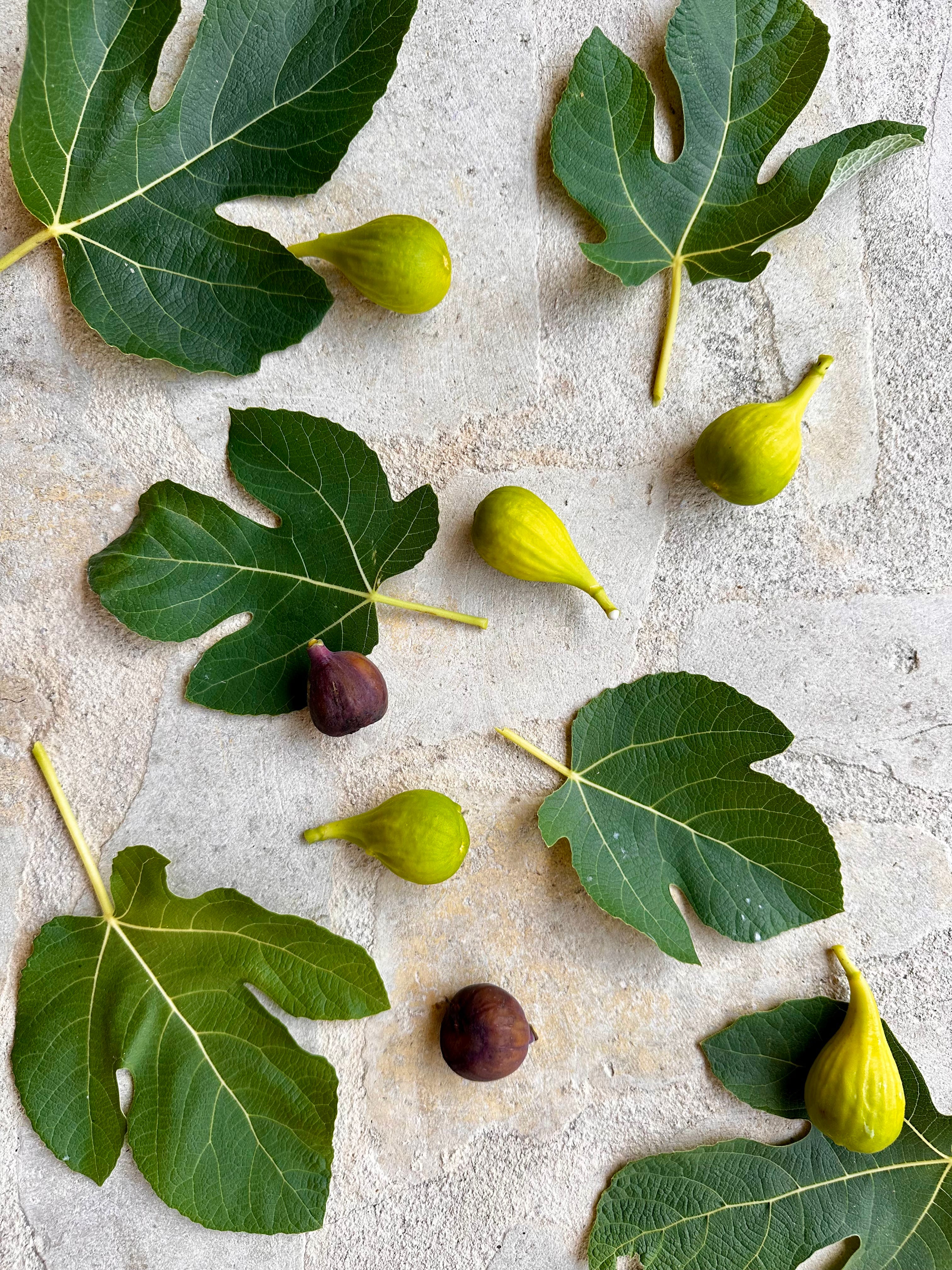
The fig tree has been growing in the wild for a very long time, some say over 80 million years. It’s hard to imagine a world that features both figs and triceratops! So who’s more impressive: the T-Rex or the fig tree?
They were first cultivated by humans much later on though, around 10,000 years ago, and originated in the Middle East where they are still grown today. They were a beloved fruit during antiquity and a symbol of favourite gods like Dionysus and Demeter. Although some believe Romans brought the fruit to the UK, research shows they were more likely eating imported figs at the time and the fruit wasn’t cultivated until the 16th century, when they also made their way to the US.
Are there wasps in our figs?
The short answer is no, rest assured. But it’s a fair question. Figs have evolved alongside fig wasps in an obligate mutualism relationship. They need each other to survive. To start with, we need to understand that there are male and female fig trees, and we eat figs from the female tree. The fig ‘fruit’ is actually an inverted flower, making it difficult to pollinate, but the fig wasps have found a way, climbing through a small hole. If it’s a pollen heavy male fruit, the wasp will lay eggs, then once hatched they fertilise each other and leave the fruit carrying with them all the pollen from the male fig. If a wasp accidentally makes its way into a female fruit, that spreads the pollen allowing the fruit to ripen. The wasp, realising it’s made a mistake then leaves the fig without hatching any eggs. Apparently they can accidentally leave their wings behind but the flower produces specific enzymes to break them down long before we get to eating them.
Aside from this evolutionary marvel, some of the cultivated species we eat no longer need wasp pollination but simply a hormone spray, so that might put your mind at ease.
Is it the forbidden fruit?
A lot of researchers claim the original fruit Eve let herself be tempted by was in fact a fig (I can hardly blame her, they’re much nicer than apples!). This also makes a lot more sense why they then chose to cover themselves with fig leaves when they suddenly realised they were naked and shouldn’t be, it was the nearest tree. In Michelangelo’s Sistine Chapel painting, he also chose to represent the scene with a fig tree. Now I find this thought quite hilarious: In a period of censorship by the Catholic Church, many ancient Roman and Greek statues featuring ‘intimate body parts’ were covered with stone carved fig leaves.
Figs are present in prominent religious writings, the prophet Mohammed even describing it as the perfect fruit.
Can fig leaves make us lose weight?
Animal research shows that eating fig leaf extract reduces appetite leading to weight loss and can help to better control cholesterol levels. They have also been used historically as traditional medicine for intestinal and cardiovascular issues alongside other ailments. So, has it been proven? No. And I wouldn’t recommend eating large quantities of syrup to lose weight… But there’s something in it.
Raw:
I love fig quarters in a salad, my favourite would be rocket, gorgonzola, walnuts, figs and balsamic vinegar.
If you’re lucky enough to be close to a tree that’s bathed in sunshine, they’re like a whole other fruit when eaten just as they are.
Cooked:
Halve and roast in the oven at 200°C for 10 minutes. Add to yogurt, ice cream, cheese plates, or on toast with goat’s cheese.
Simmer green figs in a simple sugar syrup and keep in a jar to have as a jam, especially with cheese.
I love making fig and vanilla jam each year. Just add a vanilla pod to a 500g jam batch to take it to the next level.
Bake them into cakes or, my favourite, frangipane tarts.
Flavour pairings:
Vegetables: cauliflower, mushroom, potato, pepper, beetroot
Fruit: cherries, peaches, limes, grapefruit, orange, raspberry
Nuts: hazelnuts, walnuts, almonds
Aromatics: whisky, dark chocolate, star anise, cinnamon, mint, vanilla
Cheeses: mozzarella, goat’s cheese, blue cheese, hard cheese
Meats: prosciutto, duck, liver
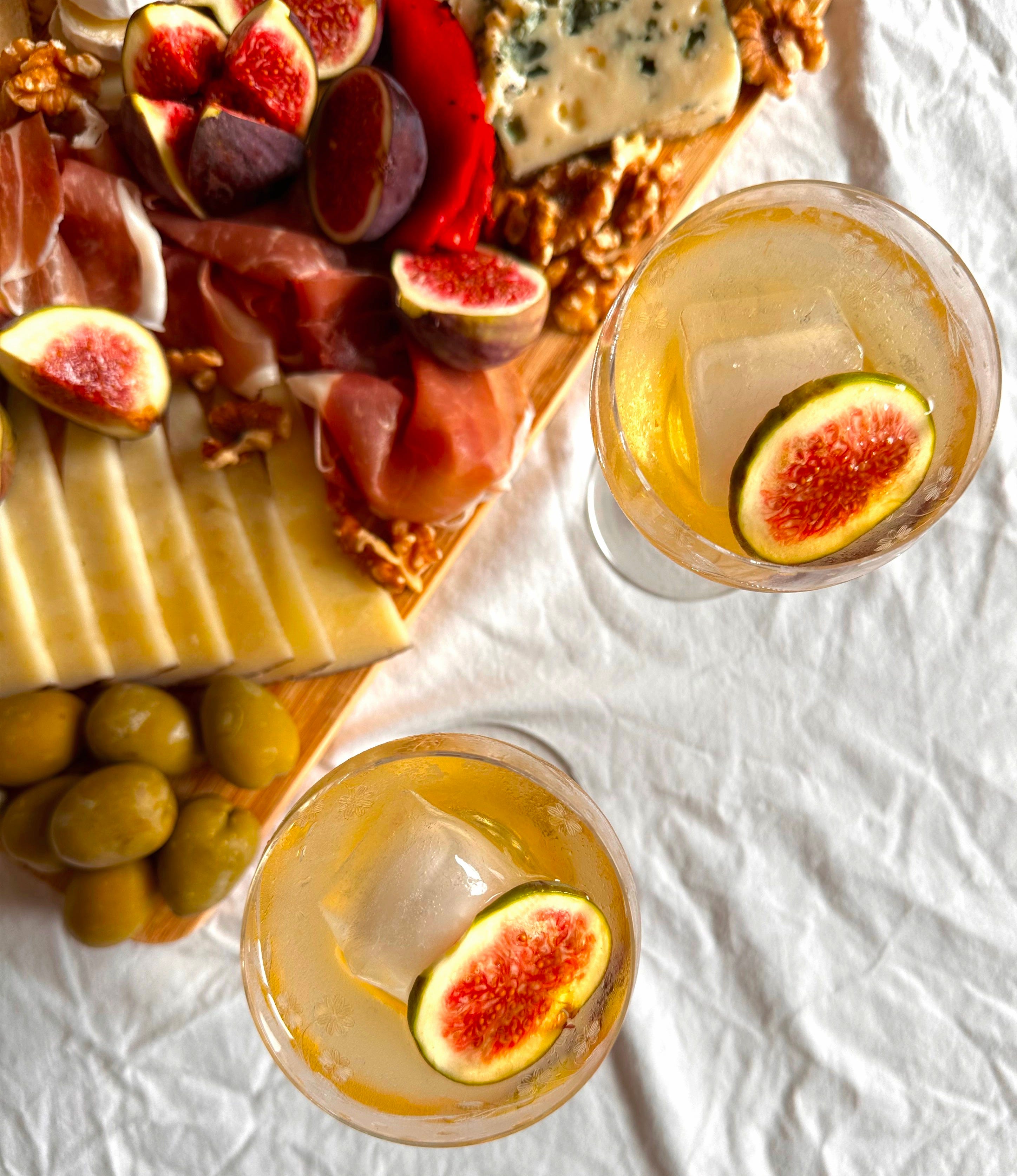
The ultimate aperitif to make the most of fig season!
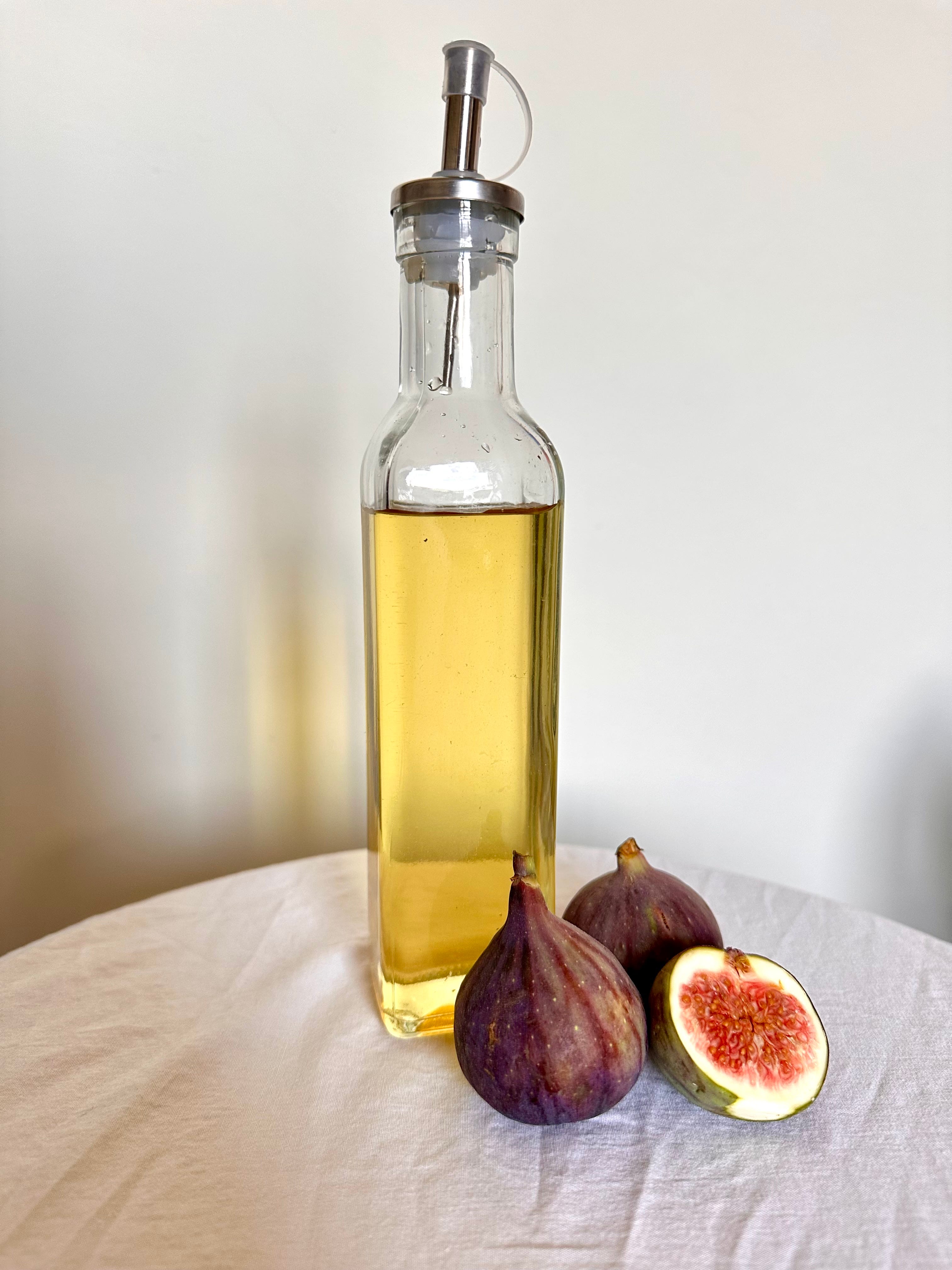
Ingredients:
200g water
200g white sugar
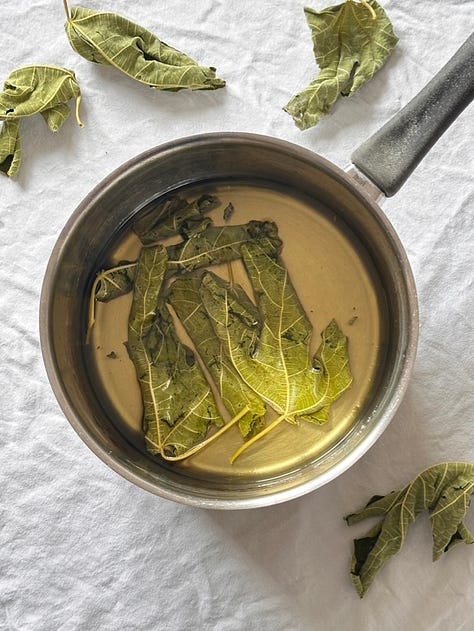
4 fig leaves (Pick a few leaves from a tree, ideally about the size of your hand or larger, and wash them in cold water)
Method:
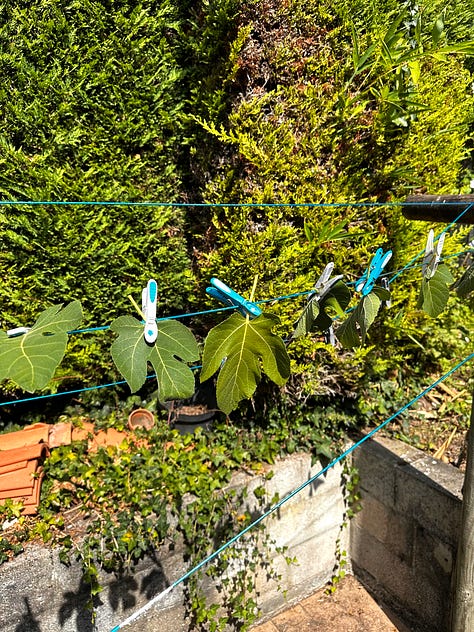
Preheat oven to 100°C, then lay out the leaves on a wire rack and dry for 30 minutes. Turn the oven off and leave them to cool down. Alternatively, dry them in the sun for a day on a washing line.
In a saucepan, mix the sugar and water together and add the dried fig leaves. Bring to the boil then reduce to a simmer and cook for 5 minutes. Turn off the heat and leave to cool down.
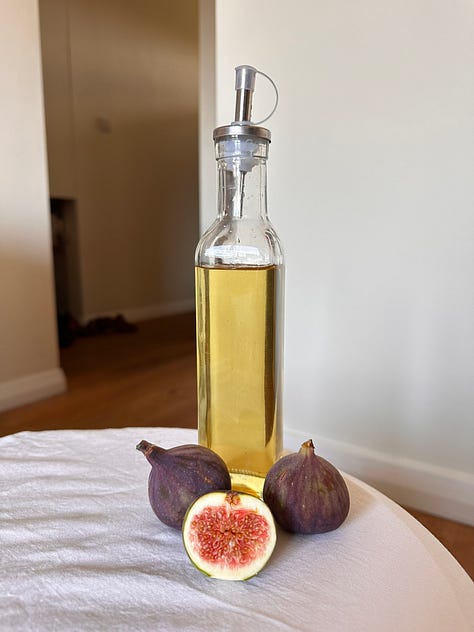
Transfer to a sterilised container and enjoy in cocktails, mocktails and iced coffees. I love it with tonic or lemonade in particular.
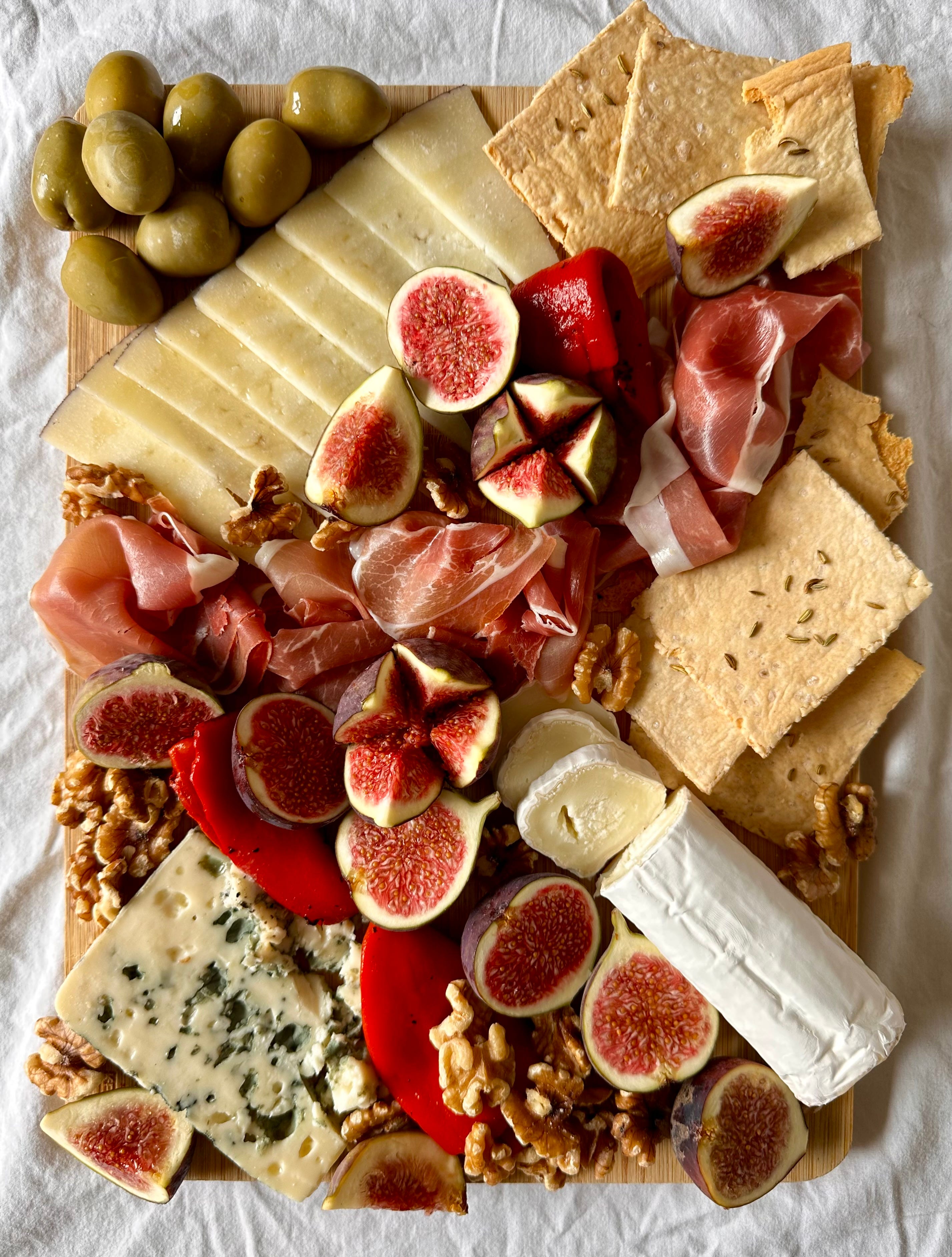
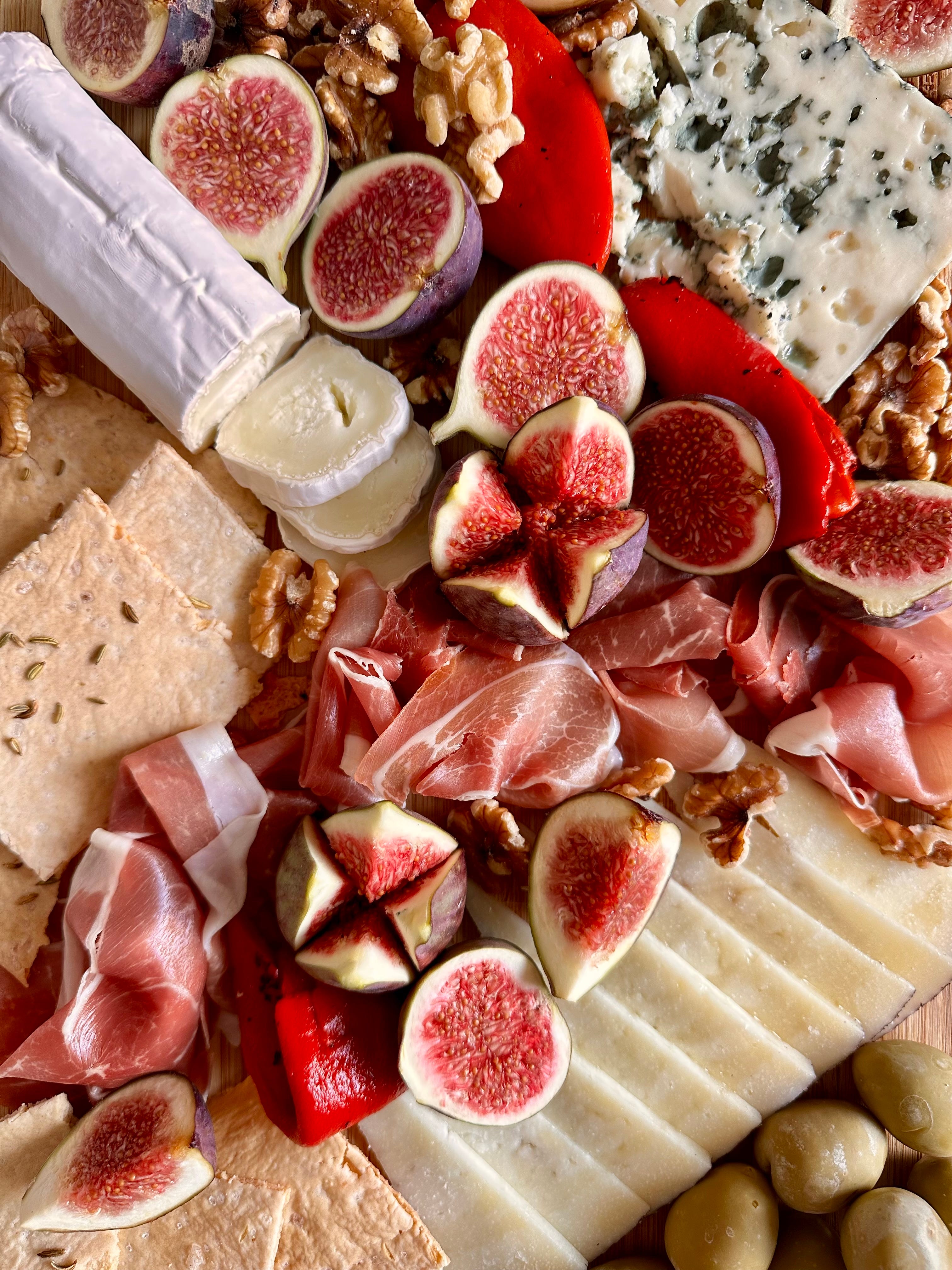
I highly recommend putting half figs on a board with all their best pairings, some crackers and tucking in!
I’ve gone for:
slices of Parma ham,
toasted walnuts,
roasted red peppers,
slices of manchego cheese drizzled with honey,
Roquefort,
French goat’s cheese,
Gordal olives,
sourdough crackers.
How about some delicious drinks to go with that charcuterie!
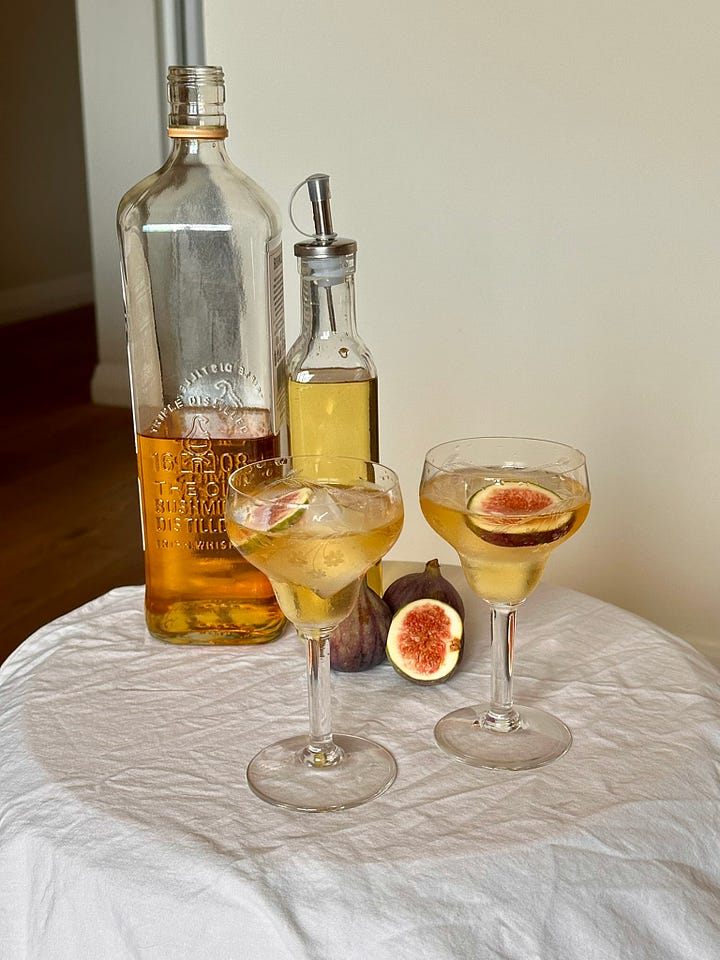
Fig Leaf Old Fashioned: Stir together 1 part fig leaf syrup to 4 parts whisky with a lot of ice until the container feels cold. Strain into a glass over a large ice cube and garnish with a slice of fig.
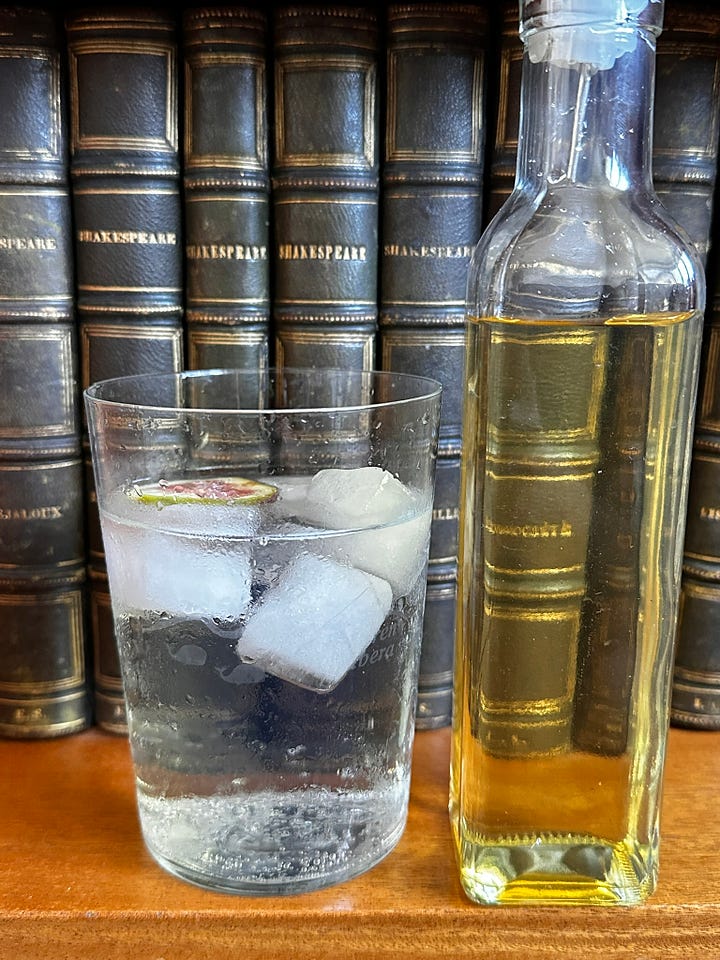
Fig Leaf Tonic: Mix together 1 part fig leaf syrup to 6 parts tonic, pour over ice and enjoy.
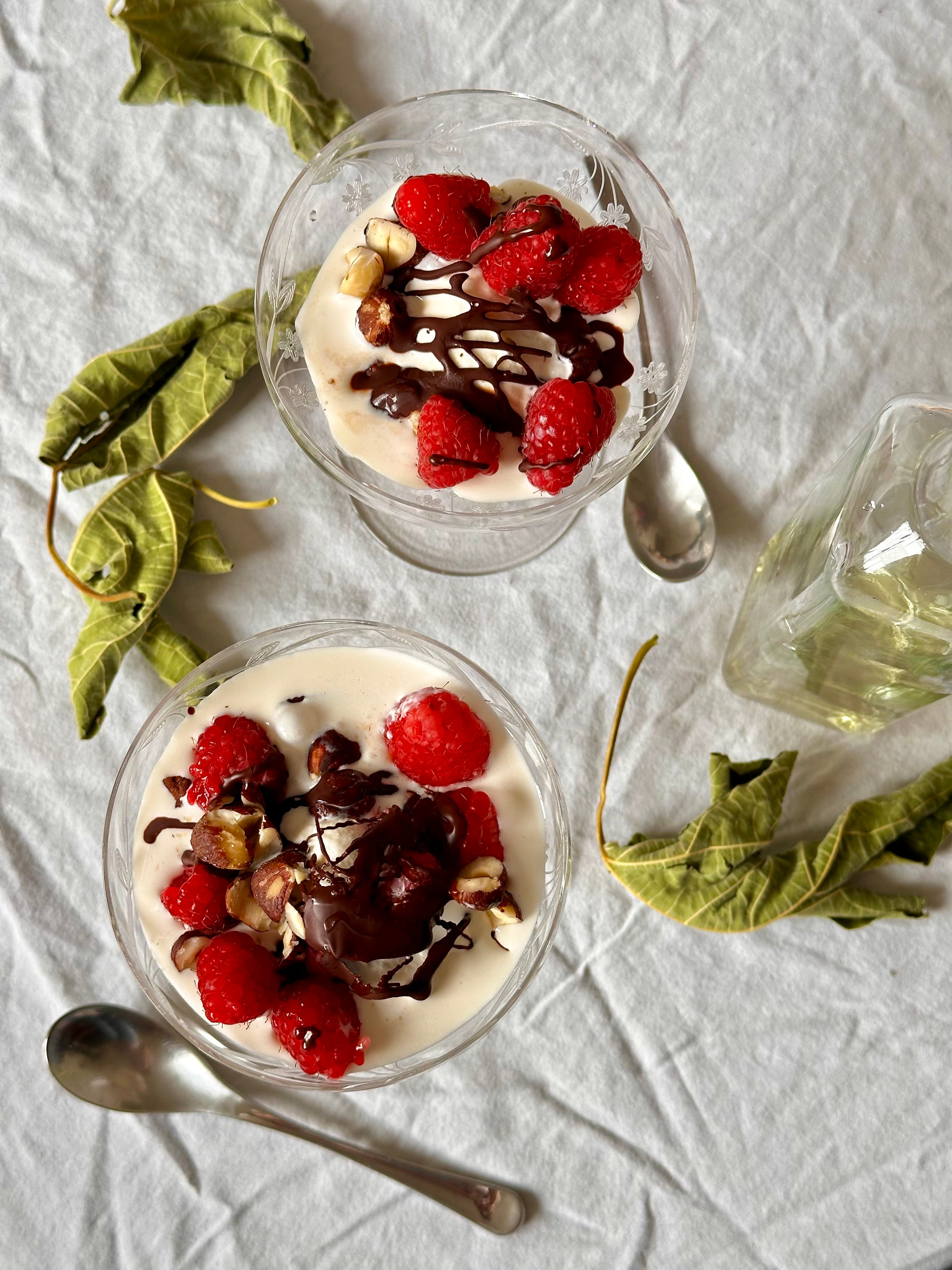
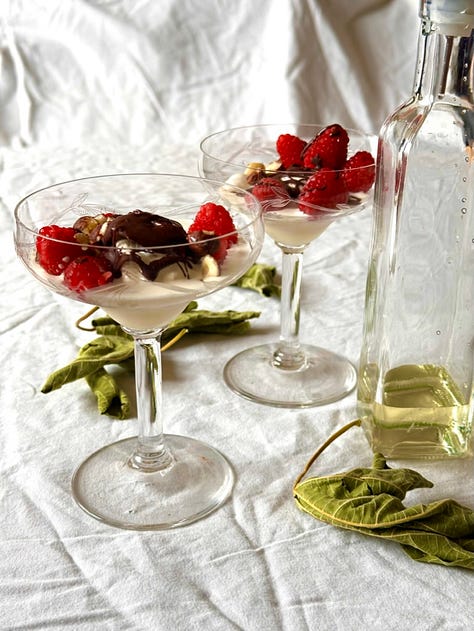
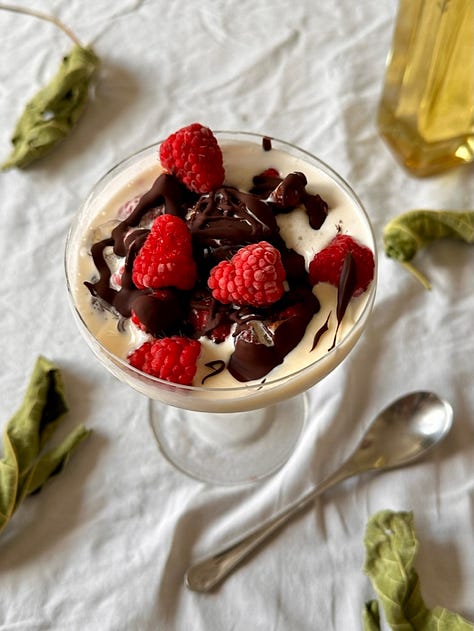
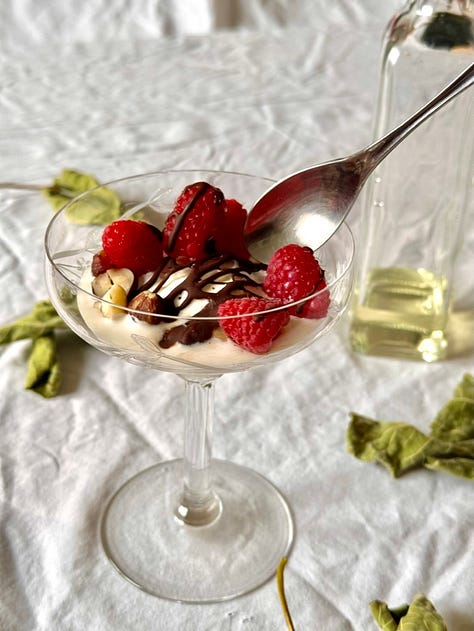
This is a great quick dessert to throw together for dinner parties. Of course fig leaf ice cream is amazing, but that entails infusing milk with fig leaf and then making your own ice cream. I don’t have the time or equipment for that. My solution:
Melt dark chocolate in the microwave
Put 2 scoops of good-quality vanilla ice cream in a bowl.
Pour the chocolate over the ice cream, it will solidify immediately.
Top with fresh raspberries, chopped hazelnuts and a generous drizzle of fig leaf syrup.
Crack the chocolate with the back of a spoon and enjoy.
As always, if you have any questions about method, substitutes etc. feel free to send me a message!
Thanks for reading Spoonful of Felicity! If you enjoyed this, please share it with fellow fig lovers, and let me know what you make with them:
Comments
Nothing yet. Say the first thing.
Sign in to join the conversation.