
Well what is a banana really? They don’t grow on a tree, but a very very VERY tall herb, and the fruit so many of us buy every week in our food shops is in fact a berry. We often buy them in “hands”, and they grow in “bunches”.
Archaeological remains of bananas were found in India, dating back 50 million years. Of course, these were nothing like today’s yellow fruit but much smaller and so full of seeds they were basically inedible. A genetic mutation happened by chance to create a seedless variety in Southeast Asia which humans then cultivated and grew more of around 10,000 years ago. They then spread this fruit across Asia, and later Africa. Just to be clear, this was a cooking variety, which we now refer to as plantain, but it was less the fruit that was popular in the Stone Age and more the leaves. These were used for roofing, plates, cookware, clothes and rope. The precursor to Ikea if you will!
When Portuguese sailors reached South America, they took bananas along with them and these grew very nicely in the tropical conditions of the rainforest. Because of their tendency to bruise easily though, they were still seen as a rare treat in North America and Europe. That is until the late 19th century, with the rise of the sweet, thick-skinned variety known as Gros Michel and further advancements in transport technology. The popularity of sweet bananas then grew exponentially, from a spectacular treat eaten with a knife and fork, to a cheap snack transported back and forth in a bag until it’s too brown to be enjoyed. Now bananas are the top selling fruit worldwide!
The name banana is said to come from an Arabic term for finger, banan.
Forget Big Pharma, who’s taking on Big Banana? Let me explain. Did you know there are over 1,000 different varieties across dessert bananas and cooking (plantain) kinds. Despite this, the majority of bananas available for purchase across the world are the exact same variety, the Cavendish. Developed by the gardener of Chatsworth House and named after its Duke. Imagine if the only apples we could buy in supermarkets were Golden Delicious, and most of us had never had the delights of a Pink Lady, Jazz, Bramley or Granny Smith at a minimum!
Before the Cavendish monopoly, there was Gros Michel. This variety made bananas widely available in America, and a company called United Fruit (now Chiquita) decided to go big. They bought up huge amounts of land in Central America, tore down rainforest, paid local workers miserable wages and sold bananas at incredibly cheap prices. With help from the CIA, they took down governments that fought for workers’ rights or tried to reclaim land for local people, giving rise to what became known as banana republics. Big Banana!
Then came TR1 in the 50s, a disease that wiped out Gros Michel and proved the dangers of monoculture. Luckily for Big Banana, the Cavendish was immune, so the cycle started again. Now TR4 has arrived, and this time the Cavendish is under threat. I’m trying to make a joke of it, but it’s actually very worrying for the many countries and people whose economy is highly dependent on banana agriculture. On a positive note, most supermarkets now only offer Fairtrade bananas to improve growers’ pay cheques and conditions, although let’s face it, bananas are still incredibly cheap. Anyway, we might finally start seeing different varieties. I hear some taste of vanilla ice cream or raspberry.
During the 1940s, a lot of new recipes came from necessity due to wartime rationing. It seems bananas were missed enough to warrant the need for an alternative. Now hazard a guess, if you were yearning, longing for a banana, how would you try to recreate one? I actually think the solution sounds really ingenious, although I have not tried it. Mash up boiled parsnips with caster sugar and banana essence and voilà!
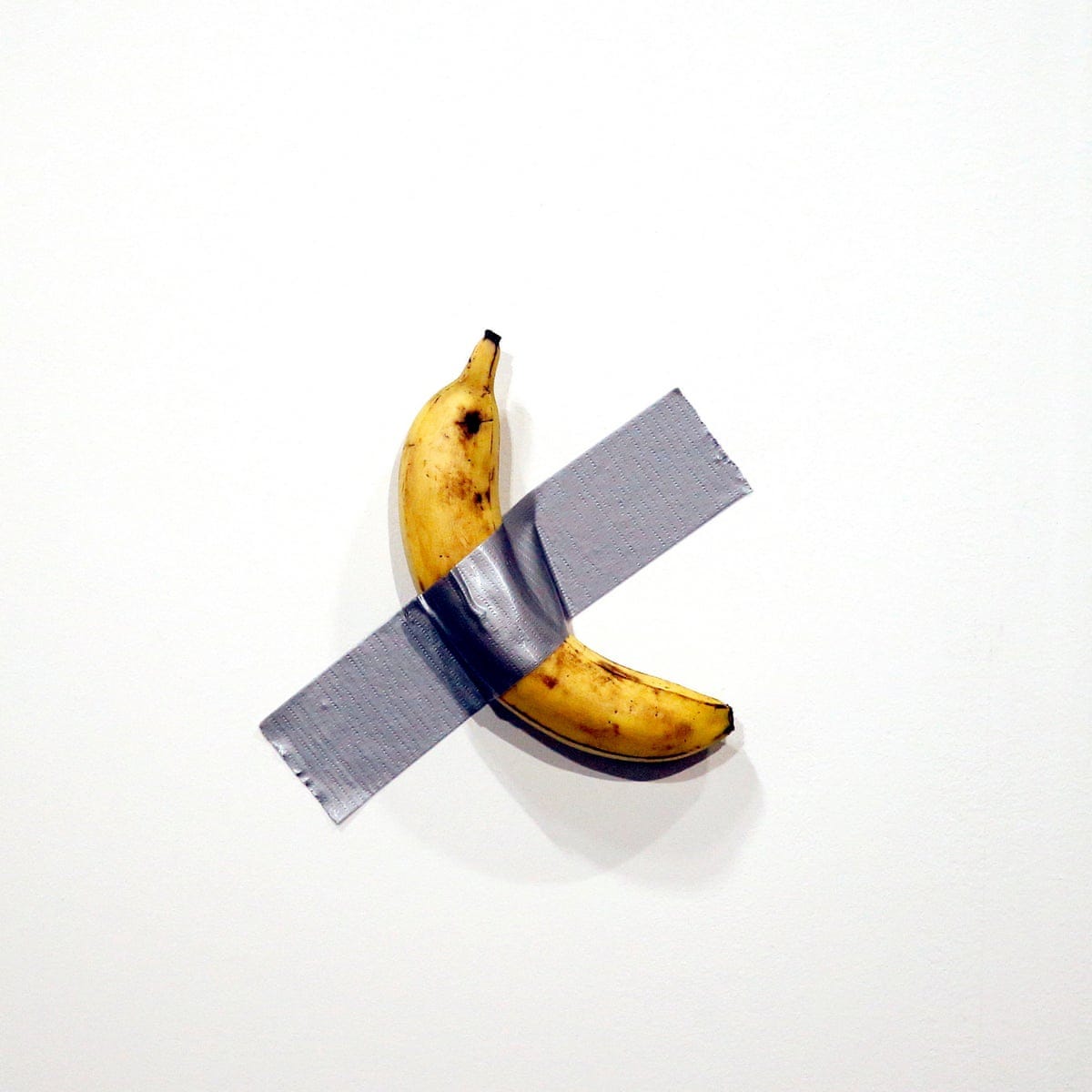
A banana worth 6.2 million dollars? This is the provocative artwork by Maurizio Cattelan, artist also known for his golden toilet, which denounces over-consumerism. A few versions have been sold with the latest getting up to such an incredible price at auction. And of course, for that money, you don’t just get a 60p banana, but also an authentication certificate and instructions for how to replace the banana with a new one when it gets too brown…
Slipping on a banana peel has been a classic gag since the start of the 20th century! Apparently, it used to be a genuine health concern in London and New York when the amount of peels discarded on the street was no laughing matter! You can actually use banana peel to polish leather and make tea. A few years ago, a vegan trend on social media was using banana peel to make curries or mock bacon, I personally wasn’t impressed with the result when I tried it…
Although I touch a bit on plantain in the history section, I am dedicating this substack to dessert bananas i.e. the sweet kind.
Raw: I feel this probably doesn’t need a long paragraph. Did you know though that monkeys open bananas from the bottom side, not the top stem as most of us do, and it is actually much easier. This was one of my dad’s favourite facts so I have not risked checking it.
If you don’t want them to ripen too quickly, avoid warm temperature shifts and storing them with tomatoes. Like most fruit and veg, if you cut bananas in advance then lemon juice will stop them from browning.
One of my favourite comfort foods is a slice of sourdough bread with salted French butter generously slathered and topped with a fork-mashed banana and a pinch of sea salt. Looks horrid but tastes great!
Cooked:
Hard to beat a caramelised banana. Either make a caramel by adding sugar to a dry pan over medium heat until golden, then adding butter off the heat and stirring in banana slices, then placing back on the heat for a couple of minutes. Alternatively, add a bit of butter to a non-stick pan on medium heat then add banana slices and sprinkle over with sugar and cook for about 2 minutes on each side and finish with a sprinkle of cinnamon.
Score a banana with the peel still on, insert squares of dark chocolate into the banana and cover with foil. Cook in the oven at 180°C for 8-10 minutes then enjoy while it’s hot with a scoop of ice cream.
Now this one is a bit controversial but I promise you it is the nicest apéritif! Thinly slice a banana and a spicy chorizo ring into similar sized pieces. Create strips of filo pastry, place the chorizo and banana at the bottom of a strip with a pinch of cumin powder then roll up into a samosa-style triangle. Brush with oil and bake at 200°C until brown and crispy all over. Serve warm.
I mean whoever is a strong advocate against pineapple on pizza, skip ahead a few lines. But in South Africa it is common to see banana on a pepperoni pizza and being such a fan of this chorizo combo, I’m not surprised it works.
Flavour pairings:
Savoury: Bacon, caviar, chicken, hard cheeses, avocado and parsnip.
Sweet: Almond, walnut, hazelnut, peanut, cherry, pear, grapes, strawberries, pineapple, coconut, honey, maple syrup, dark chocolate and coffee.
Spices: Star anise, coriander, liquorice, cardamom, cinnamon and vanilla.
Ingredients (8 portions):
Stale banana bread loaf (I made mine using Nigella Lawson’s recipe).
2 bananas
1 tin Carnation’s caramel (or dulce de leche)
1/2 lemon
20g toasted flaked almonds (for garnish, you could also grate dark chocolate on top instead)
3 tbsp spiced rum (optional)
250 mL whole milk
2 egg yolks
50g caster sugar
25g plain flour (or cornflour)
10g butter
1 vanilla pod
300 mL double cream
3 tbsp icing sugar
Sea salt
Method:
Cut the banana bread into 1 inch slices and toast them or grill until golden on both sides then leave to cool down.
Make the crème pâtissière: In a large bowl, whisk the egg yolks with the flour and sugar until it starts to foam and lighten in colour. Cut the vanilla pod in half and scrape it into a saucepan with the milk. Bring to a boil then slowly pour into the egg mixture while whisking. Transfer back into the saucepan and stir continuously over a low heat until thickened, it should coat the back of the spatula. Transfer into a bowl and leave to cool covered with some cling film.
Cut banana slices and cover with lemon juice to stop them from browning.
Toast the almond flakes in a dry pan for 2 minutes on high heat. (Take them off the heat as soon as they start to brown to avoid them burning.)
Whip the double cream with icing sugar and a pinch of sea salt.
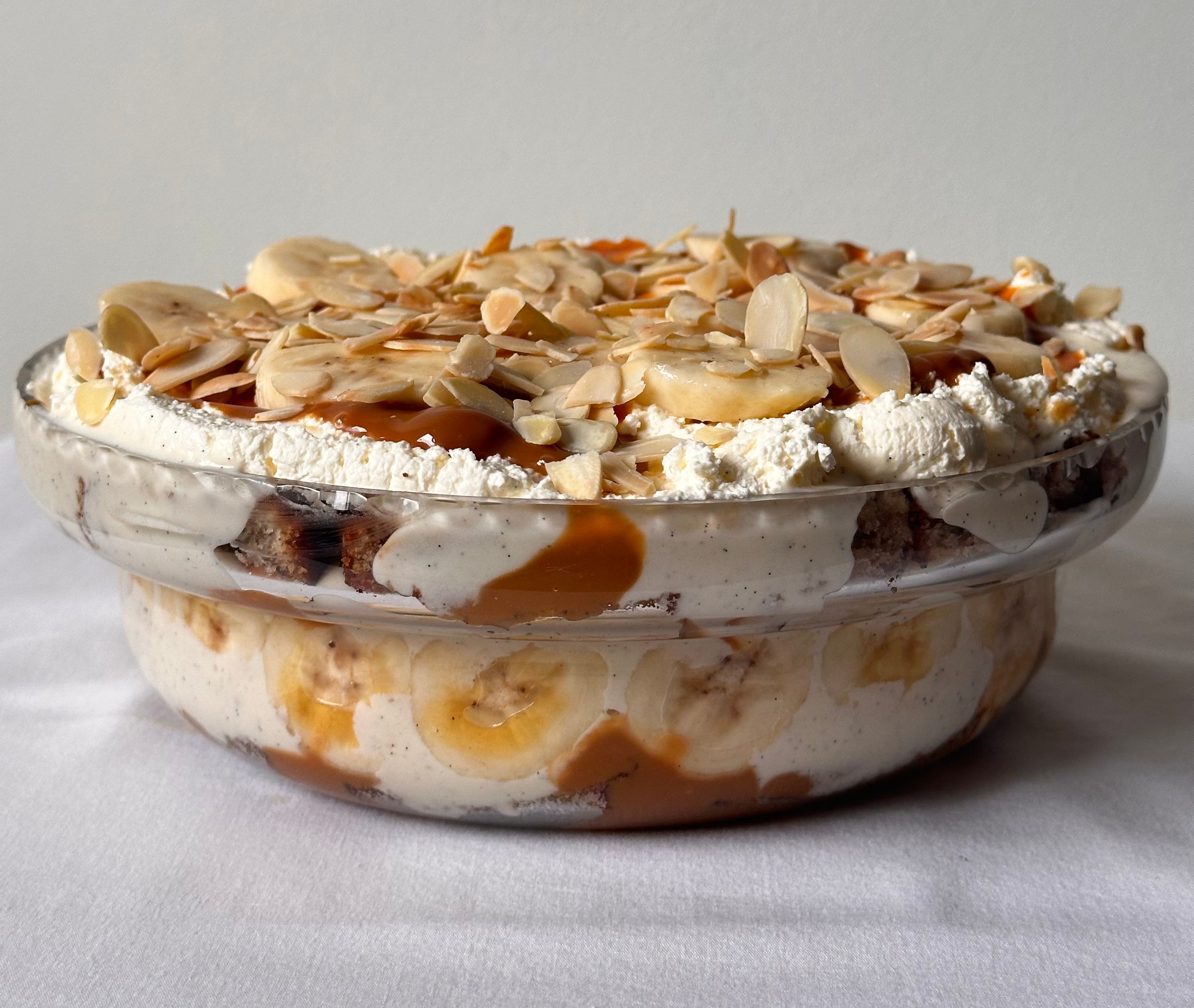
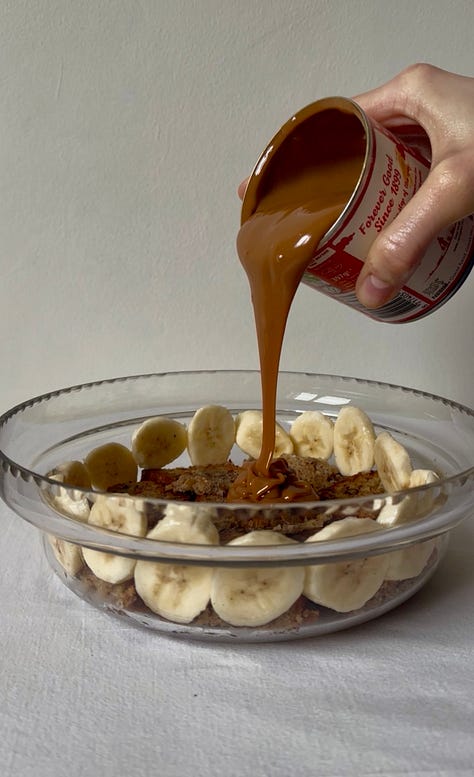
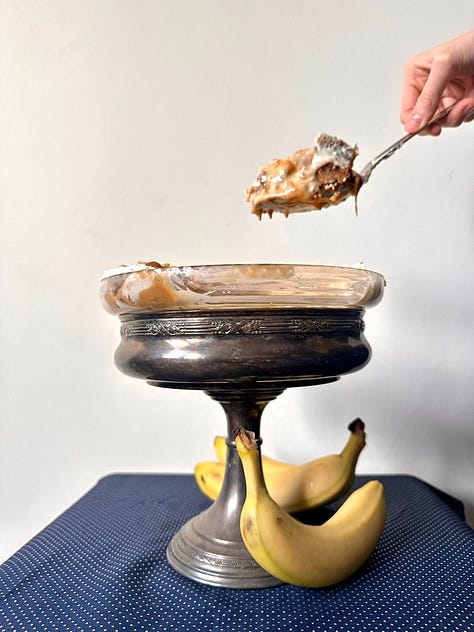
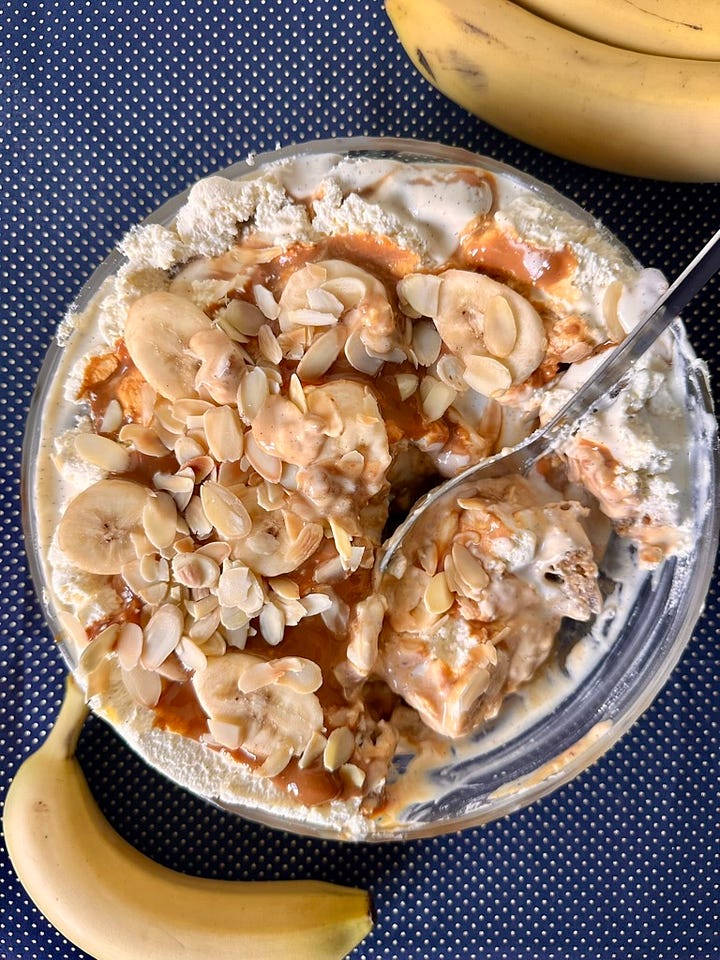
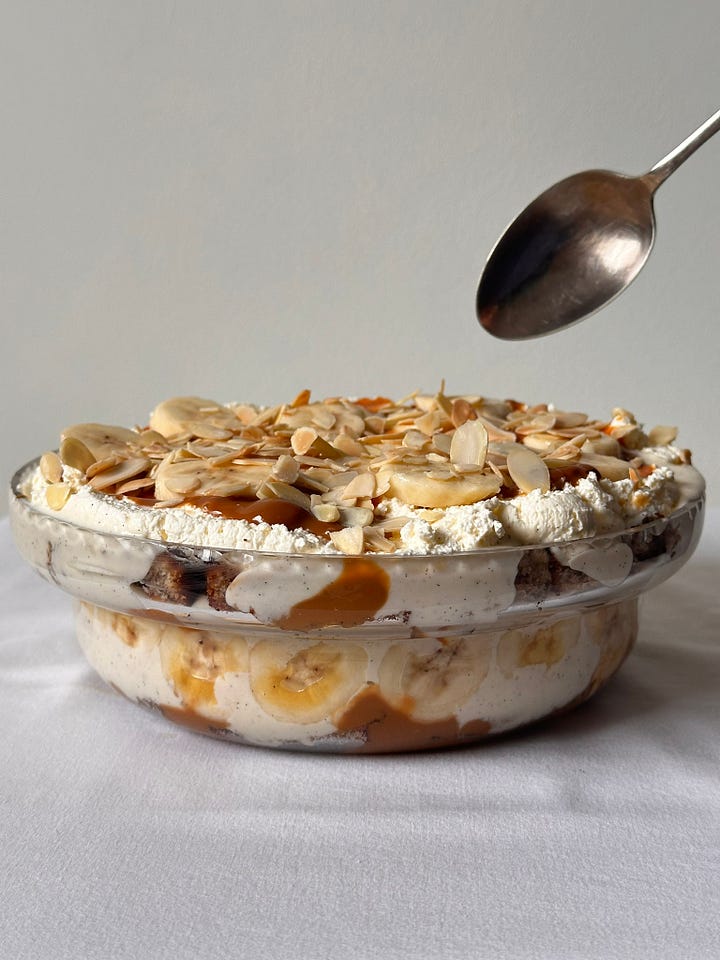
Assemble the trifle: start with a layer of banana bread slices and drizzle a bit of spiced rum on top. Then add banana slices, a layer of caramel and crème pâtissière. Then repeat and finish with the whipped cream, toasted almond flakes and a final drizzle of caramel. Store in the fridge for at least 2 to 8 hours before serving for best results.
As always, if you have any questions about method, substitutes etc feel free to send me a message!
Comments
Nothing yet. Say the first thing.
Sign in to join the conversation.