
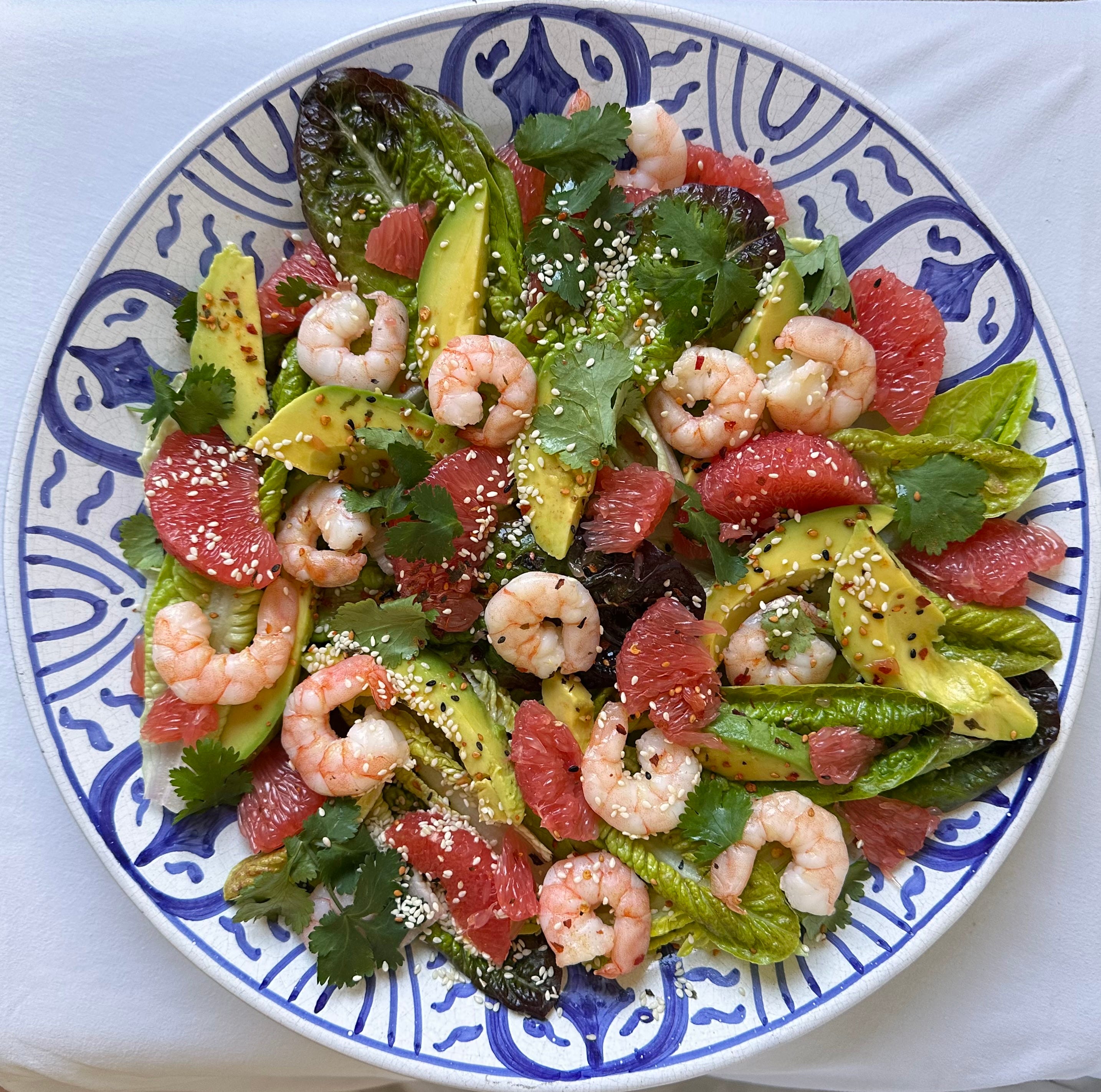
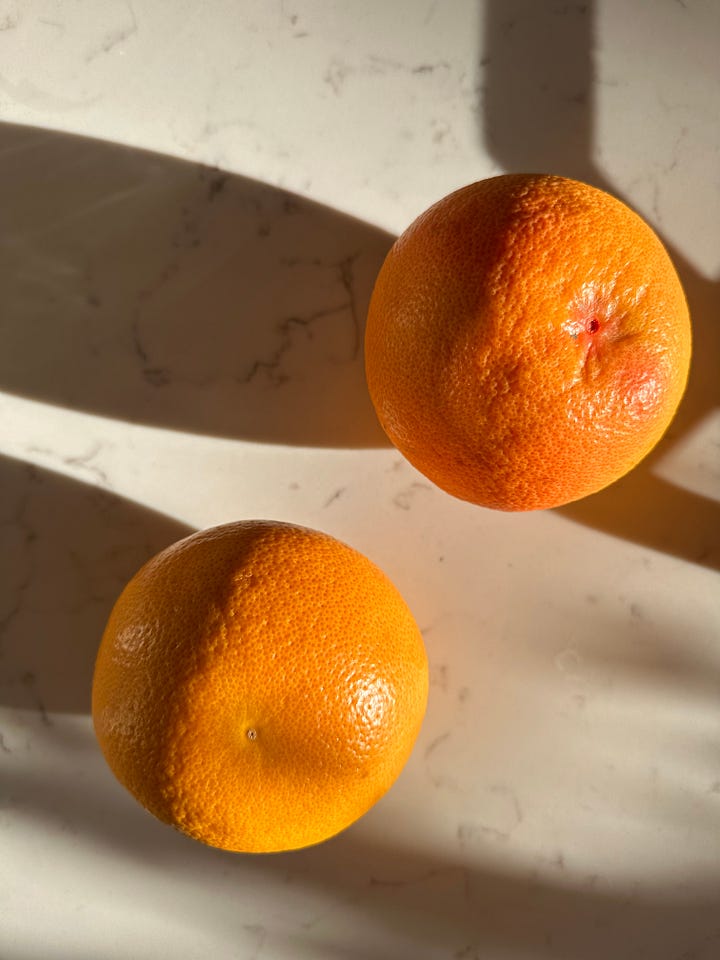
Grapefruit is not to be confused with the Asian pomelo. To be honest, the naming can get a little confusing, with the French in particular seeming to have things flipped around. But for clarity, I am not talking about the very big green one, or the sharply bitter yellow one. I mean the red or pink fleshed fruit, slightly sweeter but still with that signature bitterness, which I am calling grapefruit.
Grapefruit is a natural hybrid of sweet orange and pomelo, first discovered in Barbados, most likely in the 18th century. To go back a few steps, pomelo originates from the Himalayas and has been around for over 3,000 years, slowly making its way across the world. With the help of our well-known “importer” Christopher Columbus, pomelos eventually reached the Caribbean. Then, with a little help from nature, they crossed with wild sweet oranges to create grapefruit.
From there, the crop spread from Barbados across the Caribbean and into Florida, where it really took off. What began as a novelty tree gradually became the breakfast staple we have come to know. Thanks to a series of fad diets throughout the 20th century, grapefruit became a huge commercial success, with Florida’s exports peaking in the 1970s. Since then, production has dropped by around 70 percent, largely due to growing awareness of the fruit’s interaction with certain medications. Big Citrus versus Big Pharma, more on that below.
Grapefruit has gone by many names over the years, including the forbidden fruit and the golden orange. The name itself has a few possible origins. One is that the fruit grows in clusters, resembling bunches of grapes, although this is debated. Another is its supposed resemblance in flavour to grapes (???).
That said, the comparison is not to your usual vine grapes, but to Barbadian sea grapes, the fruit of a coastal tree with a sweet and sour flavour. I have never tried one, so I cannot confirm, but I am open to being convinced.
As I mentioned above, grapefruit got a big ego boost in the 20th century through various iterations of quick weight loss diets. The most famous was the 1920s grapefruit diet, also known as the Hollywood diet, a rather extreme regime of around 600 calories a day, with half a grapefruit required at every meal for 18 days.
In 1970s America, the Department of Agriculture tried to popularise the diet again to promote good old homegrown grapefruit (throwback to them adding corn syrup to literally everything on supermarket shelves for the same reason). This time, the diet included serving half a grapefruit with sugar and a glacé cherry on top, just to take the edge off of course. This is all giving me strong flashbacks to the Special K diet of the early naughties, for those of us unfortunately in the know.
Anyway… This goes some way to explaining our association of grapefruit with healthy eating, alongside its sharp, bitter flavour. There is some truth to it, as studies suggest it contains antioxidants such as naringenin, which may help lower cholesterol. That said, everything in moderation, methinks.
So what happened to grapefruit’s moment in the spotlight? Alongside rising costs and difficult growing conditions, its decline is largely linked to its interaction with certain medications. This discovery was actually accidental, during a study on alcohol and pharmaceuticals where grapefruit juice was used simply to make things more palatable.
It is true that grapefruit can interfere with medications such as levothyroxine and blood thinners, so moderation is advised. And it seems that, at least in the United States, pharmaceuticals have won out over citrus. That said, growers are now working on developing new varieties without these effects, so a comeback may well be on the horizon.
In London, Wandsworth Council has granted protected status to a grapefruit tree growing in someone’s front garden. Originally brought over as a sampling from Grenada in the 1980s, it has flourished ever since. Most protected trees in the UK live in Kew Gardens, so this one feels particularly special.
I prefer to cut mine into segments and remove the skin. But there is something nostalgic about eating half a grapefruit with a spoon, even though it is not necessarily the best approach. For a slightly more refined version, sprinkle brown sugar on top and place it under the grill to create a brûlée-style crackly surface.
Segments work beautifully in salads, with yoghurt and honey, or as a garnish for cocktails such as a gin and tonic or a paloma.
Flavour pairings:
Savoury: olives, celeriac, carrot, avocado, blue cheese, pork, shellfish, watercress
Sweet: other citrus, blackcurrant, lychee, pineapple
Herbs and aromatics: coriander, basil, thyme, rosemary, oregano, cardamom, lemongrass, pink pepper, juniper, nutmeg, elderflower
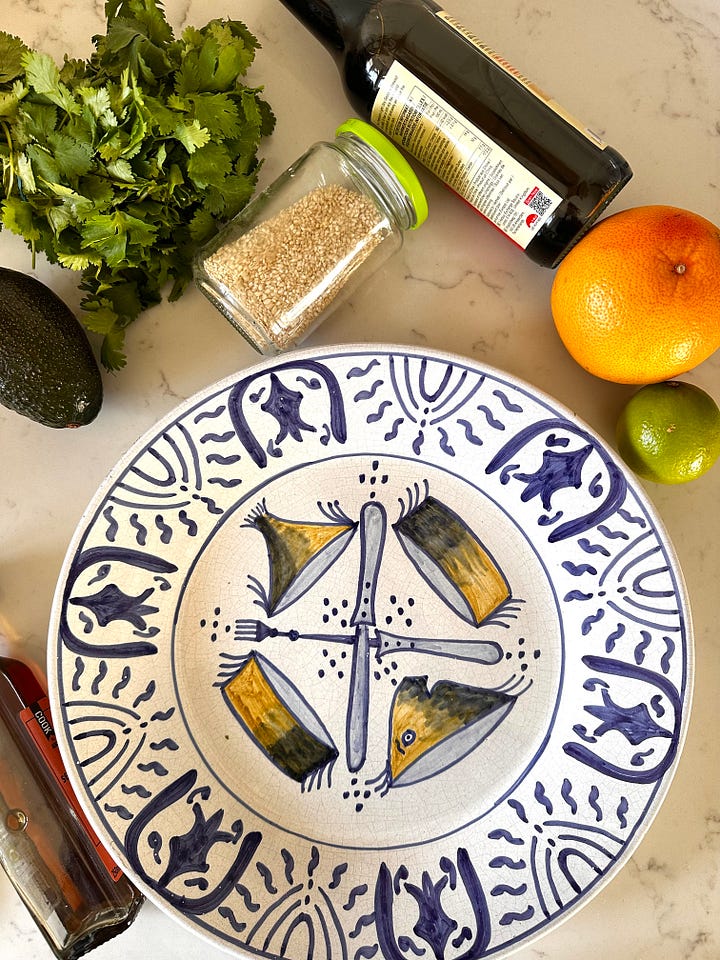
Ingredients (2 portions):
1 grapefruit
1 avocado
300g cooked prawns
1 baby gem lettuce
15g coriander
10g sesame seeds
1 tsp honey
1 tsp sesame oil
1 Tbs soy sauce
1/2 lime, juiced
Method:
Cut the grapefruit in segments: Slice off the top and bottom, slowly remove the skin and pith with a knife by following the curve of the fruit, then finally cut out the segments.
Toast the sesame seeds in a dry pan for 2 minutes (until they start to brown).
Peel and slice the avocado into segments of a similar size to the grapefruit. If not dressing immediately, squeeze a bit of lime juice on top to stop it browning.
Make the dressing by combining the reserved grapefruit juice, lime juice, soy sauce, sesame oil and honey in a jar. Shake well until emulsified.
Separate and wash the baby gem leaves.
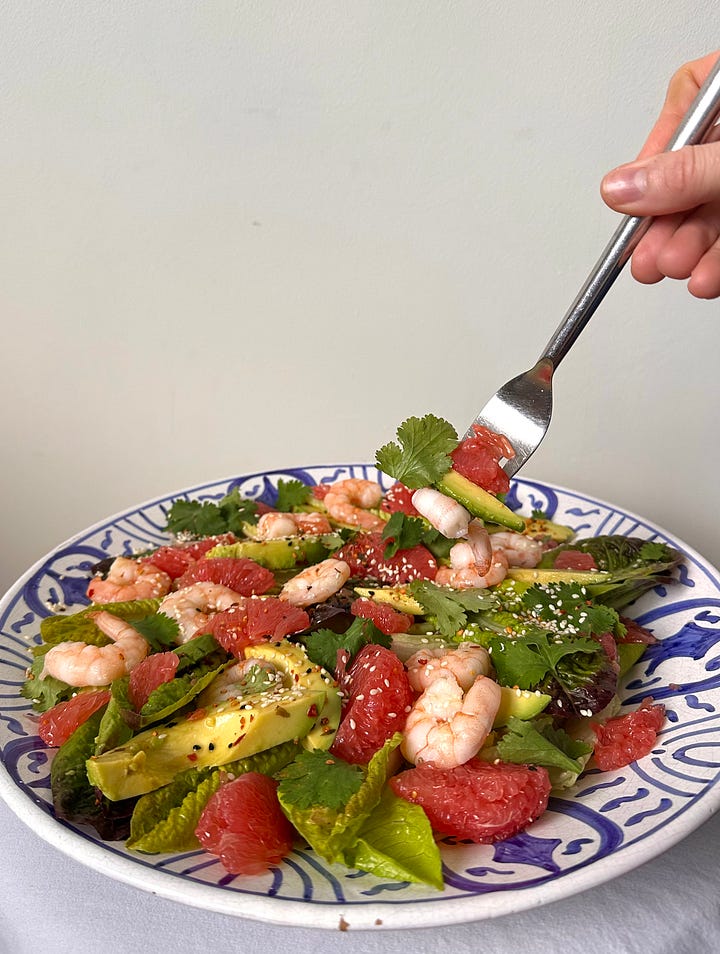
Assemble the salad by layering the lettuce with the grapefruit, coriander leaves, prawns and avocado, then top with the dressing and sesame seeds.
Bon appétit!
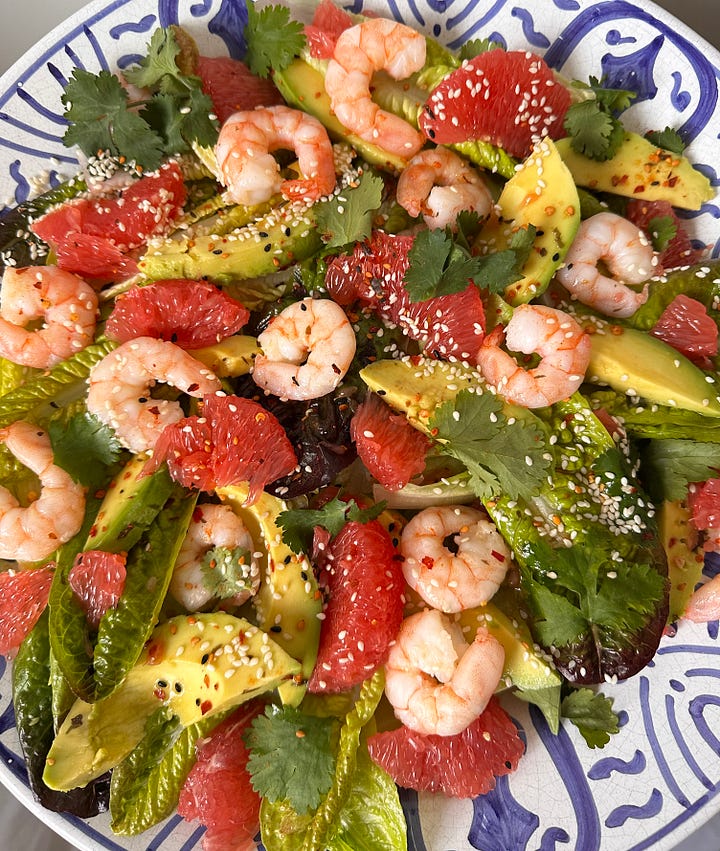
As always, if you have any questions about method, substitutes etc feel free to send me a message!
Comments
Nothing yet. Say the first thing.
Sign in to join the conversation.